

In July and August 2024, two parcels containing improvised incendiary devices caught fire inside European cargo facilities. Not mid-flight. On the ground, at logistics hubs, before anyone flagged them.
The incidents barely made headlines. But they forced TSA to issue two emergency Security Directives, rewrite ACAS data requirements, and tighten scrutiny on U.S.-bound shipments from senders without an established business relationship with a carrier or regulated agent.
Air cargo security monitoring protects more than $6 trillion in goods moving by air every year, roughly 35% of global trade by value. And as of 2026, the system responsible for that protection is still, by IATA’s own assessment, a “patchwork of inconsistent and often redundant requirements” assembled reactively after each new attack.
This piece covers what air cargo security monitoring actually involves, where the screening technology and regulatory frameworks stand right now, and where the real operational gaps remain.
What Air Cargo Security Monitoring Covers (and Where It Stops)
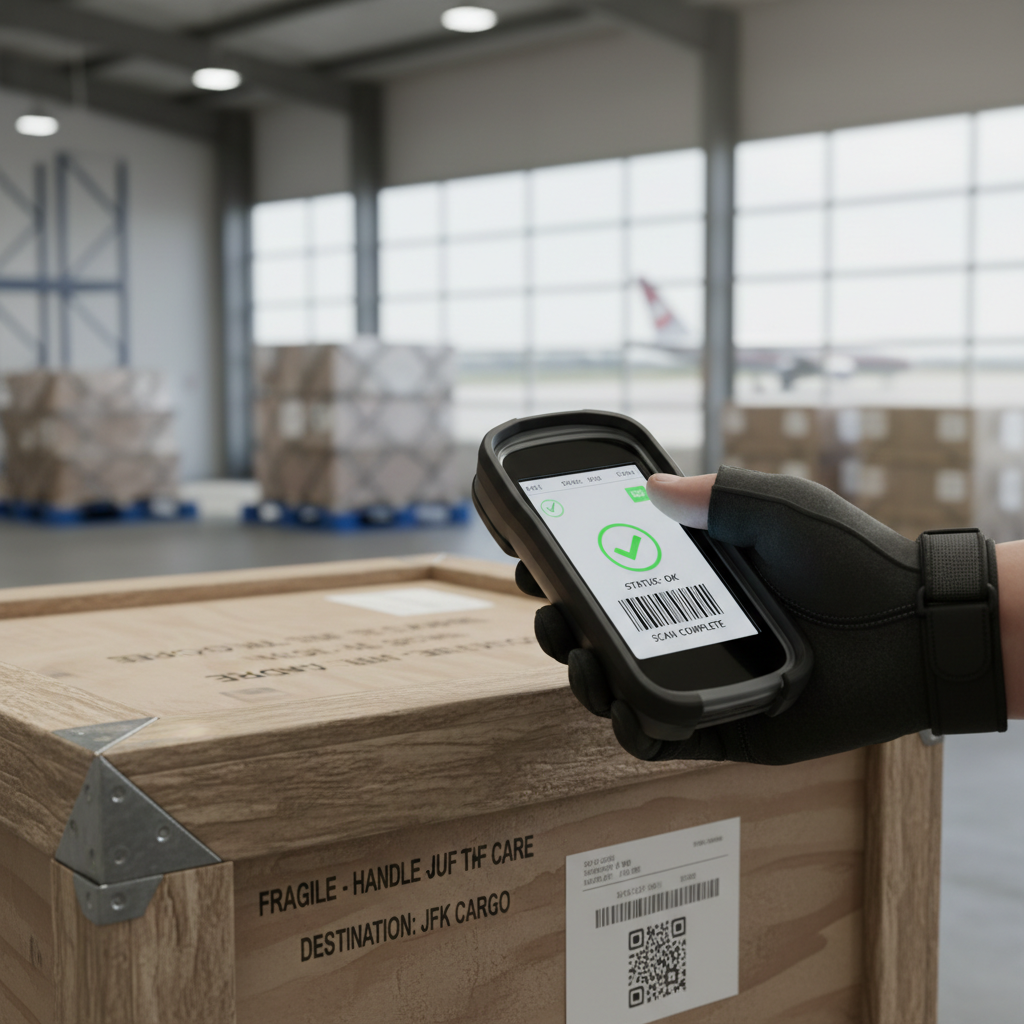
Air cargo security monitoring is the layered system of screening technologies, supply-chain controls, and regulatory oversight that prevents prohibited items, explosives, and incendiary devices from reaching an aircraft.
It works on two levels simultaneously:
Physical screening. X-ray systems, computed tomography (CT) scanners, explosive detection systems (EDS), explosive trace detection (ETD), and certified canine teams inspect cargo before loading. In the U.S., TSA requires 100% of cargo on passenger aircraft to be screened at a level commensurate with checked baggage. The EU has enforced an equivalent 100% secure-supply-chain mandate since February 2012.
Supply-chain validation. Programs like Known Consignor (the EU’s KC3, Australia’s KC scheme) and Regulated Agent (RA3) certify trusted entities whose cargo can flow through the chain with reduced physical screening. The premise: if the chain of custody is secured end to end, some screening burden can shift upstream to the origin.
What most implementations do not cover is continuous, real-time visibility into cargo location and environmental conditions between screening checkpoints. Screening tells you a shipment was clean at one point in time. It says nothing about what happened to it afterward.
The Threats That Rewrote the Rulebook
Every major expansion in air cargo security follows an incident. Not a predictive model. Not a risk simulation. An actual attack or near-miss.
Lockerbie, 1988. A bomb concealed in a suitcase destroyed Pan Am Flight 103 over Scotland, killing 270 people. It became the historical catalyst for ICAO Annex 17 and the earliest push toward 100% screening mandates worldwide.
Yemen, 2010. Al-Qaeda in the Arabian Peninsula packed 300 to 400 grams of PETN plastic explosive inside HP LaserJet toner cartridges and shipped them from Sana’a through Dubai and the UK, bound for Chicago. Both packages passed routine cargo screening. Detection came from a human intelligence tip from Saudi Arabia. Not from any scanning technology. The blast radius was regulatory: the EU’s ACC3 regime took effect in February 2012, with enhancements following in July 2014.
Europe, 2024. Two improvised incendiary devices concealed in parcels ignited at cargo facilities and on tarmacs. The threat profile had shifted. This wasn’t an in-flight detonation plot. It was ground-side fire, in the supply chain itself. TSA responded with emergency amendments tightening ACAS mandatory data elements and renewed emphasis on Pre-Loading Advance Cargo Information (PLACI) systems that flag suspicious shipments before they reach the airport environment.
The pattern is consistent. The industry builds its defenses around the last attack, then waits for the next one. IATA acknowledged this directly in its November 2024 position paper, calling for a globally harmonized, risk-based framework to replace the current reactive, jurisdiction-by-jurisdiction approach.
Screening Technology in 2026: X-ray Is Losing Ground
The typical cargo screening facility still relies on X-ray as the primary modality. That’s changing, and the investment data shows exactly where the shift is heading.
X-ray (single and dual-view) remains the workhorse. Dual-view systems improved material discrimination after 2010 by capturing two projection angles per scan. But the PETN-in-toner-cartridge attack exploited a specific weakness: the explosive looked identical to printer ink on X-ray. Dual-view narrowed that blind spot. It didn’t close it.
Computed Tomography (CT) is the fastest-growing segment. It produces 3D volumetric reconstructions that reveal density, mass, and internal structure without opening a package. The CT scanner sub-market for air cargo reached $1.2 billion in 2025 and is projected to hit $2.3 billion by 2034 at 7.8% CAGR. Dual-energy CT holds 38.5% of that market. Multi-energy CT is growing even faster at 8.9% CAGR.
Beyond threat detection, CT produces volumetric mass data that’s operationally useful for logistics. An ICAO-published analysis describes next-generation CT as a dual-use capability: security detection plus cargo-quality analytics, without opening packaging. A security line item that doubles as a logistics tool changes the procurement math entirely.
Explosive Detection Systems (EDS) are large-tunnel, certified systems for primary screening. ETD samples particles or vapor for secondary follow-up, effective but too slow for primary use at scale. Canines under TSA’s Third-Party Canine-Cargo (3PK9-C) program provide high throughput but depend on training and certification pipelines.
AI-driven object recognition is becoming the real differentiator. Software layers that automate suspicious-target detection across X-ray and CT images now update continuously against new concealment techniques. Without an AI overlay, a screening system produces images. With one, it produces actionable decisions.
| Technology | Primary Use | Throughput | Key Limitation |
|---|---|---|---|
| Single-view X-ray | Initial screening | High | Limited material discrimination |
| Dual-view X-ray | Primary screening | High | Dense cargo concealment |
| CT (dual/multi-energy) | Primary + secondary | Moderate, improving | Higher cost and footprint |
| EDS (large tunnel) | Primary screening | Moderate | Infrastructure-heavy |
| ETD | Secondary screening | Low | Manual, time-intensive |
| Canines (3PK9-C) | Primary + secondary | High | Training dependency |
| AI/object recognition | Enhancement layer | N/A (overlay) | Only as good as the sensor feed |
The direction is clear. CT plus AI is where capital is flowing. Equipment-only screening systems represent roughly $1.2 billion in 2025, growing at 4.8% annually. The broader envelope (including services and software) ranges from $2.3 billion to $6.35 billion depending on scope.
The Regulatory Framework: TSA, EU ACC3, and Known Consignor Status
Three overlapping, non-identical regimes govern air cargo security for most international routes. Understanding where they align matters less than understanding where they don’t.
TSA (United States). The Certified Cargo Screening Program (CCSP) under 49 CFR Part 1549 mandates 100% screening of cargo on passenger aircraft. Accepted technologies must be Qualified, Approved, or Grandfathered under TSA standards. Since 2024, the Air Cargo Advance Screening (ACAS) program has added mandatory data elements for U.S.-bound flights, with enhanced scrutiny for shipments from senders without established carrier relationships.
EU ACC3. Since February 2012, all cargo and mail entering the EU from third-country airports must be handled by an ACC3-designated carrier, validated by an EU Member State. Regulated Agents (RA3) and Known Consignors (KC3) operate within this framework, each with defined security obligations. The regime was further strengthened in July 2014.
ICAO Annex 17. The international baseline. It sets Standards and Recommended Practices that member states transpose into national law. Annex 17 is the reason the frameworks above exist, but it doesn’t enforce operational specifics. That falls to each country.
None of these regimes match exactly. A Known Consignor in Australia (the scheme was updated in March 2026) operates under different vetting standards than one certified in the EU. A carrier compliant with TSA CCSP does not automatically satisfy ACC3. For multi-jurisdiction routes, that fragmentation is a direct compliance cost.
What Known Consignor status actually gets you
A Known Consignor is a vetted shipper whose cargo is considered secured within a regulated supply chain, exempting it from physical screening by a Regulated Agent. The benefit: faster throughput, lower handling costs, fewer delays. The obligation: maintaining auditable security standards that regulators can revoke.
After the 2024 IID incidents, regulators worldwide are tightening KC vetting. Cargo from non-KC shippers without an established carrier relationship now faces heightened scrutiny under the new ACAS rules.
Who pays for screening?
The answer lives in your Incoterms. Under Ex-Works (EXW) or Free Carrier (FCA), the buyer pays. Under most other terms, the seller pays. Screening costs that surface as surprise line items remain one of the most common disputes between shippers and freight forwarders. Know your terms before the invoice arrives.
The Visibility Gap After Screening
Here is what I see repeatedly working with airlines, MROs, and freight operators: they invest heavily in screening compliance, then lose all air cargo visibility the moment cargo clears the checkpoint.
Screening validates cargo at one point in time. It does not tell you where that shipment is right now, whether the container environment changed (temperature excursion, humidity spike, unauthorized opening, or even air quality issues that a dedicated air quality monitoring system would flag), or whether a ULD sat on a tarmac for six hours in conditions that compromise pharmaceuticals worth six figures.
This is where air cargo security monitoring extends beyond the checkpoint into continuous, real-time tracking.
IoT-enabled devices that meet airfreight standards (DO-160 for vibration, altitude, and temperature extremes) can travel with cargo throughout the chain, reporting location and environmental condition data from origin to final delivery. Cargo condition monitoring for pharma, perishables, or high-value electronics provides the continuous data stream that’s the difference between proving chain of custody and hoping nothing went wrong between two screening events.
For reusable containers and ULDs, the value goes further. Asset tracking follows the container through its full cycle: outbound, dwell at destination, return, reuse. That’s visibility into cycle time, utilization rate, and loss prevention. Screening will never give you that.
We deploy airfreight-approved trackers like the Thingfox T2 (DO-160 certified) across container pools and high-value cargo lanes for exactly this reason. The goal is always the same: know where the asset is, know what condition it’s in, and know the moment something deviates from plan.
The Real Cost of Non-Compliance
In 2022, Air Cargo Screening & Solutions LLC, operating at Houston’s Bush Intercontinental Airport, pleaded guilty to falsifying screening records. The company had claimed 100% screening compliance. It hadn’t actually screened all cargo passing through its facility.
The result: $415,508.16 in fines (including profit disgorgement) and five years of probation. Detection came from TSA investigators cross-referencing employee forms against explosive trace detection machine logs. No whistleblower. No tip. Just someone reconciling paper records with machine telemetry and finding the mismatch.
The enforcement climate is tightening. Effective January 2025, the maximum TSA civil penalty for violations resulting in death or serious injury rose to $238,809. Individual screening violations can reach $17,062 per violation, per person.
The lesson goes beyond “don’t falsify records.” If your compliance evidence can’t be reconciled against machine data, you’re exposed. Paper logs alone no longer meet the standard your regulator is applying.
Where Air Cargo Security Monitoring Is Heading
Five trends will define the next two to three years for anyone operating in, or shipping through, the air cargo chain:
CT displaces X-ray at major gateways. The dual-use ROI (threat detection plus volumetric analytics) justifies higher capital cost. Expect X-ray refresh cycles to be augmented or replaced by CT installations, especially at hub airports handling break-bulk and palletized freight.
AI recognition becomes baseline. Automated target recognition that learns and updates against new concealment methods is moving from premium add-on to standard expectation. The screening system without AI is the one that misses the next novel threat.
ACAS and PLACI keep hardening. The 2024 IID incidents reset what data quality means for pre-loading risk scoring. Shippers’ ACAS submissions and Known Consignor credentials are now active compliance obligations, not annual checkboxes.
E-commerce forces throughput scaling. E-commerce air cargo volume is projected to grow 14% annually through 2026. More parcels through the system means screening facilities need higher throughput, which favors automated CT and AI over manual ETD sampling.
Civil penalties keep climbing. The upward trend in TSA fines means non-compliance risk is a rising budget line for every freight forwarder and cargo handler, not a hypothetical.
The convergence point: CT plus AI plus strong ACAS data quality plus validated Known Consignor status plus continuous IoT-based visibility across the shipment lifecycle. That’s the full stack. Miss a layer, and you have a gap someone (or something) will find.
Frequently Asked Questions
What does air cargo security monitoring include?
It encompasses the screening technologies (X-ray, CT, EDS, ETD, canines), supply-chain validation programs (Known Consignor, Regulated Agent), regulatory frameworks (TSA CCSP, EU ACC3, ICAO Annex 17), and increasingly, real-time IoT-based tracking of cargo location and condition throughout transit. The goal is ensuring no prohibited items, explosives, or incendiary devices reach an aircraft.
Is 100% of air cargo physically screened?
In the U.S., TSA mandates 100% of cargo on passenger aircraft be screened at checked-baggage levels. The EU has applied a 100% secure-supply-chain rule since 2012. However, physical scanning can be replaced by validated chain-of-custody under programs like KC3, where the supply chain itself is secured at origin.
Who pays for air cargo screening?
It depends on the Incoterms in your sales contract. Under Ex-Works or Free Carrier, the buyer absorbs screening costs. Under most other terms, the seller does. Airlines and freight forwarders may pass costs through, but the contractual allocation follows the agreed Incoterms.
What changed after the 2024 European cargo incidents?
Two improvised incendiary devices in parcels caused fires at European cargo facilities. TSA responded with emergency Security Directives, stricter ACAS mandatory data elements for U.S.-bound flights, and enhanced scrutiny on shipments from senders without an established business relationship with carriers or regulated agents.
What is the difference between screening and monitoring?
Screening validates cargo at a single point in time, confirming no prohibited items are present before loading. Monitoring extends that oversight across the full transit chain, using IoT sensors to track location, temperature, humidity, and chain-of-custody integrity continuously. Screening is a gate check. Monitoring is the whole journey.
How do IoT trackers fit into air cargo security?
Devices certified for airfreight operation (meeting standards like DO-160) travel with cargo and report real-time location and environmental data throughout transit. This closes the visibility gap between screening checkpoints, supports chain-of-custody documentation for regulated goods, and enables asset-level tracking for reusable containers and ULDs.
If your cargo visibility drops to zero after the screening checkpoint, that gap is worth closing. Talk to our team, or explore our airfreight-approved tracking devices.





 +1 508 292 2210

One Response