

Here is a number that should bother you: 71% of shippers report using carrier tools or third-party software for air cargo visibility. Sounds healthy. Except only 6% of those shippers achieve actual real-time visibility across the full shipment lifecycle. The other 65% are watching a delayed replay, not a live feed.
That gap is not a technology shortage. The platforms exist. The carrier APIs exist. The IoT hardware exists. The gap is architectural: most companies stack tools that never talk to each other, then call the resulting dashboard “visibility.”
If you manage air freight (whether you are a shipper protecting high-value cargo, a forwarder trying to offer an Amazon-grade experience, or an airline modernizing your cargo operations), this article breaks down what air cargo visibility actually requires in practice, where the blind spots persist, and what closing them costs versus what ignoring them costs.
What Air Cargo Visibility Actually Means
Air cargo visibility is the continuous, real-time ability to know where a shipment is, what condition it is in, and when it will arrive, across every segment of an air freight lane. Not just origin-to-destination status stamps. Every handoff, every dwell, every temperature excursion, every delay.
In practice, it fuses three data streams into a single shipment view:
- Carrier telemetry: AWB-level status updates from airlines (flight departed, arrived, delivered to handler).
- Forwarder milestone messages: Pickup confirmations, customs clearance, proof of delivery.
- IoT device streams: GPS coordinates, temperature readings, humidity, shock events from hardware physically attached to or inside the shipment.
The distinction matters. A carrier status update tells you what happened after it happened. An IoT device tells you what is happening while it happens. The first is reporting. The second is visibility.
Air cargo represents under 1% of global tonnage but nearly one-third of total trade value. The financial density of what moves by air makes the visibility gap not just an operational inconvenience but a measurable P&L exposure.
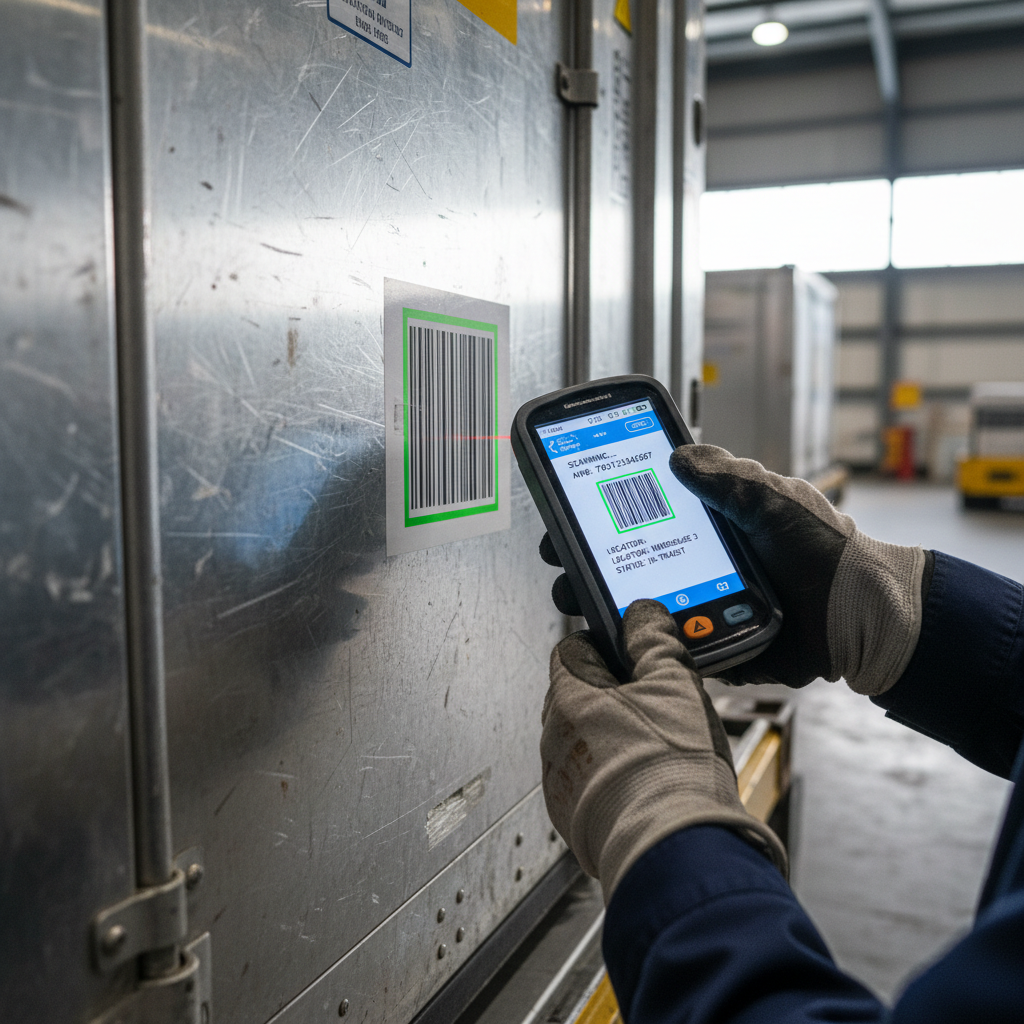
The Ground Handler Black Hole
Every SERP result on air cargo visibility talks about carrier connections, predictive ETAs, and IoT trackers. Almost none talk about the 4 to 18 hours where cargo goes completely dark: the ground handler segment.
Here is the sequence. Your freight arrives at the origin airport on a truck. A ground handling agent takes custody. The cargo sits in a warehouse, gets screened, gets built onto a ULD (Unit Load Device), gets moved to the ramp, gets loaded onto the aircraft. At destination, reverse the entire process. At each step, the data chain can (and does) break.
Why? Because ground handlers operate on their own systems. They are neither the airline nor the forwarder. Their milestone updates, if they send any, arrive late or in non-standard formats. The airline’s “received” status fires when they scan the AWB at acceptance. The next meaningful update might not appear until “departed.” Everything in between is a black box.
This is where demurrage charges accumulate. This is where temperature excursions happen for pharma cargo sitting on a tarmac in 35°C heat. This is where the 25% vaccine degradation rate that IATA estimates actually materializes.
The only way to close this gap today: hardware. A tracker physically inside the shipment does not care whose system it is passing through. It reports location and condition regardless of which handler, which warehouse, which ramp crew is involved.
Five Reasons Most Shippers Only Think They Have Visibility
That 71%-to-6% gap is not random. It follows a pattern. Here are the five most common failure modes I see across our client base and the broader market:
1. Carrier status messages are not real-time data
An airline sends a “freight on board” (FOB) message after the aircraft door closes. That message hits the forwarder’s system minutes to hours later. By the time it reaches the shipper’s dashboard, the plane might already be halfway to destination. You are watching yesterday’s weather forecast.
2. AWB-level polling leaves gaps between milestones
Standard carrier tracking gives you 5 to 8 status milestones per shipment: booked, received, departed, arrived, delivered. A transcontinental air freight journey has dozens of meaningful events between those milestones. If your “visibility” is polling an AWB number every few hours, you are seeing a slideshow, not a film.
3. Forwarder data and airline data conflict
Your forwarder says the shipment departed Tuesday at 14:00. The airline says it departed at 16:30. Which is right? Usually neither, exactly. The forwarder logged the scheduled departure. The airline logged the actual wheels-up. Nobody reconciled the two. Now your ETA calculation downstream is off by hours, compounding at each leg.
4. “Visibility” without condition monitoring is half-blind
Knowing WHERE your pharma shipment is means nothing if you do not know the temperature inside the packaging has drifted from 5°C to 14°C during a two-hour tarmac hold. Location visibility without condition visibility is like tracking a patient’s location in a hospital without monitoring their vitals.
5. No predictive layer means no proactive response
Reactive visibility tells you a problem occurred. Predictive visibility tells you a problem is developing. FourKites published a benchmark showing industry-standard air ETAs are available only 40% of the time and average two days off, while their AI-driven Dynamic ETA achieves 100% availability within 9 hours of actual arrival. The difference between those two numbers is the difference between managing your supply chain and being managed by it.
What Functional Air Cargo Visibility Looks Like
Strip away the marketing language and a production-grade air cargo visibility system has four layers working simultaneously. Organizations seeking to implement these capabilities can explore specialized airfreight visibility tools designed to address each layer:
Multi-source data fusion
The platform ingests carrier feeds, forwarder milestone messages, and IoT telemetry in parallel. When one source fails or lags (and they will), the others compensate. Descartes MacroPoint connects to more than 90 airlines, 1,600 ground carriers, and 900 freight forwarders specifically to build this redundancy. Shippeo aggregates 200+ airline connections with 25+ forwarder integrations for the same reason. Redundancy is not a feature. It is the architecture.
Predictive ETA engines
Machine learning models trained on historical flight performance, weather patterns, airport congestion data, and carrier-specific delay signatures generate dynamic arrival predictions that update continuously. This is not “estimated delivery: Thursday.” This is “current probability of arrival between 14:00 and 17:00 UTC at 92% confidence, revised 8 minutes ago.”
Condition monitoring hardware
For temperature-sensitive, high-value, or regulatory-controlled cargo, software alone cannot close the gap. You need a physical device reporting GPS, temperature (down to -200°C for cryogenic applications), humidity, light exposure, and shock. Modern air-freight-approved trackers use GPS, 5G cellular, and WiFi triangulation to maintain the chain of custody even during flight when traditional cellular is unavailable.
ONE Record as the shared data layer
IATA’s ONE Record standard replaces fragmented EDI, Cargo IMP, and XML messaging with a JSON-LD data model, API-first connectivity, and federated trust authentication. It creates a single digital record of each shipment that all authorized stakeholders (airline, handler, forwarder, shipper) can access in real time without file exchange. Lufthansa Cargo describes it as foundational to digitalization. Airlines running IBS Software’s iCargo platform are building ONE Record conformance natively. This is the direction the entire industry is heading.
The Economics of Invisible Cargo
Let me translate the visibility gap into operational dollars.
Airport storage and demurrage: Warehousing costs at major international airports can exceed $55,000 in just a few days when cargo is not picked up on time. If your visibility system tells you about the delay after the charges have already accrued, you are paying for information that arrived too late to be useful.
Pharma product loss: IATA estimates 20% of temperature-sensitive products and 25% of all vaccines degrade before reaching their destination. For an industry moving over $1 trillion of products annually by air, that is a staggering write-off. And here is the nuance most people miss: CEIV Pharma certification validates an operator’s quality management and staff training, but it explicitly does not validate the environmental conditions of any specific shipment. Each shipment still needs its own data trail.
Insurance and claims: This is the angle nobody in the SERP covers well. When you file a cargo damage claim, insurers ask for evidence. Continuous temperature and location logs from a certified tracker convert a “he said, she said” dispute into documented fact. Some insurers are beginning to offer reduced premiums for shippers who deploy IoT monitoring consistently, because the data reduces ambiguity on liability and lowers total claims cost.
Customer retention in B2C: E-commerce is growing 14% annually. Amazon Air Cargo operates with eight direct carrier partners. The expectation bar for delivery prediction has permanently moved from “it should arrive this week” to “it will arrive between 2:00 and 4:00 PM Thursday.” If you are a forwarder competing for e-commerce business without predictive ETAs, you are losing clients to those who have them.
Hardware vs. Software: You Probably Need Both
The visibility market segments into two camps: software platforms that aggregate carrier and forwarder data feeds, and hardware vendors that put physical trackers on or in your cargo. The industry conversation often frames this as an either/or choice. It is not.
Software platforms (project44, FourKites, Shippeo, Descartes MacroPoint) excel at breadth. They connect to hundreds of carriers, normalize milestone data, and run predictive models across your entire shipment portfolio. For general cargo on well-instrumented lanes with reliable carrier connections, software-only visibility can reach 80-90% of what you need.
Hardware trackers fill the remaining 10-20%, which (not coincidentally) is where the highest-value and highest-risk cargo lives. Pharma. Aerospace components. Perishables. High-value electronics. Anything where condition monitoring is non-negotiable, or where the lane passes through handlers and airports with weak digital infrastructure.
The key question is certification. Not every tracker is approved for air freight. Lithium battery regulations, DO-160 environmental testing standards, and airline acceptance policies create real barriers to deploying hardware on aircraft. This is why devices like the Thingfox T2 (DO-160 airfreight approved) exist: purpose-built for the constraints of air cargo operations where a generic GPS tracker would be rejected at check-in.
The practical rule: if your cargo is worth more than 50x the cost of a tracker per shipment, or if regulatory compliance requires continuous condition documentation, hardware is not optional. It is the cost of doing business on that lane.
How to Evaluate Your Visibility Stack
Whether you are building a visibility capability from scratch or auditing what you already have, ask these questions:
Carrier network breadth: How many airlines does the platform connect to directly? If your cargo moves on a carrier that is not in the integration list, you are back to manual status checks for that lane. The leading platforms cover 90 to 200+ airlines.
Predictive ETA accuracy: Ask for published benchmarks. Not “we have AI.” What is the availability percentage? What is the accuracy window? If they cannot answer with numbers, their prediction is a marketing feature, not a production capability. The current best-in-class published metric is 100% availability within 9 hours.
ONE Record readiness: Is the platform built for or actively integrating IATA ONE Record APIs? This is the direction the industry standard is moving. A platform without a ONE Record roadmap will become increasingly disconnected from carrier-side data streams over the next 2 to 3 years.
Regional coverage gaps: IATA data shows wild regional variance in air cargo growth: Africa at +18.2% in January 2026, North America at -0.5%. A platform with strong coverage on transatlantic lanes but weak Asian intra-regional or African corridor coverage will leave you blind precisely where growth is fastest.
Hardware compatibility: Can the platform ingest data from third-party IoT trackers? Or does it only work with its own proprietary devices? Open platforms that accept data from any certified hardware give you flexibility as your lane requirements evolve.
Condition monitoring depth: Temperature alone is not enough for many regulated lanes. Does the system support humidity, shock, tilt, light exposure? Can it handle cryogenic ranges (-200°C) for biologics? Does it produce tamper-evident records that satisfy FDA 21 CFR Part 11 or EU GDP requirements?
The Shift Ahead: From Tracking to Prediction
In 2026, logistics visibility is moving beyond basic tracking toward real-time, predictive insights across the entire supply chain. The platforms that win the next procurement cycle will not be the ones with the most carrier connections. They will be the ones whose AI models produce ETAs accurate enough to drive automated downstream decisions: warehouse slot allocation, last-mile carrier dispatch, customs pre-clearance filing.
The IATA January 2026 data showing 5.6% global demand growth with sharp regional divergence (Africa +18.2%, Latin America -2.0%) reinforces a core point: air cargo is not one market. It is dozens of micro-markets with different data quality, different infrastructure maturity, and different visibility requirements. A one-size-fits-all approach leaves gaps.
The real-time transportation visibility platform (RTTVP) market is valued at $9.2 billion and projected to reach $28.6 billion by 2034, growing at 13.4% CAGR. That is more than 2x faster than the underlying air cargo market it serves. The structural message: visibility is no longer a nice-to-have line item. It is becoming infrastructure.
Three Outcomes When You Close the Gap
- Demurrage avoidance: Predictive ETAs let you pre-position pickup resources and trigger customs filings before arrival, cutting dwell time by hours or days. At $55,000+ per multi-day airport storage event, one prevented incident pays for a year of visibility platform fees.
- Product integrity preservation: Continuous condition monitoring with real-time alerts lets you intervene mid-transit (reroute, re-ice, escalate to handler) before a temperature excursion becomes a product loss event. For the pharma vertical alone, reducing that 25% degradation rate by even a few points represents billions in preserved product value industry-wide.
- Customer experience as competitive moat: When your client asks “where is my cargo?” and you answer with a live location, current condition, and a predicted arrival window within hours (not days), you stop competing on price. You compete on confidence. That is a very different conversation.
If your air freight operation still relies on AWB polling and phone calls to ground handlers, the technology to close that gap exists today. The question is whether you close it before or after your competitor does.
We help companies deploy airfreight-certified tracking hardware integrated with their existing visibility platforms. If your cargo goes dark between the truck and the aircraft, talk to our team or explore our asset tracking device catalog to see what is available for your specific lane requirements.

Frequently Asked Questions
What is air cargo visibility?
Air cargo visibility is the real-time ability to track shipment location, condition, and estimated arrival across every segment of an air freight journey. It combines carrier status feeds, forwarder milestone data, and IoT hardware telemetry into a single continuous view, replacing the fragmented status polling that most shippers still rely on.
Why do only 6% of shippers achieve real-time air cargo visibility?
The gap exists because most shippers deploy a single data source (typically carrier AWB polling) without fusing it with forwarder milestones and IoT device streams. Carrier data arrives late, covers only major milestones, and goes dark during ground handling segments. True real-time visibility requires multi-source data fusion and, for sensitive cargo, physical hardware on the shipment.
What is IATA ONE Record and why does it matter for visibility?
ONE Record is IATA’s next-generation data standard that replaces legacy EDI, Cargo IMP, and XML messaging with a JSON-LD API-based model. It creates a single digital shipment record accessible to all authorized stakeholders in real time. It matters because it eliminates the data-format incompatibilities that cause visibility gaps at handoffs between airlines, handlers, and forwarders.
Do I need hardware trackers for air cargo visibility?
For general cargo on well-instrumented lanes with reliable carrier connections, software-only platforms can provide adequate visibility. For temperature-sensitive, high-value, or regulatory-controlled cargo (pharma, biologics, aerospace components, perishables), hardware trackers are necessary because they provide continuous condition monitoring and location data independent of carrier system reliability.
How much does poor air cargo visibility cost?
Direct costs include airport demurrage exceeding $55,000 in days, product degradation (IATA estimates 25% of vaccines are damaged in transit), insurance claim disputes without documented evidence, and customer churn. Indirect costs include excess safety stock, expedited re-shipments, and staff time spent on manual tracking calls.
What should I look for in an air cargo visibility platform?
Evaluate five dimensions: carrier network breadth (90 to 200+ airline connections), predictive ETA accuracy (ask for published benchmarks), ONE Record API readiness, regional coverage across your specific trade lanes, and compatibility with third-party IoT hardware for lanes requiring condition monitoring.







 +1 508 292 2210

3 Responses