

The world crossed 18.5 billion active IoT devices in 2024, a 12% jump in a single year. That base keeps expanding. Sensors sit on patients, inside server racks, bolted to shipping containers, strapped to ground support equipment on airport tarmacs.
And still, operations leaders keep asking the same question: where is the thing I need, and what shape is it in?
The problem is rarely the hardware. It is what happens between the signal and the decision. Remote monitoring solutions only deliver value when data reaches someone (or something) that can act on it, fast enough to matter. Miss that link and you have not invested in monitoring. You have invested in storage.
This guide covers what remote monitoring solutions actually involve across industrial, logistics, fleet, environmental, and aviation operations. Practical architecture, real numbers, and the evaluation questions most vendors hope you skip.
What Remote Monitoring Solutions Actually Do
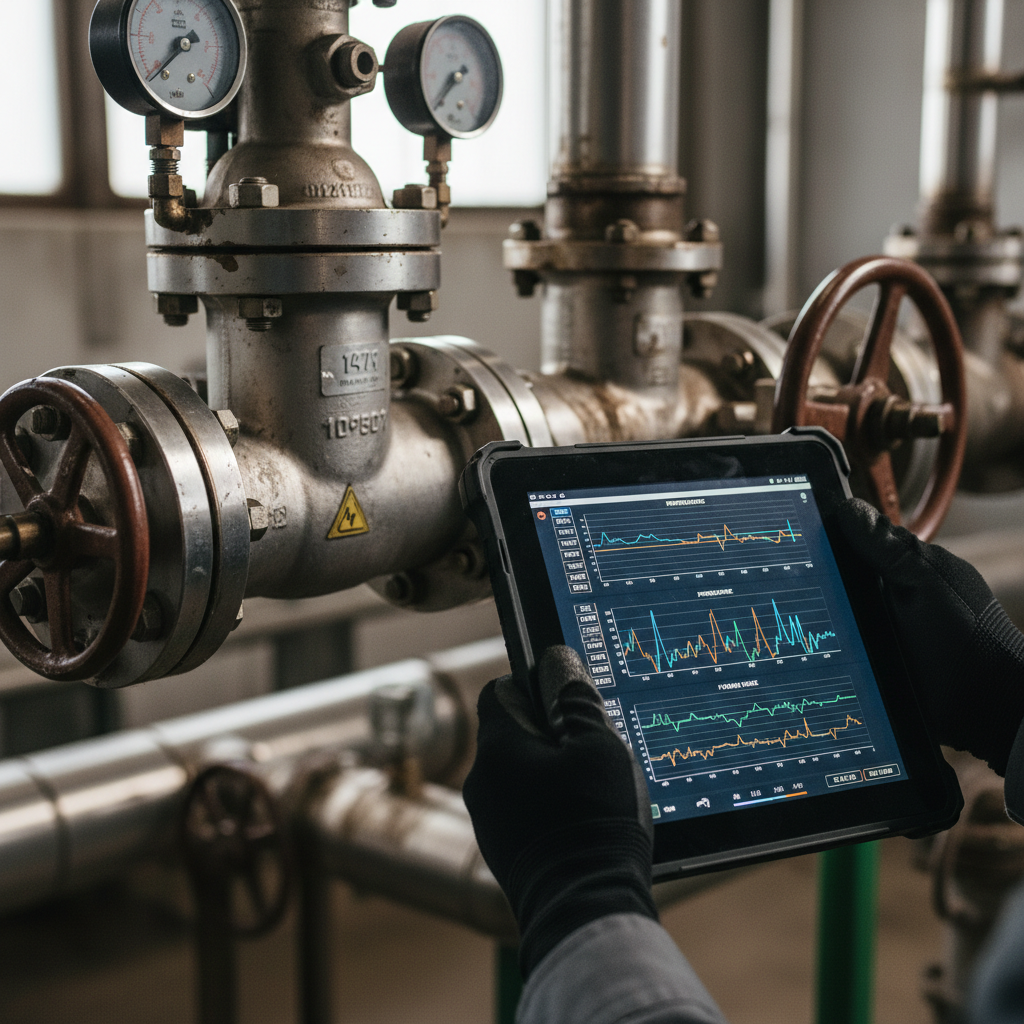
A remote monitoring solution is any system that combines sensors, connectivity, analytics, and response workflows to observe and manage an asset, environment, or process from a distance. The label covers everything from clinical patient monitors to industrial vibration sensors to IT endpoint agents. The underlying architecture, however, follows the same six layers regardless of vertical:
- A physical variable worth watching: position, temperature, vibration, humidity, device health, motion.
- A sensor that captures it.
- Local or edge processing that validates, timestamps, or compresses the reading.
- A communication path (cellular, satellite, Wi-Fi, BLE, LPWAN) that moves data from asset to platform.
- A data platform that stores, visualizes, and applies logic.
- An operational response: a person or automated process that acts on exceptions.
That structure works whether you are monitoring a cardiac patient, a CNC machine, or a ULD container on a tarmac in Dubai. The variables change. The physics of value creation does not.
The mistake I see most often: organizations buy layers one through five and assume layer six will take care of itself. It will not. A dashboard nobody checks is the same as no dashboard at all.
Five Markets Under One Label
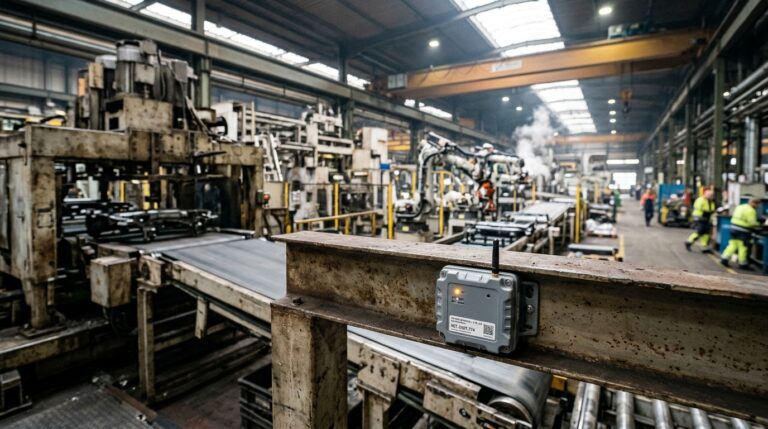
“Remote monitoring solutions” means different things to different buyers. A hospital administrator, an IT managed service provider, a fleet operator, a facilities manager, and an MRO director will all type the same phrase into a search bar. They are not looking for the same product.
| Market | What’s monitored | Who responds | Cost of a missed signal |
|---|---|---|---|
| Clinical RPM | Blood pressure, weight, glucose, heart rhythm | Clinician or care team | Clinical deterioration, avoidable readmission |
| IT RMM | Endpoints, patch status, logs, alerts | MSP or IT administrator | Outage, security breach, SLA penalty |
| Industrial / MRO | Vibration, temperature, pressure, run hours | Maintenance engineer | Unplanned downtime, safety incident |
| Fleet and logistics | Vehicle position, container location, dwell time, cargo condition | Dispatcher, fleet manager, port operator | Lost assets, excess cycle time, late delivery |
| Environmental | Temperature, humidity, light, air quality, water chemistry | Facilities or conservation team | Spoilage, compliance failure, asset damage |
The numbers reflect the breadth. The remote patient monitoring device market is projected to grow from USD 22 billion in 2024 to over USD 110 billion by 2033. Machine condition monitoring reached USD 3.1 billion in 2024 with an 8.3% CAGR. Fleet management systems in North America alone are expected to nearly double, from 19.2 million installed units to 33 million by 2029. Environmental monitoring is a USD 14.4 billion market growing at 5.7% annually.
Large numbers, all of them. But the figure that matters most is not total addressable market. It is the cost of whatever your organization fails to detect.
If you manage clinical RPM programs, CMS remote patient monitoring guidelines are the right starting point. The VA’s home telehealth program reported 41% fewer hospital admissions and 70% fewer bed-days for enrolled patients, and a 2024 systematic review of 30 studies found digital sensor alerts associated with 9.6% lower hospitalization and 3% lower mortality (though economic outcomes remained mixed). Strong clinical evidence, different operational world.
The rest of this article focuses on where physical asset visibility drives the return: industrial operations, fleet and logistics, and environmental monitoring.
Shipment Tracking Ends at Delivery. Asset Tracking Doesn’t.
This is the distinction I explain most often to logistics and aviation operators evaluating remote monitoring for the first time.
Shipment tracking follows a package from origin to destination. Once it arrives, the tracking job is done. The device goes back in a drawer (or gets tossed). For one-way shipments of finished goods, that works fine.
Asset tracking solves a different problem. It follows the asset through its entire lifecycle: deployment, transit, delivery, dwell, return, maintenance, redeployment. The value is not in confirming arrival. It is in knowing where the asset sits right now, how long it has been there, and when it will be available for the next cycle. If you are starting from scratch, our guide on how to create an asset tracking system walks through the practical steps.
For anyone managing a reusable container pool, a fleet of ULD pallets, ground support equipment, or MRO tooling, this distinction is operational. Shipment tracking tells you what happened. Asset tracking tells you what to do next.
Cycle time is the metric that exposes the gap. If a container’s average cycle is 45 days but your tracking data only covers the 3 days in transit, you are blind to the other 42. That blindness is where containers pile up at locations you do not control, unnecessary replacement orders get placed, and capital sits idle with no one noticing. When it comes time to locate lost assets, that gap is exactly what leaves teams scrambling.
If your container pool goes dark after delivery, that is the gap asset tracking closes. And it is the gap where most of the operational dollars hide.
The Signal Chain: From Sensor to Operational Decision
The technology choices in a remote monitoring deployment come down to five practical decisions. None of them requires a PhD. All of them require clarity about what you are actually trying to prevent.
What to sense
Position (GNSS) for asset location and dwell analysis. Temperature and humidity for cold chain and environmental compliance. Vibration and shock for equipment condition. Motion and tilt for utilization tracking and tamper detection. Understanding how a tracking device works helps you match the sensor to the failure mode you need to catch, not to the most impressive spec sheet on offer.
How to connect
LTE-M and NB-IoT deliver wide-area cellular coverage with multi-year battery life. Satellite connectivity (LEO constellations) covers ocean transit and remote locations where no cell tower exists. BLE and LPWAN work for high-density, localized deployments: warehouses, yards, terminals. Wi-Fi applies where infrastructure is already in place. The right answer depends on where the asset goes, not where the office sits.
How often to sample
This matters more than most buyers realize. A museum installed five environmental sensors sampling every 15 minutes and discovered humidity swings that daily manual checks had missed for years. That discovery led to a USD 30,000 HVAC upgrade. The sensors did not fix the building. They made visible a problem that had been invisible at a lower sampling rate.
The lesson applies everywhere. A container drifting into a 12-day dwell does not need per-second updates. A four-hour position ping is enough to flag the problem. A temperature excursion in a pharma shipment, however, can cross a threshold in minutes. Different assets, different intervals, different battery trade-offs.
Where to process
Edge processing reduces bandwidth, cuts latency, and keeps essential logic running when connectivity drops. Microsoft’s Azure IoT Operations illustrates the direction: edge MQTT brokering, OPC UA connectors, and data routing running locally on Kubernetes before anything reaches the cloud. For simpler deployments (a fleet of trackers reporting position every few hours), cloud-only processing is sufficient and cheaper to maintain.
Who owns the response
Layer six. The one most implementations under-design. A remote signal without a defined owner is a remote observation, not remote monitoring. The platform should route each exception type to a specific role or automated workflow: a dispatcher, a maintenance planner, a port coordinator, an MRO scheduler. If the alert goes to a shared inbox, it goes to nobody.
Security Is a Deployment Requirement, Not a Feature
Connected devices expand operational capability and attack surface in equal measure. The FDA states it explicitly for medical devices: cybersecurity incidents can compromise device safety and effectiveness. NIST’s IoT cybersecurity program applies a risk-based framework to all connected devices, rejecting a one-size-fits-all checklist in favor of controls scaled to consequence.
For industrial and logistics monitoring, the threat model is different from clinical settings but no less consequential. A compromised tracker can report false positions, mask asset theft, or become a network entry point. A tampered environmental sensor can invalidate an entire compliance record, which is why robust IoT monitoring solutions treat security as a foundation rather than an add-on.
When evaluating remote monitoring hardware and platforms, require at minimum: encrypted data in transit and at rest, authenticated device identity, secure firmware update capability, documented vulnerability response procedures, and an explicit end-of-life support policy. If a vendor cannot explain their patching process in plain language, that tells you everything you need to know.
How to Evaluate Remote Monitoring Solutions Without Getting Buried in Specs
Vendor comparisons tend to spotlight feature counts, sensor ranges, and dashboard screenshots. These have their place, but they are not where deployments succeed or fail. Six questions cut through the noise:
-
What is the consequence of a missed detection? A misplaced ULD pallet costs differently than a missed temperature excursion in a pharma cold chain. The consequence determines how much redundancy, connectivity speed, and response automation you actually need.
-
What response time does the operation require? If you need to act within minutes, you need real-time connectivity and automated alerting. If a daily summary is enough, a logger with periodic upload may be all you need. Over-buying urgency wastes battery and budget.
-
Who owns the response? Map each alert type to a specific role or automated action before deployment, not after. A monitoring system without escalation paths is an expensive archive.
-
Does the solution survive organizational boundaries? Assets cross carriers, depots, airports, ports, and third-party facilities. A system that only works inside your own network is a shipment tracker disguised as an asset tracker.
-
What is the three-year total cost of ownership? Hardware cost is visible. Connectivity fees, platform subscriptions, battery replacements, device management labor, and integration work are where the real spend accumulates. For fleet programs specifically, understanding how much fleet tracking costs upfront helps. Get a full TCO model, not a per-unit price.
-
Can you get your data out? API access, data export, and interoperability with existing systems (CMMS, ERP, TMS, WMS) are non-negotiable. If your operational history lives inside a vendor’s walled garden, your switching cost is not a cancellation fee. It is years of baseline data you cannot take with you.
Making It Operational
After 15 years deploying remote monitoring across aviation, logistics, and industrial operations, the pattern that works is not complex. It does require discipline—particularly when integrating asset audit automation to close the loop between continuous monitoring and periodic verification.
Start constrained. Pick one asset type, one location, one failure mode. Instrument it. Measure the baseline. Run for 90 days. If the data changes a decision (not just confirms a suspicion), scale. If it does not, redefine the failure mode before adding more hardware.
For aviation ground support equipment and ULD tracking, DO-160 certified trackers like the Thingfox T2 remove the regulatory barrier that stalls most IoT projects at the tarmac edge. For container pools and ocean logistics equipment, cellular trackers with multi-year battery life close the visibility gap between delivery and asset return. For other mobile industrial assets, purpose-built asset trackers provide the position and utilization data fleet managers need—understanding how fleet tracking works beyond simple dots on a map helps turn that data into decisions, and knowing how to track my fleet end to end is where real ROI begins. And for cold chain and environmental compliance, dedicated environmental sensors deliver the sampling frequency and audit trail that regulators expect.
The hardware is the straightforward part. The harder part is the operating model around it: who reviews the data, what thresholds trigger action, how exceptions escalate, and how the system improves over time.
If your assets go dark after delivery, or your equipment disappears between shifts, that is the visibility gap worth closing first. Talk to our team and we can walk through what the first 90 days look like: info@datanetiot.com.

Frequently Asked Questions
What are remote monitoring solutions?
Systems that combine sensors, connectivity, analytics, and response workflows to observe and manage assets, environments, or processes from a distance. They span clinical patient monitoring, IT endpoint management, industrial equipment, fleet logistics, and environmental sensing. The value comes from the closed loop between data and accountable action, not from the sensor alone.
What is the difference between shipment tracking and asset tracking?
Shipment tracking follows a package from origin to destination and stops. Asset tracking follows the asset through its full lifecycle: transit, delivery, dwell, return, maintenance, and redeployment. For reusable containers, ULDs, or equipment pools, asset tracking reveals the majority of cycle time that shipment tracking never sees.
Does remote monitoring always need to be real-time?
No. Sampling frequency should match the speed of the failure you need to detect. A container pool may only need position updates every few hours. A pharma cold chain shipment may need temperature readings every few minutes. Higher frequency means higher power draw and cost. Match the interval to the consequence of delay.
How do I calculate ROI for a remote monitoring deployment?
Quantify the cost of the problem: lost assets, excess cycle time, unplanned downtime, spoilage, or compliance penalties. Subtract the three-year total cost of ownership including hardware, connectivity, platform fees, labor, and integration. The strongest business cases target one specific, measurable failure mode rather than general “visibility.”
What connectivity technology works best for asset tracking?
It depends on the asset’s movement pattern. LTE-M and NB-IoT offer wide cellular coverage with multi-year battery life. Satellite covers ocean crossings and remote areas. BLE and LPWAN suit high-density environments like warehouses and port yards. Most real-world programs combine two or more connectivity types.
What security requirements should I set for IoT monitoring devices?
At minimum: encrypted data in transit and at rest, authenticated device identity, secure firmware updates, documented vulnerability response, and an explicit end-of-life support policy. NIST recommends a risk-based approach scaled to the consequence of a breach rather than a universal checklist.







 +1 508 292 2210

4 Responses