

Somewhere between “my suitcase disappeared at JFK” and “we lost visibility on 40 containers between Rotterdam and Houston,” the same question lands: where can I buy a tracking device?
The real answer is less about the store and more about what you’re tracking. A $29 Bluetooth tag from apple.com solves one problem. A DO-160-certified GPS tracker installed on an air freight container solves a completely different one. And the gap between those two purchases is where most buyers waste money, or worse, buy a device that goes silent exactly when it matters.
Here’s the complete map: every channel, every technology, every cost model, so you buy the right device on the first try.
Five Channels, Matched to What You’re Tracking
Forget alphabetical retailer lists. Find your use case first, then follow it to the right channel.
| Use case | Technology | Where to buy | Typical cost |
|---|---|---|---|
| Keys, wallets, luggage | Bluetooth/UWB tag | apple.com, samsung.com, life360.com, Best Buy, Walmart, Amazon | $29 to $35 per tag, no subscription |
| Personal vehicle (theft, teen driving) | Cellular GPS (OBD-II or battery) | spytec.com, bouncie.com, tracki.com, Best Buy, Walmart | $0 to $29 hardware + $8 to $15/mo |
| Pets | Cellular GPS wearable | tractive.com, Amazon, Best Buy | ~$50 hardware + from $9/mo |
| Backcountry, off-grid | Satellite messenger | garmin.com, REI, Best Buy | $249.99 + satellite plan |
| Fleets, containers, aviation, industrial assets | Industrial GNSS (cellular, satellite, or hybrid) | Direct from IoT integrators and OEM partners | Project-based (hardware + platform) |
If your tracking device is going inside a checked bag or clipped to a dog collar, the consumer channels above will serve you well. If it’s going onto a ULD, inside a reefer container, or bolted to ground support equipment across six airports, keep reading. The buying process for that class of device is fundamentally different.
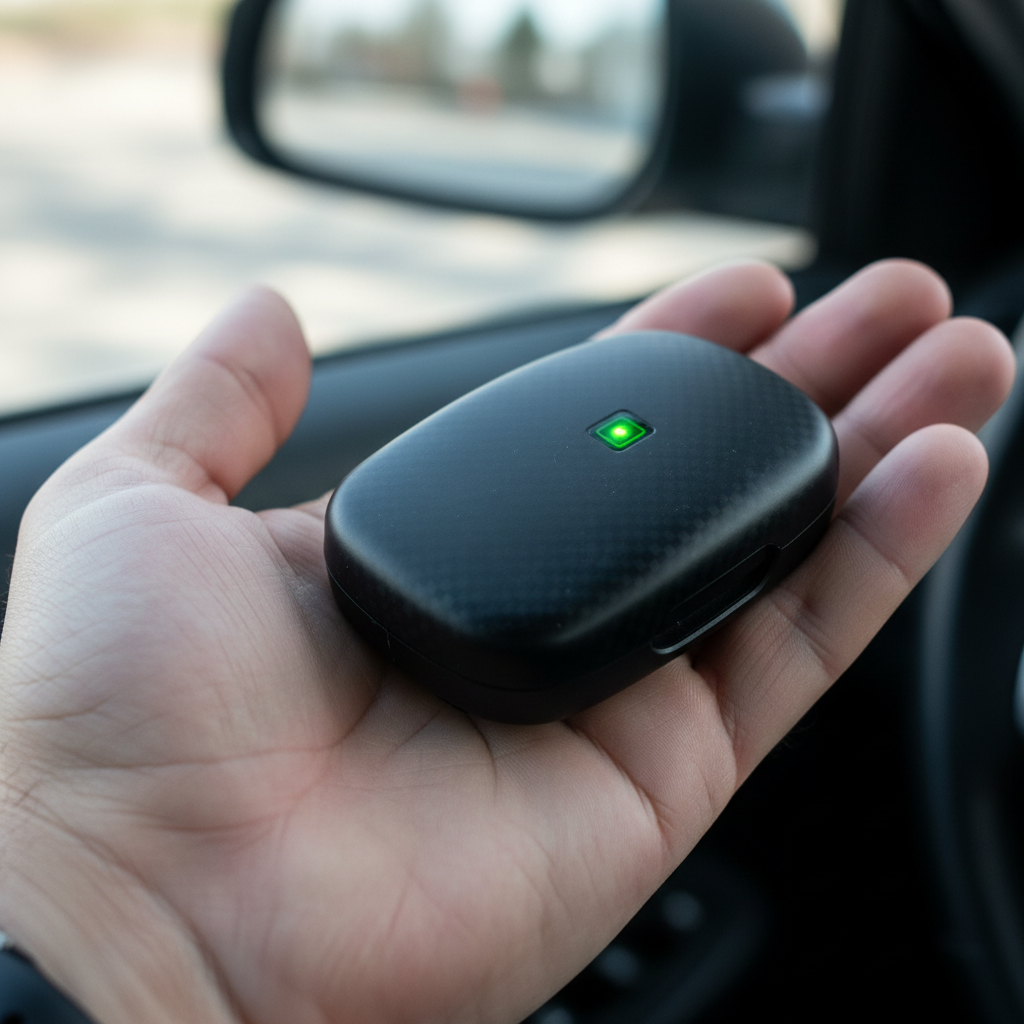
Bluetooth, Cellular GPS, or Satellite: Pick the Radio First
The single most costly mistake I see buyers make is choosing the wrong technology. Not the wrong brand. The wrong radio. Three categories cover roughly 95% of the tracking market, and each has a hard boundary where it stops working.
Bluetooth/UWB tags (AirTag, SmartTag2, Tile)
These devices don’t contain GPS receivers. They broadcast a short-range Bluetooth signal, and nearby smartphones relay that signal to a cloud network. Apple’s Find My runs on over 1 billion Apple devices. Google’s Find Hub (rebranded from Find My Device in May 2025) spans another billion-plus Android phones. Samsung SmartThings Find hit 300 million find nodes by May 2023.
In cities, airports, and offices (anywhere near people carrying phones), Bluetooth tags work remarkably well. In an empty warehouse yard at 2 AM? They go dark. No nearby phone, no location update. Accuracy ranges from 1 to 10 meters for BLE and narrows to 10 to 30 centimeters with UWB at close range.
No monthly subscription. Battery lasts over a year on a replaceable CR2032. Price: $29 for an AirTag, $29.99 for a SmartTag2.
Cellular GPS trackers (Spytec, Bouncie, Tracki, Geotab)
These carry actual GPS receivers that compute position from satellites, then transmit that position to you over a 4G LTE cellular modem. They work anywhere with cell coverage, whether or not other smartphones are nearby.
Every cellular GPS tracker on the market requires a monthly data subscription. No exceptions worth mentioning. Spytec’s OBD tracker runs $8.95/month on an annual plan with free hardware. Tracki Pro is $28.99 for hardware plus plans from $9.95/month. Bouncie offers $0 hardware if you buy three or more devices.
Outdoor accuracy: about 5 meters. Underground garages, cargo holds, or dense urban canyons: degraded or absent, unless the device also uses Wi-Fi positioning as a fallback.
Satellite messengers (Garmin inReach)
For locations with zero cell towers. The Garmin inReach Mini 2 at $249.99 communicates two-way over the global Iridium satellite network, including SOS alerts and tracking pings anywhere on Earth. Battery life reaches up to 14 days at 10-minute tracking intervals.
It’s the standard for backcountry expeditions and remote maritime safety. It is not designed for tracking a pallet of engine parts across a supply chain.
Consumer Devices: What to Buy and Where
This isn’t niche anymore. An estimated 170 million Americans own a GPS-capable tracking device, and 27% plan to buy more. Here are the three consumer categories that drive most of that adoption.
Keys, wallets, and luggage
For iPhone users, the Apple AirTag is the default. Apple released the second-generation AirTag on January 26, 2026, with an expanded finding range and a louder speaker. Price: $29 single, $99 four-pack. Buy from apple.com, Best Buy, Walmart, or Amazon.
For Android users, Google’s Find Hub network supports certified tags from Chipolo and Pebblebee. Samsung Galaxy owners can use the SmartTag2 ($29.99), but it only works within the Galaxy ecosystem. Tile (now owned by Life360) remains the most cross-platform tracker, working with both iOS and Android.
Luggage is a fast-growing use case. In late 2024, Apple partnered with 15 airlines, including Delta and United, to integrate Find My into lost-bag workflows. Drop an AirTag inside your checked bag. It won’t prevent mishandling, but it will show you exactly where the bag sits when the airline can’t.
Vehicles
Three options dominate the U.S. consumer vehicle-tracking market:
- OBD-II plug-in trackers (Bouncie, Spytec Pulse, Geotab GO) connect to your vehicle’s diagnostic port, draw power from the car, and require no wiring. Best for theft alerts, driver behavior monitoring, and teen-driving oversight. The Geotab Next Gen GO includes a supercapacitor that fires a tamper alert the moment someone cuts power.
- Battery-powered magnetic trackers (Tracki Pro, Spytec GL300) can be hidden anywhere on or in a vehicle. Battery lasts weeks to months depending on update frequency.
- Bluetooth tags as a backup: an AirTag tucked inside the glovebox is not a primary vehicle tracker, but it has helped recover stolen cars. On January 6, 2025, an AirTag inside a stolen $230,000 Range Rover led police to Lauderdale Lakes and to an arrest. In west London on June 12, 2025, a couple tracked and reclaimed their stolen Jaguar using an AirTag after police said they were too stretched to help.
Buy vehicle trackers from spytec.com, bouncie.com, or tracki.com. Best Buy and Walmart also stock several models in store.
Pets
A Bluetooth tag loses your dog as soon as she outruns the last iPhone on the block. For real pet tracking, you need cellular GPS. Tractive works in over 175 countries with plans starting at $9/month. Battery life ranges from 5 days (cat tracker) to about a month (XL model). Buy direct from tractive.com or through Amazon and Best Buy.
Industrial and Aviation Tracking: Where the Consumer Playbook Breaks
I’ve spent 15 years in IoT, and the question I hear most from operations teams is some version of: “We bought consumer trackers for our asset pool. Why do they go silent halfway through the cycle?”
Because consumer tracking is shipment tracking. It follows the thing from A to B, confirms delivery, and its job is done. Industrial operations need asset tracking: the device follows the asset through deployment, transit, delivery, dwell time, return, maintenance, and redeployment. Cycle after cycle, year after year.
When a freight forwarder loses visibility on a ULD after it reaches the destination airport, that’s the gap. The shipment was “delivered.” The asset (the container itself) is now invisible. Cycle times balloon, replacement orders pile up, and operational dollars leak in places nobody is measuring.
Three things make consumer channels the wrong fit for industrial tracking:
- Certification requirements. Aviation assets demand hardware that meets DO-160 environmental testing. Ocean containers need salt spray, vibration, and temperature-extreme ratings. A consumer GPS tracker rated for a car dashboard won’t pass intake at an MRO facility, let alone survive inside a cargo hold.
- Integration needs. Enterprise tracking doesn’t end at a dot on a map. It feeds TMS, ERP, and MRO systems. The platform configuration matters as much as the hardware. You need a solution provider who builds both sides.
- Connectivity in dead zones. Shipping containers cross oceans. Aviation ULDs sit in metal cargo holds. Ground equipment moves across terminals with patchy coverage. The device needs store-and-forward capability, multi-constellation GNSS support, and sometimes satellite backhaul.
You won’t find these devices at Best Buy. Industrial tracking hardware comes from specialized OEMs like Digital Matter (Oyster3, Oyster Edge, Remora2, Hawk for rugged asset tracking) or Thingfox (the T2, which carries DO-160 airfreight approval for aviation and air cargo). You buy from an IoT integrator who selects the right hardware, configures the tracking platform, manages connectivity, and delivers a turn-key solution.
If your asset pool includes containers, aviation equipment, or supply chain hardware that moves through multiple legs and comes back, take a look at our asset tracking device catalog. For port and ocean logistics specifically, our ocean equipment tracking line was purpose-built for that environment.
The Ongoing Cost Most Buyers Overlook
The tracking device market has a pricing structure that catches first-time buyers off guard. Hardware is the small number. The monthly plan is where the money lives.
Apple AirTag: $29, no subscription. It’s the exception, not the rule. Apple monetizes the ecosystem (you already bought the iPhone), so the tracking network is free.
Everything with a cellular modem costs monthly. Spytec: $8.95/month on an annual plan. Tracki: from $9.95/month. Tractive: from $9/month. Garmin satellite plans layer on top of the $249.99 hardware. Over two years, a “free hardware” device at $8.95/month costs $214.80 in subscriptions alone.
For enterprise deployments, the model shifts to a per-device platform fee, often bundled with hardware amortization and support. The economics are different (ROI on a tracked container pool repays the platform cost through reduced asset loss and faster cycle times), but the principle holds. Always ask about total cost of ownership over 3 to 5 years, not just the sticker on the device.
One more trap: all major U.S. carriers completed their 3G network shutdowns between 2022 and 2023. If a tracker still advertises “3G” or “2G only” connectivity, it is already obsolete. Buy 4G LTE or LTE-M. Nothing less.
Pre-Purchase Checklist
- Match the radio to the range. Bluetooth for nearby items in populated areas. Cellular GPS for vehicles, pets, and assets within cell coverage. Satellite for anything off-grid. Industrial hybrid for assets that cross all three zones.
- Check the ecosystem lock. AirTag requires an iPhone. SmartTag2 requires Samsung Galaxy. Tile and Find Hub tags work across both platforms. For business, confirm the device supports your region’s LTE bands and your platform’s integration requirements.
- Calculate the 24-month total cost. Hardware plus subscription plus accessories (cases, mounts, magnetic attachments). The cheapest device is not always the cheapest solution.
- Verify 4G LTE or newer. Reject any device still running on 2G or 3G networks.
- Read the privacy policy. Where does your location data go? Who can access it? About one in three GPS device owners already have data-security concerns. For enterprise, ask about data residency and end-to-end encryption.
- Know the legal boundaries. Multiple U.S. states prohibit placing a tracking device on someone else’s vehicle without consent. Apple and Google now ship cross-platform unwanted-tracking alerts. Tracking your own property is legal. Tracking people without consent is not.
If your tracking needs are personal, the links and channels above should point you to the right device within minutes. If your tracking needs span aviation, freight, maritime containers, or MRO supply chains, the conversation starts differently. Reach out to our team or drop a note to info@datanetiot.com. We’ll walk through your asset pool, your cycle, and the right hardware to close the gap.

Frequently Asked Questions
Where is the best place to buy a tracking device?
For Bluetooth tags, apple.com and Best Buy cover most needs. For cellular vehicle trackers, buy direct from spytec.com, bouncie.com, or tracki.com. For industrial and aviation asset tracking, work with an IoT integrator who handles hardware selection, platform configuration, and ongoing support as a single solution. The best channel depends on what you’re tracking and how far it travels.
Do all tracking devices need a monthly subscription?
No. Apple AirTag and Samsung SmartTag2 have zero subscription cost because they use crowd-sourced Bluetooth networks (Find My and SmartThings Find). Every cellular GPS tracker (Spytec, Bouncie, Tracki, Geotab) requires a data plan, typically $8 to $15 per month. Satellite devices like the Garmin inReach require a separate satellite plan on top of hardware cost.
What is the difference between a Bluetooth tracker and a GPS tracker?
A Bluetooth tracker (AirTag, Tile) has no GPS receiver. It relies on nearby smartphones to relay its location, with accuracy of 1 to 10 meters. A GPS tracker computes position directly from satellites and transmits it over a cellular or satellite modem, accurate to about 5 meters outdoors. GPS works in remote areas. Bluetooth only works where compatible phones are nearby.
Can I use an AirTag to track my car?
As a backup, yes. AirTags have helped recover stolen vehicles in documented cases. But an AirTag only updates when a nearby iPhone detects it, and Apple’s anti-stalking system will alert anyone who unknowingly carries one. A dedicated OBD-II tracker with cellular GPS provides continuous real-time location, tamper alerts, and driver behavior data that an AirTag cannot.
Where do I buy tracking devices for industrial or aviation use?
Not from consumer retailers. Industrial trackers require certifications (DO-160 for aviation, IP67 or higher for maritime), multi-year battery life, and integration with enterprise platforms like TMS and ERP. Buy from IoT solution providers who partner with specialized OEMs such as Digital Matter and Thingfox. The process starts with a scoping conversation, not a shopping cart.
Is it legal to put a tracker on someone else’s car?
In most U.S. states, no. State statutes tracked by the NCSL prohibit placing a tracking device on a motor vehicle without the owner’s consent. The FTC has stated that unauthorized tracking may violate Section 5 of the FTC Act. Both iOS and Android now alert users when an unknown tracker is traveling with them. Track your own assets. Do not track people without explicit legal authority.








 +1 508 292 2210

2 Responses