

The average aviation maintenance technician spends 35% of a shift with tools in hand. The other 65% goes to paperwork, parts searches, walking to the aircraft, and waiting. In a global MRO market that crossed $101 billion in 2026, with a technician shortfall projected to triple by 2029, that 65% is not an inconvenience. It is the largest economic leak in commercial aviation.
If you manage maintenance operations for an airline, MRO provider, or ground support organization, you feel this daily. Backlogs grow. Turnaround times slip. Overtime climbs. The instinct is to hire more people into a labor market that physically cannot produce them fast enough.
The real leverage is in the 65%. Here is where that time goes, which technologies compress it, and what the field evidence shows when MROs get this right.
What Aviation Maintenance Productivity Actually Measures
Aviation maintenance productivity is the ratio of maintenance output (aircraft returned to service, dispatch reliability maintained, regulatory compliance sustained) to maintenance input (labor hours, parts cost, hangar time, IT infrastructure). It is not one KPI. It is a system of interlocking metrics that either compound in your favor or work against you.
The ones that matter most:
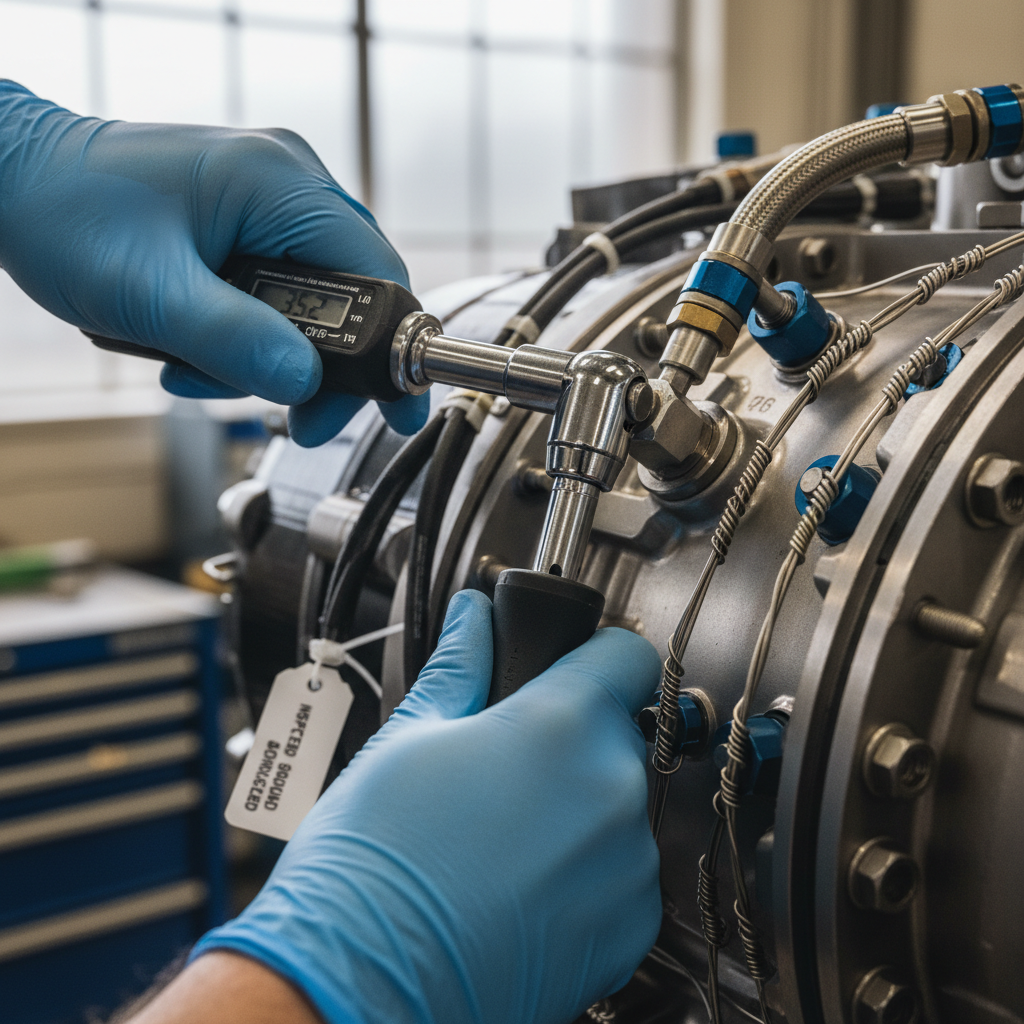
- Wrench time is the percentage of a shift spent physically performing maintenance. The industry average hovers near 35%.
- Turnaround time (TAT) measures how fast an aircraft returns to revenue service. Planned turnarounds at US majors range from 52 minutes (Southwest) to 68 minutes (United).
- Dispatch reliability tracks flights departing without mechanical delay. The IATA narrowbody benchmark sits at 99.0%+.
- MTBUR and MTBF (mean time between unscheduled removals, mean time between failures) gauge component-level reliability.
These metrics do not move independently. When wrench time drops, TAT extends. When TAT extends, dispatch reliability erodes. When dispatch reliability erodes, aircraft-on-ground events multiply. And each AOG hour costs an airline between $10,000 and $150,000 depending on aircraft type and network disruption.
Improving any single KPI in isolation usually just shifts the bottleneck somewhere else. The productivity ceiling is structural, not local.
Where the Other 65% of Every Shift Disappears
When two-thirds of a shift is non-productive, the question is obvious: what are technicians actually doing?
The short answer is logistics. The long answer breaks into four categories that show up in every MRO operation I have visited.
Parts waits eat the largest share. A technician opens a work card, identifies the replacement component, and finds it is not staged at the aircraft. The search begins: warehouse queries, inventory system checks, phone calls to other stations. Material shortages are now the number-one cited industry disruptor, with cost inflation averaging 7.7% over the past year. Parts availability is not just a procurement problem. It is a productivity problem that lands squarely on wrench time.
Documentation and paperwork consume the second largest chunk. Every task requires sign-off. Every sign-off requires accurate records. In many hangars this still means manual logbook entries, printed work cards, and physical compliance binders. A single documentation error can ground an aircraft or trigger a regulatory finding, which makes shortcuts dangerous and slowness expensive.
Tool and equipment searches are the third category. Calibrated tooling, ground support equipment, test rigs. When these are not where they are supposed to be (and in most hangars, they are not), technicians spend time walking and hunting rather than working. This is invisible waste because nobody tracks “time looking for a torque wrench” as a discrete KPI. Reducing tool loss in aviation maintenance directly addresses this productivity drain by establishing real-time location visibility.
The fourth is fatigue. Research on aviation maintenance populations consistently shows more than half of technicians experience measurable fatigue during shifts, with a strong correlation between workload intensity and fatigue levels. Fatigue does not just slow people down. It increases error rates, creates rework, and further erodes the productive hours that remain.
The compounding effect is severe. BCG found that airlines currently complete 10% to 15% less work with the same technician headcount compared to pre-pandemic levels. This is not a temporary dip. It is a structural gap that has persisted for years.
22,000 Technicians Short and Counting
The labor crisis turns every wasted percentage point of wrench time into a six-figure dollar figure.
McKinsey projects a global AMT shortfall of roughly 22,000 by end of 2026, tripling to approximately 60,000 by 2029. That is about 20% below the industry’s needs. In the US alone, the certified mechanic shortfall will reach 19% by 2028. US MRO wages have already climbed more than 20% since 2019, with another 5.7% wage inflation expected in the year ahead.
The math is direct. If you cannot fill 60,000 positions, the only path to meeting demand is extracting more output from the technicians you have. McKinsey’s own data shows the shortfall is reducible to roughly 11,000 if MROs reach top-quartile productivity. That is the difference between a manageable gap and a capacity crisis that grounds aircraft.
And the demand is not slowing. Oliver Wyman puts global MRO demand at $136 billion in 2025, approaching $193 billion by end of decade, while the global fleet expands from roughly 30,000 to 41,000 aircraft by 2036. Engine overhaul alone, which already accounts for 46% of MRO revenue, will add $140 billion in demand over the next ten years.
You cannot hire your way to that number. You have to make the workforce you have dramatically more productive.
Six Levers That Compress Non-Productive Time
The technology to close the 65% gap exists today. McKinsey estimates that digital and AI solutions deliver a 15% to 35% increase in technician productivity in aggregate. The challenge is not availability. It is sequencing the right investments in the right order.
| Lever | What It Targets | Time to Impact | Capital Intensity |
|---|---|---|---|
| Gen-AI documentation tools | Paperwork, work-card completion, logbook entries | Weeks to months | Low |
| Asset tracking and visibility | Parts search, tool location, GSE availability | Weeks to months | Low to medium |
| Drone-assisted inspection | Visual inspection time, scaffolding setup | Months | Medium |
| Predictive analytics platforms | Unplanned maintenance, AOG events, parts pre-staging | 12 to 24 months | Medium to high |
| AR/VR training | New-hire ramp time, skills gap, qualification speed | 12 to 36 months | Medium |
| Full MRO IT platform consolidation | Data silos, duplicate entry, cross-system reconciliation | 12 to 24 months | High |
The fastest win is gen-AI for documentation. A generative AI issue-reporting tool deployed at a global airline produced 60% to 70% time savings on individual documentation tasks. Fleetcraft converts voice notes from mechanics directly into QA-ready records, eliminating the keyboard entirely. In a hangar where noise and gloves make typing impractical, voice-to-text AI is not a convenience. It is a wrench-time multiplier.
Drone-assisted inspection delivers the next-fastest payback. Donecle’s drone-and-image-analysis solution runs 10 times faster than manual visual inspection. HAECO launched drone-assisted trials at its US facilities in April 2025, signaling that drones have moved from conference demos to operational rollout at major independents. The combination of speed and AI-powered defect detection compresses what historically required scaffolding, multiple technicians, and hours of manual work.
Predictive analytics produces the largest headline numbers, but needs a longer runway. Airbus Skywise helped easyJet avoid 35 technical cancellations in August 2022 alone. A 2026 study found that AI-driven predictive maintenance reduces costs by 12% to 18% and cuts unplanned downtime by 15% to 20%. Lufthansa Technik’s AVIATAR, Rolls-Royce’s engine data partnerships with QOCO, and Boeing’s predictive agreements with Korean Air and EVA Air all point to the same conclusion: predictive analytics is no longer experimental. It is operating at fleet scale.
AR/VR training and full IT consolidation (IFS Maintenix, SAP MRO with Pelico, Ramco Aviation) operate on longer timelines but address structural problems. Lufthansa Technik has invested in XR technologies since 2021 to compress qualification timelines; VR simulators let new technicians practice complex procedures safely before touching an aircraft, which matters enormously in a market that cannot afford 18-month ramp-ups.
Asset tracking, the second lever in the table, is the one I want to expand on. It gets the least attention at industry conferences, but it attacks the largest single chunk of non-productive time.
What Measurable Gains Look Like in the Field
Projections are useful. Deployed results are what matter.
Air Transat adopted Lufthansa Technik’s full AVIATAR ecosystem in July 2025, deploying it across all 43 Airbus aircraft. Not a pilot. A fleet-wide commitment to digitized tech ops, including reliability analytics, condition monitoring, and a new Technical Repetitives Examination module. When a mid-size carrier goes all-in on a digital MRO platform, it validates the ROI math for every operator watching.
At MRO Asia-Pacific 2025 in Singapore, Korean Air and Boeing formalized a predictive maintenance partnership designed around operational performance and aircraft reliability. Boeing signed parallel agreements with EVA Air at the same event. The OEM-airline digital integration wave is no longer a pilot phase.
The Pratt & Whitney GTF recall provides the counter-example. When RTX disclosed in July 2023 that 1,200 GTF engines needed inspection, MRO capacity was overwhelmed. By 2024, roughly 637 of 1,334 GTF-powered aircraft sat grounded. By April 2026, the recall had grown to 600 to 700 engines. MRO providers with diversified capabilities and flexible digital workflows absorbed the shock. Those running on manual planning and single-engine-type dependency did not.
The lesson generalizes. Productivity is not about optimizing for steady-state operations. It is about building a system flexible enough to absorb shocks (recalls, supply chain ruptures, seasonal surges) without losing wrench time.
The Visibility Layer Most MROs Still Ignore
Predictive analytics gets the conference keynotes. Gen-AI gets the LinkedIn buzz. But both of them run on a foundation most MROs have not finished building: real-time visibility into where physical assets are.
Consider the sequence. A predictive model flags a hydraulic pump replacement window 14 days out. The planner schedules the work card. The technician arrives on the appointed day. The replacement pump, which should be in bay storage, is not there. Someone pulled it for an AOG event two days ago and it was never logged back into inventory.
Wrench time drops to zero. Fourteen days of predictive lead time, wasted.
This happens with tools, with ground support equipment, with rotable parts, with test rigs. It is a tracking problem, not a prediction problem. And it sits underneath every other technology layer in the table above. Without knowing where assets physically are in real time, predictive maintenance becomes a scheduling exercise that breaks the moment it contacts the real hangar floor.
The fix is not exotic. GPS, cellular, and RFID trackers on high-value and high-turnover assets deliver continuous location data. In aviation environments the hardware needs to meet specific durability and certification standards (DO-160 for airfreight-adjacent equipment, IP67+ for ramp conditions), but the integration pattern is straightforward: tag the asset, ingest the data, surface it to planning and maintenance systems.
When this layer works, three things change. Parts pre-staging becomes reliable because you confirm availability before opening a work card. Tool calibration tracking becomes automatic instead of clipboard-based. GSE utilization goes up because equipment is findable, not functionally lost on a ramp somewhere.
Each of these compresses the non-wrench portion of a shift. And each one makes every upstream investment (predictive analytics, gen-AI, drones) actually deliver its promised return.
This is the work we do at Datanet IoT Solutions. We build and deploy asset tracking systems for aviation environments: DO-160 approved airfreight trackers, industrial-grade GPS and cellular devices for ground support equipment and tooling, and the integration layer that connects asset position data to the operational systems your maintenance teams rely on.
If your digital MRO investments are not delivering the productivity gains you expected, the gap is often underneath them. Talk to our team and we can walk through how the visibility layer fits your operation.
Frequently Asked Questions
What is wrench time in aviation maintenance?
Wrench time is the percentage of a maintenance technician’s shift spent physically performing tasks on the aircraft or component (tools in hand). The industry average is approximately 35%, meaning roughly 65% of shift time goes to logistics, documentation, parts searches, and travel. Improving wrench time is the most direct lever for aviation maintenance productivity.
How large is the global aviation MRO market?
Multiple analyst firms place the 2026 global commercial MRO market between $97 billion and $101 billion. Oliver Wyman’s broader forecast puts 2025 demand at $136 billion, approaching $193 billion by end of decade. Engine overhaul is the largest single segment at approximately 46% of total revenue.
How many aviation maintenance technicians does the industry need?
McKinsey projects a global shortfall of roughly 22,000 AMTs by end of 2026, growing to approximately 60,000 by 2029 (about 20% below demand). US MRO wages have risen more than 20% since 2019. The shortfall drops to roughly 11,000 if MROs achieve top-quartile productivity, which is why efficiency gains, not just hiring volume, are the core solution.
How much does an aircraft-on-ground event cost?
AOG events cost between $10,000 and $150,000 per hour of downtime, depending on aircraft type, network disruption, and downstream rebooking requirements. For narrowbodies generating roughly $4,337 per flight hour in maintenance costs, even brief AOG events compound rapidly across an airline’s schedule.
Can AI measurably improve aviation maintenance productivity?
Yes. McKinsey estimates digital and AI solutions deliver 15% to 35% increases in technician productivity. Gen-AI documentation tools have shown 60% to 70% time savings on individual tasks. Airbus Skywise helped easyJet avoid 35 technical cancellations in a single month. A 2026 SSRN study found AI-driven predictive maintenance reduces costs by 12% to 18% and unplanned downtime by 15% to 20%.
What role does asset tracking play in MRO productivity?
Asset tracking provides real-time visibility into where tools, parts, ground support equipment, and rotable components physically are. Without it, technicians waste shift time searching for misplaced or unaccounted-for assets, directly reducing wrench time. Reliable asset visibility also enables parts pre-staging and automated calibration tracking, both prerequisites for predictive maintenance and digital MRO platforms to deliver their full return on investment.








 +1 508 292 2210