

In December 2023, engineers performing a borescope inspection on a Qantas A380 at LAX left a 1.25-meter nylon turning tool inside the engine’s low-pressure compressor case. The tool went undetected for 34 revenue flights and 294 hours of operation before being discovered on January 1, 2024. Nobody was hurt. The engine held. But the exposure was real, and the root cause wasn’t negligence. It was a gap in visibility.
Reducing tool loss in aviation maintenance is a problem every MRO claims to have handled. Shadow boards are up. Checkout logs exist. FOD walks happen on schedule. And tools still disappear. Most programs can tell you what was checked out this morning. Far fewer can tell you where that tool is sitting right now.
What follows is the cost structure behind lost tools, the root causes most shops overlook, and the practical layers of control that move the loss rate, not just the audit score.
What a Lost Tool Actually Costs
The per-incident number is documented. A US Navy Safety Center figure widely cited in the trades puts a single lost-tool event at $10,000 to $250,000, depending on how long the search runs and whether the aircraft saw service in the meantime. At the USAF’s Warner Robins Air Logistics Center, a single F-100 engine FOD event ran close to $1 million. F-22 Raptor repairs after FOD reached “several million.”
Scale that up: the FAA’s 2023 cost-benefit analysis on FOD detection estimated annual global FOD costs at up to $22.7 billion. Earlier industry estimates ranged from $4 billion to $13 billion, with the gap driven by whether indirect costs (delays, labor, secondary damage) are folded in.
Then there’s the per-minute clock. Ponemon Institute data puts average downtime cost at $9,000 per minute across industries, with aviation routinely exceeding that baseline. Every minute the line is stopped for a tool search is revenue evaporating and downstream schedules compressing.
Those are the losses you see. The Qantas A380 flew for a month before anyone realized a tool was in the engine. The direct damage happened to be zero. The liability exposure for those 34 flights was not.
Why Tools Keep Disappearing Despite Existing Protocols
The default explanation is human error. A tech forgets to return a wrench. Someone gets pulled to another bay mid-task. The end-of-shift count catches it, or it doesn’t.
That explanation isn’t wrong. It’s just incomplete. When you look at where and when tools go missing, patterns emerge that point to system design, not individual carelessness.
Shared hangars and contractor handoffs. In a large MRO facility, multiple teams from different companies may work the same aircraft in the same 24-hour window. Each team brings its own kits. Handoff points between shifts or between contractors are the highest-risk moments for a tool to land in the wrong cart, the wrong bay, or a cowling nobody checks until the next C-check.
Layout friction. When the tool crib is 200 meters from the work stand, technicians improvise. They stage items closer to the aircraft, borrow from adjacent kits, skip the formal checkout step. Each shortcut is rational from the technician’s perspective and invisible to the control system.
Night-shift pressure compounded by workforce shortage. ATEC’s 2025 pipeline report projects a 10% certificated-mechanic shortage in 2025, narrowing to only 7% by 2035. Fewer mechanics means more pressure per person, longer shifts, and less patience for time-consuming manual counts at 3 AM. The conditions that produce tool loss are structural. They don’t respond to more posters on the wall.
Manual systems that fail silently. A shadow board tells you a tool is missing. It doesn’t tell you where it went. A checkout log tells you who took it. It doesn’t tell you where it is now. The failure mode isn’t dramatic. It’s the slow accumulation of items that “should be somewhere,” with nobody able to confirm where.
Senior Master Sgt. Joe German at Warner Robins said it plainly: “The first line of defense against FOD is the mechanic. If the mechanic doesn’t buy into the program, it won’t work.” True. But buy-in is easier to build when the system catches problems fast. A tech who discovers a missing item in 30 seconds will report it. A tech who realizes at the end of an 11-hour night shift that something might be gone, maybe, somewhere? That tech is less likely to stop the line.
Three Levels of Tool Control (Most MROs Stall at Level Two)
Not every MRO needs the same technology stack. But every MRO should know where it sits on the maturity curve, because the gap between levels is where tools vanish.
Level 1: Physical Accountability
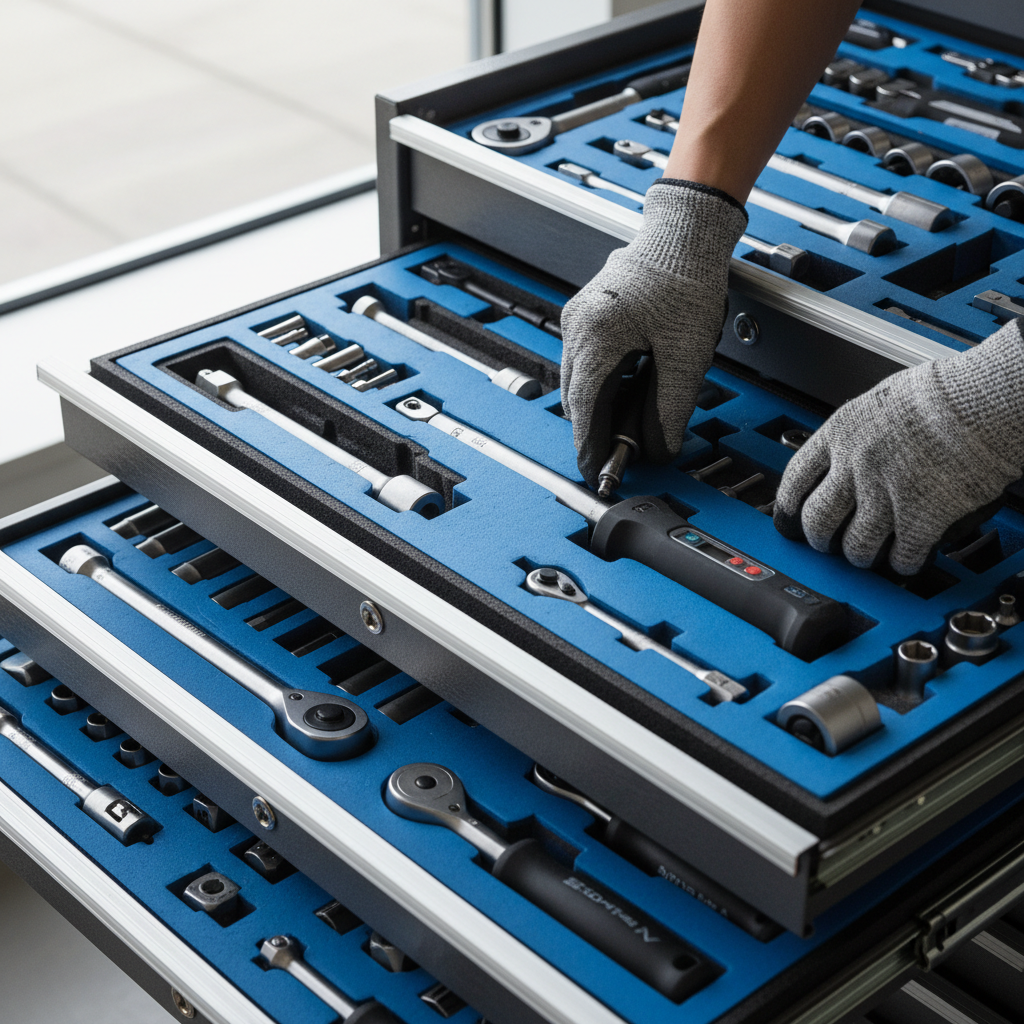
Shadow boards with contrasting foam cutouts. Consolidated Tool Kits (CTKs) with Master Inventory Lists. Manual counts at shift start, shift end, and before aircraft movement. Scheduled FOD walks across the ramp, hangar, and maintenance bays. Employee IDs and tool chits.
This is the regulatory baseline, and it works up to a point. I’ve visited MRO floors where the shadow boards looked immaculate and the actual tool count was off by double digits. The board shows compliance. The count shows reality. Level 1 detects absence. It cannot locate what’s absent.
Level 2: Electronic Check-In / Check-Out
Barcode or RFID scanning at the tool crib. Electronic toolboxes that weigh contents or scan tags on open/close. Software (henchmanTRAK, TC Max, ToolHound) manages the transaction log: who took what, when, and whether it came back.
Level 2 is a real step forward. It digitizes the record, accelerates audits, and creates a defensible trail for regulators. Most MROs that describe themselves as “having RFID tool control” operate here.
The limitation: Level 2 tracks the transaction, not the tool. It knows the torque wrench was checked out at 14:00. It knows it hasn’t returned by 22:00. It does not know whether that wrench is on a work stand in Bay 3, inside a cowling on tail number N-445, or in someone’s personal bag.
Level 3: Continuous Asset Visibility
IoT-enabled tags on individual tools that report location periodically, not only at the crib door. Real-time awareness of where a tool is inside the facility (or whether it left the facility). Automated alerts when a tool enters a restricted zone, hasn’t moved in an abnormal window, or approaches a calibration deadline.
Here’s the distinction that matters. Level 2 is shipment tracking: you know it shipped, you know if it arrived. Level 3 is asset tracking: you know where it is right now, through its entire cycle. Checkout, work stand, bay transfer, return.
The Warner Robins program that cut FOD incidents 61% in one fiscal year didn’t rely on a single technology. It combined physical controls, electronic logging, X-ray verification, monthly working groups, and named incentive programs (Eagle Eye, Golden Bolt awards). That convergence of tools, process, and culture is what Level 3 thinking looks like in practice.
What Regulators Require vs. What Actually Reduces Loss
Regulatory frameworks set the floor. They tell you what you must have. They don’t tell you how well it needs to work.
FAA Part 145: Under 14 CFR 145.109, US-certificated repair stations must ensure all tools used for airworthiness determinations are calibrated against an FAA-acceptable standard. The regulation mandates traceable equipment, current manuals, and a functioning quality system. It does not mandate RFID, real-time tracking, or any specific detection technology. However, modern aviation compliance tracking solutions often exceed minimum requirements to achieve operational excellence.
EASA Part 145: European rules go further on shop-floor practice. Tooling store management must address designated FOD-sensitive areas, organized storage, and Clean-As-You-Go protocols. The requirement is procedural. Implementation depth is the operator’s call.
US Air Force: The most prescriptive framework. Wright-Patterson AFB Instruction 21-201 mandates TCMax-tracked Consolidated Tool Kits, 9-digit worldwide identification codes for every tool, a Master Inventory List for every kit, and a hard 2-hour search escalation limit when something is unaccounted for. Compliance is mandatory, not advisory.
The uncomfortable truth: you can pass a Part 145 audit and still lose tools every month. Compliance proves you have a system. It does not prove the system catches loss before the aircraft pushes back.
The FAA’s own 2023 CBA recognized this. It modeled six scenarios for integrating detection technology into airport operations, and all six returned a net financial benefit, with break-even ranging from 1 to 9 years. The headline scenario: $15.4 million in benefit, Year 3 break-even. When the regulator’s own math shows the regulatory minimum isn’t economically optimal, that tells you where the real ROI sits.
Where Continuous Asset Visibility Changes the Math
Most tool control programs track transactions. The tool was issued. The tool was returned. Between those two events: silence.
That silence is where the $22.7 billion in annual FOD costs accumulates. It’s where a 1.25-meter nylon tool rides undetected for 34 flights. It’s where a $250,000 search begins six hours after the tool could have been flagged automatically.
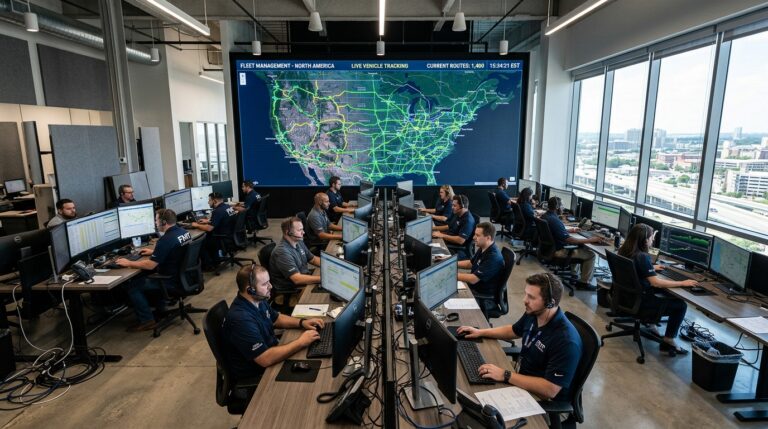
Continuous asset visibility closes that gap by tracking tools through their entire operational cycle. Not just out and back. Through the hangar, across bays, between shifts, contractor to contractor, and back to storage. The technology layer depends on your environment: RFID for proximity awareness within a single building, cellular or BLE-enabled IoT trackers for wider facility coverage, GPS for tools that move between sites or follow aircraft to line stations.
Three outcomes I see consistently when MROs move from transaction logging to continuous visibility:
- Search time collapses from hours to minutes. Querying a tool’s last known position beats walking Bay 1 through Bay 12. The $9,000-per-minute clock stops sooner.
- Contractor accountability becomes data, not argument. In shared hangars with multiple parties, a timestamped location log resolves “who had it last” without the politics.
- Calibration and lifecycle tracking ride the same signal. The tag that tells you where a torque wrench is can also flag that it’s 30 days from recalibration, or 50 meters from where it belongs.
The FAA CBA’s $15.4 million benefit case assumed exactly this kind of integration: detection systems feeding a shared operational picture, not standalone tool cribs generating disconnected logs.
This is what we build at Datanet. Industrial-grade IoT tracking hardware, designed for MRO environments, paired with the integration work that connects device data to your operational systems. If your tool inventory goes dark the moment a technician walks away from the crib, that’s the visibility gap worth closing. See our asset tracking devices, or reach out directly to talk about what deployment looks like for your operation.

Frequently Asked Questions
How much does a single lost tool cost in aviation maintenance?
Estimates range from $10,000 to $250,000 per incident, depending on search duration and whether the aircraft flew with the tool aboard. Engine FOD events at military depots have exceeded $1 million. The multiplier most operators underestimate is downtime, which runs $9,000 per minute or more in aviation.
What is the annual global cost of FOD in aviation?
The FAA’s 2023 cost-benefit analysis estimated up to $22.7 billion per year globally. Earlier figures ranged from $4 billion to $13 billion, with the spread driven by whether indirect costs like delays, labor, and secondary damage are included.
What tool control does FAA Part 145 require?
14 CFR 145.109 requires certificated repair stations to calibrate all test and inspection tools against an FAA-acceptable standard, maintain current manuals, and operate a functioning quality system. It does not mandate specific technology such as RFID or real-time location tracking.
What is the difference between a FOD walk and a tool inventory check?
A FOD walk is a visual sweep of a defined area (runway, ramp, hangar floor) looking for any loose debris. A tool inventory check is a formal count of a specific kit against its Master Inventory List, typically performed at shift changes and before aircraft movement. Both feed into the same tool control program but catch different categories of risk.
Can RFID alone solve tool loss in MRO environments?
RFID at the crib door significantly improves checkout and return accuracy. But most implementations only provide visibility at that single choke point. Continuous visibility (IoT-enabled tags reporting location throughout the facility) is what catches tools between checkout and return, which is where the majority of undetected losses actually occur.
What is the fastest documented FOD reduction from a structured tool control program?
The USAF’s Warner Robins Air Logistics Center reported a 61% drop in one fiscal year: from 44 FOD incidents in FY2005 to 17 in FY2006, with only two chargeable to the center. The program combined X-ray templates, monthly cross-functional working groups, and named incentive programs.







 +1 508 292 2210

5 Responses