

Energy-related CO2 hit nearly 38.4 billion tonnes in 2025, up again despite record renewable deployment. Most guides on how to reduce carbon footprint hand you 35 tips and treat switching to LED bulbs the same as insulating your home. They’re not the same. Not even close.
After 15+ years working in industrial IoT and supply chain operations, I’ve watched companies (and people) pour effort into visible but minor changes while the big emission sources sit untouched. The pattern is always the same: they skipped measurement. This guide ranks the actions that actually move the needle. If you have limited time, money, or patience, start here.
Measure First. Everything Else Comes Second.
You can’t cut what you haven’t counted. This sounds obvious, but most people skip it. They start carrying reusable bags while their heating system burns through three times more carbon than all their packaging combined.
For households, the EPA Carbon Footprint Calculator breaks your emissions into three categories: home energy, transportation, and waste. Run it once. The result usually surprises people. Heating, cooling, and driving dominate. Everything else is noise by comparison.
For businesses, the framework is the GHG Protocol. It separates emissions into three scopes: Scope 1 (direct emissions from your operations), Scope 2 (purchased energy), and Scope 3 (everything else in your value chain). Scope 3 is usually the largest and the hardest to measure, covering suppliers, logistics, product use, and end-of-life. Most companies that claim to have measured their footprint have actually measured only Scope 1 and 2. That’s like tracking the fuel in your fleet but ignoring the factories that built the vehicles.
Measurement doesn’t just tell you where you stand. It changes what you do next. Without a baseline, every action feels equally virtuous. With one, you can rank, prioritize, and deploy capital where it counts.
Buildings and Home Energy: The Largest Lever Most People Overlook
Buildings and construction account for roughly 37% of global emissions, consuming 28% of global energy and nearly half of all extracted materials. This isn’t just office towers and shopping malls. Your house is part of that number. And the building sector’s efficiency improved only 8.5% over the past decade, while building-code updates slowed sharply in 2024, with only three recorded globally compared to over 20 the year before.
The highest-return sequence for a homeowner:
- Insulate and seal the envelope. Before you upgrade any equipment, stop the energy from leaking out. Walls, attic, windows, air gaps. This is the least glamorous step and the most effective one.
- Switch to a heat pump. The IEA estimates heat pumps could cut global CO2 by at least 500 million tonnes by 2030, but only if the installed base nearly triples. A well-sized heat pump in a properly insulated home slashes heating and cooling emissions, especially where the grid is getting cleaner. Sales dipped 3% in 2023 due to high rates and inflation, so incentives and financing matter here.
- Upgrade appliances and lighting. ENERGY STAR products, LED lighting, efficient water heaters. These are meaningful but secondary to the envelope and heating system.
- Buy cleaner electricity. If your utility offers a renewable plan or community solar is available, this shifts the carbon intensity of everything electric in your home.
If you rent, you’re not out of the game. Programmable thermostats, cold-water laundry (which can save around 500 pounds of CO2 per year), LED swaps, removable weatherstripping, and choosing efficient appliances when your landlord replaces old ones all add up. The point isn’t that renters have equal control. It’s that waiting for ownership to start reducing is a missed decade for most people.
Transportation: Cut the Miles Before You Buy the Car
The reduction hierarchy for transport is simple: avoid the trip, shift to a lower-carbon mode, then improve the vehicle. Most carbon guides skip straight to “buy an EV.” That’s fine if you’re buying a car anyway. But the fastest way to cut transport emissions is to drive and fly less. Remote work, consolidated errands, cycling for short trips, public transit where it exists. These cost nothing and take effect immediately.
When you do need a vehicle, size matters more than most people realize. The IEA’s lifecycle analysis, covering both manufacturing and operation, shows that a battery-electric car sold in 2023 emits roughly half as much over its lifetime as a gasoline equivalent. But a smaller EV beats a larger EV on both production and energy consumption. An electric SUV is better than a gas SUV. A smaller electric sedan is better than both.
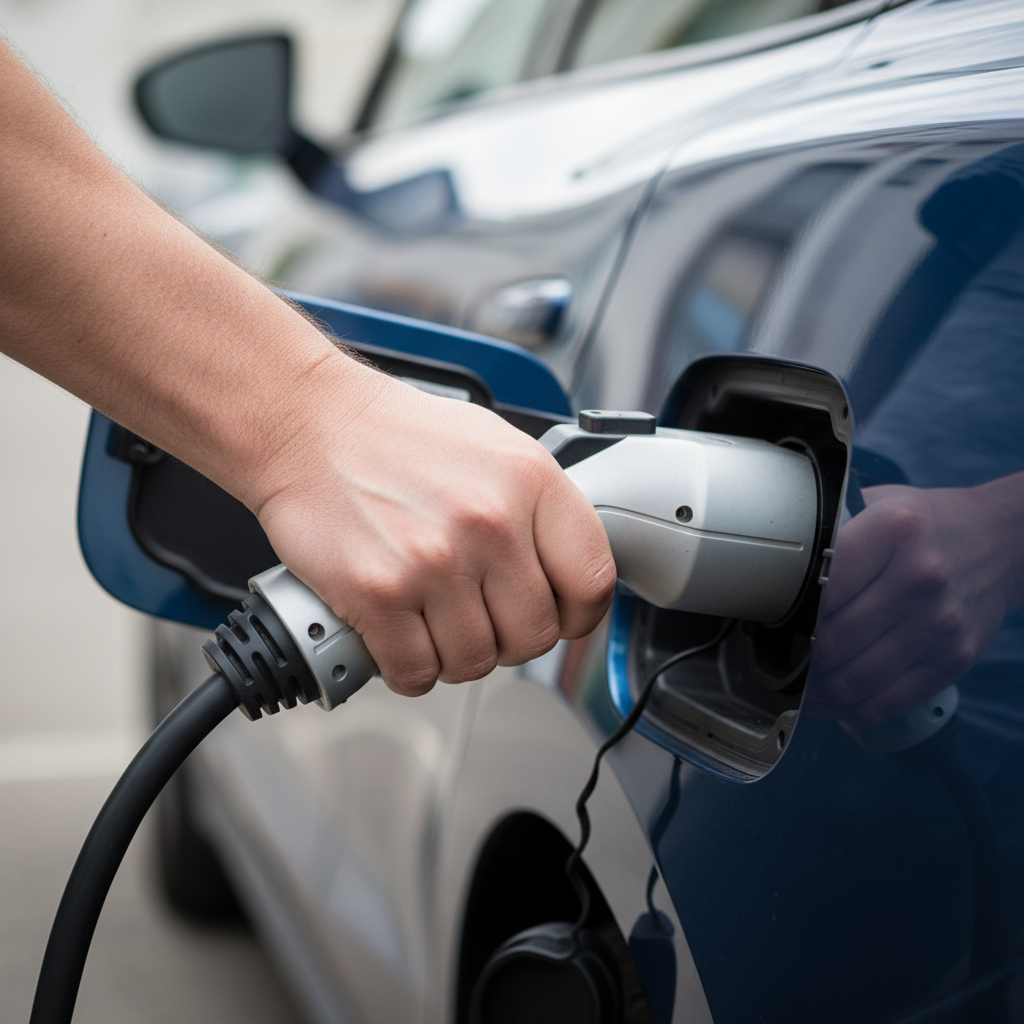
The EV charging infrastructure is catching up: more than 1.3 million public charging points were added globally in 2024, up over 30%. Europe alone surpassed one million public chargers. The practical barriers are real but shrinking.
Then there’s flying. One round-trip domestic flight in the U.S. produces about 2 tonnes of CO2, roughly 10% of the average American’s annual footprint. There’s no “efficient flying” hack that closes that gap. The honest answer: fly less when you can, and make the flights you take count.
Food, Waste, and the Methane Blind Spot
Agrifood systems generated 16.5 billion tonnes of CO2-equivalent in 2023: roughly one-third of all human-caused emissions. Farm-gate activity accounted for 49%, land-use change (mostly deforestation) for 19%, and pre/post-production (packaging, transport, retail, waste) for 32%.
Livestock alone contributed 4.3 billion tonnes. Deforestation added 2.8 billion. These numbers dwarf the impact of whether your tomatoes came in plastic or paper packaging.
Practical food actions, ranked by impact:
- Reduce food waste. Roughly a third of food produced globally never gets eaten. When organic waste hits a landfill, it produces methane, which has about 80 times the warming power of CO2 over 20 years. Meal planning, proper storage, and composting are high-return, low-cost moves.
- Shift protein sources. You don’t have to go fully vegan. Replacing beef with poultry, legumes, or plant-based protein a few meals per week makes a measurable difference. Beef’s carbon intensity runs 5 to 10 times higher than chicken or beans per gram of protein.
- Buy local and seasonal when the math works. Transport is actually a small fraction of most foods’ total emissions. The production method matters more. A locally raised feedlot steer is not lower-carbon than imported lentils.
Here’s the blind spot most guides miss entirely: methane from the energy sector. The IEA reports that energy-related methane emissions may be 80% higher than what countries officially report, and that existing solutions can bring fossil-fuel methane to near zero at little or negative cost. This isn’t a household action item. But it’s exactly why voting, regulation, and corporate accountability belong in any serious carbon-reduction conversation, right alongside your grocery choices.
The Durability Paradox: When “Upgrading” Adds Carbon
Every new product carries embodied carbon: the emissions from extracting raw materials, manufacturing, shipping, and disposing of it. When you replace a working appliance, vehicle, or piece of equipment with a newer, “greener” model, you’re betting that the operational savings will outweigh the production footprint of the new unit.
Sometimes that bet pays off clearly. A new heat pump replacing a 25-year-old oil furnace almost certainly delivers net savings within a few years. But replacing a 5-year-old gas car with a brand-new electric SUV? The math gets tighter. Especially if the car you discard still has useful life that someone else would fill by buying new anyway.
The principle: extend the life of what works. Repair before replacing. And when you do replace, choose the smallest, most efficient option that meets the actual need.
This applies with even more force in business settings, and it’s something I see constantly in our work. Ground support equipment at airports, reusable containers in logistics, tooling in MRO operations: these assets have long useful lives if they’re maintained and tracked. The problem is that companies lose visibility once assets leave a facility. Without tracking, containers pile up at customer sites, equipment gets written off prematurely, and new units get ordered to replace things that still exist somewhere in the system. That’s wasted embodied carbon on top of wasted capital. Every “lost” reusable container that triggers a new purchase carries a double penalty: the resources to make the replacement and the disposal emissions of the original.
Your Digital Footprint Is Growing Faster Than You Think
This one rarely appears in carbon-reduction guides, but it should.
Google reported that data-center energy emissions fell 12% in 2024 while demand increased, backed by efficiency improvements and over 8 GW of new clean-energy contracts. Encouraging. But Microsoft’s 2025 sustainability report told a different story: total emissions rose 23.4% above the 2020 baseline, driven largely by AI and cloud expansion. Energy use jumped 168% over the same comparison period.
The lesson isn’t that one company is responsible and the other isn’t. It’s that efficiency improvements can be overwhelmed by demand growth. And that demand includes your streaming, your cloud storage, your video calls, and increasingly your AI queries.
Individual digital emissions remain small compared to heating or driving. But they’re invisible and accelerating. Awareness matters. Systemic pressure on providers to power infrastructure with clean energy matters more. See also the article: How to Reduce pH in Aquaculture: Fix the Cause First.
Carbon Offsets: Useful Last Step, Terrible First One
The Science Based Targets initiative defines corporate net zero as reducing Scope 1, 2, and 3 emissions to zero or a residual level consistent with 1.5°C, then permanently neutralizing whatever remains. The keyword in that definition is “residual.” Offsets come after deep cuts, not instead of them.
The quality problem is well-documented. A recent empirical study of improved-forest-management carbon credits found no evidence of additional management activity in its samples and estimated that issued credits exceeded actual emission reductions by 1.7 times. The ex-ante projections overstated impact by 3.7 times.
Not all offsets are worthless. But before treating a certificate as equivalent to a tonne of CO2 removed from the atmosphere, ask:
- Was the activity genuinely additional? Would it have happened without the credit revenue?
- Is the carbon stored permanently, or could it be released by fire, logging, or policy reversal?
- Has leakage been measured? Did deforestation simply shift to a neighboring area?
- Are the baselines conservative and independently verified?
The ICVCM Core Carbon Principles provide ten science-based criteria for evaluating credit integrity. If you’re a company purchasing offsets, use them as a minimum filter. If you’re an individual, the honest best practice is simpler: reduce first, offset only what you genuinely cannot eliminate.
Individual Action and System Change Are Not Opposites
There’s a persistent narrative that individual carbon reduction is pointless because “100 companies cause 71% of emissions.” That statistic is real, but misleading. Those companies are mostly fossil fuel producers. Their emissions exist because billions of people and businesses buy their products. Demand and supply are the same system.
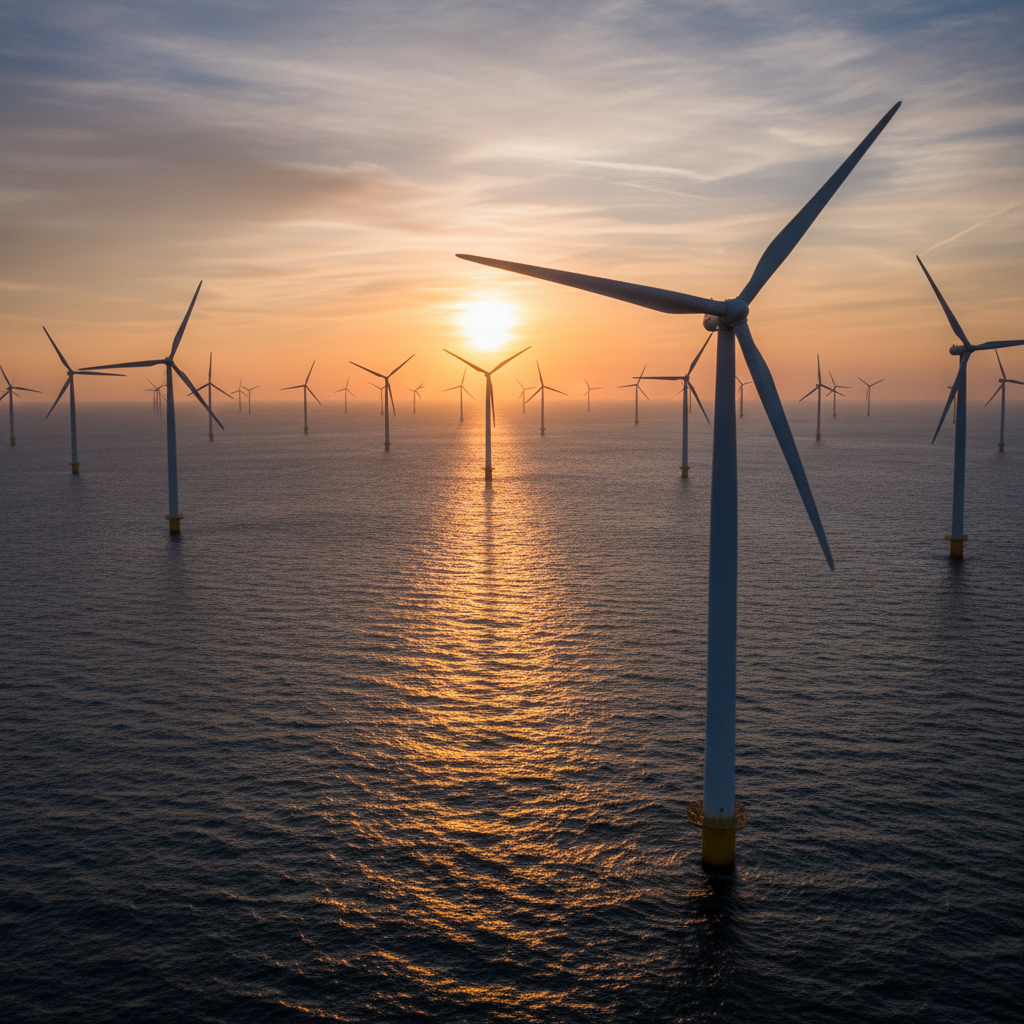
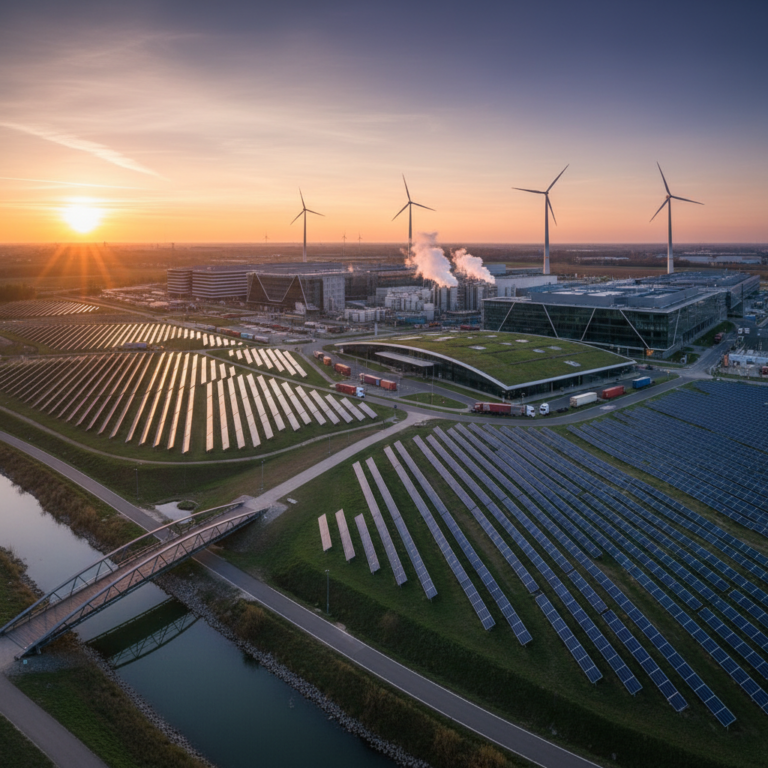
The IPCC makes this explicit: policies, infrastructure, and lifestyle changes together can enable 40 to 70% lower emissions by 2050. Compact cities with good transit make car-free living feasible. Building codes with insulation standards make every home efficient by default. Clean-electricity grids make every heat pump, EV, and electric appliance lower-carbon automatically. Renewables added 692 GW of capacity in 2025, representing 85.6% of all new power installations globally. The grid is changing. Your choices on top of that grid compound the benefit.
Your individual actions matter. They matter more when the system supports them. Which is why advocacy, voting, and applying pressure to companies and institutions belong in any serious carbon-reduction plan, right alongside insulation and meal planning. The UNEP Emissions Gap Report says global emissions need to fall 42% by 2030 and 57% by 2035 from 2019 levels to stay on a 1.5°C pathway. That scale requires both personal commitment and structural change.
What This Means for Businesses
If you manage a fleet, run a warehouse, operate a supply chain, or oversee corporate facilities, the framework scales up but the logic stays the same. Measure, rank, cut the biggest sources first.
A practical starting sequence:
- Build a GHG Protocol inventory that includes Scope 3. Don’t skip it because it’s hard. For most companies, purchased goods, logistics, product use, and capital equipment represent the majority of emissions. Start with estimates and improve data quality each year.
- Set science-based targets. The SBTi framework defines near-term and long-term reduction pathways grounded in climate science. In the cross-sector pathway, long-term emissions are reduced by at least 90% from 2020 levels.
- Fund the highest-return projects first. Building efficiency, fleet electrification, logistics optimization, supplier engagement. The EPA organizes corporate strategies into energy efficiency, renewable energy, supply chain, waste diversion, methane reduction, and transportation.
- Make your assets visible across their full lifecycle. You can’t manage the carbon footprint of equipment you can’t find. Container pools, ground support equipment, reusable transport packaging, MRO tooling: if these disappear from your system after dispatch, you’re ordering replacements (and absorbing their embodied carbon) for assets that still exist somewhere. This is where asset tracking stops being only an operational tool and becomes a sustainability lever.
- Report with honesty. Publish absolute emissions alongside intensity metrics. Disclose your Scope 3 estimation methods. With California requiring Scope 1, 2, and 3 disclosure from companies above $1B in revenue and the EU CSRD expanding mandatory sustainability reporting to roughly 50,000 companies, transparent disclosure is becoming a legal floor, not a differentiator.
The organizations that will lead from here aren’t the ones with the glossiest sustainability reports. They’re the ones connecting emissions data to capital budgets, procurement decisions, and operational controls, then reporting both wins and setbacks. Carbon accounting software is growing fast (one estimate puts the ESG software market at $4.78 billion in 2026, rising to $10.31 billion by 2031), but no dashboard replaces the discipline of cutting actual emissions rather than optimizing a spreadsheet.
If your reusable containers, fleet equipment, or supply-chain assets go invisible once they leave your dock, that gap costs you twice: in replacement spend and in avoidable carbon. Reach out to our team if you want to close it, or explore how environmental monitoring can reduce spoilage-related waste across your operations.
Frequently Asked Questions
What is the single most impactful way to reduce my carbon footprint?
It depends on your baseline, which is why measuring comes first. For most Americans, home heating and cooling plus driving account for the largest share. Insulating your home and cutting car trips typically deliver more reduction than any dietary or shopping change. Use the EPA calculator to find your specific top sources.
Is an electric car always lower-carbon than a gasoline car?
In most markets, yes, over its full lifetime. The IEA estimates a 2023 EV emits about half as much as a gasoline equivalent, including manufacturing and well-to-wheel emissions. The benefit grows as grids decarbonize. A smaller EV on a cleaner grid delivers the largest advantage. Vehicle size still matters.
Do carbon offsets actually work?
Some do. Many don’t. Recent research found systematic over-crediting in forest-management offset projects, with issued credits exceeding measured reductions by 1.7 times. Best practice: reduce your own emissions first, then offset only genuine residuals using credits verified under the ICVCM Core Carbon Principles or equivalent rigor.
What are Scope 1, 2, and 3 emissions?
Scope 1 is direct emissions from sources you own or control. Scope 2 covers emissions from purchased electricity, heat, or steam. Scope 3 covers everything else in your value chain: suppliers, logistics, product use, employee travel, waste. For most companies, Scope 3 is the largest and most difficult category to measure.
Can renters meaningfully reduce their carbon footprint?
Yes. Programmable thermostats, LED lighting, cold-water laundry, removable weatherstripping, and choosing efficient appliances when old ones fail all produce measurable savings. Renters can also influence landlord decisions through feedback and lease discussions. Waiting for homeownership to start acting is a lost decade for most people.
Does my digital activity contribute to carbon emissions?
Yes, though it’s currently smaller than home energy or transportation for most individuals. Data centers powering cloud services, streaming, and AI consume significant electricity. Google cut data-center energy emissions by 12% in 2024 through efficiency and clean procurement, but Microsoft’s total emissions rose 23.4% due to AI-driven demand growth. Pressuring providers to use clean energy matters more than individual screen-time guilt.






 +1 508 292 2210

One Response