

The FAA’s Investigative Technologies Aviation Rulemaking Committee recommended delaying the Timely Recovery of Flight Data (TRFD) mandate to no earlier than December 31, 2036, citing unfinished ICAO technical standards, while the broader aviation asset management market reached $290 billion in 2026 amid accelerating satellite surveillance and airport 5G deployments. (See also: global shipment monitoring with griffin air.) (See also: how griffin air supports logistics operations.) (See also: griffin air airfreight visibility tools.)
FAA ARC Report: TRFD Pushed a Decade Out
The FAA’s Investigative Technologies ARC final report identified a critical bottleneck: the Minimum Aviation System Performance Standards (MASPS) and Minimum Operational Performance Standards (MOPS) from ICAO Working Group 118 Sub-Group 4 will not be published until Q4 2026 at the earliest. Without those standards, manufacturers cannot begin developing compliant TRFD systems.
The ARC recommended harmonizing U.S. rules with EASA and ICAO standards and urged amendments to 49 U.S.C. 44746 to give manufacturers “sufficient time to develop the necessary technical standards to support implementation.” The practical result: airlines and OEMs have a decade-long runway before TRFD hardware must be installed.
Two primary TRFD architectures remain on the table. Transmission of Flight Data (TFD) streams information via satellite during distress events. The alternative, the Automatically Deployable Flight Data Recorder (ADFR), combines cockpit voice, flight data, data link, and image recording with an Emergency Locator Transmitter in a single crash-survivable unit that floats indefinitely on water.
25-Hour CVR Rule Now in Effect
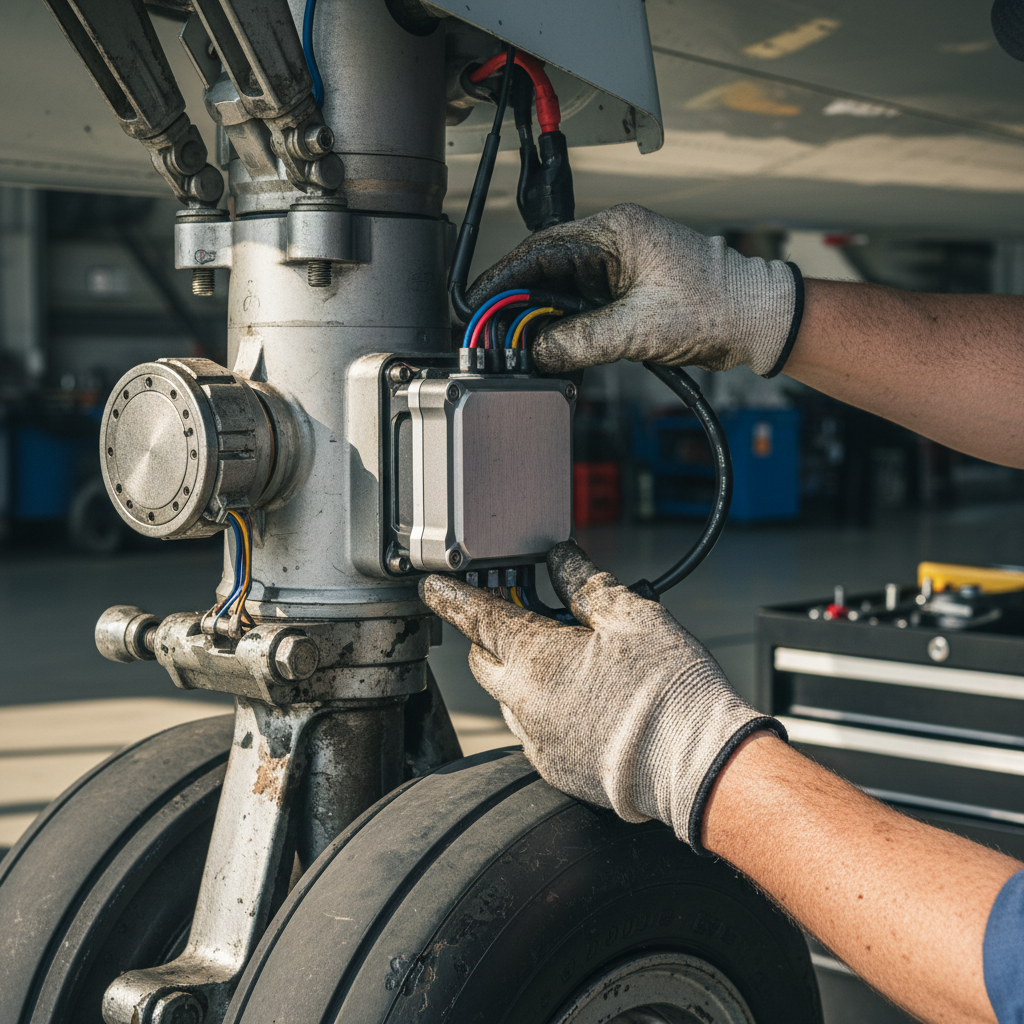
While TRFD timelines extend, the FAA’s 25-hour Cockpit Voice Recorder requirement took effect on May 8, 2026. The rule mandates that all newly manufactured affected aircraft carry recorders meeting TSO-C123c standards, extending capacity from 2 hours to 25 hours.
Honeywell and Curtiss-Wright have responded with the HCR-25 (Honeywell Connected Recorder-25), which records 25 hours of cockpit audio and flight data and supports TRFD via a 24/7 cybersecure satellite connection. Retrofit deadlines for existing fleets extend through 2029.
Aireon Achieves Full Data Redundancy
On April 16, 2026, Aireon announced it achieved full data redundancy across its space-based ADS-B network, a milestone the company described as “mission success” for continuous system resilience.
The network, hosted on Iridium’s NEXT Low Earth Orbit constellation, provides 100% global flight tracking coverage including oceanic, polar, and desert regions. FlightAware processes Aireon’s data and delivers it through products like GlobalBeacon, a turnkey GADSS-compliant solution integrated into Collins Aerospace’s OpsCore flight operations platform.
The environmental impact is measurable. A NATS study using Aireon’s space-based ADS-B found approximately 45,000 tonnes of CO2 saved annually across UK-managed oceanic airspace, with airlines saving roughly £19 million per year in fuel burn through optimized routing and reduced separation distances.
Separately, GE Aerospace expanded its use of Aireon’s data across its Event Measurement System solutions, integrating space-based ADS-B into its Airspace Insights product to help airlines identify inefficiencies in flight paths and fuel utilization.
Collins Aerospace Invests $26.5M in Production Expansion
Collins Aerospace announced a $26.5 million investment on May 11, 2026 to expand its Largo, Florida facility. The investment targets accelerated production of commercial aviation radars and security solutions, with the new production area expected fully operational by late 2026.
Private 5G Networks Reshape Airport Ground Tracking
On the ground, airports are replacing legacy Wi-Fi with private 5G networks to handle the density of IoT sensors, autonomous vehicles, and real-time telemetry required for modern operations.
At Dallas Love Field, a private 5G network deployed on the CBRS spectrum manages thousands of connected devices with sub-5ms latency, supporting ramp, cargo, and terminal services while improving Air Traffic Control situational awareness. The technology supports over 10,000 devices per square kilometer, a capacity threshold that legacy Wi-Fi cannot consistently deliver.
Changi Airport in Singapore uses similar infrastructure to oversee autonomous baggage handling vehicles, streaming real-time video and sensor data to central control rooms. The integration of RFID, BLE, and UWB networks for tracking ground equipment and catering containers has produced a 33% reduction in GSE downtime at leading facilities.
Market Figures: $290 Billion and Growing
The financial picture reinforces the operational urgency. Fortune Business Insights valued the global aviation asset management market at $290.03 billion in 2026, projecting growth to $465.06 billion by 2034 at a 6.08% CAGR. Capital is flowing toward data analytics and satellite services rather than hardware alone.
The Flight Data Recorder market stands at $1.54 billion in 2026, projected to reach $1.83 billion by 2030 at 4.4% CAGR. The disparity between the two figures signals where the industry sees long-term value: not in the box itself, but in the continuous monitoring platforms that interpret what the box captures.

What to Watch in Late 2026
The most consequential near-term milestone is the expected publication of MASPS and MOPS from ICAO Working Group 118 Sub-Group 4 in Q4 2026. Those standards will define the exact technical specifications for TRFD compliance, breaking the holding pattern that airlines and manufacturers currently occupy.
Meanwhile, Safran’s ULTIMA-DT, the world’s first certified autonomous fixed distress and tracking beacon under GADSS regulations, continues as standard Supplier Furnished Equipment on all Airbus programs, positioning it as the incumbent solution once mandates crystallize.







 +1 508 292 2210

3 Responses