

In 2023, a UK-based parts broker sold over 60,000 aircraft engine parts worth £6.9 million with forged Authorised Release Certificates. The fraud ran for years before anyone caught it. Certificates looked legitimate. Serial numbers matched. The only problem: none of the documentation was real.
See also: aviation equipment tracking software.
That’s what a failed aircraft component traceability system looks like. Not a dramatic explosion on a runway. A slow, invisible breach, with parts moving through the supply chain carrying paperwork that checks every box while proving nothing.
The response came fast. Regulators tightened standards. MROs began digitizing records. But most of that response targets one half of the equation: the documents. If you can’t physically locate and verify a component between maintenance events, your traceability still has a structural gap no digital certificate will close.
This article breaks down what a complete aircraft component traceability system requires today, where the blind spots are, and what to prioritize if you’re building or upgrading yours.
What an Aircraft Component Traceability System Actually Covers
At its core, an aircraft component traceability system is the collection of records, processes, and identification technologies that let you trace any part from its current installed position back to original production. The industry calls this “back to birth” (BtB) traceability: an unbroken chain from the Production Approval Holder (PAH) through every repair, overhaul, modification, and installation.
A common point of confusion: traceability is not the same as airworthiness. Airworthiness means a part is fit for service right now. Traceability means you can prove where it came from and everything that has happened to it since manufacture. A part can be perfectly airworthy but have broken traceability due to missing records. Most operators and regulators will treat that part as unserviceable until documentation is restored.
The document stack anchoring this system includes:
- FAA Form 8130-3, the U.S. Authorized Release Certificate for parts returning to service after maintenance or production
- EASA Form 1, the European equivalent recognized across EASA member states
- ATA Spec 106, a standardized documentation format used heavily in the broker and resale market
- Maintenance release records, AD compliance logs, and modification histories that fill the lifecycle gaps between release certificates
FAA Advisory Circular AC 20-154A sets the reference standard for receiving inspection. It details how organizations should verify inbound parts to prevent unapproved articles from entering inventory. One point from AC 20-154A that’s routinely misunderstood: a “Certificate of Compliance” stating that traceability documentation is “available upon request” does not establish traceability to the PAH. The documents must be present and verified at the point of receiving inspection.
These requirements assume the documents are authentic. When they aren’t, the receiving inspection process fails at its foundation.
How 60,000 Fake Parts Exposed the Weak Point
The AOG Technics fraud wasn’t sophisticated in method. Forged certificates, plausible serial numbers, parts shipped through legitimate channels to airlines and MROs worldwide. Investigators found more than 60,000 parts had entered the supply chain with falsified documentation. The perpetrator received a four-year prison sentence in 2026.
The deeper lesson: paper-based Authorised Release Certificates are forgeable. A broker with access to formatting conventions and certificate templates can produce documents that pass visual inspection by experienced receiving staff. When your traceability chain depends on PDFs exchanged over email, the system is exactly as strong as the least honest participant in the chain.
The Aviation Supply Chain Integrity Coalition formed in 2024, bringing regulators, OEMs, and operators together. Their 2025 progress report shows real traction: 70% of surveyed organizations have begun adopting digital ARC verification tools, and 90% now use suppliers meeting voluntary accreditation standards.
That’s progress on the document side. But digitizing a certificate addresses one vulnerability. A digital ARC confirms that, at some point, an authorized entity certified a part. It doesn’t tell you where that part is right now. It doesn’t tell you what transit conditions it experienced, or whether it’s been sitting forgotten in an unconditioned warehouse for six months. Those gaps require a different layer entirely.
Three Layers of a Complete Traceability System
A modern aircraft component traceability system operates across three distinct layers. Most organizations have some version of the first. A growing number are investing in the second. Almost no one has fully implemented the third.
Layer 1: Document integrity
This is the digital record of a component’s lifecycle: release certificates, maintenance logs, modification history, AD compliance status. The transition underway is from paper and emailed PDFs to structured digital platforms with tamper-evident records.
Blockchain registries are gaining real traction here. Air France Industries KLM E&M and Parker Aerospace completed the first back-to-birth track-and-trace deployment for 787 parts on SkyThread’s blockchain platform. Honeywell’s GoDirect Trade marketplace has processed over $8 million in transactions with more than 2,700 active companies using blockchain-verified documentation.
A reality check, though: blockchain works for records that actually get entered. If your receiving dock still processes paperwork manually and uploads nothing until the end of shift (or the end of the week), the platform matters less than the process. Start with the workflow. The tooling follows.
The data exchange standard enabling cross-company traceability is GS1 EPCIS 2.0, which defines both a data model and REST APIs for sharing event data between systems. EPCIS 2.0 answers the core traceability questions (what happened to this part, where, when, under whose authority) in a format that works across different ERP and MRO platforms. Version 2.0 adds native support for sensor data and IoT integration, connecting the document layer directly to physical tracking.
Layer 2: Physical part identification
ATA Spec 2000 governs how parts are physically marked. Two technologies dominate:
- UHF RFID tags (EPC Gen 2 compliant): readable at distances up to 4.5 meters without line of sight, suited for cabin items, rotable components, and any part requiring frequent presence verification. Hundreds of tags scanned per second, no manual handling needed.
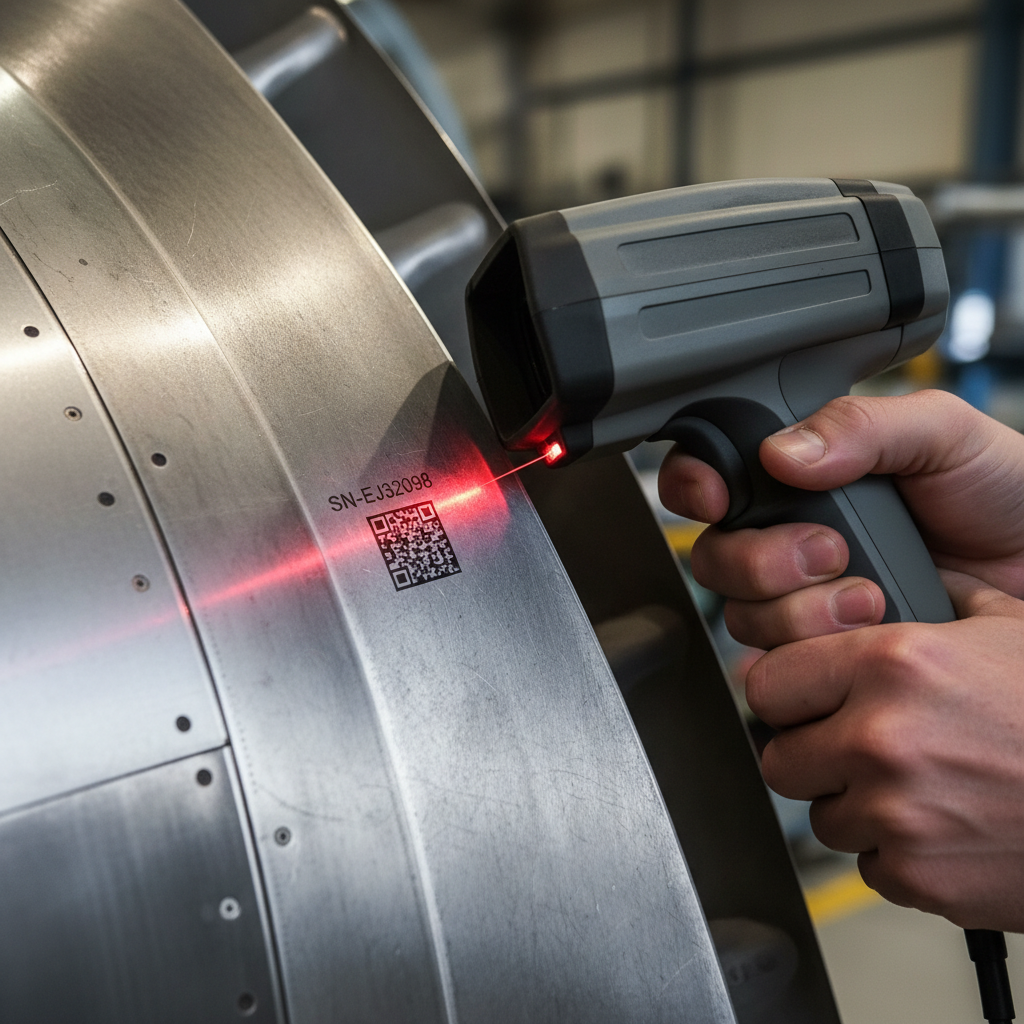
- Data Matrix codes (2D barcodes): laser-etched directly onto engine parts and structural components. Extremely durable. But each part requires individual line-of-sight scanning, which limits throughput in high-volume environments.
The global RFID market is projected to reach $30.47 billion by 2034, up from $14.58 billion in 2025. Aviation is one of the fastest-growing segments, driven by the need for touchless, bulk-scannable identification in hangars and warehouses.
Layer 3: Real-time location and condition tracking
This is the layer most traceability frameworks miss entirely. Layers 1 and 2 tell you what a part is and what has happened to it. Layer 3 tells you where it is right now, how it got there, and what conditions it traveled through.
I’ve seen MRO operations that can produce the full maintenance history of a landing gear assembly in minutes but can’t tell you which warehouse it’s sitting in today. That’s a traceability system with perfect memory and zero spatial awareness.
Layer 3 uses IoT-enabled tracking devices with cellular or satellite connectivity, GNSS positioning, and environmental sensors for temperature and humidity monitoring. For aviation components, devices must meet DO-160 environmental testing standards to be approved for airfreight. Devices like the Thingfox T2, which carries DO-160 certification, are purpose-built for this use case. The same tracking layer extends beyond components to airport equipment tracking across ground support fleets, including tracking airport support vehicles, a dedicated baggage cart tracking system and aircraft towbar tracking for high-loss assets.
The operational payoff is immediate. A pooled rotable sitting idle for 90 days won’t appear in a document registry. It will appear on a tracking dashboard. A component loaned to another MRO and never returned won’t show a gap in paperwork until someone runs an audit. A live tracker flags the delay in weeks, not months, which directly improves aviation asset utilization. This level of supply chain visibility transforms reactive audits into proactive asset management.
| Layer | Core Question | Key Technologies | Adoption Status |
|---|---|---|---|
| Document Integrity | “Is this part properly certified?” | Digital ARCs, Blockchain, EPCIS 2.0 | Growing (70% adopting digital ARCs) |
| Physical Identification | “What is this part?” | UHF RFID, Data Matrix, ATA Spec 2000 | Established (OEM-driven) |
| Location & Condition | “Where is this part right now?” | IoT trackers, GNSS, DO-160 sensors | Early (expanding from GSE to components) |
Why the Used Parts Boom Strains Every Layer
The Used Serviceable Material (USM) market was valued at $7.64 billion in 2025 and is projected to reach $10.86 billion by 2033. New parts face long lead times. Airlines need alternatives as fleets age. USM is substantially cheaper.
But every used part enters your system with a chain of custody you didn’t create. Multiple prior owners. Maintenance events executed under different regulatory frameworks. Documentation that may have changed hands through brokers and storage facilities over years or decades.
The average commercial aircraft reached 14.8 years of age in 2024. Older fleets mean more life-limited parts hitting cycle thresholds, more component removals, and heavier reliance on USM to keep aircraft flying. Each of those transactions adds a link to the traceability chain your receiving inspectors must verify.
When documentation arrives incomplete (and with used parts, it frequently does), the component gets quarantined. Aircraft stay on ground. The average cost per cancelled flight due to an AOG event can reach $130,600. Run that math against a $2,000 IoT tracker on a $50,000 rotable. One prevented quarantine-driven grounding pays for the device many times over, which is why fast, visible aircraft spare parts logistics matters as much as the paperwork.
What to Prioritize When Digitizing Your Traceability System
Global MRO demand reached $136 billion in 2025, with component maintenance alone expected to hit $33 billion by the end of the decade. The investment capacity exists. The question is sequencing.
Here’s a priority stack that balances compliance risk with operational ROI, based on what I see working across aviation deployments:
- Receiving inspection workflow. This is where auditors look first and where most compliance failures start. Digitize your inbound verification process: electronic checklists mirroring AC 20-154A requirements, photo capture of arriving documentation, and structured rejection workflows with timestamped records.
- Digital ARCs and document verification. If you still accept scanned PDFs via email as proof of airworthiness, you are one forged certificate away from your own AOG Technics scenario. Transition to platforms that provide tamper-evident digital release documentation.
- RFID for high-rotation items. Start with rotable pools, cabin safety equipment, and life-limited parts where presence verification is frequent. UHF RFID lets you scan hundreds of tagged items per second at real hangar distances. ATA Spec 2000 compliance (Chapters 9-4 and 9-5) is non-negotiable here.
- IoT tracking for components in transit or on loan. This closes the visibility gap between “left facility A” and “arrived at facility B.” DO-160 approved devices provide continuous position and condition data while components move through the supply chain, whether between your own facilities or across third-party logistics networks.
One honest caveat on interoperability: your MRO system doesn’t natively speak to your broker’s document platform, which doesn’t connect to the airline’s maintenance tracker. EPCIS 2.0 is the closest the industry has to a common language for this, but integration requires middleware and planning. Build time for it in your roadmap. Underestimating this step is the number one reason traceability digitization projects stall after a successful pilot.

Frequently Asked Questions
What is the difference between traceability and airworthiness?
Traceability documents a component’s full history from production through every maintenance event. Airworthiness certifies that a component is currently fit for service. A part can be airworthy but untraceable if records are missing. Most operators and regulators will treat it as unserviceable until documentation is restored.
What documents are required for aircraft component traceability?
The core documents are FAA Form 8130-3 (U.S.) or EASA Form 1 (Europe), both serving as Authorized Release Certificates. Supporting records include ATA Spec 106 documentation, maintenance logs, modification records, and Airworthiness Directive compliance logs. FAA AC 20-154A outlines the complete receiving inspection protocol.
Does a Certificate of Compliance prove traceability?
No. The FAA states that a Certificate of Compliance with language like “traceability documentation available upon request” does not establish traceability to the Production Approval Holder. Documentation must be physically present and verified at receiving inspection.
What is back-to-birth traceability?
Back-to-birth (BtB) traceability means documenting every event in a component’s lifecycle from original manufacture through every repair, overhaul, and installation. It is especially critical for life-limited parts (LLPs), where accumulated cycles determine remaining service life.
How does RFID improve aircraft parts traceability?
UHF passive RFID tags compliant with ATA Spec 2000 can be read at distances up to 4.5 meters without line of sight, enabling bulk verification of hundreds of items per second. This eliminates manual identification errors and dramatically reduces the time required for inventory checks and receiving inspections.
What does DO-160 certification mean for tracking devices?
DO-160 is the environmental testing standard devices must pass to be approved for use in and around aircraft, including airfreight compartments. It covers temperature extremes, vibration, humidity, altitude, and electromagnetic interference. Any IoT tracker used for aviation component tracking in transit should carry this certification.
If your component pool goes dark between facilities, that’s the traceability gap real-time tracking closes. We deploy aviation-grade IoT solutions across airlines, MROs, and freight operators. Talk to our team, or browse our aviation asset tracking devices to see what fits your operation.








 +1 508 292 2210

4 Responses