

In early 2026, a UK court sentenced the director of AOG Technics to nearly five years in prison. His company had sold over 60,000 aircraft engine parts with forged Authorised Release Certificates between 2019 and 2023. The parts were for the CFM56, one of the most common engines in commercial aviation. Airlines globally had been flying passengers on components whose documentation was entirely fabricated. (See also: aviation asset tracking.) (See also: aviation asset tracking trends 2026.) (See also: aviation asset visibility solutions.)
Here’s what bothers me about the industry’s response: most of the conversation focused on document verification. Better paperwork. Stricter supplier audits. Digital signatures. All necessary. But none of it answers a simpler question that maintenance directors and parts managers ask every day: where is this part right now?
Aircraft parts tracking has two dimensions that the industry still treats as separate problems. One is provenance (is this part legitimate, and can I prove it?). The other is physical visibility (where is it in the supply chain at this moment, and when will it reach my hangar?). If you only solve one, you’re still grounding aircraft or failing audits.
Two Layers of Aircraft Parts Tracking (and Why Both Matter)
When someone searches “aircraft parts tracking,” they might mean completely different things. A parts buyer in Miami wants to verify that the turbine blade she’s purchasing from a broker has an unbroken chain of custody back to the OEM. A maintenance controller at a regional carrier wants to know whether the replacement actuator shipped from the MRO facility in Singapore will arrive before the aircraft’s next scheduled departure.
Both are aircraft parts tracking. Neither substitutes for the other.
The document layer covers traceability: FAA Form 8130-3 (the Authorized Release Certificate), ATA Spec 106 trace forms, back-to-birth records, non-incident statements. This is the part’s identity and legal proof of airworthiness.
The physical layer covers location and condition: GPS coordinates in transit, temperature exposure during shipping, arrival confirmation at the receiving dock, dwell time in the warehouse before installation. This is the part’s operational status.
Most MRO software handles the first layer well. Almost nobody handles the second layer for parts in transit between organizations. That gap is where AOG situations silently accumulate.
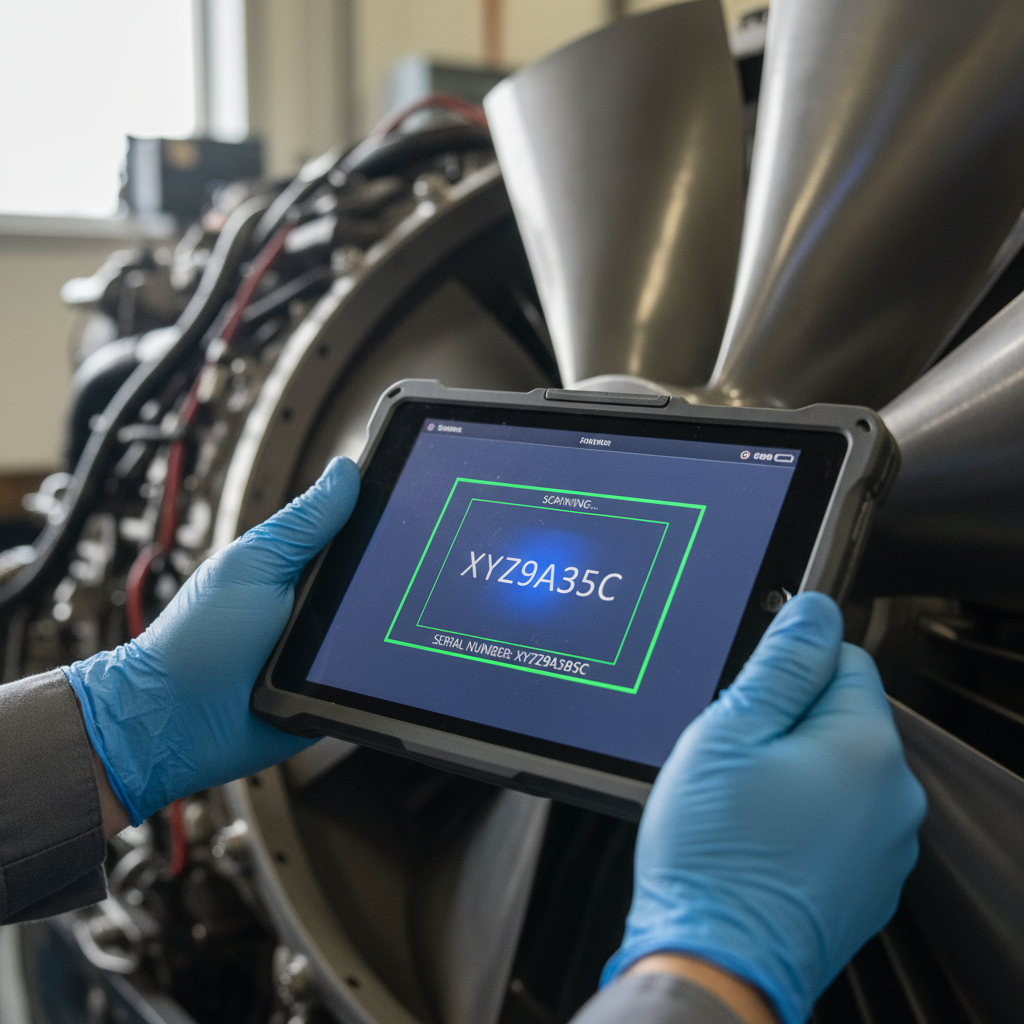
The Document Layer: Regulations You Cannot Ignore
Let me be direct about what’s legally required, because I’ve seen operators confused by the alphabet soup of standards.
FAA Order 8130.21H governs how the 8130-3 form gets completed and retained. Electronic completion is explicitly permitted. Retention periods: minimum 5 years for new products, 10 years for critical parts. If your records system can’t guarantee that retention with full data integrity, you have a compliance problem waiting to surface.
Advisory Circular AC 120-78A provides the framework for electronic signatures and recordkeeping systems. It covers operations under 14 CFR parts 43, 91, 121, and 135. This is what makes digital tracking legally equivalent to paper, provided your system meets the stated criteria.
ATA Spec 2000 Chapter 9 standardizes how identification data gets encoded, both in 2D barcodes and RFID tags. The minimum data set encoded on an aviation RFID tag includes CAGE code, original manufacturer part number, serial number, and date of manufacture.
FAR 43.9 and 43.11 mandate the content and retention of maintenance records after inspections and major repairs. Miss these, and a perfectly functional component becomes unsaleable (or worse, uninstallable).
None of this is new. What’s new is the enforcement intensity after the AOG Technics scandal. The FAA’s Suspected Unapproved Parts program has become substantially more active, and supplier onboarding requirements are tightening across the board.
The Physical Layer: Where Parts Tracking Actually Breaks Down
Ask a maintenance controller what happens after a rotable component ships from a vendor. In most operations, the answer is: “We get a shipping notification, then we wait.” Maybe there’s a FedEx or DHL tracking number. Maybe not. For AOG situations involving international shipments through multiple freight forwarders, that black hole can last days.
This is the distinction I keep making in conversations with airline operations teams. Shipment tracking (courier provides a scan at each hub) tells you the package moved. Asset tracking (a device on the part or its container reporting continuously) tells you where it is right now, what conditions it’s experiencing, and gives you a predicted arrival window you can plan maintenance around.
The financial impact of this gap is measurable. An aircraft on ground costs airlines between $10,000 and $150,000 per hour depending on the route and aircraft type. If a replacement part sits in customs for 18 hours because nobody realized it needed a specific import declaration, and nobody knew it was stuck because the last tracking scan was at origin, those are operational dollars burned by a visibility gap.
Here’s what makes aviation parts different from generic freight: the part has regulatory identity. Its condition matters. Temperature excursions during shipping can invalidate certain components. A GPS tracker that also logs environmental data doesn’t just tell you where the part is. It tells you whether the part is still airworthy when it arrives.
Technology Stack: RFID, Cellular IoT, and Blockchain
Passive UHF RFID (On-Part Identification)
RFID has become the practical standard for parts identification on the aircraft itself. Tags are passive (no battery), ISO 18000-6C compliant, and readable without line of sight from 1.5 to 4.5 meters. FAA AC 20-162A treats the addition of a passive RFID tag to a certified component as a minor modification, provided it meets DO-160 Section 26 flammability requirements.
The operational gains are dramatic. Delta Air Lines implemented RFID to track life-limited parts like oxygen generators and life vests, achieving ROI in months. Previously, inspectors opened overhead panels individually to check expiration dates. With RFID, bulk reads replaced that tedium entirely.
Airbus reduced final assembly inspection of seats and life vests from 14 hours to 26 minutes using battery-less UHF RFID in their “flyable parts” program. That’s not an incremental improvement. That’s a process category change.
But passive RFID has a limitation: it only works when a reader is nearby. Tags don’t transmit. They respond. For parts sitting in a warehouse, installed on an aircraft, or being received at a dock with a fixed reader, RFID is ideal. For parts in a crate crossing the Pacific on a cargo flight, RFID is silent.
Cellular and GPS Trackers (In-Transit Visibility)
This is where active tracking hardware fills the gap. A cellular IoT device attached to the shipping container or pallet reports location at intervals via GNSS (GPS, Galileo, GLONASS) and transmits over LTE-M or NB-IoT networks. Some devices use Wi-Fi positioning or Bluetooth beacons for indoor warehouse tracking when cellular signal isn’t available.
For aviation freight specifically, the hardware needs to meet DO-160 standards for use on aircraft. Not every tracker qualifies. Devices approved for airfreight environments can travel inside cargo holds without interference with avionics, which means you maintain visibility even when the part is flying to you on another aircraft.
The data these devices generate converts directly into operational decisions: rerouting shipments, pre-clearing customs documentation, scheduling receiving crews, alerting maintenance planners to revised ETAs. When cycle times for rotable components span multiple countries and carriers, this visibility compresses your planning uncertainty from days to hours.
Blockchain (Immutable Provenance Records)
Blockchain addresses the trust problem in multi-party transactions, particularly in the used serviceable material (USM) market. Honeywell’s GoDirect Trade marketplace uses blockchain to create a digital ledger of previous transactions for used parts, including associated quality documents and images. Before the marketplace was a year old, it had passed $4 million in sales with nearly 5,000 registered users.
The technology’s value for parts tracking is specific: making it computationally impractical to forge a component’s history after the fact. In an industry where a single forged ARC can put 60,000 suspect parts into the supply chain, that immutability matters.
GS1 EPCIS 2.0 (Interoperability Standard)
EPCIS 2.0 is GS1’s data-sharing standard for supply chain visibility, capturing what happened, when, where, and why across organizations. It supports JSON/REST APIs and sensor data. For aircraft parts, it enables MRO facilities, airlines, logistics providers, and regulators to share event data in a common format without requiring everyone to use the same software platform.
This is the connective tissue between the document layer and physical layer. A part’s RFID scan at receiving (physical event) triggers an EPCIS event that links to its 8130-3 record (document event). The two layers merge into one timeline.
ROI That Justifies the Investment
I don’t recommend technology for its cleverness. I recommend it when the numbers close. Here’s what operators are reporting:
- Air France KLM E&M achieved 100% hands-free paperless tracking of parts packaging with RAIN RFID, cutting packaging costs by 50%. The tags were on returnable containers, not on the parts themselves, making implementation non-invasive.
- Airbus cut final assembly inspection from 14 hours to 26 minutes. At loaded labor rates for A320 final assembly, that’s a six-figure annual saving per production line.
- Delta’s RFID program for cabin safety equipment delivered payback in months, with implementation still expanding into new equipment categories.
Those are the documented cases on the identification side. On the in-transit side, the math is different but equally clear. If continuous visibility of high-value rotable shipments prevents even one unnecessary AOG event per quarter, the tracker hardware pays for itself many times over. A set of trackers covering your top 20 most-shipped rotable routes might cost less than a single hour of AOG for a widebody aircraft.
Building a System That Covers Both Layers
If you’re a maintenance director or parts manager evaluating where to start, here’s how I’d sequence it:
First, fix the document layer if it’s broken. If your 8130-3 records are still paper-filed in binders, if your back-to-birth documentation has gaps, if your parts buyer can’t verify trace within minutes, that’s the fire to put out first. MRO software (AMOS, Ramco, Veryon, others) handles this. Pick one that integrates with your existing fleet management.
Second, add physical identification where it saves labor. Passive RFID on high-turnover inventory (consumables, life-limited cabin equipment, rotable pools). The tags are cheap. The readers are a one-time investment. The labor savings compound monthly.
Third, close the transit gap. Put cellular trackers on high-value or time-critical shipments. Start with your AOG parts shipments, then expand to routine rotable exchanges. You need hardware that’s DO-160 approved if it travels by air. You need a platform that consolidates location data with your maintenance planning system so the information actually reaches the person making the scheduling decision.
Fourth, connect the layers. Use EPCIS or equivalent event standards to link physical scans to document records. When a part arrives and gets RFID-scanned at receiving, that event should automatically pull up its 8130-3, verify the trace documentation, and flag any discrepancies before the part enters your serviceable inventory.
The sequence matters. Each layer makes the next one more valuable.
The Market Context: Why Now
The commercial aircraft aftermarket parts market is projected to grow from $47 billion in 2026 to nearly $62 billion by 2031 at a 5.55% CAGR. Aviation MRO software is expected to reach $10.6 billion by 2034. Money is flowing into digital sustainment because operators have realized that manual processes don’t scale with aging fleets, rising part counts, and tighter regulatory scrutiny.
Post-AOG Technics, every new supplier relationship requires deeper due diligence. Every used part purchase carries higher verification overhead. The operators investing in end-to-end tracking now aren’t spending more per part. They’re spending less time (and less risk premium) per transaction because the system handles verification automatically.
RFID technology itself is advancing. The Impinj Gen2X standard enhances read speed, range, and adds cryptographic authentication to verify tag (and therefore part) authenticity. That last feature directly addresses counterfeiting at the hardware level, making it computationally difficult to clone a tagged component.
Where Most Operations Still Fall Short
After 15 years in this space, the pattern I see repeatedly is: operators invest in software for the document layer, invest in RFID for warehouse inventory, and then lose complete visibility the moment a part leaves their facility or hasn’t yet arrived from a vendor.
That transit window is exactly where delays, diversions, temperature excursions, theft, and customs holds happen. It’s also the window no MRO software covers, because MRO software tracks maintenance status, not physical location across a global supply chain.
The fix isn’t complicated. It’s a hardware deployment (trackers rated for airfreight, attached to shipping units) connected to a visibility platform your planning team can actually access. The complicated part is choosing hardware that doesn’t violate airfreight regulations, lasts long enough between charges to cover multi-leg international shipments, and connects to networks in every geography your parts move through.
If your rotable pool feels invisible between the moment a part ships and the moment it arrives, that’s the gap asset tracking closes. Our team works with airlines, MROs, and freight forwarders to deploy DO-160 approved trackers and cellular asset tracking devices that give you continuous visibility across the entire parts cycle. If you want to talk specifics for your operation, reach out to us directly.

Frequently Asked Questions
Is electronic FAA Form 8130-3 legally accepted?
Yes. FAA Order 8130.21H explicitly permits electronic completion and retention of the 8130-3, provided the system maintains data integrity and meets retention requirements: 5 years minimum for new products, 10 years for critical parts. AC 120-78A provides the framework for acceptable electronic signatures.
Can RFID tags be added to certified aircraft parts without recertification?
Yes, under FAA AC 20-162A. Adding a passive UHF RFID tag to an existing certified component qualifies as a minor modification, provided the tag serves as ancillary marking and meets DO-160 Section 26 flammability requirements. No supplemental type certificate is needed.
What data must be encoded on an aviation RFID tag?
Per ATA Spec 2000 Chapter 9, the minimum encoded data includes CAGE code (manufacturer or supplier), original manufacturer part number, serial number, and date of manufacture. Tags must be ISO 18000-6C and GS1/EPC Gen 2 compliant.
How does physical tracking differ from shipment tracking for aircraft parts?
Shipment tracking relies on carrier scans at handling points, giving you intermittent status updates. Physical asset tracking places a device on the shipment itself, reporting location and environmental conditions continuously regardless of carrier. This gives maintenance planners real-time ETAs and condition verification on arrival.
What triggered increased regulatory scrutiny of parts traceability?
The AOG Technics scandal, where over 60,000 engine parts were sold with forged Authorised Release Certificates between 2019 and 2023, directly accelerated enforcement. The FAA’s Suspected Unapproved Parts program has intensified investigations, and industry-wide supplier verification requirements have tightened substantially.
What ROI can operators expect from RFID-based parts tracking?
Documented results include Delta achieving payback in months (not years) on cabin safety equipment tracking, Airbus reducing inspection time from 14 hours to 26 minutes, and KLM cutting packaging costs by 50% through RFID-enabled returnable container tracking. ROI depends on fleet size and part turnover volume.
Vale comparar com a oferta da Tractian, plataforma referência em IoT industrial pra manutenção preditiva.








 +1 508 292 2210

7 Responses