

The aviation industry tracks flights to the second. Yet it loses between $330 million and $400 million every year on ULD repairs and replacements alone. Add unaccounted ground support equipment, vanishing MRO tools, and safety gear with expired certifications that nobody caught, and the real number climbs far higher. (See also: griffin air real-time cargo tracking.) (See also: griffin air certified tracking technology.)
Aviation equipment tracking software exists to close that gap. But the category is broader than most buyers realize, the technology choices are more consequential than any vendor comparison chart suggests, and the difference between a deployment that pays for itself and one that collects dust often comes down to decisions made before a single tag gets installed. This is the field guide I wish someone had handed me before my first aviation tracking project.
What “Equipment Tracking” Actually Means in Aviation
Search for this keyword and you’ll mostly find aircraft maintenance tracking software: platforms that schedule inspections, manage airworthiness directives, and log compliance records. That’s one slice of the picture. Equipment tracking in aviation covers every physical asset that moves, degrades, or disappears across the operation.
The full scope includes:
- Unit Load Devices (ULDs), the containers and pallets cycling between airlines, handlers, and freight forwarders across continents.
- Ground Support Equipment (GSE) like tugs, tow tractors, belt loaders, baggage carts, and ground power units scattered across the ramp.
- On-aircraft safety equipment such as life vests, oxygen generators, fire extinguishers, and medical kits that must be present, functional, and within certification windows.
- MRO tools and rotable parts, from calibrated torque wrenches to serialized engine components cycling between aircraft and repair shops.
- Airfreight containers, including temperature-controlled units carrying pharma or perishables through global supply chains.
Each category has different tracking requirements. Different environments, different regulatory frameworks, different cycle times. A BLE tag that works inside a climate-controlled hangar is useless on a ULD crossing the Pacific. Software that manages maintenance schedules may have zero visibility into where a $15,000 rotable part sat idle for six months.
The first question isn’t “which software?” It’s “which assets, tracked how, measured against what outcome?”
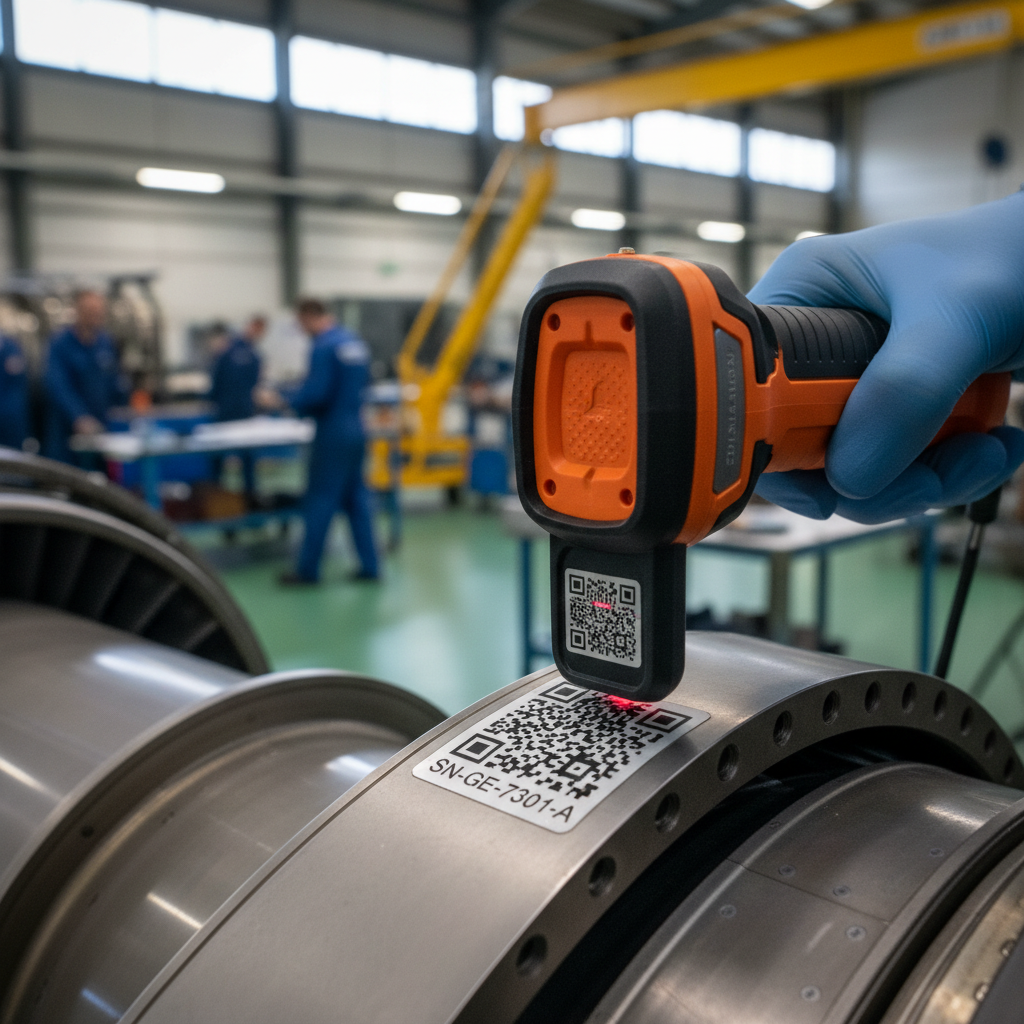
The Technology Stack: RFID, BLE, UWB, and Cellular IoT
No single tracking modality covers every use case from hangar to supply chain. Modern aviation equipment tracking runs on hybrid architectures, and understanding the trade-offs is what separates a deployment that delivers ROI from an expensive pilot that never scales.
Passive UHF RFID
Battery-free tags with lifespans measured in decades. RFID tags operate without batteries, avoiding interference with aircraft systems, which makes them the default choice for permanent installation on ULDs, rotable parts, and cabin safety equipment. Read range reaches up to 12 meters with handheld scanners. Cost per tag is low. The limitation: no real-time location, only confirmation at scan points.
Bluetooth Low Energy (BLE)
Battery-powered tags that broadcast continuously and can carry sensor data (temperature, shock, humidity). Unilode’s BLE tags passed the DO-160G protocol, Section 21, classifying them alongside Personal Electronic Devices for aircraft use. Battery life runs 2 to 5 years depending on broadcast interval. Emerging Bluetooth 5.1 Angle of Arrival (AoA) technology is pushing indoor accuracy below one meter.
Ultra-Wideband (UWB)
UWB delivers centimeter-level positioning accuracy, making it the go-to technology for high-precision tool tracking inside MRO hangars where Foreign Object Debris (FOD) is a safety risk. The trade-off: UWB requires fixed anchor infrastructure, limiting it to controlled environments. Recent regulatory changes in Europe removed duty-cycle limits for indoor UWB operation, expanding its usable spectrum significantly.
Cellular IoT
LTE-M and NB-IoT provide global coverage for assets that leave the airport perimeter: ULDs in transit, GSE moving between facilities, airfreight containers crossing borders. Battery life is shorter than RFID or BLE (months, not years), and connectivity costs are higher. For assets in the global supply chain, cellular GPS trackers are often the only option that keeps working between airports.
Hybrid Architectures
The market is converging on layered approaches. Trackonomy deploys cellular-enabled units that act as mobile readers, using meshing technology to create a dynamic, self-expanding network alongside LoRa and BLE infrastructure at fixed locations. This is the direction: not picking one technology, but layering them by use case so each does what it does best.
Five Use Cases With Hard Numbers
1. Cabin Safety Equipment Audits
Airlines must verify that every life vest, oxygen generator, and medical kit is present and within its expiration window. Manual checks are slow and error-prone. AirAsia reduced nightly cabin inspections from 60 minutes per aircraft to around 20 minutes using RFID, saving 51,100 man-hours annually across their fleet. Fiji Airways cut safety equipment inspections from hours to minutes per aircraft. Delta Air Lines tagged oxygen generators with AS5678-compliant RFID, enabling a 45-second aisle walk with a handheld scanner to confirm presence and expiration status.
These aren’t pilot programs. They’re production deployments generating measurable savings every night.
2. ULD Management
ULDs are the most overlooked high-value asset in aviation. They cycle between airlines, ground handlers, and freight forwarders, often with zero visibility after handoff. Unilode’s digitized ULDs experience 75% fewer unreported units, with loss levels reduced to 0.01%. They’re rolling out “Super Sentinel” tracking across 220,000+ ULDs during 2026.
For context: ULDs are classified as aircraft parts subject to safety and airworthiness requirements under IATA regulations. Losing track of them isn’t just expensive. It’s a compliance problem.
3. MRO Tool Control and FOD Prevention
One airline implemented Snap-on’s AutoCrib system and reduced tool and inventory usage by 30 to 40%, with FOD virtually eliminated. In aviation, a forgotten wrench inside an engine cowling isn’t an inventory line item. It’s a potential catastrophic failure. UWB-based systems are gaining traction here because they pinpoint a tool’s location to within centimeters inside a hangar bay, making tool accountability automatic rather than procedural.
4. Ground Support Equipment Fleet Optimization
GSE is expensive, heavily utilized, and frequently idle in the wrong place. Telematics platforms provide accurate fuel consumption monitoring and reduced idle time across ground fleets. Swissport has deployed electric and hybrid GSE across its operations, using tracking data to optimize fleet sizing and reduce emissions.
Most airports overstock GSE by 15 to 25% because they can’t see utilization patterns in real time. Effective airport equipment tracking makes the invisible visible, and the surplus obvious.
5. Airfreight and Cargo Container Visibility
Temperature-sensitive pharma, high-value electronics, perishable goods: all travel in containers crossing multiple handling zones. The tracking requirement goes beyond location. It includes condition monitoring (temperature excursions, shock events, door-open alerts) and chain-of-custody documentation that holds up under regulatory scrutiny. These logistics and supply chain tracking challenges require specialized solutions.
This is where the distinction between shipment tracking and asset tracking becomes critical.
Shipment Tracking vs. Asset Tracking: The Blind Spot
Here’s a pattern I see over and over. An airline or freight forwarder invests in tracking, gets visibility from origin to destination, and calls the project done. The container arrives. The tracking “job” ends.
But the container doesn’t end. It sits at the destination, eventually gets repositioned (or doesn’t), enters a repair cycle (or doesn’t), and the asset owner has zero visibility into dwell time, utilization rate, or maintenance state.
Shipment tracking answers: “Where is the cargo right now?”
Asset tracking answers: “Where has this container been for the last 18 months, how many cycles has it completed, when does it need repair, and do we actually need 5,000 of these or would 3,800 cover our network?”
The ROI gap between these two approaches is enormous. Shipment tracking reduces customer complaints. Asset tracking reduces capital expenditure. It tells you how many containers you actually need, where they’re pooling, and which ones cost more in repair than they’re worth.
Most aviation equipment tracking software handles the shipment side well. Far fewer follow the asset through its full lifecycle: deployment, transit, dwell, retrieval, maintenance, redeployment. If your container pool goes dark after delivery, that’s exactly the gap asset tracking closes.
Standards That Gate Every Deployment
In aviation, “it works” is table stakes. “It’s certified” is the entry ticket. Three frameworks matter most.
RTCA DO-160
First published in 1975 and continuously updated, DO-160 defines the environmental and EMI test methods that electronic equipment must pass before installation on an aircraft. Temperature, vibration, humidity, altitude, electromagnetic interference: if you’re deploying BLE or active tags on aircraft, DO-160 compliance is the cost of entry.
Hardware designed from the ground up for aviation environments, like the Thingfox T2 (DO-160 airfreight approved), eliminates the compliance risk that comes with repurposing general-purpose IoT trackers. That distinction matters when the alternative is a months-long certification process that delays your entire deployment.
SAE AS5678
AS5678 provides the certification standard for passive RFID tags intended for permanent installation on aircraft and aircraft parts. This is the standard behind Delta’s oxygen generator tagging program and similar deployments. If you’re permanently affixing RFID to any flight-critical component, AS5678 compliance is non-negotiable.
IATA ULD Regulations (ULDR)
IATA’s ULDR framework governs how ULDs are maintained, tracked, and transferred between operators. Any tracking system for ULDs needs to align with ULDR requirements for damage reporting, inspection intervals, and chain-of-custody documentation. Operators outside the FAA’s jurisdiction should also verify alignment with EASA or their local civil aviation authority, since certification requirements can vary in testing protocols and documentation standards.
The practical takeaway: start your vendor evaluation with compliance. If the hardware doesn’t meet the applicable standard for your use case, nothing else about the software matters.
How to Evaluate Aviation Equipment Tracking Software
After years of deploying tracking solutions across aviation, logistics, and industrial operations, I keep seeing the same evaluation mistakes. Here’s what separates successful deployments from expensive shelfware.
Start with the problem, not the technology. “We need RFID” is not a requirements statement. “We need to cut cabin audit time by 50% and eliminate missed AD compliance on safety equipment” is. The technology choice follows from the use case, the operating environment, and the regulatory framework. Not the other way around.
Demand integration, not isolation. Your tracking system needs to talk to your MRO software, your ERP, and your ground handling platform. A standalone dashboard that shows dots on a map is a toy. The value multiplier comes when location and condition data flow into maintenance scheduling, inventory optimization, and compliance reporting automatically.
Test for the hangar, not the demo room. Aviation environments are harsh. Extreme temperatures on the ramp. Metal-dense structures that kill RF signals. Remote airstrips with no connectivity. Ask vendors about offline capability: what happens when cellular drops out in a cargo hold at 40 below? Ask for references from operators in environments similar to yours. If a vendor can’t demonstrate offline store-and-forward, they haven’t built for aviation.
Calculate total cost of ownership. Hardware cost per tag is the wrong metric. The real number includes connectivity infrastructure (gateways, cellular plans), platform licensing, integration development, data migration from legacy systems (spreadsheets, older platforms), and training for ground crews who may resist the shift from clipboard to scanner. A $5 RFID tag sounds cheap. The scanner infrastructure, middleware, and training to deploy it across 200 aircraft is a different conversation.
Plan for scale from day one. A pilot that tracks 50 ULDs across two stations is easy. Scaling to 50,000 ULDs across 30 airports is a different engineering problem. Ask about multi-tenant architecture, API throughput, and whether the platform can ingest data from multiple hardware vendors simultaneously. Vendor lock-in at the hardware layer is the most common trap in aviation IoT.
Where the Market Is Heading
Two numbers frame the trajectory.
The global aviation software market was valued at $11.18 billion in 2024, projected to reach $16.93 billion by 2030 at a 7.5% CAGR. Within that space, the aviation and airport asset tracking segment hit $356 million in 2024 and is projected to reach $912 million by 2034 at a 14.83% CAGR.
Asset tracking is growing at nearly double the rate of the broader aviation software market. The reason: airlines and airports have already digitized scheduling, booking, and route planning. Physical asset visibility is the next frontier, and the one with the most immediate operational dollars at stake, which is exactly why airport asset management has become such a high-stakes priority.
Ground support equipment tracking is currently the fastest-growing sub-segment, driven by fleet electrification mandates and the push to right-size GSE pools. ULD digitization follows closely, with major pooling operators investing in global BLE and cellular rollouts through 2026 and beyond.
If you’re evaluating aviation equipment tracking software today, you’re not early. But you’re not late either. The technology has matured past the proof-of-concept stage, and the case studies now come with production-scale numbers. The question has shifted from “does it work?” to “how fast can we deploy?”
That’s the kind of question our team at Datanet helps answer every day: matching the right tracking hardware to your operation, handling integration, and getting you to production without months of trial and error. If that’s where you are, let’s talk.

Frequently Asked Questions
Is RFID safe to use on aircraft?
Yes, when tags meet aviation standards. Passive UHF tags require SAE AS5678 certification for permanent aircraft installation. Active tags (BLE, cellular) must pass RTCA DO-160 environmental and EMI testing. Certified tags do not interfere with avionics or navigation systems.
What’s the difference between tracking ULDs with RFID versus GPS?
RFID is battery-free, lasts decades, and excels at confirming presence during handoffs. GPS provides continuous location but drains batteries in days and carries ongoing cellular costs. Most modern deployments combine RFID at scan points with BLE or cellular for in-transit visibility.
How much time does RFID save during cabin safety audits?
AirAsia cut per-aircraft inspections from 60 to 20 minutes. Fiji Airways reduced multi-hour audits to minutes. Delta performs complete oxygen generator verification with a 45-second aisle walk. These savings scale linearly with fleet size.
Can aviation tracking software work offline?
Only if it was designed that way. Operations on remote airstrips, inside metal hangars, and in cargo holds frequently lose connectivity. Platforms built for aviation should store data locally and sync when a connection resumes. Always verify offline store-and-forward capability before committing.
What does aviation equipment tracking software typically cost?
Total cost varies by scope. RFID cabin equipment systems might run $2 to $10 per tag plus reader infrastructure. BLE and cellular deployments add connectivity costs. Platform licensing ranges from per-asset-per-month models to enterprise agreements. The meaningful metric is cost per tracked asset per cycle, not hardware sticker price.
How does asset tracking differ from maintenance tracking software?
Maintenance tracking schedules inspections, logs compliance, and manages work orders. Asset tracking tells you where the physical asset is, what condition it’s in, and how it moves through its lifecycle. The two complement each other: location and condition data feed maintenance workflows, while maintenance status informs deployment decisions.








 +1 508 292 2210

5 Responses