

Engineering teams on aerospace shop floors spend up to 30% of their workweek on manual documentation. Meanwhile, major primes are targeting 40% to 50% capacity expansions within five years, per Deloitte’s 2026 Aerospace and Defense Outlook. Those two numbers cannot coexist. You cannot scale production when a third of your floor time burns on paper travelers, handwritten logs, and compliance binders that nobody opens until the next audit. Lean manufacturing principles directly address this waste by eliminating non-value-added activities.
A manufacturing execution system closes that gap. Not through AI promises (the autonomous factory is a 2028 story at the earliest), but through digital work instructions, real-time WIP tracking, and audit records that write themselves as operators do the work. In aerospace, MES also carries regulatory weight that no generic software handles cleanly: AS9100D compliance, lot-and-serial genealogy across millions of parts, ITAR data handling, FAA certification evidence that must survive scrutiny years after the aircraft ships.
This guide covers what aerospace MES does, where the vendor landscape stands, what real implementations produce, and where rollouts fail. If you’re evaluating platforms or wondering whether your ERP can stretch to cover shop-floor execution, start here.
What Aerospace MES Actually Does
At its core, a manufacturing execution system tracks and documents the transformation of raw materials into finished goods. In aerospace, every step, every material lot, every operator signature, and every test result must be captured in a form that satisfies regulators years downstream.
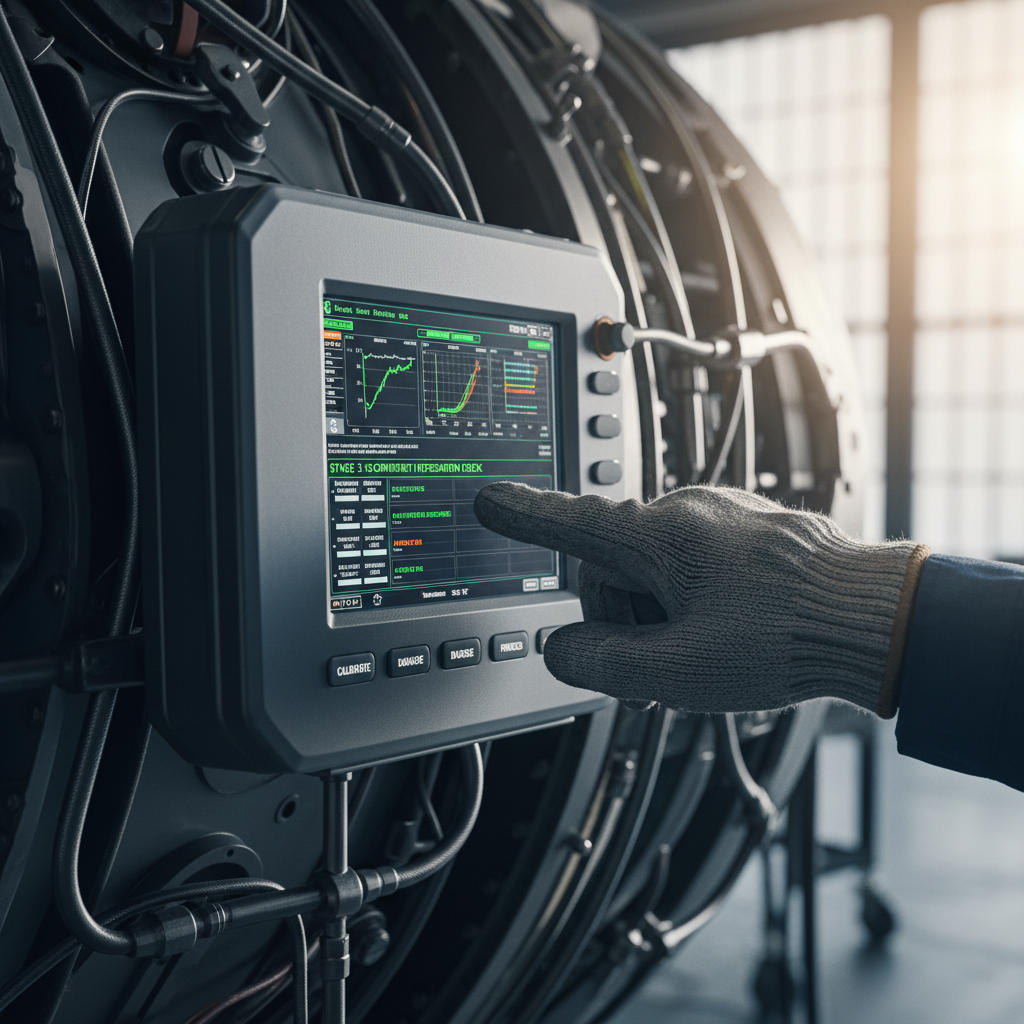
An aerospace MES sits between your ERP and the shop floor. ERP handles enterprise-wide logistics: finance, procurement, inventory, supply chain. MES handles real-time execution, collecting data from machines, sensors, and operators, then translating production orders into actionable steps. The relationship is bidirectional: ERP plans, MES executes, both stay synchronized.
Most aerospace MES platforms ship with seven core modules:
- Digital work instructions replacing paper travelers with interactive procedures, 3D visuals, video, and embedded signature prompts
- Production and WIP tracking providing real-time visibility into subassemblies, components, and lot/serial tracked parts
- Quality management and NCR workflows for nonconformance reports, first pass yield, and corrective/preventive actions (CAPA)
- Test and equipment automation with direct instrument orchestration inside the MES sequence
- Traceability and compliance: version-controlled procedures, automatic AS9100/EN9100 report generation, complete genealogy from incoming material through delivery
- Analytics and dashboards with live production risk views, supplier scorecards, and passive audit trail accumulation
- Integration layer with APIs connecting ERP, PLM, and IoT sensor systems into a single data flow
Underneath these modules, the data model follows ISA-95 (IEC 62264), the international standard defining how manufacturing control systems integrate with enterprise logistics. Industry 4.0 implementations increasingly replace the rigid ISA-95 hierarchy with a Unified Namespace architecture, where the MES becomes the central data hub rather than one tier in a stack.
Why Stretching Your ERP Will Not Work
The most expensive decision in aerospace manufacturing IT is stretching an ERP to cover MES functions. It looks cheaper on the purchase order. It costs more in every quarter that follows.
ERPs process data in batches, typically hours or days behind reality. That latency is fine for finance. It is not fine when an operator needs to know, right now, whether the composite layup in Station 4 passed incoming material inspection, whether the torque wrench on the last fastener was within calibration, or whether yesterday’s NCR has been dispositioned.
Aerospace compounds this with regulatory requirements ERPs were never designed for:
- AS9100D requires a continuously maintained, audit-grade production record. MES captures this as work happens. ERP reconstructs it after the fact, with gaps.
- AS9102 first article inspections demand measurement data tied to specific serial numbers, operators, tools, and timestamps. MES automates capture. ERP needs manual entry.
- ITAR and CMMC impose data sovereignty and access controls that most commercial ERP architectures don’t handle natively. Defense-ready MES platforms like First Resonance run on AWS GovCloud with explicit ITAR support.
- Complex rework and multi-inspector buy-off workflows require procedural logic that lives in MES, not in ERP workflow engines designed for purchase-order approvals.
iBase-t argues that aerospace and defense is “the most complex manufacturing sector” and that horizontal software serves it at a lowest-common-denominator level. The market agrees: vertical software markets (aerospace MES included) are growing at over 11% annually through 2030, outpacing the general MES market’s 10.1% CAGR (valued at $15.95 billion in 2025, projected to reach $25.78 billion by 2030). Buyers have learned that generic tools cost more to maintain than purpose-built ones.
The 2026 Vendor Landscape
The aerospace MES market is not a single market. It segments into four tiers, each serving different buyer profiles and budget realities.
Vertical SaaS Challengers
Connektica, Epsilon3, First Resonance, and Manufacturo compete on fast deployment, SaaS pricing, and AS9100 compliance preconfigured. These are cloud-native platforms, often built by engineers who came from SpaceX, NASA, or satellite programs.
Epsilon3’s January 2026 operator survey places it at #1, citing customers including NASA, Redwire, Firefly Space, Virgin Galactic, and Rocket Lab. First Resonance’s ION Factory OS serves Astranis, Phase Four, and Epirus on AWS GovCloud. Connektica publishes pricing starting at EUR 89 per month, a structural price point that gives small satellite and UAV suppliers access to the same compliance tooling that used to require six-figure enterprise contracts. Manufacturo partnered with Relativity Space in 2024 for Terran R rocket production.
Enterprise MOM Incumbents
Siemens Opcenter, Dassault DELMIA Apriso, iBase-t Solumina, AVEVA MES, and Rockwell FactoryTalk compete on feature breadth, multi-site harmonization, and deep PLM/ERP integration. These are the platforms running production lines at the largest primes.
iBase-t Solumina’s customer list includes Airbus Defence and Space, NASA, Northrop Grumman, Pratt & Whitney, Safran, Rolls-Royce, BAE Systems, Moog, and Maxar. Lockheed Martin Aeronautics selected Siemens Xcelerator (including Opcenter) in 2022; Boeing, BAE Systems, and Rolls-Royce also run Opcenter. Dassault DELMIA Apriso serves Airbus Helicopters, Embraer, Safran, and RTX.
Implementation costs in this tier typically range from $500K to $3M+ for a full prime rollout, plus annual licensing. The trade-off is integration depth: Opcenter connects natively to Teamcenter PLM, and iBase-t partners with PTC’s Windchill and ThingWorx for end-to-end digital-thread deployments.
Process Crossovers and Niche Players
Werum PAS-X, Honeywell MXP, and Critical Manufacturing straddle aerospace and pharmaceutical/chemical markets. They appear in broad MES rankings but rarely lead dedicated A&D deals.
Tulip offers a no-code composable layer that sits on top of existing systems. SAP ME serves shops already deep in the SAP ecosystem. And Rocket Lab builds its MES entirely in-house, integrated directly to its own ERP. That’s a viable approach if you have the software engineering headcount, but it’s not a pattern that scales to most suppliers.
What the Numbers Look Like
Here are the cases with the hardest numbers, each verifiable.
Anywaves, a Toulouse-based satellite antenna OEM, deployed Connektica and compressed antenna testing from 8 hours to 15 minutes per unit, with 4 to 5 times more measurement coverage on the same hardware. EN 9100 reports that previously took 30 minutes to assemble manually now generate in 5 minutes automatically. The bottleneck was never the antenna. It was workflow friction and paper-based compliance locking engineers into manual test orchestration.
Phase Four, a smallsat electric propulsion company, reported a 50% increase in satellite engine production after deploying First Resonance’s ION Factory OS. Separately, Epirus (counter-electronics) saved roughly 2 hours per engineer per week on documentation: about 12 hours of engineering time per month returned to actual work.
Lockheed Martin’s Siemens Xcelerator adoption established the prime-contractor digital-thread blueprint. The real impact is downstream: Tier-1 and Tier-2 suppliers are now being pulled toward Opcenter-compatible tooling so the digital thread runs end-to-end across the supply chain.
Cirrus Aircraft uses iBase-t Solumina to automate certification reporting and increase aircraft-level visibility. Cirrus is a smaller OEM with relatively low volumes but a high certification burden under FAA Part 23. MES pays off even at low production rates when compliance costs dominate.
Five Ways Aerospace MES Implementations Fail
Buying the right platform is half the problem. Deploying it without killing your production line is the other half.
CIMX documents five recurring failure modes, all of which hit aerospace harder than other industries:
- Big-Bang rollouts that attempt to replace everything in a single cutover. In aerospace, a failed cutover does more than cause downtime. It creates a gap in the compliance record. Rebuilding AS9100D evidence chains after a botched migration takes months.
- Cultural misalignment. Veteran technicians who’ve built airframes for decades resist digital tools imposed from above. If the interface adds cognitive load instead of removing it, adoption collapses.
- The ERP-as-master antipattern: forcing MES into a subordinate ERP module instead of letting it own shop-floor execution as a peer system with its own domain authority.
- Excessive customization. Aerospace workflows are unique, but over-customizing beyond what the vendor supports makes upgrades impossible and locks you into an orphan version.
- Vendor overpromise. AI timelines, integration speed, or out-of-the-box compliance claims that don’t survive contact with the actual shop floor. Corning Inc’s documented MES failure is the most-cited cautionary case.
The pattern is consistent: implementation risk in aerospace MES is organizational, not technical. The software works. Failures come from rushing rollouts, ignoring operator experience, or treating MES as an IT project instead of an operations transformation.
What works: phased implementation starting with a single cell or work center. IT and OT teams aligned from day one. A Phase 1 scope focused on core traceability and work instructions before expanding to analytics or AI features. This is the same principle behind how to implement Industry 4.0: start with one problem, prove value, then expand.
The AI Reality Check
Every MES vendor in 2026 has an AI slide in the deck. Here’s where the data actually lands.
US aerospace and defense spending on AI will reach $5.8 billion by 2029, roughly 3.5 times the 2025 level. About 36% of tasks across industrial-products manufacturing could benefit from AI augmentation. The investment curve is real.
The caveat from the same Deloitte report: “Widespread, AI-driven factory operations, where agentic AI orchestrates core shop-floor processes, are unlikely before 2028.”
Today, AI in aerospace MES works in three narrow places:
- Document automation. Generating compliance reports, flagging quality anomalies, summarizing NCR trends. Delivers measurable time savings right now.
- Predictive maintenance. Using sensor data from machines and test equipment to forecast failures. Effective where sensor coverage is dense enough to train models.
- Inspection assistance. Computer vision for surface defects on composites, automated dimensional checks against CAD. Deployed at individual work stations, not factory-wide.
75% of advanced manufacturers say they’re prioritizing AI. But prioritizing and deploying are different verbs. My recommendation: choose a platform that includes AI capabilities so they’re ready when the technology matures. Evaluate vendors on what their installed base uses today. If a vendor’s pitch leads with AI rather than compliance and digitized work instructions, ask harder questions.
The Sensor Layer That Feeds Your MES
An MES processes data. It doesn’t generate it. The quality of what comes out depends entirely on what goes in.
IIoT integration is one of the defining MES architecture trends right now: real-time sensor feeds for production optimization, environmental monitoring, equipment health tracking. As aerospace manufacturing automation advances and industrial IoT solutions mature, the sensor layer handles three things MES can’t cover on its own:
- Environmental compliance. Composite layup rooms, paint booths, and optical cleanrooms need continuous temperature and humidity monitoring. When conditions drift out of spec during a production step, the MES needs that data automatically, not after a technician spots it and logs it by hand.
- Asset and tooling location. Aerospace factories run on specialized jigs, calibrated instruments, and ground support equipment. Real-time location data eliminates production delays when operators spend 20 minutes searching for a tool that should be at their station.
- Equipment health. Vibration, temperature, power draw, and cycle counts from CNC machines, autoclaves, and test benches feed the predictive maintenance models that vendors promise. The same principle applies elsewhere, where aquaculture sensor systems show how sensor accuracy determines outcomes. Without this data pipeline, the promise stays theoretical.
The MES is the brain. The IoT sensor layer is the nervous system. Deploying one without planning the other is like installing an ERP and never entering transactions. This sensor-to-platform integration is the space we work in at Datanet: connecting industrial asset trackers and environmental monitors to the platforms that need their data, building toward a secure end-to-end IoT solution. Because these feeds carry compliance-grade production data, knowing how to secure IoT solutions is part of the same planning. If you’re planning an MES rollout and haven’t mapped your sensor infrastructure, that’s a gap worth closing before the software goes live.
How to Evaluate an Aerospace MES
The strongest shortlisting process starts with your operation, not the vendor’s demo. Six considerations, in priority order.
Start with compliance. Does the platform ship with AS9100D, AS9102, and (if applicable) ITAR/CMMC support preconfigured? If compliance is a configuration project rather than a native capability, add 6 to 12 months and six figures to your estimate.
Then reference depth in your sub-vertical. An MES for satellite AIT is not the same product as one for engine MRO. Ask for references doing what you do, not logo walls.
Then deployment model. Cloud SaaS gets you live faster at lower upfront cost. On-premises or hybrid works better for classified defense programs. Match deployment to your security requirements.
Then integration. What PLM do you run? What ERP? Opcenter connects natively to Teamcenter. Solumina connects to PTC Windchill. Vertical SaaS vendors expose open APIs but expect integration work (and cost) at their higher-tier plans. Budget it realistically.
Then total cost of ownership. Published SaaS pricing starting at EUR 89 per month has changed the math for Tier-2 and Tier-3 suppliers. Enterprise incumbents don’t publish pricing, and implementation services often cost 2 to 3 times the license. Get a five-year TCO projection that includes integration, training, and ongoing configuration.
Last, operator experience. This one doesn’t appear in procurement checklists but determines whether the MES gets used. If the interface adds cognitive load to a technician doing precision assembly under magnification, adoption fails regardless of the software’s capabilities. Ask for operator feedback from reference accounts, not management testimonials.
Tulip’s 22-question evaluation framework is a useful supplement before your first vendor call.

Frequently Asked Questions
What is a manufacturing execution system for aerospace?
An MES for aerospace is software that monitors, tracks, documents, and controls the production of aircraft, spacecraft, engines, and related hardware from raw materials through finished goods. It differs from generic MES by shipping with built-in AS9100/EN9100 quality management, AS9102 first article inspections, ITAR data handling, and full lot/serial genealogy from sub-assembly through delivery.
How is MES different from ERP in aerospace?
ERP handles enterprise-wide business processes (finance, procurement, inventory, supply chain planning). MES handles real-time production execution on the shop floor: operator instructions, quality capture, test orchestration, and compliance records. In aerospace, both are needed. ERP plans production and manages contracts. MES executes work orders and maintains the audit trail.
How much does an aerospace MES cost?
Costs span a wide range. Vertical SaaS vendors publish tiers starting at EUR 89 per month. Enterprise platforms (Opcenter, DELMIA Apriso, Solumina) typically involve six-figure implementation fees plus annual licensing, with full deployments reaching $500K to $3M or more. Always evaluate five-year total cost of ownership, including integration, training, and configuration.
Is MES required for AS9100D compliance?
AS9100D does not mandate a specific MES tool. It does require a continuously maintained, audit-grade record of production, traceability, work-instruction compliance, and nonconformance handling. An MES is the most efficient way to meet those requirements at scale, especially when paired with digital work instructions, signature capture, and automated report generation.
What are the biggest risks in aerospace MES implementation?
The five most documented failure modes: Big-Bang rollouts, cultural misalignment with shop-floor operators, forcing MES under ERP control, excessive customization, and vendor overpromise. In aerospace, a failed rollout also creates compliance gaps. Phased implementation, IT/OT alignment from day one, and a Phase 1 focused on core traceability are the proven risk mitigators.
When will AI change aerospace MES?
AI already works in document automation, predictive maintenance, and visual inspection assistance. Fully autonomous factory operations where AI orchestrates core production processes are unlikely before 2028, per Deloitte. US A&D AI spending is projected to hit $5.8 billion by 2029. Select a platform with AI built in, but evaluate it on today’s capabilities, not future promises.
The MES question eventually becomes a data question: where does the real-time input come from? That’s where we work at Datanet. We build the sensor and tracking infrastructure that feeds MES, ERP, and visibility platforms across aerospace operations. If you want to scope the IoT layer before you commit to software, we’d welcome that conversation. info@datanetiot.com | +1 508 292 2210.









 +1 508 292 2210

5 Responses