

Factory asset tracking is no longer a back-office play. The global asset tracking market was valued at roughly USD 25.98 billion in 2025 and is projected to reach USD 71.55 billion by 2034, growing at an 11.97% CAGR. That growth reflects real pressure on manufacturers to run leaner while shrinking their environmental footprint.
This increasing concern with sustainability led the European Union to adopt the Corporate Sustainability Reporting Directive (CSRD) in 2022, with the first mandatory reports (covering fiscal year 2024) already filed. The directive measures the impact of corporate activities on the environment and society, and its scope keeps widening.
In this context, factory asset tracking is no longer just a tool to implement efficient production, but a strategic weapon in the fight for environmental, social, and governance transparency – and a powerful ally to future reporting of CSRD metrics as well.
So let’s discuss some details aspects of the CSRD and how factory asset tracking enters the equation!
What is factory asset tracking?
Factory asset tracking refers to the process of monitoring and managing physical assets within a manufacturing facility. These assets can include machinery, equipment, tools, vehicles, and other resources essential for the production process. Traditionally, asset tracking in manufacturing facilities relied heavily on manual processes, spreadsheets, and outdated systems.

However, this approach often led to inaccuracies, inefficiencies, and increased chances of errors. With sprawling factory floors housing a multitude of equipment, tools, and machinery, keeping track of every asset’s location, condition, and maintenance schedule became a daunting task.
But then came factory asset tracking solutions powered by technologies such as RFID (Radio-Frequency Identification), UWB (Ultra-Wideband), BLE (Bluetooth Low Energy), IoT (Internet of Things) sensors, and AI (Artificial Intelligence).
These solutions provide real-time visibility into the location and status of assets throughout the manufacturing process. The results are well documented: 30 to 50% reductions in asset loss, 20 to 30% cost savings from optimized utilization, and up to 25% productivity gains from reduced search time alone.
RFID (Radio-Frequency Identification) tags remain the highest-volume identification layer, holding 35.8% of the AI-augmented tracking market. Each asset is equipped with a unique RFID tag containing electronic data that can be wirelessly transmitted to readers across the factory floor. For centimeter-grade positioning on high-value assets (forklifts, AMRs, tooling), UWB at 10 to 30 cm accuracy is the preferred alternative.
As assets move through various stages of production, RFID readers automatically capture and record their whereabouts, providing accurate and up-to-date information on their location and movement.
IoT (Internet of Things) sensors also play a crucial role in factory asset tracking. These sensors are embedded in machinery, equipment, and other assets, collecting a wealth of data on performance metrics, usage patterns, environmental conditions, and more.
And then there is AI (Artificial Intelligence), the fastest-growing layer in the stack. The AI-augmented tracking segment was valued at USD 8.3 billion in 2025 and is projected to reach USD 26.8 billion by 2034, a 22.4% CAGR. These algorithms turn raw data from RFID, UWB, and IoT sensors into operational decisions.
In practice, that means digital twins of the factory floor, predictive maintenance triggers, and automated reorder logic. One U.S. aerospace manufacturer deployed a digital twin platform with BLE, UWB, and RFID across 7 sites and over 10,000 assets, achieving full payback within the first year.
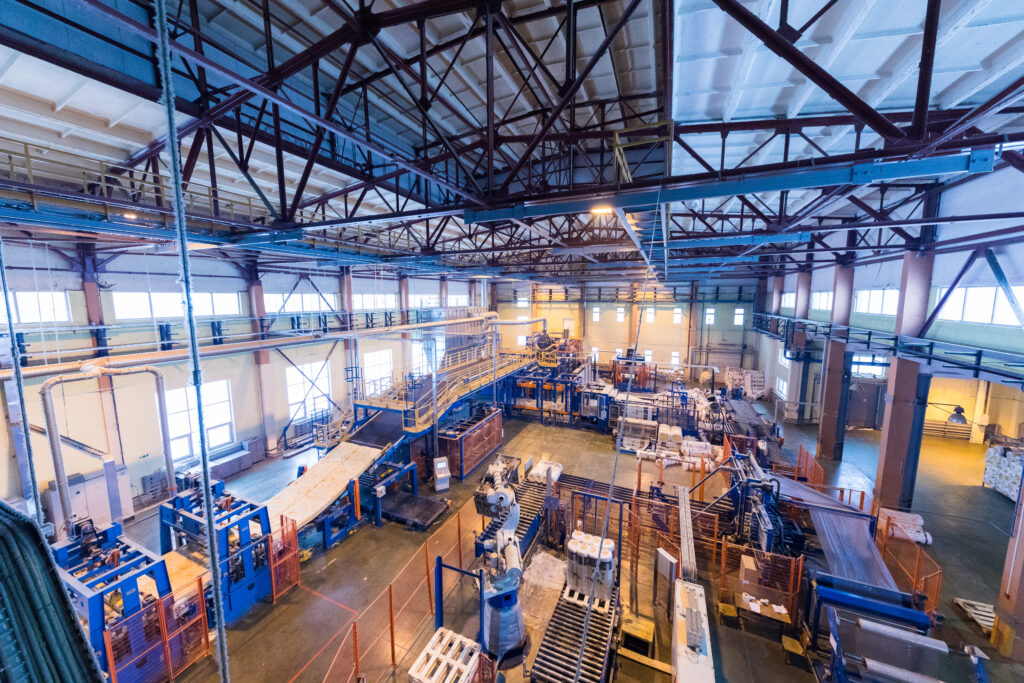
Factory asset tracking and CSRD reporting
But why is factory asset tracking so important to CSRD compliance?
The CSRD compels companies to gather and analyze data to support their sustainability claims – this incentivizes investment in robust asset-tracking systems. There are three aspects that companies should focus on:
- Real-time data collection
Focusing on continuous and immediate monitoring of resource consumption and potential sustainability issues is pivotal. - Advanced analytics
It is also important to identify trends and correlations between asset use and environmental impact to always move towards a more efficient and sustainable practice. - A systematic view of the operation
A holistic view of sustainability performance across the entire operation is also important. This holds true even when working with third-party companies. By CSRD standards, any emissions they produce when providing services for your company count as if they were your own.
Investing in advanced factory asset tracking for CSRD compliance isn’t just about ticking boxes. It’s an opportunity to reduce costs by improving resource efficiency, which then translates to lower energy and material expenses.
Besides, by tracking the energy consumption of equipment, companies can identify areas for optimization, reducing their overall environmental footprint and monitoring their lifecycle, facilitating responsible material sourcing, reuse, and recycling at the end of life.
Tracking emissions is also another big advantage. Data on fuel consumption of vehicles and equipment used on-site can contribute to accurate greenhouse gas (GHG) reporting and help ensure proper maintenance and adherence to service schedules, contributing to a safer work environment.
You may also like: The difference between EMS and GPS monitoring
Being prepared for this future
The CSRD may present a challenge at first, but it is also an opportunity for factories. By leveraging the power of asset tracking, companies can not only comply with regulations but also embark on a path toward a more sustainable and productive future.

With a data-driven approach to resource management and social responsibility, factories can transform asset tracking from a logistical tool to an ESG powerhouse.
That’s why factory asset tracking is no longer optional for manufacturers who want to stay competitive. Hybrid architectures combining RFID, UWB, BLE, IoT, and AI are the standard for new deployments, and the documented ROI (30%+ efficiency uplift, payback within year one for large-scale programs) makes the business case clear.
The trajectory is concrete: UWB is moving from premium to mainstream as chip costs fall and the omlox open RTLS standard matures, AI and digital twin layers are becoming default rather than optional, and hybrid BLE plus UWB plus RFID plus cellular architectures are replacing single-technology deployments across industries.
And if you’re looking to be a part of this revolution, we here at Datanet IoT are ready to help you with our asset-tracking solutions!
The Thingfox T2 Airfreight, for example, is the perfect tracker for the third-party compliance that we mentioned previously. Measuring the emissions of machinery your company does not necessarily own can pose quite a challenge – but not with the Thingfox T2 Airfreight. When it comes to logistics and transportation, you can simply plug it into a truck, and it’s ready to report the gas and CO2 consumption for every delivery into your factory or out to the client.
So get in contact with us to learn more about our products and schedule a presentation. Be ready for the future of CSRD compliance with the most efficient factory asset tracking in the market.









 +1 508 292 2210

6 Responses