

If you’re evaluating aviation asset traceability for audits, start with this number: 60,000. That’s how many unapproved CFM56 engine parts circulated globally before the AOG Technics fraud was uncovered and its director convicted in December 2025. Delta, United, Ryanair, Virgin Australia: all affected. The documentation accompanying those parts looked legitimate. The parts were not.
Traceability for audits is not about knowing where a part sits right now. It’s about proving, on demand, that every component on an aircraft has a verified, unbroken history from raw material to installation. When an auditor walks through the door, the question is binary: can you demonstrate it, or can’t you?
Here’s what I’ve seen in 15+ years of working with aviation operators and MROs: most organizations believe their traceability is solid until the audit actually happens. The gap between “we have records” and “we have audit-ready records” is where certifications get pulled and careers end.
What Auditors Actually Verify
Aviation traceability audits pull from three regulatory stacks, depending on jurisdiction and certification scope:
FAA (United States). 14 CFR Part 21 requires every aircraft part to be traceable to its origin. Advisory Circular AC 20-154A adds specific guidance on using RFID to link physical components to their digital records. The FAA’s Suspected Unapproved Parts program investigates every reported case and notifies operators industry-wide when a part is confirmed unapproved.
EASA (Europe). Part 145, clause EASA.145.A.55, mandates comprehensive records of component lifecycles and repair histories. Every maintenance organization under EASA must retain and produce these records on demand.
AS9100 Rev D. Built on ISO 9001 with aerospace-specific requirements, AS9100 demands full material traceability throughout the supply chain. A typical AS9100D traceability audit checklist runs over 70 questions covering test traceability, part legitimacy, calibration history, and chain-of-custody documentation.
The documents auditors expect to see:
- FAA Form 8130-3 (Authorized Release Certificate): certifies a part meets its approved design and is airworthy
- EASA Form 1: the European equivalent
- Certificate of Conformity (C of C): confirms manufacturing met specified requirements
- Back-to-birth trace: the full documentation chain from raw material through every owner, repair, and installation to the present
One missing link in that chain, and the part can be declared unairworthy. The aircraft gets grounded regardless of physical condition. That’s not a theoretical scenario. It’s the documented regulatory outcome when trace documentation has gaps.
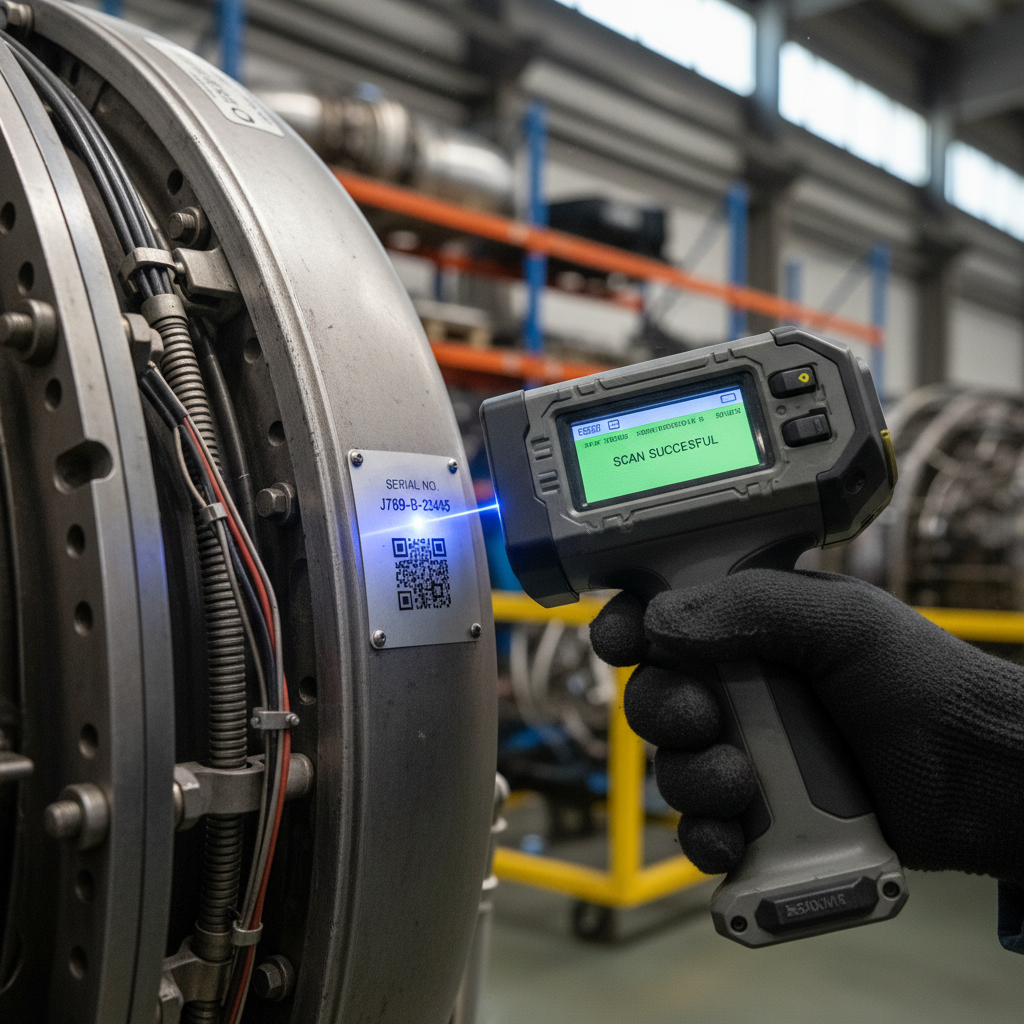
Paper Killed Traceability. Two Scandals Proved It.
The AOG Technics case is the most consequential traceability failure in modern aviation. Jose Alejandro Zambrano sold counterfeit parts for the CFM56 engine (the powerplant behind the A320 and 737 families) using forged 8130-3 forms and fabricated certificates of conformance. CFM International identified 126 engines suspected of containing falsely documented parts. The fraud was caught only when a maintenance organization flagged inconsistencies in the paperwork.
In a parallel case, a man operating from Virginia Water, England, was jailed after selling nearly £7 million worth of counterfeit parts that grounded hundreds of international flights. Same pattern: forged paperwork, limited supply chain visibility, years of undetected circulation.
The common failure was not technology gaps. It was the assumption that paper certificates can be trusted. Paper can be photocopied, altered, fabricated. A scanned PDF is only as trustworthy as the person who created the original. The FAA estimates that over half a million counterfeit or unapproved parts get installed on aircraft each year. When your traceability depends on the integrity of documents that any competent forger can replicate, you don’t have traceability. You have a filing system.
Four Technologies That Build an Audit-Ready Trail
Moving from paper-based to digitally verified traceability depends on four technology layers, each solving a different part of the problem.
RFID. Tags attached to parts respond to reader signals with stored identification data. No line-of-sight required. At receiving, maintenance, and shipment checkpoints, RFID creates automatic custody-change logs. Aerospace manufacturers using RFID for AS9100 compliance have cut audit preparation from weeks to days, replacing manual spreadsheet reconciliation with real-time compliance dashboards. When RFID data feeds directly into manufacturing execution systems for aerospace, that traceability starts on the shop floor rather than being reconstructed after the fact.
IoT sensors. Embedded sensors track location, environmental conditions (temperature, vibration, humidity), and usage data continuously. For audit purposes, IoT provides ongoing evidence that a component was stored and operated within its certified parameters. This matters most for parts on condition-based maintenance intervals, where “was it kept within spec?” is a direct audit question.
Blockchain. An immutable, decentralized ledger that records every transaction in a component’s lifecycle. Unlike paper certificates, blockchain records cannot be retroactively altered. Smart contracts automate compliance checks when a part changes hands. SkyThread estimates that blockchain-based data networks can unlock over $30 billion in trapped value across the aviation parts ecosystem by eliminating data errors and counterfeiting.
Digital twins. A virtual replica of a physical asset that merges real-time sensor data with historical lifecycle records. A typical Airbus aircraft has 5,000+ rotable parts; a Boeing, 7,000+. Digital twins connect all that data into a single, queryable source that auditors can verify against physical reality.
| Technology | What It Answers | Audit Benefit | Maturity |
|---|---|---|---|
| RFID | Who touched this part, and when? | Automatic custody-change logs | Mature, widely deployed |
| IoT Sensors | Where is it, and in what condition? | Continuous compliance evidence | Growing adoption |
| Blockchain | Is the history tamper-proof? | Immutable chain of custody | Pilot to early production |
| Digital Twin | What’s the complete picture? | Single source of truth for auditors | Early mainstream |
In practice, these work in layers. RFID and IoT generate the raw data. Blockchain secures the provenance record. The digital twin aggregates everything into a format auditors can actually interrogate. No single technology covers the full scope; it’s the integration that makes the system audit-proof.
The Handoff Problem: Where Traceability Actually Breaks
This is the failure point I see most often.
Inside your own facility, traceability is manageable. You control the systems, the scanners, the processes. But when a part ships to an external MRO for repair, or moves between partner organizations running different platforms, the chain of custody fragments. Different IT systems, different data standards, different levels of digital maturity. The gap is structural, not accidental.
This is the distinction between shipment tracking and asset tracking that matters most for auditability. Shipment tracking tells you a part left Building A and arrived at Facility B. The job ends at delivery. Asset tracking follows the part through the full cycle: who received it, what work was done, what condition it’s in, who certified the repair, when it returned, whether the documentation is complete. One answers a logistics question. The other answers an auditor’s question.
Federated data networks are the emerging answer. Instead of each organization maintaining siloed records, a shared (but permissioned) ledger validates events across the entire chain. The SkyThread-Wingleet partnership launched in late 2025 is one early example: a trusted network where validated part history is stored by tail number, accessible to authorized stakeholders for compliance verification.
But even without a blockchain network in place today, the physical tracking layer matters right now. A DO-160 approved IoT tracker attached to a component logs GPS position, custody events, and environmental conditions as the part moves between facilities. When the receiving MRO’s records say the part arrived Tuesday and was stored at 22°C, and your tracker independently confirms the same data, the auditor has corroboration from two sources. That’s a different conversation than “we trust their paperwork.”
Getting the Hangar Floor On Board
The best traceability system in aviation is worthless if the line mechanic doesn’t use it.
I’ve walked enough MRO facilities to know the pattern. Management buys the system. IT deploys it. The QA team configures the workflows. And then the technician, already carrying a flashlight, safety wire pliers, and a stack of task cards, is told to scan an RFID tag every time they touch a part. The reaction is predictable.
The organizations that get adoption right frame traceability as protection, not surveillance. When every scan creates a timestamped record that a specific technician performed a specific action on a specific part, that record protects them. If something goes wrong months later, the digital trail proves they followed the correct procedure. Without that trail, blame defaults to whoever was last on the work order.
The practical path: start with the pain your floor teams already feel. Lost tools? Deploy RFID tool tracking first. Let them experience the benefit of finding a calibrated torque wrench in 30 seconds instead of searching for 20 minutes. Calibration alerts overdue? Automate them. Once the system proves it saves time rather than adding steps, expanding to full component traceability meets far less resistance. Trying to deploy everything at once is how traceability projects stall at month three.
What Audit-Ready Traceability Delivers in Practice
Three outcomes I’ve seen consistently when aviation organizations move from paper-based to digitally verified traceability:
- Audit preparation collapses from weeks to hours. Instead of pulling physical files and cross-referencing spreadsheets, the compliance team queries a dashboard. RFID-based systems have demonstrated auditing 10,000 tools in 15 minutes. The difference between an audit being a crisis and being a Tuesday.
- Counterfeit parts get flagged at intake, not at incident. When your receiving process requires a digital handshake (RFID scan, blockchain verification, or both), parts without verified provenance can’t quietly enter the system. The AOG Technics fraud succeeded because the entry point relied on visual inspection of paper certificates.
- Asset utilization climbs because visibility climbs. When you know exactly where every rotable, every tool, and every piece of GSE actually sits (not where the last spreadsheet said it was), cycle times drop and unnecessary purchases stop.
The market trajectory backs this up. The aviation MRO software market reached $5.27 billion in 2024 and is projected to hit $13.12 billion by 2034. The asset tracking sub-segment is growing at a 14.83% CAGR, nearly three times the rate of the broader MRO software market, which is why investment in airline asset management software is accelerating. That gap tells you where operators are putting their money first: real-time visibility and audit automation.
If your current traceability depends on paper certificates and manual reconciliation, the gap between your system and what auditors expect is widening, not shrinking. The regulatory direction is clear. IATA’s position paper on adopting aircraft electronic records provides the industry-wide framework. The FAA is drawing firmer lines between born-digital records and scanned documents. Organizations that wait to digitize their traceability will eventually have no choice. The ones that move now choose their own timeline, their own architecture, and their own terms.
If you’re looking at where to start, particularly for assets that move between facilities and lose visibility at handoff points, our asset tracking catalog is built for exactly that use case. Or just talk to our team and tell us where the chain breaks. That’s usually the fastest path to a solution that actually fits.

Frequently Asked Questions
What is back-to-birth traceability in aviation?
Back-to-birth traceability requires documentation from a part’s raw material origin through every subsequent owner, repair, and installation to the present. Regulators like the FAA and EASA require this unbroken chain to verify airworthiness. If a single link is missing, the part can be declared unairworthy and the aircraft grounded, regardless of the component’s physical condition.
What documents do aviation auditors check for parts traceability?
The primary documents are FAA Form 8130-3 (Authorized Release Certificate), EASA Form 1 (European equivalent), and the Certificate of Conformity (C of C). Together these certify that a part meets its approved design, was manufactured to specification, and is in condition for safe operation. Maintenance release certificates, work orders, and material test reports may also be required depending on the part’s classification.
How does RFID improve AS9100 audit readiness?
RFID tags assigned to parts and tools automatically record custody changes at receiving, maintenance, and shipment checkpoints. This creates a real-time digital audit trail without manual data entry. Aerospace manufacturers report reducing audit preparation from weeks to days because the compliance data is continuously generated during normal operations rather than compiled after the fact.
Can electronic records legally replace paper records for FAA audits?
Yes, with conditions. FAA Advisory Circular AC 120-78B establishes standards for electronic signatures and recordkeeping. However, the FAA Aircraft Registry distinguishes between fully born-digital records and scanned copies of paper documents. Organizations should invest in systems that generate digital records at the point of creation rather than digitizing paper retroactively.
How common are counterfeit parts in aviation?
The FAA estimates over half a million counterfeit or unapproved parts are installed on aircraft annually. The AOG Technics scandal alone involved 60,000+ unapproved CFM56 engine components affecting major carriers worldwide. A parallel case in the UK involved nearly £7 million in fake parts that grounded hundreds of flights. These cases exposed systemic gaps in paper-based traceability systems.
What is the difference between shipment tracking and asset tracking for audit purposes?
Shipment tracking confirms a part moved from point A to point B. The job ends at delivery. Asset tracking follows the part through its complete lifecycle: custody changes, maintenance performed, environmental conditions during transport and storage, certification status, and return to service. Auditors need asset-level traceability because their questions are about provenance and condition history, not just logistics.








 +1 508 292 2210

3 Responses