

Organizations without automated asset tracking overspend on IT alone by 12 to 20% every year through duplicate purchases, unused licenses, and ghost assets nobody bothered to retire. Add physical equipment, containers, fleet vehicles, and tooling to the picture, and the leak gets bigger. The root cause is always the same: nobody knows exactly what they have, where it sits, or what condition it’s in.
Asset audit automation fixes that. Not by eliminating auditors. By giving them real-time, sensor-fed data instead of stale spreadsheets and clipboard walks.
But here’s the catch most guides skip: automating on top of broken data just produces broken results faster. The technology is mature. The question is whether your data foundation can support it. This article covers both sides, from the sensing layer up to continuous assurance, including where implementations actually fail.
What Asset Audit Automation Means in Practice
Asset audit automation is the use of RFID, IoT sensors, barcode and QR scanning, drones, AI reconciliation engines, and integrated asset management platforms to verify, locate, and report on an organization’s assets continuously, without relying on manual counts.
The scope is wider than most people assume at first:
- Physical assets: containers, vehicles, ground support equipment, industrial machinery, returnable transport items
- IT assets: hardware fleets, servers, network devices, endpoint equipment spread across offices and home setups
- Financial and intangible assets: software licenses, leases, right-of-use assets governed by IFRS 16 and ASC 842
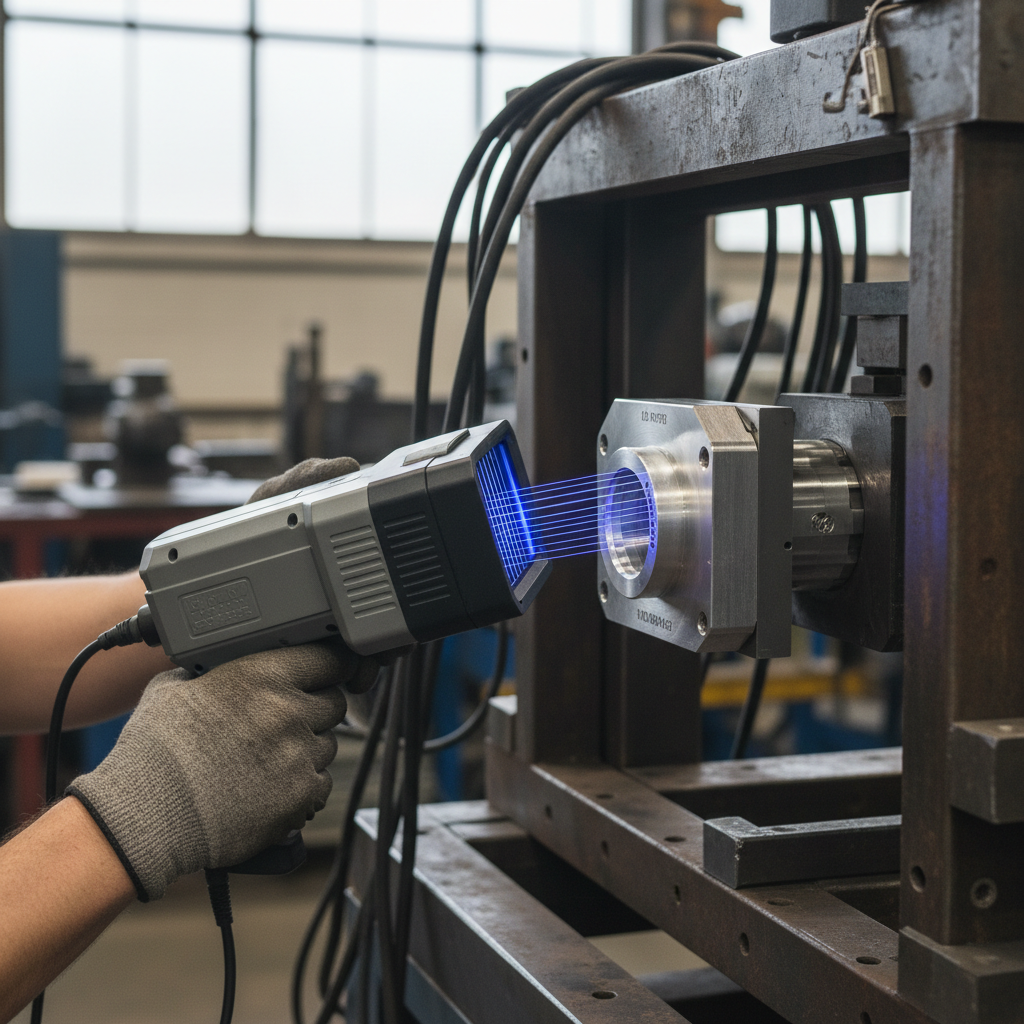
A manual audit is a snapshot. Teams walk a facility, count what they see, reconcile against a register, and file a report that’s already aging by the time it reaches the CFO. An automated audit is a live feed. Sensors keep assets reporting their location and status. Software flags discrepancies the moment they appear: a missing container, an unregistered laptop, a tool that left the site and never returned. Instead of hunting for exceptions, the audit team receives exceptions served to them, ranked by risk.
This isn’t a future concept. The audit software market reached USD 1.27 billion in 2024 and is growing at 18% CAGR. The broader software asset management market hit USD 4.11 billion in 2025 and is projected to reach USD 15.88 billion by 2032. Real organizations are shifting from annual sample-based counts to population-level continuous assurance. The early movers are already seeing returns.
Why Manual Audits Keep Failing
Every ops manager I’ve talked to knows what a painful audit cycle looks like. But the specific failure modes are worth naming, because they dictate which part of automation solves what.
Ghost assets eat budget silently. A ghost asset is something still on your books (and your insurance policy, and your tax filings) that no longer physically exists or functions. It was scrapped, lost, cannibalized for parts, or just walked off site. You’re paying depreciation on it. You’re insuring it. In large fleets, ghost assets can represent 5 to 15% of the total register. One case study from DataNub documented audit time dropping from 1.5 months to 2 weeks after digitizing the process, and financial statement accuracy jumping to 99%. The ghost assets they uncovered during that cleanup were a significant line item.
The snapshot problem. A manual audit captures one moment in time. For assets that move (containers, tooling, vehicles, mobile IT equipment), that moment is already inaccurate hours after the count ends. In aviation MRO or port logistics, where assets circulate between operators, airports, and depots, a quarterly audit is functionally useless for operational decisions. You need position and status data flowing in between audits, not just during them.
Scale defeats manual processes. When your assets span multiple sites, countries, or third-party locations, coordinating a manual audit becomes a project management exercise that drains the same people who should be running operations. The cost isn’t just the labor. It’s the opportunity cost of pulling your best people off the floor to count things.
The Technology Stack That Makes Automation Work
Asset audit automation isn’t one product. It’s a stack of five layers, each solving a different part of the problem. Skip a layer and the whole thing underperforms.
Layer 1: Identification
Every asset needs a machine-readable identity. RFID tags (passive UHF for high-volume items, active for high-value assets), QR codes, barcodes, and NFC tags handle this. RFID became the retail gold standard after Walmart’s mandate in 2010. RFID-enabled Walmart stores saw a 16% reduction in out-of-stocks and inventory accuracy approaching 99%. Nike tagged every SKU starting in 2017 and reports measurable accuracy gains and faster fulfillment.
For industrial and logistics environments, identification alone isn’t enough. You need the next layer.
Layer 2: Sensing and tracking
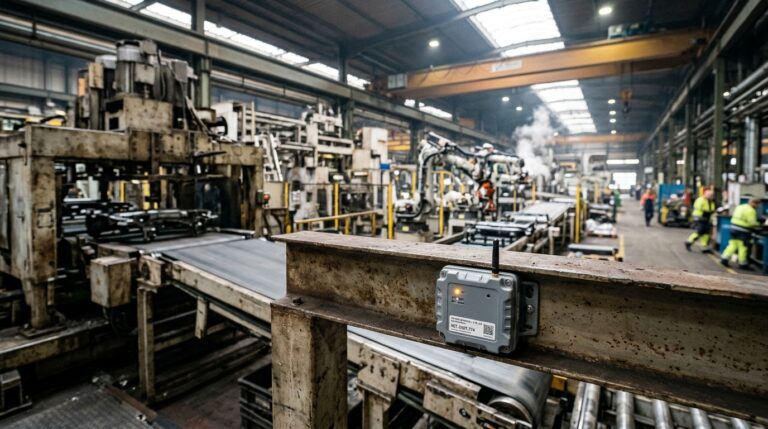
This is where IoT asset trackers enter. GPS, cellular, BLE, and satellite-enabled devices that report position, movement, dwell time, and environmental conditions (temperature, shock, humidity) continuously, not just when someone walks by with a handheld reader.
For returnable containers, ULDs, ground support equipment, or fleet vehicles, this layer is the difference between “we know what we own” and “we know where everything is right now.” That distinction matters for asset audits because you can’t verify an asset’s existence if you can’t locate it. Devices like the Oyster3 or Oyster Edge handle outdoor and rugged environments, and for remote assets a solar powered asset tracker removes battery-swap headaches entirely. For airfreight, the Thingfox T2 (DO-160 certified) provides tracking that’s actually approved for flight.
This is the layer most purely software-focused solutions miss. They build beautiful dashboards on top of data that’s still manually entered. The sensing layer feeds the system automatically.
Layer 3: Capture at scale
Handheld RFID sleds (Zebra, CSL) read 100 to 300 tags per minute in retail. Autonomous drones take it further. Corvus Robotics deploys warehouse drones that scan approximately 1,000 tags per minute without Wi-Fi or GPS, flying through high-bay racking autonomously. For utility and infrastructure companies, aerial drones from Skydio or DJI Enterprise inspect transmission lines and substations, producing photogrammetry-based asset registers fed directly into GIS and EAM systems. The same continuous-sensing logic extends to other domains too, including aquaculture automation, where sensor-driven data replaces manual monitoring entirely.
Layer 4: Platform and system of record
This is where the data lives. Enterprise platforms (ServiceNow HAM, SAP S/4HANA, IBM Maximo, Oracle Fusion) or mid-market SaaS tools (Asset Panda, Reftab, Freshservice, Lansweeper) hold the digital twin of every asset. The right asset tracking software receives scan data and tracker feeds, then reconciles them against the register automatically.
Layer 5: AI reconciliation and continuous monitoring
The analytics layer compares physical evidence against system records, flags exceptions, and ranks them by risk. MindBridge AI, Diligent ACL, and the Big Four’s proprietary platforms (EY Helix, KPMG Clara, PwC Halo, Deloitte Omnia) all operate at this level. KPMG reports 30 to 40% time savings on first-year audit engagements with Clara. These tools don’t sample. They analyze 100% of the population.
Dirty Data Will Sink Your Automation
This is the part I wish someone had told me earlier in my career, and it’s the topic that every vendor conveniently glosses over in their demo.
Studies consistently show that 20 to 30% of CMDB records in large enterprises are stale. Wrong location, wrong custodian, wrong status, or referencing assets that no longer exist. When you connect automation to that kind of register, you don’t get clarity. You get automated confusion. The system flags hundreds of “exceptions” that aren’t real exceptions. They’re just records that were never cleaned.
The October 2025 Deloitte Australia incident is a sharp reminder that automation is only as trustworthy as its inputs. Deloitte had to partially refund AUD 440,000 after GPT-4o-generated citations in a government report turned out to be fabricated. Different domain, same principle: when the foundation is unreliable, the output inherits that unreliability and sometimes amplifies it.
The practical sequence is: clean first, automate second.
- Freeze the register. Export everything. Identify records with no update in 12+ months. Those are your prime ghost asset candidates.
- Physical spot-check the worst segments. You don’t need to walk the entire facility. Target the oldest, highest-value, and most mobile asset categories first.
- Purge and reconcile. Remove confirmed ghosts. Update locations and custodians for everything verified. This is boring, thankless work, and it’s the most important step in the entire project.
- Then deploy sensors and software. Now your automated system starts from a clean baseline, and exceptions it flags are real discrepancies, not inherited noise.
Skip this step and you’ll spend the first six months of your automation project debugging data quality issues instead of running audits.
Building an ROI Case That Survives Scrutiny
Most ROI arguments for asset audit automation focus on time savings. That’s real, but it’s also the smallest piece. The full picture has four components, and the CFO needs to see all of them.
Ghost asset recovery. Every ghost asset you’re still depreciating, insuring, and paying property tax on is a direct cost. In large fleets, purging ghost assets after the first automated audit cycle typically recovers 3 to 8% of total insured asset value. That’s money back in the first year.
Audit cycle time compression. Manual audits for mid-size industrial operations run four to six weeks. Automated cycles compress that to days, freeing staff for actual operations. DataNub’s documented case showed a 70% reduction (1.5 months to 2 weeks). For companies running more frequent cycle counts, the compounding effect is larger.
Compliance risk reduction. SOX 404, IFRS 16, ASC 842, EU CSRD, EU DORA for financial services. Each regulation requires verifiable asset-level evidence. Manual evidence collection is expensive and error-prone. Automated SOX testing replaces spreadsheet-based controls with scripts that run on 100% of populations nightly. The avoided cost of audit findings, restatements, or regulatory penalties is hard to quantify upfront but catastrophic when it materializes.
Operational asset utilization. When you know where every asset is, you stop buying duplicates. You stop renting replacements for equipment that’s sitting idle at another site. For container pools and returnable transport items, visibility into cycle time and dwell time directly reduces fleet size requirements.
Typical payback for mid-size and large enterprises lands between 6 and 18 months, depending on asset complexity and starting data quality. If you’re still budgeting, it helps to understand how much asset tracking costs before committing. The cleaner your baseline, the faster you see returns.
Continuous Assurance Is Replacing Annual Counts
The biggest structural change in asset auditing isn’t a new tool. It’s a shift in philosophy: from sample-based annual audits to 100%-population continuous assurance.
Traditional audits test a sample: pick 50 assets from a register of 10,000, verify them, extrapolate confidence. That made sense when verification was manual and expensive. When sensors report every asset’s location daily (or hourly), sampling becomes unnecessary. The system monitors the entire population and flags deviations in real time.
KPMG’s thought leadership on continuous auditing describes this as a move from reactive to proactive assurance. EY Helix processes 100% of journal entries for many financial audit engagements, where auditors used to sample 30 to 60. The same principle applies to physical assets: if every container, vehicle, and piece of equipment is reporting its status, the annual walkabout becomes a formality that confirms what the system already knows.
Regulatory bodies are catching up. McKinsey’s 2025 State of AI report notes that 88% of organizations now use AI regularly in at least one business function, with audit and risk among the fastest-adopting domains. PCAOB and IAASB are expected to formally recognize continuous-audit evidence within the next two years.
For operations that manage mobile, high-cycle assets (container pools, ULD fleets, rotable components in MRO), continuous assurance isn’t just nice to have. It’s the only model that keeps pace with how those assets actually move.
Three Places Implementations Get Stuck
Field teams resist when they’re not consulted. Automation changes workflows. If the people on the floor or in the yard learn about the new system on go-live day, you’ve already lost them. The best implementations I’ve seen start with the field team’s pain points, not the CFO’s compliance requirements. When a warehouse operator or ground handler understands that the system eliminates their least favorite task (manual inventory walks in 40-degree heat), adoption follows naturally.
Software gets purchased before the sensing layer exists. This is the most common and most expensive mistake. A company buys a sophisticated EAM or ITAM platform, configures beautiful dashboards, and then realizes the data feeding those dashboards is still manually entered, sporadically updated, and incomplete. The platform is only as good as the sensor data going into it. For physical assets that move between sites, you need GPS or cellular trackers deployed on the assets themselves before the software layer delivers value.
Edge environments get ignored. Not every asset operates in a warehouse with perfect Wi-Fi. Containers sit in port yards. Equipment moves through airside zones with transmission restrictions. Fleet vehicles cross borders. Tools end up in basements and remote substations. Your tracking solution needs to work in those environments, not just in the demo room. That means battery-powered devices with multi-network fallback (cellular, satellite, BLE) and certifications appropriate for the environment (DO-160 for aviation, IP67+ for outdoor industrial).
Where This Connects to Real Operations
If you’re running an airline, an MRO shop, a freight operation, or a container pool, you already know the feeling: the system says you own 500 ULDs, but only 420 are accounted for. The other 80 are somewhere in the network, maybe at a partner station, maybe damaged, maybe sitting idle at a depot nobody remembers to check.
Asset audit automation closes that gap, but only if the automation starts at the physical layer. Tags on assets. Trackers reporting position. A platform that catches the delta between what your books say and where things actually are.
That’s what we build at Datanet. Not the audit software itself, but the sensing and tracking layer that makes audit software actually work. If your asset register feels unreliable, or your audit cycle takes weeks instead of hours, that’s worth a conversation. Reach out at info@datanetiot.com or explore our asset tracking device catalog.

Frequently Asked Questions
What is asset audit automation?
It’s the use of RFID, IoT sensors, drones, barcode scanning, AI reconciliation, and asset management platforms to verify and report on an organization’s assets continuously, replacing manual spreadsheet-based counts. The goal is real-time accuracy across physical, IT, and financial assets.
How long does it take to see ROI from automated asset audits?
Most mid-size and large enterprises see payback within 6 to 18 months. The fastest returns come from ghost asset recovery (removing assets you’re still insuring and depreciating but no longer possess) and audit cycle time compression, which can reach 70% or more.
What is a ghost asset and why does it matter?
A ghost asset is an item still on your books that no longer physically exists or functions. You’re paying insurance, taxes, and depreciation on something that’s gone. In large asset pools, ghosts can represent 5 to 15% of the register. Automated audits surface them fast because the system expects a signal from every registered asset and flags the ones that never respond.
Can asset audit automation work in harsh or remote environments?
Yes, but device selection matters. You need battery-powered trackers rated for the conditions: IP67 or higher for outdoor industrial, DO-160 for aviation, multi-network connectivity (cellular plus satellite) for areas without reliable cellular coverage. Not every tracker handles this, so matching hardware to environment is a critical early decision.
Does automation replace auditors?
No. It replaces the manual data collection and reconciliation drudgery. Auditors shift to judgment-intensive work: evaluating exceptions, assessing fraud risk, interpreting complex estimates, and governing the AI tools themselves. Industry surveys project 20 to 30% productivity gains in routine audit tasks over the next decade, not headcount elimination.
What’s the difference between asset audit automation and asset tracking?
Asset tracking gives you real-time location and status data for your assets. Asset audit automation uses that data (plus financial records, contracts, and system registers) to verify that what you think you own matches reality, then produces audit-grade evidence. Tracking is the sensing layer. Audit automation is the verification and reporting layer built on top of it. One without the other underperforms.






 +1 508 292 2210

4 Responses