

A $200 GPS logger sat in a maintenance drawer for three months because nobody remembered to download its data. Two floors up, a cellular tracker fired 300 alerts a week until the ops team muted every single one.
Both were real deployments. Both failed. And neither failed because of the hardware.
The passive vs active asset tracking decision gets framed as a spec sheet comparison: range, battery, price per tag. That framing misses the point. The real question is operational: when do you need to know where your assets are, and what will you actually do with that information?
The global asset tracking market reached $24 billion in 2024 and is projected to hit $51 billion by 2030. Most of that growth is coming from companies that answered that question before buying tags. Here’s how to be one of them.
What “passive” and “active” actually mean
The first problem with this debate: the terms describe two different things depending on context, and people conflate them constantly.
At the hardware level, a passive tag has no battery. It harvests energy from a reader’s RF field and reflects data back. Passive RFID is the classic example: a sticker that costs cents, reads at under 10 meters, and lasts indefinitely because it never powers itself. An active tag carries its own battery and transmits on its own schedule. GPS trackers, BLE beacons, cellular IoT devices, satellite tags: all active hardware.
At the data model level, passive tracking means the device logs data locally for later retrieval. It records GPS positions, temperatures, or events to internal memory. You collect that data when the asset returns to base (USB, Bluetooth sync, docking station). Active tracking means the device pushes data over a network (cellular, satellite, LoRaWAN, BLE) in real time or near-real time. You see the asset on a map now, not next Tuesday.
Here’s where it gets interesting: a device can be active hardware running in a passive data model. A cellular GPS tracker configured to store data locally and upload only when in Wi-Fi range is active hardware behaving passively. Many modern trackers support both modes through firmware configuration. The choice between passive and active is often a software decision, not a purchasing one.
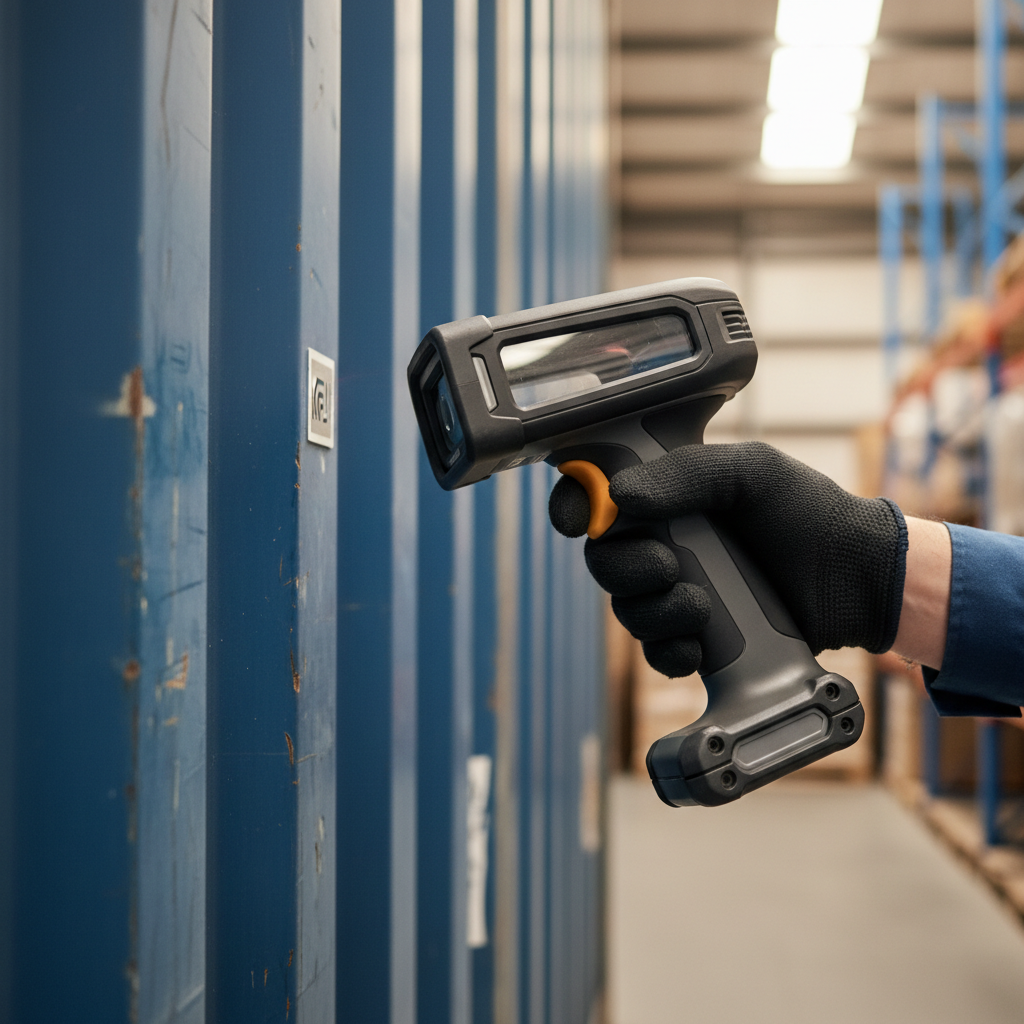
Passive vs active tracking: a direct comparison
| Factor | Passive tracking | Active tracking |
|---|---|---|
| Location data | Historical (retrieved after the fact) | Real-time or near-real-time |
| Alerts and geofencing | None until data is retrieved | Instant (movement, boundary, temperature, tamper) |
| Tag cost | $0.10 (RFID) to $200 (GPS logger) | $15 (BLE) to $200+ (cellular/satellite) |
| Monthly subscription | $0 | $8 to $25 per asset |
| Battery life | Indefinite (passive RFID) or 6 to 12+ months (loggers) | 1 month to 10+ years (varies by report interval) |
| Range | Under 10m (RFID) or logged GPS coordinates | Global (cellular/satellite) or facility-wide (BLE/UWB) |
| Data retrieval | Manual (physical connection required) | Automatic (cloud platform) |
| Primary use case | Compliance audits, cold-chain proof, inventory counts | Theft prevention, fleet ops, cycle-time optimization |
Numbers set the boundaries. Operations fill in the answer.
When passive tracking is the right call
Passive tracking wins when you don’t need to act on location data in the moment. You need to prove where something was, not chase where it is.
Cold-chain compliance logging. A pharmaceutical shipment needs an unbroken temperature record from origin to destination. A passive BLE data logger records readings every 30 seconds, costs a few dollars per trip, and gets scanned at delivery. The recipient verifies compliance, files the log, moves on. Real-time monitoring on that same shipment would cost 10x more per trip and wouldn’t change the outcome: the cold chain either held or it didn’t.
High-volume container pools. Tagging 50,000 returnable containers with $15/month cellular trackers means $750,000 a month in subscriptions. Passive RFID at $0.50 per tag means $25,000 once. You scan at gates, reconcile the pool, and flag containers overdue for return. For most pool operators, that visibility is sufficient.
Regulatory audit trails. Aviation MRO shops need proof of which tools entered and exited an aircraft zone. Passive RFID at the tool crib gate logs every event without requiring the technician to do anything beyond walking through. No live map of a torque wrench is needed. The audit trail is the entire deliverable.
The tradeoff with passive is always the same: you accept a delay between event and awareness. If something goes wrong (theft, diversion, loss), you find out later. For the use cases above, “later” is fine. For the ones below, “later” is expensive.
When active tracking earns its cost
Active tracking justifies its subscription the moment the time gap between “something happened” and “someone responds” carries a dollar figure.
Theft and unauthorized movement. US construction equipment theft runs $300 million to $1 billion a year, with fewer than 25% of stolen machines ever recovered. An active GPS tracker with a geofence alert fires the instant a $150,000 excavator leaves the jobsite at 2 AM. Recovery happens within hours, not “if at all.” The $15/month subscription on that machine is rounding error.
Fleet and vehicle operations. Active tracking delivers live ETAs, route deviations, idle time, and maintenance triggers. The economics speak for themselves: Geotab alone surpassed 4 million connected vehicle subscriptions worldwide. Typical payback on active fleet tracking lands around six months, driven by fuel savings, insurance discounts of 5 to 15%, and reduced unauthorized use.
Asset cycle time across networks. This is where we spend most of our time at Datanet. When an airline tracks ULDs across 40 airports, or an MRO facility follows rotable parts through multi-station repair cycles, checkpoint scanning at two locations tells you the asset left and the asset arrived. It tells you nothing about the dwell time at each station, the assets stuck in transit, or the bottlenecks inflating your cycle time. That requires continuous position data and proper asset utilization tracking. Active trackers like the Thingfox T2 (DO-160 certified for air freight) transmit through the entire loop: dispatch, transit, delivery, return, redispatch.
Environmental monitoring with intervention windows. A reefer container carrying biologics doesn’t just need a temperature log. It needs an alert the moment temperature breaches threshold, so someone can reroute, add coolant, or reject the pallet before the whole load spoils. Passive loggers confirm the failure after the fact. Active trackers give you a window to prevent it.
The cost math most comparisons skip
Every passive-vs-active comparison shows tag price and monthly fee. Almost none show the three-year total cost, including the hidden lines that actually shape ROI.
Passive tracking’s hidden cost is labor. Someone has to physically retrieve the data. For 500 assets with passive GPS loggers, that means connecting to each device at the yard, downloading trip history, uploading it to a system, and reconciling. That’s a dedicated headcount. In MRO environments, it’s a technician pulled off billable work. The subscription fee you saved on the tracker reappears on the payroll.
Active tracking’s hidden cost is noise. A fleet of 2,000 active trackers reporting every 5 minutes generates over 200,000 data points per day. Without smart alert rules and exception-based dashboards, the ops team drowns. I’ve watched companies deploy active tracking, get overwhelmed in the first month, and mute every alert. At that point you’re paying for active and getting less value than passive would have delivered.
Battery management at scale is a line item nobody budgets. Active trackers with aggressive reporting intervals (every 1 to 5 minutes) burn through batteries in 1 to 6 months. For 1,000 devices, that means sourcing batteries, scheduling swap-outs, managing logistics for the logistics. Devices built for industrial deployment with LTE-M or NB-IoT power-saving modes and motion-triggered reporting push battery life into the 5 to 10 year range. Firmware configuration matters as much as the hardware spec.
Realistic three-year TCO for a 500-asset deployment:
| Cost line | Passive (GPS loggers) | Active (cellular IoT) |
|---|---|---|
| Hardware (500 units) | $50,000 to $100,000 | $37,500 to $100,000 |
| Subscriptions (36 months) | $0 | $144,000 to $450,000 |
| Data retrieval labor (36 months) | $90,000 to $180,000 | $0 |
| Battery replacements (36 months) | Minimal | $0 to $50,000 (depends on config) |
| Platform/software | $5,000 to $20,000 | Often included in subscription |
| Three-year total | $145,000 to $300,000 | $181,500 to $600,000 |
Active costs more in aggregate. But one theft recovery on a $150,000 machine, or a 10% cycle-time reduction on a container pool, flips the equation entirely. Passive wins on cost per tag. Active wins on cost per outcome. Building a solid asset tracking business case means knowing which metric your operation actually cares about.
Why the answer is often both
Most mature tracking deployments don’t pick one side. They layer.
A freight forwarder might run passive RFID at warehouse gates for bulk container check-in/check-out, and put active cellular trackers on the 200 highest-value or most-delayed containers in the pool. RFID handles volume. Cellular handles exceptions.
An MRO shop might tag every tool with passive RFID for crib management and FOD prevention, then put active BLE beacons on the 50 calibrated instruments where downtime waiting for a missing bore gauge costs $800/hour in labor.
In aviation, the split typically follows asset value and mobility. Ground support equipment that stays at one airport gets passive checkpoint scanning. ULDs and rotable parts crossing continents get active cellular or satellite trackers, because that’s where cycle time bleeds and assets vanish between handoffs.
The hybrid approach works because it matches tracking investment to asset risk. Not every item in your operation deserves a monthly subscription. But some absolutely do, and underinvesting on those is where the real losses stack up.
If you’re designing a hybrid deployment from scratch, or migrating away from a passive system that stopped giving useful information, our asset tracking device catalog covers both ends of the spectrum, from configurable BLE tags to ruggedized cellular devices built for years of outdoor exposure. If your container pool goes invisible after handoff, that’s the gap active tracking closes. Talk to our team and we’ll help you figure out which assets need what.

Frequently asked questions
Can the same device work as both passive and active?
Yes. Many cellular GPS trackers store data locally in passive mode and switch to real-time reporting when network-connected. The choice is firmware configuration, not a new purchase. Devices like the Oyster3 support configurable reporting intervals, so you can adjust the balance between battery life and real-time visibility per deployment.
Which is better for cold-chain compliance?
Passive data loggers remain the standard for single-trip cold-chain proof. They’re cheap, disposable, and deliver the required audit trail. Active monitoring is worth the extra cost only when the cargo value is high enough that a real-time temperature alert can trigger intervention before the load is lost.
How long do batteries last on active trackers?
Reporting frequency is the primary variable. Trackers pinging every 1 to 5 minutes last 1 to 6 months. The same hardware set to motion-triggered reporting with LTE-M power-saving modes can run 5 to 10 years on a single battery. Choosing the lowest useful report cadence is the biggest lever on battery life.
Can Apple AirTags replace a commercial GPS tracker?
For personal use, sometimes. For business operations, no. AirTags lack enterprise APIs, multi-user dashboards, ruggedized housings, and Android support. They depend on proximity to Apple devices, go dark in remote areas, and Apple’s terms restrict tracking property without the owner’s consent.
What connectivity options exist for active trackers?
Cellular (LTE-M, NB-IoT, Cat-1) covers most outdoor mobile assets. BLE 5.x and the newer Channel Sounding protocol deliver sub-meter indoor accuracy at low cost. LoRaWAN handles low-power, wide-area applications. Satellite IoT serves off-grid environments. UWB provides centimeter-level precision indoors. The right pick depends on indoor vs outdoor, local vs global, and required update frequency.
How do I decide between passive and active for my operation?
Start with the cost of a delayed response. If a missing or deviated asset creates real financial exposure (theft, cold-chain loss, cycle-time inflation), active tracking pays for itself. If you mainly need post-event proof for audits and compliance, passive is more cost-effective. Most mixed-asset operations land on a hybrid: passive at volume, active on the assets that hurt when they disappear.








 +1 508 292 2210

2 Responses