

Only 6% of companies report full end-to-end supply chain visibility. The rest operate with fragmented data, periodic counts, and educated guesses about where their inventory actually sits. Inventory visibility solutions exist to close that gap, but most implementations stall at half the problem.
I’ve spent 15+ years deploying IoT tracking across aviation, logistics, and industrial supply chains. The pattern I keep seeing: companies invest in visibility inside four walls (warehouse, store, production floor), then lose the signal entirely the moment an asset crosses the dock door.
What Inventory Visibility Solutions Actually Do
These systems perform three functions simultaneously. They capture data about where each unit is and what state it’s in. They normalize that data across systems never designed to talk to each other. And they expose the consolidated view to planners, floor associates, and increasingly to AI agents that act on it autonomously.
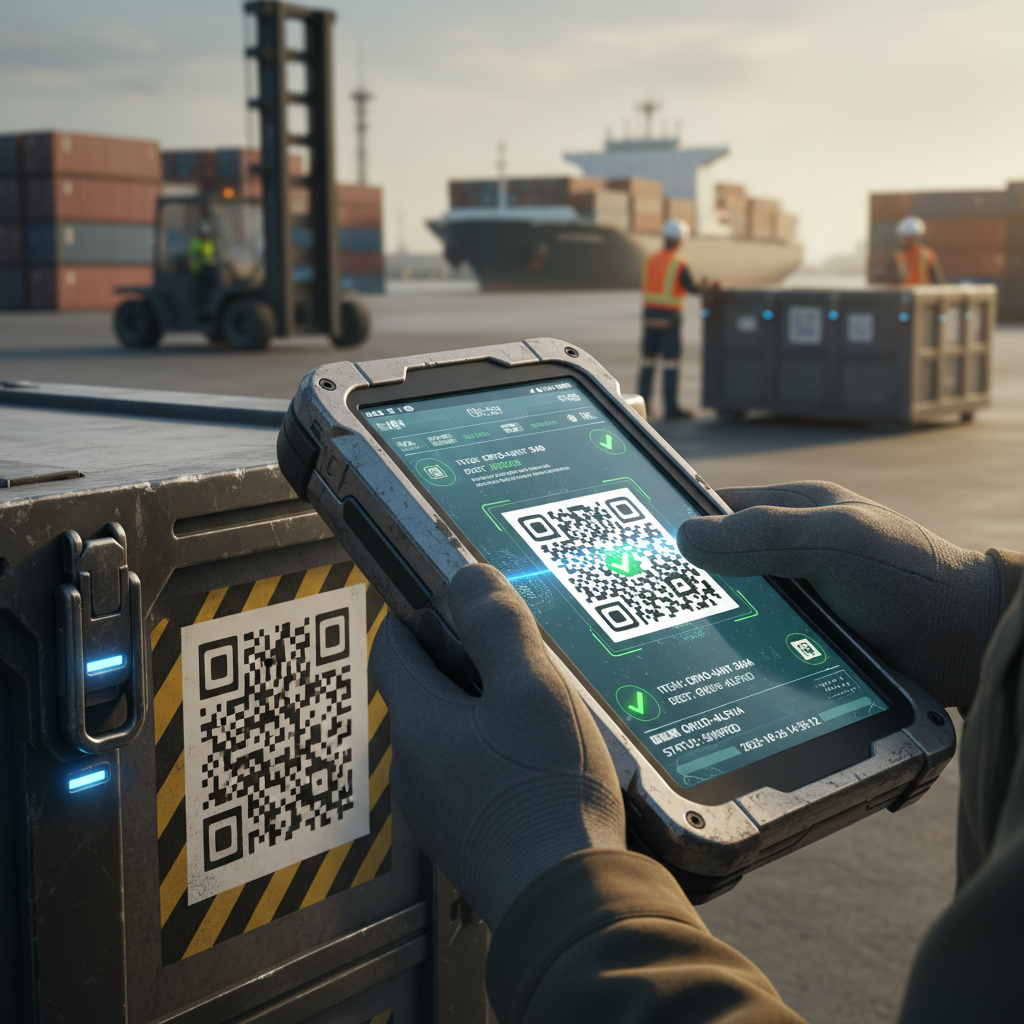
The “solutions” side of the equation spans a wide range. On one end: enterprise software platforms (SAP IBP, Oracle Fusion, Microsoft Dynamics 365, Blue Yonder) that aggregate data from ERP, WMS, and TMS into a single dashboard. On the other: the physical infrastructure that generates data in the first place. RFID readers, IoT GPS trackers, BLE beacons, computer vision cameras, environmental sensors.
Neither layer works alone. The most polished dashboard means nothing if the data feeding it is twelve hours stale. And a warehouse full of sensors is just noise without a platform to reconcile what they report.
The shift in 2026: “real-time” has moved from aspirational to baseline. When Walmart and Target mandate item-level RFID tagging across new departments, they expect continuous, passive data that reflects the floor right now. McKinsey’s 2025 supply chain analysis goes further: generative AI agents now sit on top of visibility platforms, autonomously investigating anomalies and drafting replenishment orders. That only works if the data substrate is live.
What Invisible Inventory Costs You
Inventory distortion is the gap between what your system says you have and what you actually have. It shows up as stockouts, overstocks, shrink, and lost sales. The IHL Group puts the annual cost to US retailers at approximately $1.7 trillion.
Within that figure, retail shrink alone hit roughly $94.5 billion, with shrink rates climbing from 1.4% to 1.6% of sales in a single year. And shrink isn’t just theft. It’s receiving errors. Misplaced stock. Administrative mistakes. Inventory that exists in the system but not on the shelf where a customer can find it.
The costs most companies underestimate:
- Expedited freight. When you don’t know what you have where, you air-ship replacements instead of re-routing existing stock. At $4 to $8 per kilogram for air versus cents by ocean, the math is punishing.
- Customer defection. Out-of-stock is not a warehouse event; it’s a revenue event. Customers who encounter empty shelves don’t wait. They buy elsewhere.
- Scope 3 emissions. Overproduction and expedited transport carry carbon costs that frameworks like CSRD and SEC climate rules now require companies to quantify. You cannot reduce what you cannot see.
- Dead capital in reusable assets. Containers, ULDs, tooling, and ground equipment that can’t be located tie up working capital and force unnecessary repurchases.
The cost of inaction grows every year. Customer expectations tighten. Compliance requirements expand. And competitors with better visibility make faster, cheaper decisions than you can. Understanding the financial return of asset tracking investments helps justify closing these visibility gaps before they compound further.
Five Technologies Behind Inventory Visibility
Each technology has a sweet spot. The right choice depends on what you’re tracking, how it moves, and what “real-time” means for your specific operation.
| Technology | Best For | Strength | Key Limitation |
|---|---|---|---|
| RAIN (UHF) RFID | Item-level retail, apparel, MRO parts | 95-99% accuracy, hands-free bulk reads | Metal/liquid interference, tag cost at scale |
| IoT GPS/Cellular Trackers | In-transit containers, fleet assets, reusable equipment | Global coverage, no fixed infrastructure | Battery management, connectivity in remote areas |
| BLE Beacons | Warehouse zones, yard management | Low power, smartphone-compatible | Short range, requires gateway infrastructure |
| Computer Vision | Shelf monitoring, bin counting | No tags needed, retrofit friendly | Lighting and occlusion sensitivity |
| Ambient IoT (battery-free) | Pallet/case tracking, high-volume items | Ultra-low cost, zero maintenance | Emerging standard, limited range |
RFID delivers the most proven ROI in controlled environments. Walmart stores using RFID saw a 16% reduction in out-of-stocks compared to non-RFID locations. Zara pushed inventory accuracy above 99% and compressed full-store cycle counts from weeks to hours. Decathlon went further, deploying autonomous robots with RAIN RFID readers to count entire warehouse-sized retail floors every one to four weeks, up from twice a year.
But RFID has a scope boundary. It excels inside a store, a warehouse, a loading dock. The moment an asset leaves that controlled envelope (on a truck, on a vessel, at a partner facility), there is no reader to capture it. That is where IoT cellular and GPS trackers take over. They don’t rely on fixed infrastructure. They report position autonomously, from a port yard in Rotterdam or a maintenance hangar in Tulsa.
Computer vision is the fast-rising option. An IEEE-published study from 2025 documented real-world deployments where AI-camera systems reduced stockouts and improved restocking accuracy without a single tag on the product. Lower deployment friction, but a narrower initial use case.
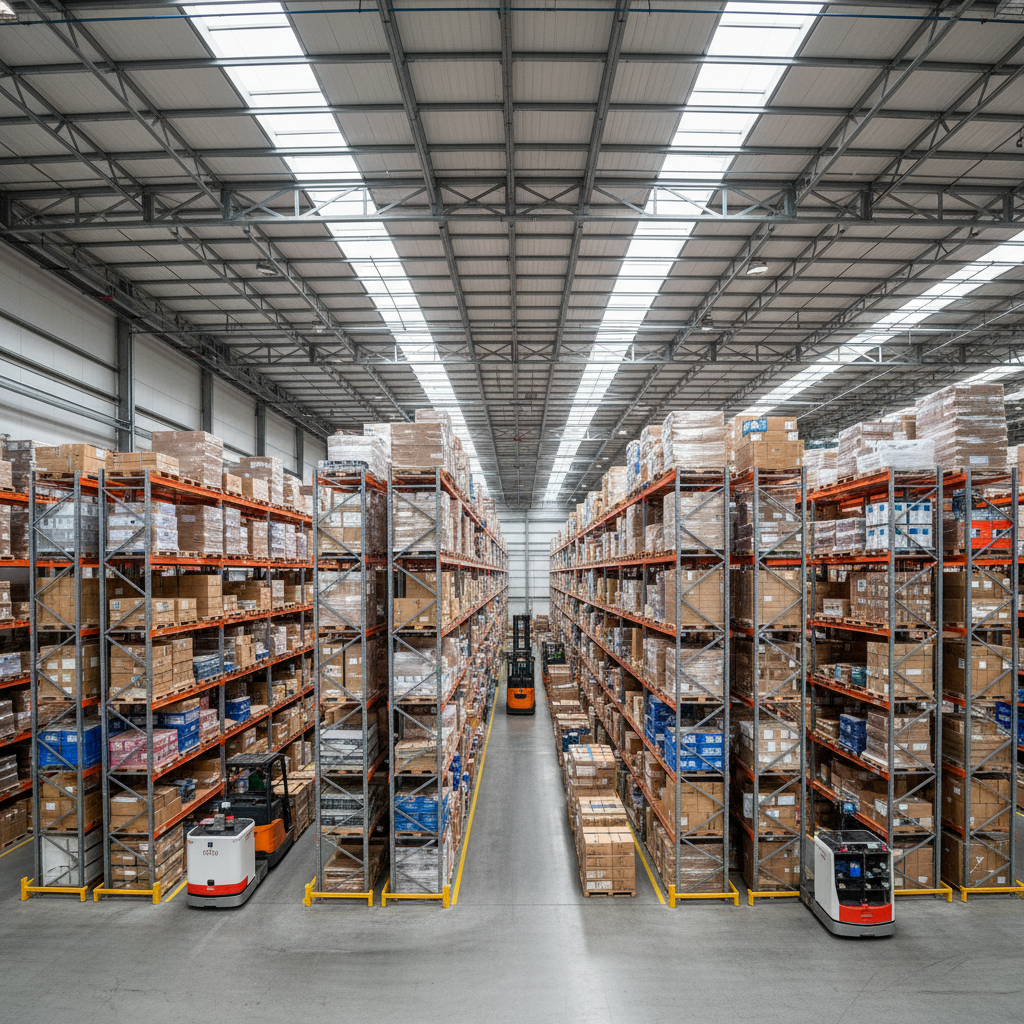
The smartest deployments layer these technologies. RFID inside the four walls. IoT GPS for in-transit and inter-facility moves. Computer vision at the shelf edge. Each layer covers where the others drop off.
The Maturity Ladder: Where You Probably Stand
Not every operation needs a digital twin. And not every operation is ready for one. Here’s a framework to locate where you are and identify the step that actually moves the needle.
At Level 1, you’re running on spreadsheets and periodic counts. Inventory data lives in Excel or a basic POS export. Counts happen monthly, maybe quarterly. Accuracy floats between “close enough” and “we’ll sort it out during the audit.” The first move from here is any cloud-based inventory platform (Cin7, Zoho Inventory, Fishbowl) that provides a live dashboard and barcode scanning. The lift is immediate and inexpensive.
At Level 2, you have a WMS covering a single site. Warehouse ops are solid, but transfers between locations are manual entries. The risk: phantom inventory. Stock exists in the system but not where the system thinks it is. Multi-location synchronization is the unlock.
At Level 3, your ERP connects warehouses, stores, and maybe your 3PL. This is where most mid-market companies land. Visibility inside owned facilities is decent. The blind spot: everything in transit and everything sitting at a partner’s site. IoT tracking hardware can close this gap without touching your ERP core.
At Level 4, sensors, RFID, and telematics feed a control tower showing inventory across the full network, including in-transit and partner locations. AI handles demand sensing and anomaly flagging. Fewer than 10% of companies operate here consistently.
Level 5 is the predictive digital twin: a virtual replica of your inventory network, continuously updated, simulating disruptions before they arrive. BCG documented that digital twins let companies anticipate bottlenecks and dynamically re-route inventory across echelons. This is leading edge. A few enterprises do it well.
Most companies overestimate their maturity by one to two levels. Quick diagnostic: can you tell me the exact location and condition of every reusable container you own, right now? If the answer involves “we’d have to check,” there’s a gap between your system and what’s actually happening on your dock.
The Blind Spot Beyond the Dock Door
This is where I see the biggest disconnect in how companies think about inventory visibility.
Most solutions focus inside the four walls: what’s on the shelf, what’s allocated to an order, what’s in receiving. That coverage is necessary. It is not sufficient.
The moment a container, a ULD, a pallet, or a piece of ground support equipment leaves your facility, it typically vanishes from your visibility map. Your WMS knows it shipped. Your TMS might give you a carrier ETA. But the physical asset that carries your inventory becomes invisible until someone scans it at the next stop. If they scan it at all. This is exactly the gap that remote monitoring solutions are built to close.
This is the line between shipment tracking and asset tracking. Shipment tracking follows a package to delivery, then the job is done. Asset tracking follows the container, the ULD, the tool through its entire lifecycle: outbound move, use at destination, idle time (dwell), return, maintenance, redeployment.
Why does this matter for inventory visibility? Because those reusable assets are inventory. A $300 ULD sitting idle at a partner facility for 60 days instead of 15 is locked capital. A container pool where 30% of units are unaccounted for pushes you to buy replacements you shouldn’t need, which is exactly why container visibility solutions matter. MRO tooling that can’t be located stalls a work order while someone expedites a duplicate.
The compounding effect is real. When you can’t see reusable assets, cycle times inflate. When cycle times inflate, you buy more assets to compensate. When you have more assets, you have more to lose track of. The problem feeds itself.
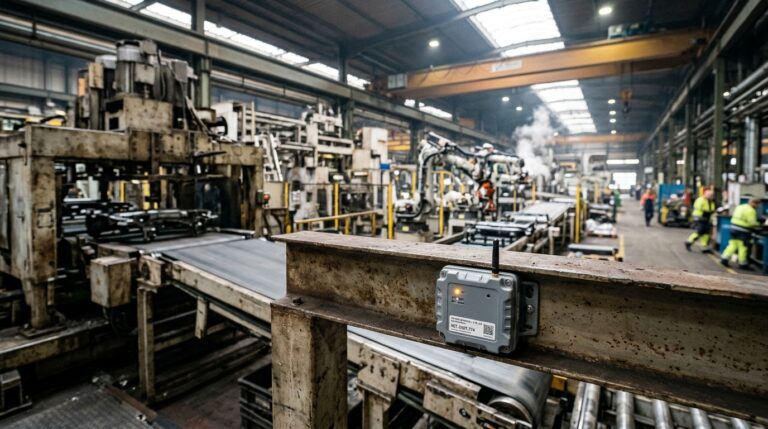
Closing this loop requires hardware that travels with the asset, not infrastructure that waits for it to arrive. Battery-powered cellular/GNSS trackers like the Oyster3 for logistics assets or the Thingfox T2 (DO-160 approved for airfreight) report position and status from anywhere: a port, a tarmac, a partner warehouse. No reader infrastructure. No dependency on someone else scanning your property.
Building Visibility Without Replacing Everything
The fastest way to kill a visibility initiative is to frame it as an ERP replacement. It isn’t one. The overlay approach works and delivers results faster.
Start with the highest-loss category. Where is the most capital disappearing? For retailers, it’s usually the top 20% of SKUs driving 80% of revenue. For logistics operators, it’s the reusable asset pool. For MRO operations, it’s high-value tooling and rotable components.
Instrument that category first. RFID for item-level in a warehouse. IoT GPS trackers for containers and equipment that move between sites. Connect the data to your existing ERP or WMS through standard APIs. No system-wide migration.
Three things that separate a pilot that scales from one that dies:
- Audit the gap before choosing the tech. Map exactly where your system loses track of assets. At the dock door? At a third-party facility? In transit between your own sites? The nature of the gap selects the technology, not the other way around.
- Prove ROI on one layer before adding another. Don’t deploy RFID, IoT, and computer vision simultaneously. Pick the technology that covers your biggest blind spot. Show measurable results. Then expand.
- Demand interoperability. Your tracker hardware should feed data into whatever system you already run. If a vendor requires exclusive use of their proprietary platform with no API access, that’s lock-in, not a solution.
Implementation timelines for IoT-based asset tracking typically run weeks, not years. Device provisioning, API hookup, dashboard configuration. The hardware has matured to the point where fast deployment is the norm, not the exception. Before you budget, it helps to understand how much asset tracking costs across hardware, connectivity, and platform fees.
If your container pool, ULD fleet, or ground equipment feels invisible once it leaves your facility, that’s exactly the gap asset tracking closes. We build these solutions end-to-end at Datanet, from hardware selection through platform integration, backed by asset tracking software that ties the data together. Reach out to our team or drop a line at info@datanetiot.com if you want to stop guessing where your assets are.
Frequently Asked Questions
What is inventory visibility?
Inventory visibility is the ability to track and monitor the location, quantity, status, and movement of inventory in real time across your supply chain. That includes warehouses, stores, in-transit shipments, partner facilities, and reusable assets like containers and equipment. The goal is a single, accurate view that supports decisions without lag.
How much does poor inventory visibility cost?
The IHL Group estimates inventory distortion costs US retailers approximately $1.7 trillion annually through stockouts, overstocks, and lost sales. Factor in expedited freight, emissions penalties, and customer churn from out-of-stock events, and the real number is higher.
What is the difference between shipment tracking and asset tracking?
Shipment tracking follows a package or order to its delivery point, then ends. Asset tracking follows the physical container, ULD, pallet, or tool through its full lifecycle: deployment, use, dwell, return, maintenance, and redeployment. For reusable assets, shipment tracking only covers a fraction of the visibility you need.
Can I improve inventory visibility without replacing my ERP?
Yes. Modern IoT trackers and RFID infrastructure integrate with existing ERP and WMS systems through APIs. The overlay approach lets you instrument your highest-loss asset category first, prove ROI, and expand from there. No full system migration required.
What technologies power inventory visibility in 2026?
The core stack includes RAIN RFID for item-level tracking indoors, IoT cellular/GPS trackers for in-transit and inter-facility assets, BLE beacons for warehouse zone-level positioning, computer vision for shelf monitoring, and emerging ambient IoT (battery-free sensors) for high-volume pallet and case tracking. Most mature deployments layer multiple technologies.
How long does it take to deploy an IoT-based visibility solution?
For IoT asset tracking (not full ERP replacement), implementation typically takes weeks to a couple of months. That covers device provisioning, API integration with existing systems, and dashboard configuration. The usual bottleneck is internal process alignment, not the technology itself.



 +1 508 292 2210

2 Responses