

Here is a number that should bother you: one unproductive hour costs automotive manufacturers $2.3 million, according to a Siemens industry analysis. That figure doubled between 2019 and 2023. Heavy industry saw a fourfold increase in the same period. (See also: real-time monitoring.)
Yet most organizations still treat asset monitoring and control as a software checkbox. Buy a platform, stick a sensor on something, watch a dashboard. The asset disappears from view the moment it leaves the expected zone, and nobody notices until a maintenance window is missed or a $40,000 ULD vanishes somewhere between Frankfurt and Singapore.
I have spent 15+ years deploying IoT hardware across aviation, logistics, and industrial supply chains. The pattern is consistent: teams confuse monitoring with tracking, confuse tracking with control, and end up with expensive data that changes nothing. This article is the field guide I wish someone had handed me a decade ago.
What Asset Monitoring and Control Actually Means
Asset monitoring and control is the operational discipline of collecting data from physical assets (location, condition, performance, environment) and using that data to make decisions or trigger actions across the asset’s full lifecycle. Smart asset monitoring extends this by integrating real-time analytics with automated decision workflows. The Institute of Asset Management defines the broader practice as balancing cost, risk, opportunity, and desired performance to meet organizational objectives.
That definition is precise but abstract. In practice, the discipline breaks into three layers that most content on this topic conflates:
- Asset tracking answers: where is this thing, who has it, and what lifecycle events have occurred? Think RFID tags on aircraft tooling, GPS on ground support equipment, barcode scans on warehouse inventory.
- Asset monitoring adds real-time condition data: temperature, vibration, humidity, pressure, battery state, shock events. You know not just where something is, but how it is doing right now.
- Asset control closes the loop. Based on monitoring data, something happens: a work order is generated, a set point changes, a dispatch decision is triggered, an alert reaches the right technician. Control means the data produces action.
The problem is that most deployments stop at the first layer. They track shipments to the delivery point, declare success, and lose visibility the moment the asset enters the return cycle, sits in a depot, or moves between maintenance stations. That gap between shipment tracking (job ends at delivery) and true asset monitoring (visibility across the full cycle, including return, dwell, reuse, and retirement) is where operational dollars leak.
The Technology Stack That Makes Monitoring Actionable
Buying sensors without an architecture is like buying tires without a car. The technology stack behind effective asset monitoring and control has distinct layers, and weakness in any one of them breaks the chain from signal to action.
1. Hardware and sensing
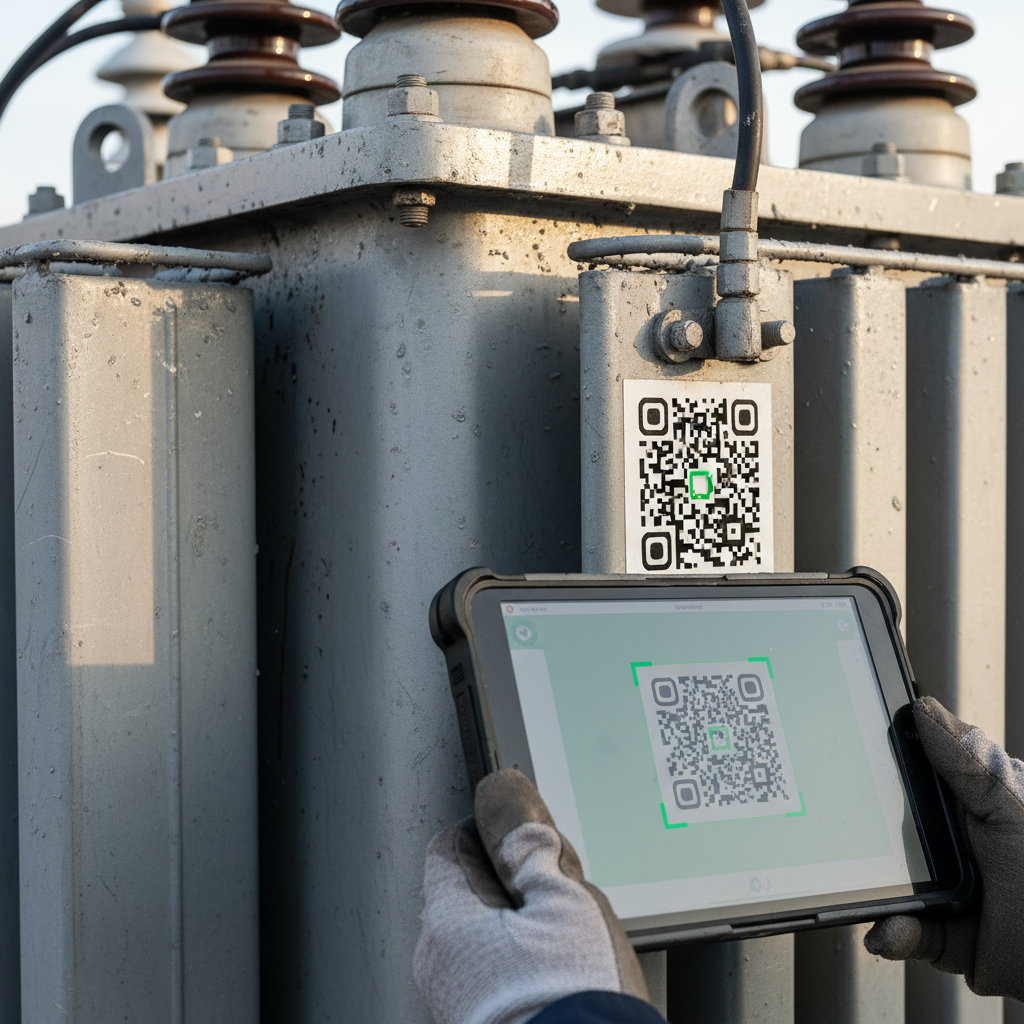
The physical layer captures what matters. For location: GNSS, cellular, Wi-Fi, BLE beacons. For condition: vibration, temperature, pressure, acoustic, current, and environmental sensors. For identity: RFID, NFC, barcodes, serial-number registries.
The choice depends on the asset, the environment, and the consequence of failure. An aerospace MRO shop tracking rotable parts needs DO-160 certified hardware that survives altitude, vibration, and temperature extremes. A port operator monitoring container pools needs rugged, battery-efficient GPS trackers that report position across months of ocean transit. A fleet manager tracking ground support equipment at an airport needs cellular devices with geofencing and motion-triggered reporting.
NASA’s predictive maintenance guidance from 1994 described the core system as a data collector, host computer, software, and transducers. Thirty years later, the causal chain is identical. Modern platforms add cloud analytics, machine learning, and mobile workflows, but the principle holds: measure, interpret, decide, act, learn.
2. Connectivity and normalization
Sensors produce data. Connectivity moves it. The protocol choice matters more than most vendors admit.
OPC UA provides structured industrial interoperability, preserving equipment identity, units, timestamps, and meaning across systems. MQTT is a lightweight publish/subscribe protocol designed for constrained environments. In aviation and logistics, cellular IoT (LTE-M, NB-IoT) and satellite connectivity handle assets that move across regions and oceans. IoT Analytics counted 4.1 billion cellular IoT connections in 2024, with total connected devices projected to reach 39 billion by 2030.
The design question is not which protocol wins. It is whether the architecture preserves context (identity, units, quality flags, lineage) as data moves from the asset through gateways to cloud or edge systems. Lose context and your analytics become noise.
3. Analytics and decision support
Condition monitoring tells you something is abnormal now. Predictive maintenance estimates when a future failure is likely. Prescriptive maintenance recommends the specific action. Asset performance management (APM) connects all three to reliability strategy, cost, and work execution.
Digital twins are entering this layer. A 2025 research paper in Frontiers in AI describes a modular AI-enabled digital twin architecture integrating physical systems, sensors, and predictive models, but acknowledges the implementation is partial and traditional simulation twins face scalability limitations. The trend is toward hybrid twins combining engineering models, live telemetry, and historical work records. But the honest reality: most organizations are not ready for digital twins. They are still struggling with clean asset registries.
4. Execution and feedback
This is where monitoring becomes control. An alert triggers a work order in the CMMS. A geofence violation dispatches a recovery team. A condition threshold schedules a part replacement before failure. The feedback loop records what happened, updates the model, and improves the next prediction.
Without this layer, you have a very expensive observation system.
Where Asset Monitoring and Control Delivers Measurable ROI
I am skeptical of vendor claims that lack context. “Reduce downtime by 50%” means nothing without knowing the baseline, the asset population, and the measurement method. So here are cases with enough detail to be useful.
Manufacturing at scale
Siemens reports that an aluminum producer reduced unplanned downtime by 20%, reached ROI goals in 4 to 6 months, and remotely monitors more than 10,000 machines using machine-learning algorithms. The lesson is organizational: the model became valuable when it was extended across a machine population and linked to maintenance action. A prediction that nobody acts on saves nothing.
Power generation
EDP deployed GE Vernova’s cloud APM software across 58 units and nearly 8 GW of installed capacity, using approximately 13,000 tags, 1,300 predictive models, and 450 assets. Of nearly 570 cases reviewed, 25 were catches with real business impact. Portfolio context matters. A single asset model detects deviations; a fleet system helps compare assets, prioritize experts, and quantify avoided consequences.
Infrastructure and water
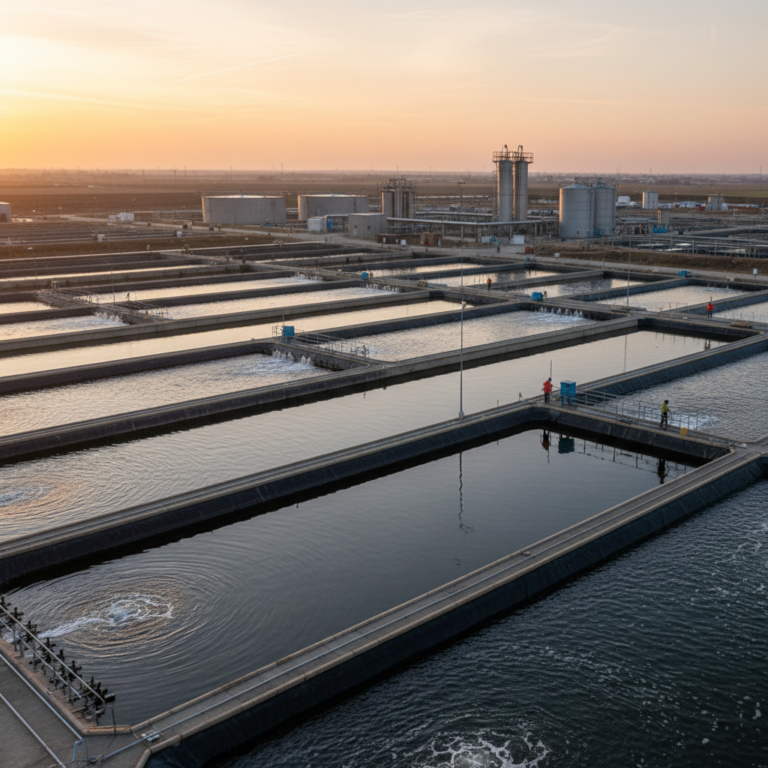
The Global Infrastructure Hub documents a Florida water utility case where Voda assessed more than 1,200 pipes, predicted 18 avoidable breaks, and saved over $100,000 in reactive maintenance. A University of Queensland deployment on 22 chiller units reported 135% ROI and up to $100,000 in avoided repair costs. Small scope, measurable proof. That is how you start.
Aviation, logistics, and the invisible container pool
This is the territory I know best. In aviation supply chains, the monitoring gap is not about predicting when a turbine blade will crack. It is far more basic: knowing where your ULDs are after they leave your facility, how long rotable parts sit in MRO queues, whether ground support equipment is actually at the gate where the system says it should be, and what happened to the 200 reusable containers your freight forwarder “returned” three months ago.
Between 10% and 30% of fixed assets on enterprise books are ghost assets: recorded but not physically present, or present but unaccounted for. This is precisely why asset tracking is important. In aviation logistics, the percentage can be worse because assets cross organizational boundaries constantly. Airlines, ground handlers, MRO providers, and freight forwarders all touch the same equipment, but none of them own the full picture.
Asset monitoring and control in this context means: certified hardware on the asset (something that survives DO-160 vibration and altitude testing for airfreight, or months of ocean exposure for maritime containers), connectivity that works across borders and carriers, and a platform that shows cycle time, dwell time, utilization rate, and exception alerts. When you can see that a container pool averages 47 days per cycle instead of the 28 your model assumes, you have found the ROI before you optimize anything.
The Control Boundary: Why More Visibility Should Not Automatically Mean More Automation
Monitoring tolerates delayed or uncertain information. Control cannot. This distinction matters more than the industry acknowledges, especially as AI accelerates the push toward autonomous operations.
Two incidents illustrate the boundary.
In February 2021, unauthorized actors accessed a Florida water treatment facility’s SCADA system and increased sodium hydroxide dosing to dangerous levels. Personnel noticed and corrected the change before the monitoring software alarmed. The system’s dashboard was visible, but the control layer was not secure. Poor password practices and an outdated operating system created the opening.
Three months later, a ransomware attack shut down Colonial Pipeline, causing widespread fuel shortages across the US East Coast. The lesson: remote access and connected monitoring expand operational capability, but they also expand the attack surface.
In July 2026, CISA issued an urgent advisory about threat actors targeting exposed PLCs in water systems, modifying passwords, locking out operators, and causing boil-water notices. The recommendation: remove exposed PLCs from the public internet, use VPNs, change default credentials, and maintain clean backups.
The takeaway for any asset monitoring program is straightforward. Every remote pathway should be inventoried, segmented, authenticated, logged, and recoverable. Automated control should expand only after safety boundaries, human override capability, and independent protection layers are demonstrated. Monitoring is the foundation; control is earned through engineering discipline, not purchased through a license fee.
How to Start Without Overbuilding
The global industrial asset management software market is projected to reach $17 billion by 2030. That spending will produce value only if organizations resist the temptation to buy a full platform before they understand their assets.
Here is the sequence that works in the field.
Step 1: Identify your critical blind spots. Not all assets deserve monitoring. Start with the ones where loss, downtime, or poor utilization costs you real money. In aviation, that might be high-value rotable parts, ULD pools, or ground support equipment at congested hubs. In manufacturing, it is the bottleneck machine or the safety-critical system.
Step 2: Audit existing data before buying new sensors. Siemens Senseye states it can work with legacy machine data, historians, and IoT platforms, not just new sensors. Many organizations already collect data they never use. Check your historians, CMMS, ERP, and existing telemetry before adding hardware.
Step 3: Define the intervention workflow. A prediction without a response plan is trivia. Before you deploy, answer: who receives the alert? What is the decision threshold? What action do they take? How is the outcome recorded? If you cannot answer these questions, your analytics investment will produce dashboards that people stop checking after two weeks.
Step 4: Deploy hardware matched to the environment. A consumer-grade GPS tracker will not survive airfreight conditions. A Bluetooth tag will not report from a container ship mid-Atlantic. Match the hardware to the physics of the problem. For airfreight, that means DO-160 approved devices like the Thingfox T2. For ground equipment and general fleet assets, purpose-built industrial trackers with long battery life, rugged housings, and flexible connectivity.
Step 5: Prove value on a narrow scope, then scale. The University of Queensland proved 135% ROI on 22 chillers. EDP started with specific generating units before expanding across 58. The aluminum producer achieved ROI goals in 4 to 6 months before going global. Small proof, measured results, then systematic expansion. This is how monitoring programs survive the budget review.
The Gap Most Content Will Not Tell You About
Most articles on asset monitoring and control are written by software vendors. Their world starts at the dashboard and ends at the analytics layer. They assume the data arrives clean, the assets are identified, and the connectivity works.
In the physical world, none of that is given. Assets move between organizations. Connectivity drops in warehouses, on tarmacs, inside metal containers, and across ocean routes. Tags get removed, batteries die, firmware needs updating, and the asset registry drifts from reality within months if nobody maintains it.
The real gap in asset monitoring and control is not algorithmic sophistication. It is the physical-to-digital bridge: getting reliable, continuous, contextualized data from assets that do not sit in a server room. This is the layer where hardware selection, deployment methodology, connectivity architecture, and ongoing device management determine whether your monitoring program produces ROI or just produces data.
It is also where the distinction between shipment tracking and asset tracking becomes operational, not academic. A freight forwarder tracking a shipment to the delivery dock has completed their job. But the airline that owns the container, the MRO provider that holds the rotable, the logistics company managing a reusable pool: their job continues through return, inspection, repair, redeployment, and eventual retirement. Asset monitoring and control, done right, covers that entire cycle. Done wrong, it covers only the easy part.
If your container pool feels invisible after delivery, that is exactly the gap asset monitoring closes. We build these systems daily across aviation, logistics, and industrial supply chains. Talk to our team: info@datanetiot.com.

Frequently Asked Questions
What is asset monitoring and control?
It is the practice of collecting real-time data from physical assets (location, condition, performance, environment) and using that data to make operational decisions or trigger maintenance, dispatch, and lifecycle actions. It spans simple inventory tracking through predictive analytics to closed-loop automated control, depending on the asset’s criticality and the organization’s maturity.
What is the difference between asset tracking and asset monitoring?
Asset tracking tells you where an asset is and who has it. Asset monitoring adds condition data: temperature, vibration, battery state, shock events, environmental exposure. Monitoring answers “how is it doing,” not just “where is it.” Combined with a control layer (work orders, alerts, dispatch), monitoring becomes actionable rather than observational.
How much does unplanned downtime actually cost?
It depends on the industry and asset. Siemens reports $2.3 million per unproductive hour for automotive manufacturers, with heavy industry costs quadrupling between 2019 and 2023. Smaller operations should calculate their own figures based on lost throughput, labor, scrap, expedited logistics, safety exposure, and customer impact for their specific critical assets.
Do I need new sensors to start an asset monitoring program?
Not necessarily. Audit your existing data sources first: historians, CMMS records, ERP systems, and any current telemetry. Add sensors where a critical failure mode or location gap is not observable with existing data. Purpose-built IoT trackers are needed when assets move between sites, organizations, or harsh environments where legacy instrumentation does not reach.
What technologies are used for asset monitoring in aviation?
Aviation asset monitoring combines GNSS and cellular tracking for location, RFID for identity and check-in/check-out, environmental sensors for temperature-sensitive cargo, and DO-160 certified hardware for equipment that travels in aircraft. Connectivity uses LTE-M, NB-IoT, or satellite links depending on route coverage. The platform layer integrates with airline and MRO systems to close the loop on maintenance, utilization, and lifecycle management.
How long does it take to see ROI from asset monitoring?
Published cases range from 4 to 6 months (Siemens aluminum producer) to under a year (University of Queensland chiller program). The fastest ROI comes from starting with a narrow asset population where the cost of loss, downtime, or poor utilization is already known and quantifiable. Broad deployments without a defined intervention workflow take longer because the data exists but nobody acts on it.






 +1 508 292 2210

2 Responses