

If your team spends weeks every quarter walking hangars, ramp areas, or warehouses with clipboards and barcode scanners, you already know the outcome: a spreadsheet that’s outdated before anyone opens it. Manually auditing 5,000 assets three times a year burns roughly 1,250 staff hours, producing three static snapshots with zero continuous visibility between them.
Reducing manual asset audits isn’t about running audits faster. It’s about making most of them unnecessary. The organizations that have solved this shifted from periodic counting to continuous tracking, where the audit becomes a database query instead of a field expedition. Here’s how that shift works, what it costs, and where most teams stumble on Day 1.
What Manual Audits Actually Cost (Beyond the Obvious)
The direct cost is easy to calculate: labor hours, travel, operational downtime while someone verifies serial numbers against a register. But the indirect costs are where things get expensive.
Lansweeper’s 2025 analysis found that manual asset records become 40 to 60% inaccurate within three months of creation. That’s not a rounding error. By the time your Q2 audit wraps, the Q1 data driving procurement decisions has drifted so far it’s functionally fiction.
In aviation operations, this hits hard. A GSE fleet manager making purchase decisions based on stale audit data will over-order equipment to buffer against what’s “missing” (but actually just sitting at another station, unrecorded). Hospitals exhibit the same behavior: they over-purchase mobile equipment by 20 to 30% to compensate for assets they can’t find. The pattern is identical in any asset-heavy operation. You don’t trust the data, so you buy more.
And the accuracy problem is systemic, not isolated. Average inventory accuracy across businesses sits at just 83%, according to CAPS Research. That 17% gap is a capital leak. Organizations relying on manual tracking overspend by 12 to 20% annually on assets they already own but can’t locate.
Three cost layers most teams undercount:
- Equipment that’s been retired, lost, or scrapped but still sits on the books. You’re paying insurance, depreciation, and sometimes taxes on things that no longer exist. Industry estimates put these “ghost assets” at 10 to 30% of fixed asset registers.
- Every hour a technician spends counting is an hour not spent on maintenance, repair, or actual operations. In MRO environments, that’s not abstract. It’s measured in aircraft-on-ground time and delayed turnarounds.
- Compliance exposure keeps climbing. The SEC filed 583 enforcement actions in fiscal year 2024, totaling $8.2 billion in orders. Asset register inaccuracies feed directly into SOX findings, IFRS restatements, and audit qualifications. In one documented case, manual audit gaps at a financial institution led to $35 million in SEC fines and a $60 million lawsuit settlement.
You’re Auditing Because You Can’t See
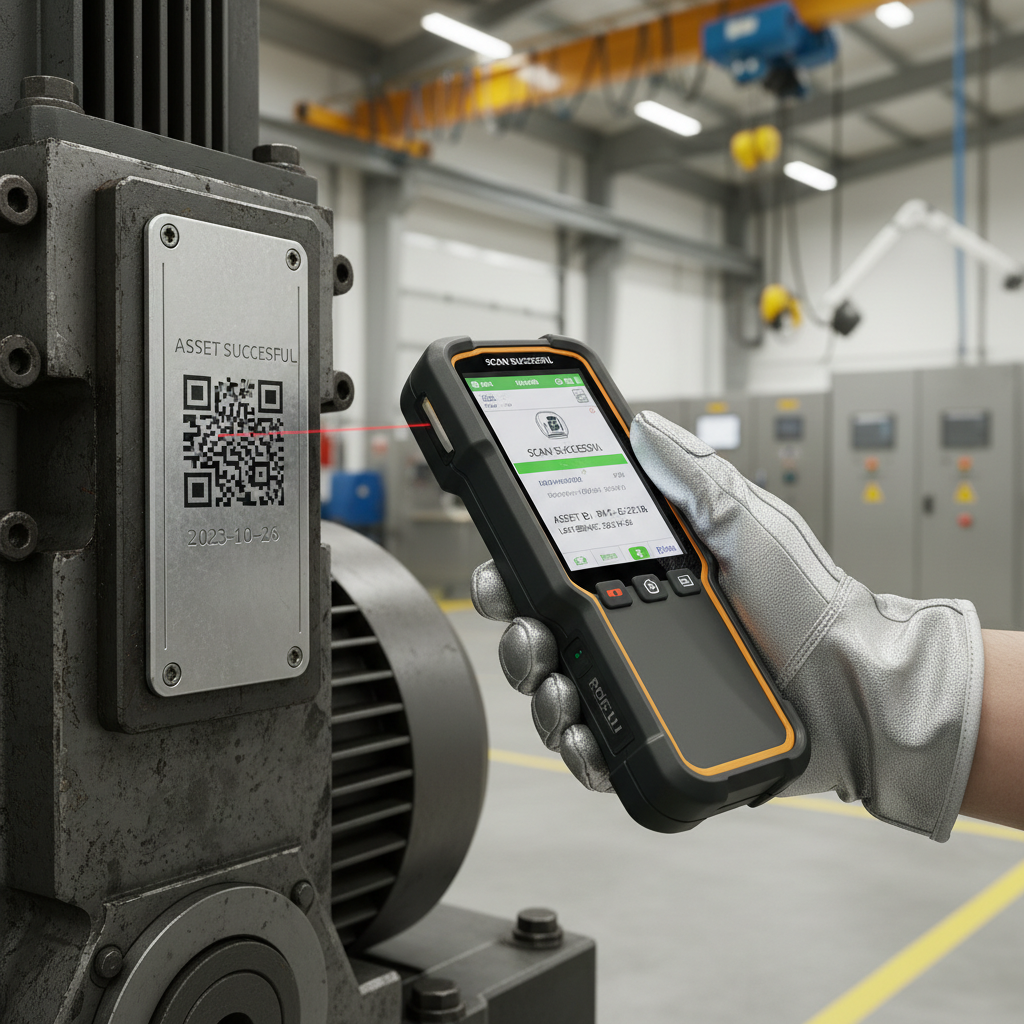
Strip away the process and the spreadsheets, and every manual audit tries to answer one question: where are my assets, and what condition are they in?
That’s it. The clipboard is just a workaround for not knowing in real time.
This is where I see the biggest disconnect in how companies approach audit reduction. They search for better audit software (faster forms, mobile barcode apps, cloud spreadsheets) when the actual problem is a visibility gap. You’re auditing because you don’t have continuous data. Fix the data flow, and the audit shrinks from a discovery exercise to a targeted verification step.
Think about it in aviation terms. An airline that tracks ULD containers only at handoff points (origin, destination) has a shipment tracking mindset. The container disappears between those two points. When audit time comes, someone has to physically walk the facility, find every container, and reconcile it against the register.
An airline that tracks ULD containers continuously (position, dwell time, cycle count, return status) has an asset tracking mindset. The register updates itself. The “audit” becomes: run a query, flag exceptions, investigate the handful of containers that haven’t reported a position in 48 hours. That’s a 30-minute task, not a three-week project.
The distinction between shipment tracking and asset tracking is the core of this shift. Shipment tracking’s job ends at delivery. Asset tracking follows the asset through its full lifecycle: deployment, use, return, dwell, maintenance, redeployment. When you have lifecycle visibility, the periodic manual audit loses its reason to exist.
What Continuous Tracking Looks Like in Practice
The technology stack for reducing manual audits is past the pilot phase. It’s deployed, it works, and the ROI math is documented. Here’s what the layers look like in the field.
A physical identity on every asset
Every asset gets a tag. The technology choice depends on the environment and the value of what you’re tracking.
Passive RFID handles bulk scanning at chokepoints (dock doors, hangar exits, maintenance bay entries). BLE beacons provide 1 to 3 meter indoor accuracy with continuous positioning. Cellular GNSS trackers report position globally without depending on local infrastructure, which makes them the default choice for assets that move between sites, cities, or countries.
For equipment that moves through airport facilities and onto aircraft, the tracker selection needs to match the operational environment. Ground support equipment in open ramp areas works well with rugged cellular devices like the Oyster Edge. Airfreight containers and ULDs that enter cargo holds need hardware certified to DO-160 standards for use on aircraft. The Thingfox T2 was built for exactly that scenario: airfreight approved, with battery life and environmental tolerance designed for the temperature and vibration extremes of cargo operations.
Automated data capture, no human in the loop
Tags communicate with gateways. Gateways push data to a platform. No one walks a floor. When a piece of GSE moves from Terminal A to the maintenance bay, the system logs it. When a container enters a port facility, the system logs it. When a tool cart hasn’t moved in 14 days, the system flags it for review.
This is the layer that kills the audit. If every movement is captured automatically, the asset register stays current without anyone walking the floor with a scanner. The data quality doesn’t degrade over three months because it’s refreshed every time the asset reports.
Exception-based verification replaces exhaustive counting
Continuous tracking doesn’t eliminate human involvement entirely. It makes human involvement targeted. Instead of verifying 5,000 assets, your team investigates the 50 that triggered an exception: missed check-in, unusual dwell time, location mismatch with the expected assignment.
That’s a 99% reduction in manual effort, directed at the 1% that actually needs attention. And because exceptions surface in real time (not three months later during the next scheduled audit), problems get resolved while they’re still small.
The Day 1 Problem Nobody Warns You About
Most articles about asset audit automation make the transition sound seamless. Deploy tags, connect platform, audits disappear. In the field, it never works that way. Three problems show up consistently.
The first is dirty data. If your current asset register is 40 to 60% inaccurate, automating on top of bad data just gives you faster access to wrong information. Before you tag a single asset, you need a baseline reconciliation. Yes, that means one more manual audit. Think of it as the last one you’ll need to do at full scale.
The second is cultural resistance. Field teams who’ve spent years doing manual counts sometimes see automation as surveillance rather than support. The shift works when the message is clear: this frees you from counting so you can do the work that actually requires your expertise. In MRO environments, that message sells itself. Nobody became an aircraft mechanic to count torque wrenches.
The third is scope creep. Organizations try to tag everything on day one. Don’t. Start with your highest-value, highest-loss asset class. In aviation, that’s often GSE or ULD containers, where pool imbalances create direct operational cost. In freight forwarding, it might be reusable containers or chassis. Prove ROI on one class, then expand.
A practical rollout sequence:
- Clean the register for your target asset class. One-time manual reconciliation, scoped tight.
- Deploy trackers on that asset class.
- Run parallel operations for 30 to 60 days: automated tracking alongside one scheduled manual audit to validate accuracy.
- Once the accuracy delta is confirmed, retire the manual audit for that class.
- Expand to the next asset class.
This phased approach takes 8 to 12 weeks per asset class. That’s the advantage of working with IoT hardware and a focused integration partner instead of deploying a heavyweight EAM platform on an 18-month timeline.
Three Outcomes You Can Measure
If you’re building a business case for a CFO or VP of Operations, these are the numbers that hold up under scrutiny.
First, audit labor drops by 85 to 95%. Moving from wall-to-wall manual counts to exception-based verification returns over a thousand hours annually on a 5,000-asset fleet. That’s staff time redirected to maintenance, operations, and the work that actually generates value.
Second, ghost assets surface and get cleared. Continuous tracking identifies equipment that should have been written off years ago. The financial impact is immediate: corrected depreciation schedules, reduced insurance premiums, and eliminated tax liability on assets that no longer exist. For organizations where 10 to 30% of the register is ghosts, the first cleanup alone can fund the entire tracking deployment.
Third, cycle time visibility drives utilization up and capital expenditure down. When you can see dwell time, turnaround time, and location patterns across your container pool or equipment fleet, you stop over-purchasing to compensate for uncertainty. A 20% reduction in buffer stock on a fleet of reusable transport assets pays for the tracking hardware several times over within the first year.
The common thread across all three: every dollar saved comes from replacing assumptions with data. Manual audits produce assumptions three times a year. Continuous tracking produces data every hour.
When the Audit Becomes a Query
The endgame isn’t zero audits. Some regulatory frameworks (EASA, FAA, SOX) will always require formal verification cycles. But the nature of those audits changes completely when continuous tracking is in place.
Instead of deploying a team for three weeks to physically locate and verify thousands of assets, you pull a live report, flag discrepancies, and send a small team to investigate the exceptions. Audit prep that used to take weeks compresses to hours. Field verification that used to require every asset narrows to a handful.
For aviation operations, this shift compounds. Regulatory audits demand traceable records. When your tracking system generates a continuous, timestamped chain of custody for every asset, you’re not just reducing audit labor. You’re building compliance evidence as a byproduct of daily operations, not as a separate exercise performed under time pressure.
If your container pool, GSE fleet, or tooling inventory feels invisible between audits, that visibility gap is exactly what continuous asset tracking closes. Reach out to our team if you want to scope what a phased rollout looks like for your operation, or email us directly at info@datanetiot.com.

Frequently Asked Questions
How much time does a manual asset audit typically consume?
For a fleet of 5,000 assets audited three times per year, expect roughly 1,250 hours of staff time annually. This excludes travel, data entry corrections, and the reconciliation work that follows when counts don’t match the register.
What’s the difference between audit software and asset tracking for reducing audits?
Audit software makes the counting process faster (mobile forms, barcode scanning, cloud sync). Asset tracking with IoT hardware eliminates the need to count by providing continuous location and status data. The first improves the audit. The second replaces most of it with exception-based verification.
How quickly does IoT-based tracking reduce manual audit workload?
A phased rollout targeting one asset class takes 8 to 12 weeks from data cleanup through parallel validation. Most organizations see 85 to 95% reduction in manual audit hours for that asset class within the first quarter of full deployment.
Does continuous tracking satisfy regulatory audit requirements?
Yes, when implemented correctly. Continuous tracking generates timestamped, location-verified records that meet traceability requirements under EASA, FAA, SOX, and IFRS frameworks. The formal audit shifts from a discovery exercise to a verification step against system-generated data.
Which asset types benefit most from this approach?
High-value mobile assets that move between locations: ULD containers, ground support equipment, reusable shipping containers, MRO tooling, and chassis pools. Any asset class where manual counting is slow and loss or misplacement carries measurable financial cost.
What does tracking hardware cost relative to the savings?
Cellular GNSS trackers for industrial and aviation use typically run $30 to $150 per unit depending on battery life, certification level, and environmental rating. For a fleet where buffer purchases run 20 to 30% above actual need, the hardware pays for itself within one or two audit cycles through reduced capital spend and recovered assets.







 +1 508 292 2210

3 Responses