

The global asset tracking market crossed USD 25.98 billion in 2025, with double-digit growth projected through the end of the decade. That’s a lot of money flowing into platforms that promise visibility over physical assets. And yet, most operations teams I talk to still can’t answer a basic question: where is that container right now, and when is it coming back?
The problem isn’t a shortage of software. It’s that buyers choose platforms based on feature checklists instead of operational fit. They buy a pin on a map when what they need is lifecycle control. This guide breaks down what asset tracking software actually does, which technology stack fits which operation, and where the real return hides.
What Asset Tracking Software Does (and What It Doesn’t)
Asset tracking software is a platform that records the location, status, and lifecycle of physical assets (tools, equipment, vehicles, containers, IT devices) using some combination of identifiers, connectivity, and analytics. IBM defines asset tracking as the practice of monitoring the location of an organization’s physical assets to maximize efficiency and minimize loss. That’s accurate, but incomplete.
Here’s the distinction that matters: shipment tracking ends when the package arrives. The job is delivery confirmation. Asset tracking follows the asset through its entire cycle: deployment, use, maintenance, return, reuse, disposal. A freight forwarder cares about shipment tracking. An airline that owns 4,000 ULDs, or a construction company with 800 pieces of heavy equipment across 12 sites, needs asset tracking. The software that serves one badly serves the other.
Architecturally, the stack has four layers:
- Identifiers and tags: barcodes, QR codes, RFID tags, BLE beacons, GPS/GNSS modules, UWB tags.
- Connectivity: cellular (LTE-M, NB-IoT), LoRaWAN, Wi-Fi, satellite (NTN), or reader-based (RFID gates).
- Software platform: the cloud or on-premise system that ingests location data, maps it, triggers alerts, and stores asset records.
- Integrations and analytics: connections to ERP, CMMS, ITSM, and the AI/ML layer that turns raw location pings into operational decisions.
Hardware margins are thin. The real value, and the real differentiation, lives in layers three and four. A platform that fuses data from GPS outdoors, BLE indoors, and RFID at choke points into a single asset register is fundamentally different from one that only ingests GPS coordinates.
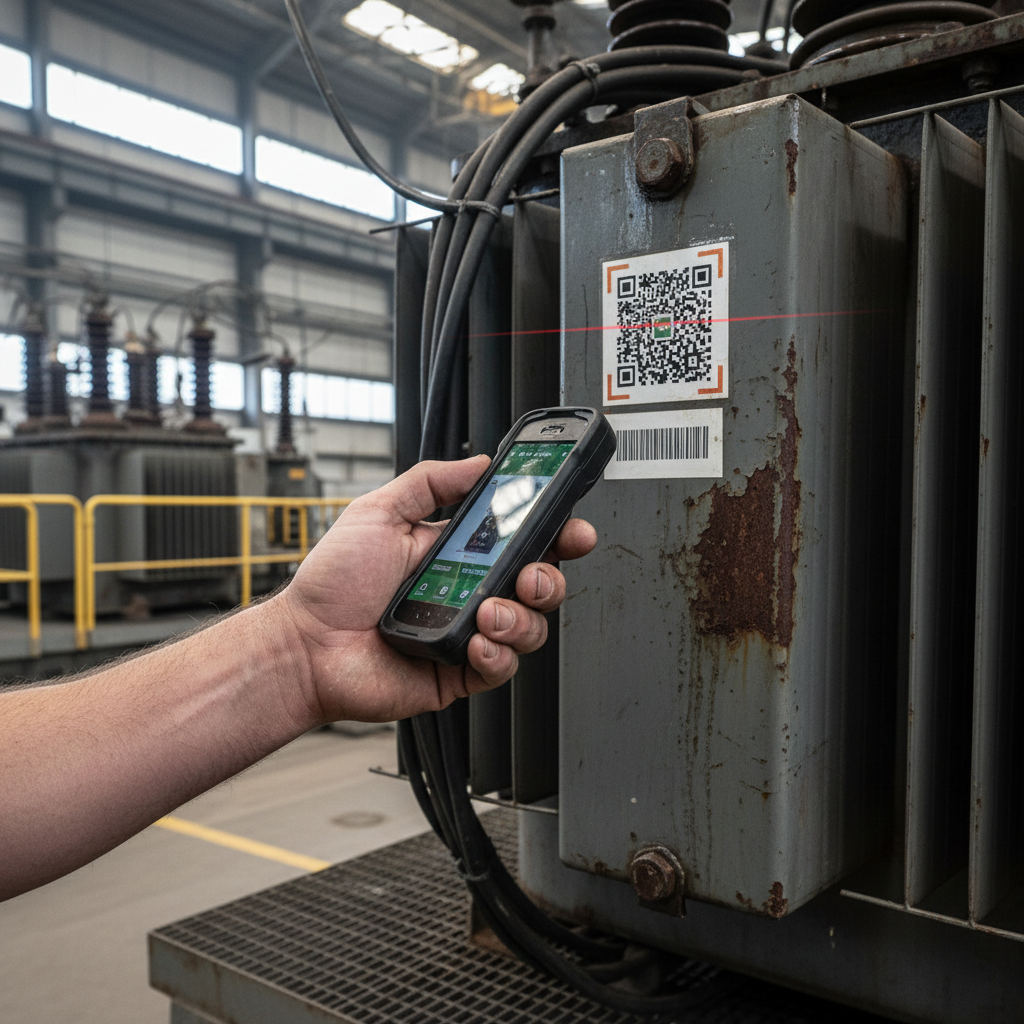
The Technology Stack: GPS, RFID, BLE, UWB, and When Each One Fits
No single tracking technology covers every asset. That sentence should be printed on every RFP. The vendor who says otherwise is either lying or selling you something that works in one environment and fails in three others.
| Technology | Range | Accuracy | Power | Best Fit |
|---|---|---|---|---|
| GPS / GNSS | Global (outdoor) | 3-10 m | Rechargeable or hardwired | Vehicles, trailers, high-value mobile assets |
| Passive RFID (UHF) | Up to ~10 m | Zone / choke-point | None (reader-powered) | Inventory counts, warehouses, tool cribs |
| BLE beacons | 30-100 m | 1-5 m | 1-10 year battery | Indoor equipment, hospitals, pallets |
| BLE 5.4 (channel sounding) | 30-150 m | Sub-metre | Coin cell | Next-gen indoor positioning at lower cost than UWB |
| UWB (ultra-wideband) | 10-50 m | 10-30 cm | Months to years | Hospitals, factories, yard management |
| Cellular IoT (LTE-M / NB-IoT) | National / global | Tower-level | Years on battery | Containers, unpowered trailers, remote equipment |
| LoRaWAN | 2-10 km rural | Hundreds of metres | Years | Ports, campuses, farms |
| Satellite IoT (NTN) | Global | Kilometre-level | Years | Maritime, cross-border, remote corridors |
The practical reality in 2026 is hybrid deployments. GPS for the fleet. BLE or UWB inside the warehouse. RFID for high-volume inventory passes. Cellular IoT for unpowered assets that spend weeks or months between check-ins. Bluetooth 5.4’s channel sounding is the newest entrant, bringing centimetre-level ranging to coin-cell tags and threatening to replace legacy RFID for many indoor use cases.
The software platform’s job is to normalize these disparate data streams into one coherent asset register. If your platform can only ingest GPS, you have a fleet tracker, not an asset tracker. If it handles GPS plus BLE plus RFID plus cellular IoT on a single dashboard, you have operational visibility. That’s the line.
Where the Money Goes (and Comes Back)
Let’s talk numbers, because “improved visibility” doesn’t get budget approved.
According to the National Insurance Crime Bureau (NICB) and industry trade associations, U.S. construction equipment theft costs an estimated $300 million to $1 billion annually, with less than 25% of stolen equipment recovered. GPS trackers with geofencing and real-time alerts flip that ratio: equipped assets are frequently recovered within 24 hours.
CargoNet recorded roughly $455 million in cargo theft losses across North America in 2024, with electronics, food, and metals hit hardest. Supply chain digitalization, ironically, has given thieves better intelligence about what’s on which truck. Tracking is no longer optional for high-value freight.
In healthcare, Mission Hospital deployed a hybrid RFID/RTLS system for infusion pumps and mobile equipment. The result: device loss rate dropped from 13.8% to zero, saving roughly $200,000 per year. That’s one hospital, one equipment category.
Organizations deploying asset tracking software report 40-60% savings on lost-asset replacement and 50-70% faster audit preparation. Construction firms routinely recoup their investment within 6 to 12 months purely from theft reduction and improved equipment utilization.
But the ROI conversation gets dishonest when vendors leave out the cost side:
- Physical tagging labor. Somebody has to affix tags to thousands of assets. That means downtime, coordination across sites, and decisions about which assets justify which tag type. This is the cost nobody puts in the slide deck.
- Connectivity subscriptions. Cellular IoT tags carry monthly data fees of $1-5 per device. At 10,000 assets, that’s $10,000-50,000 per year in recurring costs before you touch the platform license.
- Change management. The best platform in the world fails if field teams don’t scan, don’t check out, don’t follow the workflow. Adoption is an operations problem, not a software problem.
Real ROI comes from understanding total cost of ownership against total cost of ignorance. Not from a vendor’s ROI calculator that conveniently omits implementation friction.
What the Platform Needs to Do Beyond Showing a Pin on a Map
Every vendor demo looks great. A map. Some dots. A geofence alert. Impressive for 15 minutes. Useless if your platform can’t answer the questions your operations team asks every day.
Core capabilities that separate asset tracking software from a glorified GPS viewer:
- Asset register with hierarchy. Parent-child relationships (a trailer contains 40 pallets, each pallet holds 8 bins). Location hierarchy: site, zone, room. Custom attributes by asset class. Without this, you’re tracking coordinates, not assets.
- Geofencing and conditional alerts. Entry/exit is baseline. Dwell time, speed thresholds, shock/tilt events, temperature excursions: these catch problems before they become losses.
- Workflow and check-out. For tools, IT devices, ground support equipment: who has it, when is it due back, what condition was it in. Digital signatures, photos, return-by dates. This is where cycle time visibility lives.
- Maintenance and lifecycle. Preventive maintenance schedules triggered by hours, cycles, or calendar. Depreciation calculations. Warranty tracking. End-of-life disposal records. The asset’s biography, not just its GPS coordinates.
- API-first integrations. Your tracking platform needs to talk to your ERP (SAP, Oracle, NetSuite), your CMMS (IBM Maximo, UpKeep), and your ITSM (ServiceNow, Freshservice). If asset data lives in a silo, you’ve bought another spreadsheet with a nicer interface.
- Mobile access that works offline. Warehouses, ramps, yards: connectivity is spotty. The app needs to queue scans and syncs for when signal returns. Field teams will abandon any tool that freezes when they walk behind a building.
The global asset tracking market is growing at roughly 16% CAGR through 2030, and the software component is where that growth concentrates. Hardware is commoditizing. The platform is the product.
AI in Asset Tracking: Separating Signal from Noise
Every vendor in 2026 claims “AI-powered.” Most of that is rule-based automation wearing a marketing hat. Here’s what actually works today, and what’s still aspirational.
Predictive maintenance is real and measurable. AI-driven predictive maintenance reduces unplanned downtime by up to 50% and extends equipment life by 20-40%. The market reflects that: MarketsandMarkets projects the AI-driven PdM segment growing from USD 1.77 billion in 2025 to USD 19.27 billion by 2032, roughly 41% CAGR. This works when the platform ingests enough telemetry (vibration, temperature, usage hours, cycle counts) to train models on failure patterns. It requires clean historical data and consistent sensor coverage. Without both, predictive maintenance is just a checkbox on a feature page.
Anomaly detection is deployed and useful. Platforms like Samsara and Geotab flag route deviations, unusual idle patterns, and impact events in near-real time. For fleet and construction equipment, this catches unauthorized use and theft-in-progress. For containers and cargo, it identifies dwell anomalies that signal supply chain bottlenecks.
Digital twins are converging with asset tracking. The Digital Twin Consortium describes digital twins as virtual representations of physical assets that mirror state and behavior in real time. Asset tracking telemetry is the live data feed. Building operators, manufacturers, and port logistics teams are buying tracking platforms specifically to power digital-twin dashboards. This is early-stage for most organizations but accelerating fast.
What’s still noise. “AI-powered inventory optimization” often means the platform auto-generates reorder alerts based on threshold rules. Useful, but that’s business logic, not machine learning. Ask the vendor: what data does the model train on? What’s the false-positive rate? If they can’t answer, it’s a rule engine with an AI label.
Security and Privacy: Risks Inside Your Tracking Data
Tracking data is sensitive data. Full stop. And the industry has not always treated it that way.
In 2022, Bitsight disclosed six critical vulnerabilities in the MiCODUS MV720 GPS tracker, a device deployed in more than 1.5 million vehicles worldwide, including Fortune 500 fleets, government agencies, and military vehicles. The flaws allowed remote attackers to track vehicles in real time, cut fuel lines, and disable alarms. This wasn’t a theoretical risk. It was a production exploit in a widely deployed device.
On the privacy front, the legal landscape is tightening. The New York Court of Appeals ruled warrantless GPS tracking of a state employee’s vehicle unconstitutional. The California Consumer Privacy Act (CCPA) and GDPR impose disclosure and consent requirements on any platform that tracks people, even indirectly through the assets they carry. Courts have found that employer GPS monitoring without consent can create intrusion-upon-seclusion claims, particularly when location data is captured outside work hours.
GPS jamming and spoofing add another layer. GPS jamming in the Strait of Hormuz has reduced tanker traffic by roughly 20%, according to a tanker CEO quoted by CNBC. Cargo thieves in North America increasingly use portable GPS jammers to blind tracking devices during heists.
What to demand from any vendor before signing:
- Firmware signing and secure boot on all hardware.
- Encrypted data in transit and at rest (TLS 1.3 minimum, AES-256 at rest).
- Over-the-air (OTA) update capability for patching vulnerabilities without physical device access.
- SOC 2 Type II certification for the platform. HIPAA compliance if you’re in healthcare.
- Documented data retention and deletion policies that align with GDPR/CCPA.
- Multi-layered positioning (cellular fallback, Wi-Fi sniffing) for assets operating in GPS-denied environments.
Picking the Right Stack for Your Operation
The right platform depends on what you’re tracking, where it moves, and what system needs the data downstream. Not on which vendor had the best booth at the trade show.
Construction and heavy equipment. GPS trackers on excavators, loaders, and generators. BLE or RFID for hand tools and small equipment. The platform needs geofencing per jobsite, utilization reporting by machine-hours, and integration with project management. Tenna, Hilti ON!Track, and Samsara own this vertical. Recovery ROI is immediate.
Healthcare. UWB or IR/RFID hybrid RTLS for infusion pumps, wheelchairs, and portable monitors. Room-level accuracy minimum. Integration with clinical workflow systems. The cost of not tracking is concrete: a GE Healthcare study found nurses spend an average of 21 minutes per shift searching for equipment. CenTrak, Zebra Technologies, and Securitas Healthcare dominate. The compliance dimension (HIPAA, FDA UDI) rules out generic platforms.
Logistics and supply chain. Cellular IoT for containers and trailers (LTE-M/NB-IoT). Satellite IoT for cross-border ocean freight. Temperature and humidity sensors for cold chain (pharmaceutical GDP, FDA DSCSA). FourKites, project44, and Tive lead in multi-modal visibility. The distinction between shipment tracking and asset tracking matters most here: if you own reusable containers or ULDs, you need cycle-time visibility, not just delivery confirmation.
IT and enterprise assets. CMDB-integrated platforms (ServiceNow ITAM, Lansweeper, Freshservice) for laptops, monitors, and network gear. Large enterprises track more than 166,000 IT assets on average. The spreadsheet-to-platform transition is well underway here, driven by SaaS sprawl, hybrid work, and shadow IT risk.
Aviation and aerospace. This vertical has unique constraints: DO-160 environmental certification for airfreight, GADSS compliance for locating aircraft, and the complexity of tracking ULDs, GSE, and MRO tooling across global networks. Standard consumer-grade trackers don’t survive the vibration, pressure, and temperature profiles of an aircraft cargo hold. You need DO-160 approved devices like the Thingfox T2 combined with a platform that handles multi-modal asset journeys from warehouse to tarmac to destination and back.
Maritime and port operations. Container pool management requires ocean-grade tracking hardware that tolerates salt spray, stacking pressure, and months without charging. Cellular IoT with satellite fallback is the standard architecture. For assets operating in remote ocean corridors or oil and gas platforms, offshore asset tracking presents unique connectivity and environmental challenges. The value isn’t knowing where the container is right now. It’s knowing the cycle time: how long until it returns to the pool. That’s the data that drives fleet-sizing decisions and eliminates unnecessary purchases.
Across all verticals, the integration question is the one that makes or breaks deployments. If your tracking platform can’t push asset status into your ERP, CMMS, or MRO system via API, you’ve created a visibility island. Your team will check the tracking platform for location and then switch to another system for maintenance records, then a third for procurement. Three tabs. Three data sources. Same operational friction you had before, just with a fancier map.

Frequently Asked Questions
What is asset tracking software?
Asset tracking software is a digital platform that records the location, status, and lifecycle of physical assets using identifiers (GPS, RFID, BLE, barcodes) and connectivity (cellular, Wi-Fi, satellite). It combines a real-time location feed with an asset register, alerts, maintenance scheduling, and analytics. The goal is operational visibility across the full asset lifecycle, not just delivery confirmation.
How much does asset tracking software cost?
Cloud platforms range from $10-50/month for small asset counts up to $200+ per user or location for enterprise tiers. Hardware adds cost: passive RFID tags run $0.50-2.50 each, cellular IoT trackers cost $30-150+ per unit with monthly data subscriptions of $1-5 per device. Total cost of ownership depends on asset volume, technology mix, and integration complexity.
What ROI can I expect from asset tracking?
Organizations typically report 40-60% savings on lost-asset replacement costs and 50-70% faster audit preparation. Construction firms often recoup investment within 6-12 months through theft reduction alone. Healthcare facilities have documented six-figure annual savings from eliminating equipment loss. The strongest ROI comes from pairing location data with utilization analytics to right-size asset fleets.
What’s the difference between asset tracking and fleet management?
Fleet management focuses on vehicles, drivers, and routes: fuel efficiency, dispatch, ELD compliance, driver safety. Asset tracking covers non-vehicle physical items like tools, equipment, containers, IT devices, and returnable packaging. Many platforms (Samsara, Geotab, Verizon Connect) offer both modules, but the sensors, KPIs, and workflows differ substantially between the two.
Which tracking technology should I use?
It depends on the asset and environment. GPS for outdoor mobile assets. BLE or UWB for indoor positioning. Passive RFID for high-volume inventory counts. Cellular IoT (LTE-M, NB-IoT) for unpowered assets that need long battery life over wide areas. Satellite IoT for maritime or remote locations. Most serious deployments use a hybrid of two or more technologies unified by a single software platform.
How does asset tracking software integrate with ERP and CMMS systems?
Modern platforms offer REST APIs and pre-built connectors for SAP, Oracle, NetSuite, IBM Maximo, ServiceNow, and similar systems. Integration typically pushes asset location, status changes, and maintenance triggers into the ERP/CMMS, eliminating manual data entry. The depth of integration varies: some platforms offer bidirectional sync, others only export. Ask vendors for a documented API and reference customers running your ERP.
If your container pool feels invisible after delivery, if your equipment utilization data lives in spreadsheets, or if your MRO tooling crosses borders without real-time status, that’s the gap asset tracking closes. We build these systems for a living, from hardware selection through platform integration. Talk to our team or reach us at info@datanetiot.com.







 +1 508 292 2210

2 Responses