

Fleet tracking typically costs $15 to $50 per vehicle per month for the software subscription. That’s the number you’ll find everywhere. It’s also incomplete.
The subscription is one line item. Hardware, installation, dashcams, ELD modules, activation fees, contract terms, device-transfer charges, and integration costs can double or triple the sticker price. I’ve seen fleet operators budget $20 per vehicle per month, then discover their actual cost is $45 once cameras, compliance, and a three-year lock-in enter the picture. (See also: how tracking technology improves aircraft uptime.)
This guide breaks down every cost layer so you can compare fleet tracking quotes on equal footing. If you manage vehicles, trailers, containers, or ground equipment, you’ll also learn where standard fleet tracking ends and a different category (asset tracking) begins.
The Quick Math: What Fleet Tracking Costs Right Now
Here’s the table. These ranges reflect published vendor data, U.S. Chamber of Commerce benchmarks for small businesses, and pricing structures I encounter working with logistics and aviation operators.
| Cost component | Typical range | What it covers |
|---|---|---|
| Monthly subscription | $15 – $50 per vehicle | Location, alerts, reports, basic diagnostics |
| Hardware (plug-and-play OBD-II) | $40 – $150 | Self-install, 10-15 min per vehicle |
| Hardware (hardwired, tamper-resistant) | $100 – $300+ | Professional install recommended |
| Installation (per vehicle) | $0 – $150+ | OBD-II often free; hardwired varies |
| Activation fee | $0 – $50 | One-time; sometimes waived in bundles |
| Dashcam add-on | $15 – $40/month extra | Plus camera hardware ($100 – $300+) |
| ELD compliance module | $15 – $35/month extra | Required for qualifying CMV drivers |
| Enterprise / heavy-duty tier | $100 – $450+ per vehicle | Sensors, satellite, cargo, full integration |
A practical example: five vehicles on a mid-range plan with plug-and-play hardware. Monthly subscription runs $125 to $250. Upfront hardware costs $200 to $750. Year-one total: roughly $1,700 to $3,750. That’s before cameras, compliance, or integration add-ons.
GPS Insight reports the $15-to-$50 range and notes some vendors bundle hardware into the subscription while others sell or lease it separately. Leasing reduces your upfront bill but increases total spend over a multi-year contract.
The range itself reveals something: a $15 plan and a $50 plan are not the same product. One gives you dots on a map. The other gives you operational control. Understanding what sits inside each price point matters more than the number.
What Makes Up the Price: Five Cost Layers
Fleet tracking vendors package these layers differently. Two quotes with identical monthly rates can produce very different total costs over three years. Here’s what you’re actually paying for.
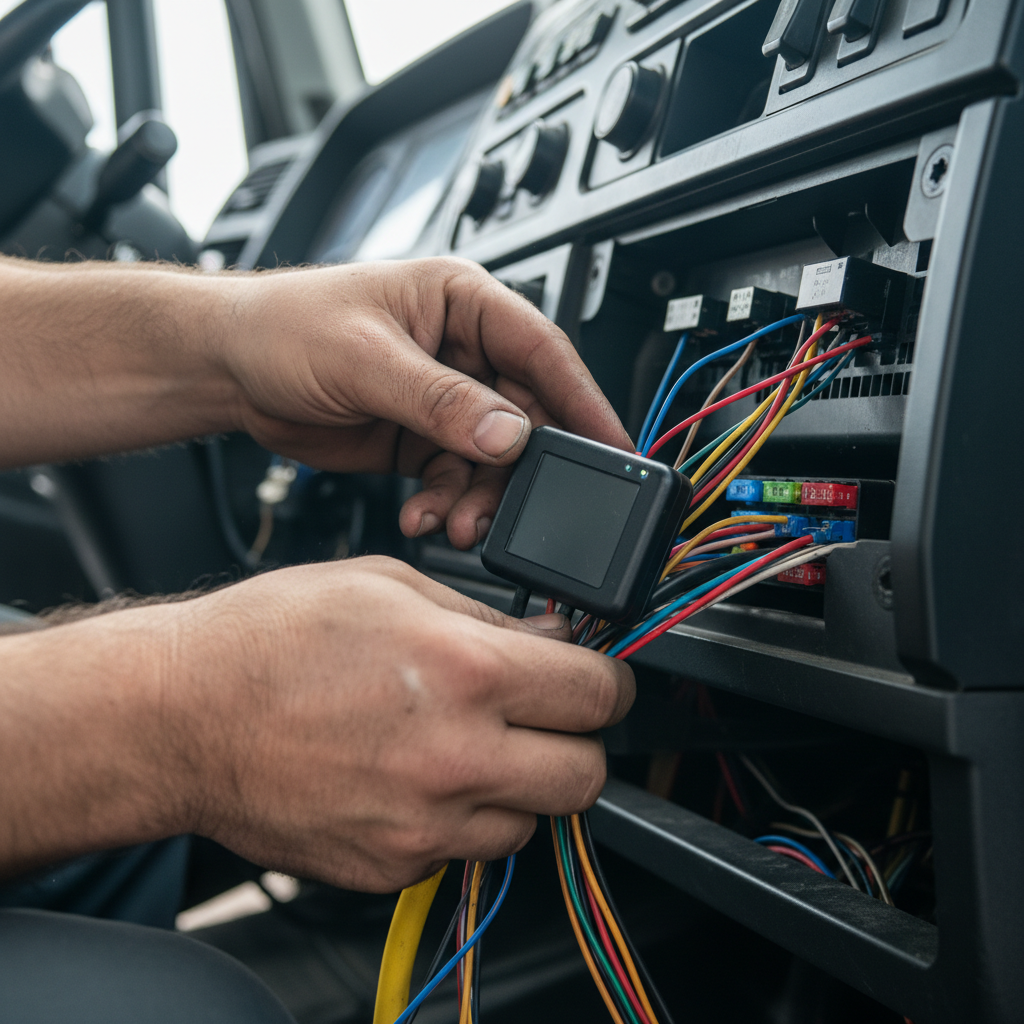
Layer 1: Hardware. The physical device in the vehicle. Plug-and-play OBD-II trackers plug into the diagnostic port and can be moved between vehicles in minutes. Hardwired units connect directly to the vehicle’s electrical system. They’re harder to tamper with, survive harsher environments, and support more sensor inputs, but they cost more to install and relocate.
Layer 2: Software subscription. The recurring fee covers the platform, mobile app, map interface, alerts, reports, and data processing. Entry-level platforms deliver real-time location, geofencing, trip history, and idle alerts. Mid-tier platforms add engine diagnostics, fuel monitoring, maintenance scheduling, and driver scorecards. Enterprise platforms add compliance workflows (ELD, HOS, DVIR, IFTA), dispatch, routing, driver coaching, and API access.
Layer 3: Connectivity. Real-time tracking requires a cellular data connection (or satellite for remote areas). Most vendors include cellular costs in the subscription. Telematics devices typically connect through wireless or satellite modems, with store-and-forward capability when cellular coverage drops. Satellite fallback, relevant for mining, agriculture, and offshore operations, carries a premium.
Layer 4: Installation and activation. OBD-II is self-install. Hardwired units may need a technician at $50 to $150+ per vehicle. Activation fees range from nothing to $50, sometimes waived for larger deals or longer commitments.
Layer 5: Add-ons. This is where costs quietly compound. Dashcams (hardware plus cloud storage per camera per month). ELD modules. Temperature sensors. Trailer trackers. Tire-pressure monitors. Cargo sensors. API access. Each has its own line item. A “basic” plan that looks affordable becomes expensive once you add the capabilities your operation actually requires.
Three Tiers: Basic, Mid-Range, Enterprise
The industry segments roughly into three capability levels. Boundaries overlap, but the operational reality at each tier is distinct.
Basic: $10 to $25 per vehicle per month. You get real-time or near-real-time location with updates every one to five minutes. Trip history playback. Geofence alerts. Idle-time reports. Simple driver-behavior notifications. Hardware is plug-and-play. Contracts are often month-to-month. This tier works for a contractor, plumber, or delivery service that needs to know where vehicles are and whether drivers are staying on route. It does not include engine diagnostics, compliance tools, cameras, or system integrations.
Mid-range: $25 to $50 per vehicle per month. Update intervals tighten to 30 to 60 seconds. Engine diagnostics pull fault codes. Fuel monitoring identifies waste. Maintenance scheduling prevents breakdowns. Driver scorecards create accountability. Some vendors include basic ELD at this tier; others charge separately. Hardware is often hardwired. Contracts are one to two years. Industry benchmarks from the U.S. Chamber of Commerce and leading vendors consistently place the typical range at $15 to $50 per vehicle monthly, with the upper end reflecting these mid-range and advanced capabilities. This tier fits fleet managers who need measurable cost reduction and can use the data to change operational patterns.
Enterprise: $50 to $450+ per vehicle per month. Full compliance (ELD, HOS, DVIR, IFTA). AI-powered dashcams with event detection and driver coaching. Dispatch and routing integration. API access for ERP, TMS, and payroll connections. Temperature monitoring for cold-chain. Satellite backup for remote coverage. Dedicated account support. Hardware is specialized and hardwired. Contracts are multi-year. This tier exists for large carriers, regulated fleets, cold-chain operators, construction companies, and any operation where non-compliance, spoilage, or unplanned downtime has serious financial consequences.
The danger zone: a vendor quoting basic-tier pricing while knowing your operational needs require mid-range capabilities. Always ask what the monthly cost will be once you add every feature you’ll actually use.
Costs That Don’t Appear in the Quote
Every fleet tracking vendor I’ve encountered quotes clean. The reality is messier. These are the line items that surface after you sign.
Device transfer and replacement fees. Vehicles get sold, totaled, or swapped. The tracker has to move. Verizon Connect publishes a hardware-services schedule charging $150 per device for removal, transfer, or replacement. No-show fees run $150 for one to two devices and up to $450 for five or more. If your fleet cycles vehicles annually, these fees compound into a meaningful budget line.
Auto-renewal and cancellation penalties. Multi-year contracts typically include auto-renewal clauses. Miss the 30- or 60-day notification window and you’re locked in again. Cancellation penalties can equal the remaining contract value. The monthly rate looks better on a three-year deal, but your exit cost is higher. Read the termination clause before you read the features list.
Camera storage overages. Dashcam hardware is one expense. Storing video clips in the cloud is another, typically charged per camera per month. Event-triggered clips (hard braking, collision) may have different retention and pricing than continuous recording. If your insurance carrier wants 90-day retention, get that storage cost in writing.
Implementation drag. None of the top fleet tracking articles online mention this, but it’s real. Deploying trackers across a 50-vehicle fleet means scheduling vehicles out of service, installing and testing devices, configuring platform rules, training dispatchers, and onboarding drivers. I’ve seen rollouts take two to four weeks for mid-sized fleets. During that period, productivity dips. Budget for the labor cost and the operational drag of transition.
Training and adoption. A platform nobody uses is a cost with zero return. Initial training, refresher sessions, and the time your team spends adjusting workflows all carry a price. Some vendors include onboarding; others charge per session or per user.
Integration fees. Connecting fleet tracking to your TMS, ERP, payroll, or work-order system often requires API access, custom middleware, or developer time. API access may be standard on enterprise plans and premium on mid-tier. Closed-architecture platforms make integration more expensive and lock you in harder.
Data portability (or lack of it). If you switch providers in three years, can you export your full historical dataset? In what format? At what cost? I’ve worked with operators who discovered, mid-transition, that their tracking data was treated as the vendor’s property. Ask about data ownership and export rights before you sign.
When Fleet Tracking Pays for Itself
The ROI case is real. It’s also routinely inflated by vendor marketing. Here’s how to separate mechanism from hype.
Industry telematics case studies report potential reductions of up to 45% in collisions, 14% in fuel consumption, and 14% in maintenance incidents. Those are significant numbers from vendor-reported data. They represent ceilings, not guarantees. Your fleet will produce different results depending on your baseline, your drivers, your vehicles, and whether anyone actually acts on the data.
Where the payback is most concrete:
- Fuel and idle reduction. At current diesel prices, one hour of unnecessary idling per vehicle per day adds up to hundreds of dollars monthly across even a small fleet. Tracking identifies the waste. Manager action reduces it. A 10% idle reduction across 20 vehicles often covers the subscription alone.
- Insurance discounts. Many carriers offer 5% to 20% premium reductions for fleets with active telematics and dashcams. The discount depends on your insurer, the data you share, and the hardware deployed. Ask your insurer first; some require specific providers or data-sharing arrangements.
- Theft and unauthorized use. A single recovered vehicle or piece of equipment can pay for years of tracking. Geofence alerts triggered outside business hours are simple to configure and immediately actionable.
- Maintenance timing. Diagnostics and fault-code alerts let you schedule repairs before a roadside breakdown. The avoided tow, emergency labor, and downtime on a single incident can exceed twelve months of subscription for that vehicle.
- Compliance. FMCSA requires qualifying commercial drivers to use registered ELDs for hours-of-service records. Non-compliance penalties and out-of-service orders cost far more than the compliance module.
Where the case gets weaker:
- Fleets under five vehicles where the owner already manages routes tightly. The visibility gain may not justify the spend.
- Organizations that deploy tracking but never act on the data. The platform doesn’t save fuel. People who change dispatch patterns and coach drivers based on the data save fuel.
- Over-specified deployments. Three vans running local service calls don’t need AI dashcams, satellite fallback, and ERP integration. Paying for enterprise features you’ll never touch is negative ROI.
My test: if you can’t name the specific cost you expect tracking to reduce, pause. Define the operational problem. Then buy the tracking that measures it.
Fleet Tracking vs. Asset Tracking: The Cost Gap Nobody Mentions
Here’s where most fleet tracking conversations stop too early.
Fleet tracking follows the vehicle. Where’s the truck? How fast is the driver going? When did it arrive? That’s valuable for dispatch, routing, safety, and compliance. But it only works while the vehicle is running and the device has power.
Asset tracking follows the thing itself: a trailer, a container, a pallet of parts, a piece of ground support equipment, a reusable transport unit. Not just during a single trip. Through the full cycle: deployment, transit, dwell, return, maintenance, redeployment.
This distinction matters when your real cost problem isn’t “where’s the driver?” but “where’s the equipment?”
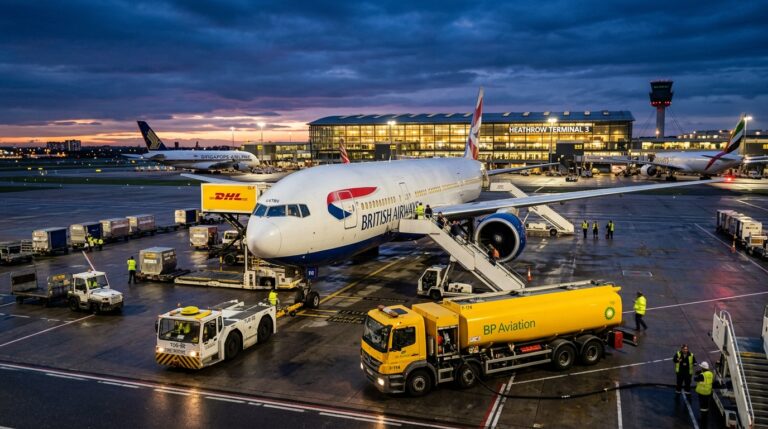
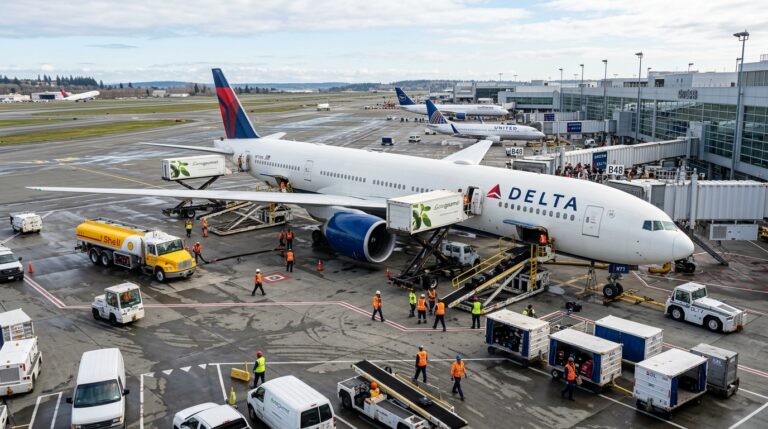
I encounter this constantly in aviation and industrial logistics. A freight forwarder tracks the shipment to the delivery address, then the container vanishes into a customer’s yard for weeks. An airline tracks its fuel trucks on the tarmac but loses visibility on ULD containers the moment they leave the ramp. Ground support equipment sits idle across three airports, invisible to the operations team that needs it at a fourth.
Fleet tracking won’t solve any of that. What solves it: purpose-built asset trackers. Small, battery-powered devices that attach to the asset itself and report position for months or years without relying on vehicle power. Devices like the Oyster3 or Oyster Edge are built for exactly this: rugged housings, long battery life, cellular connectivity, zero wiring.
The cost model differs too. Asset trackers are hardware plus a low monthly connectivity fee, often well under $10 per device per month. There’s no vehicle installation. No OBD-II dependency. No driver-management software you don’t need. If your real concern is container pool visibility, trailer dwell time, or equipment utilization across sites, standalone asset tracking devices are the right product category, and they often cost less per unit than a full fleet telematics subscription.
If your container pool feels invisible after delivery, that’s the gap asset tracking closes.
Seven Questions to Ask Before You Sign
Use these to audit any fleet tracking proposal. They surface the costs and constraints that won’t appear in the sales deck.
- What is the five-year total cost? Not the monthly rate. The total: hardware, subscription, installation, cameras, storage, support, renewal increases, replacement devices, and taxes. Compare vendors on this number, not the teaser rate.
- What happens when I cancel? Get the cancellation penalty in writing. Check for auto-renewal clauses, the notification window, and whether unused contract months are refundable.
- Who owns the hardware after the contract? Leased devices may need to be returned, with fees attached. Purchased devices may or may not work with another provider’s platform.
- Who owns the data? Can you export your complete historical dataset in a standard format? Is there a fee? What retention period applies after termination?
- What does “installation” actually include? Wiring, testing, configuration, training, removal, vehicle-to-vehicle transfer, and replacement of failed units. Get every scenario priced explicitly.
- What refresh rate does my price tier deliver? A five-minute update and a 30-second update serve different operational needs. Verify the interval at the quoted price, not the one shown in the demo.
- What integrations are included at my tier? API access, TMS connectors, ERP feeds, payroll exports. Determine whether these are standard or premium and what per-call or per-connection costs apply.
A vendor who answers all seven clearly is worth your time. A vendor who deflects is telling you something.
Fleet tracking is a solved problem at the technology level. The unsolved part is matching cost to outcome. Whether you need vehicle telematics, standalone asset trackers, or a combination, start with the operational gap you’re trying to close, not the monthly rate on a pricing page.
If your tracking needs extend beyond vehicles to containers, ground equipment, or returnable assets, reach out to our team or email us at info@datanetiot.com.

Frequently Asked Questions
What is the cheapest fleet tracking option available?
Entry-level plans start around $10 to $15 per vehicle per month with plug-and-play OBD-II hardware. You get basic location, trip history, and geofence alerts. Cameras, diagnostics, ELD compliance, and integrations are not included. Hardware is an additional one-time cost of $40 to $150 per device.
Is fleet tracking worth it for a business with fewer than 10 vehicles?
It depends on the specific cost you’re trying to control. If unauthorized use, excessive idling, or route inefficiency is a measurable problem, basic tracking at $20 to $30 per vehicle monthly can pay for itself within months through fuel and labor savings. If you already manage routes tightly, the return may not justify the spend.
Do I need a long-term contract?
Not always. Month-to-month plans exist at the basic tier but usually carry a higher per-vehicle rate. One- to three-year contracts lower the monthly cost while increasing your cancellation risk. Match the contract length to your confidence in the vendor and the expected stability of your fleet size.
What is the difference between fleet tracking and asset tracking?
Fleet tracking follows vehicles: location, speed, driver behavior, engine data. Asset tracking follows individual equipment, containers, or cargo through their complete lifecycle, including storage, dwell time, and return. Fleet tracking stops when the vehicle parks. Asset tracking continues until the asset is reused, recovered, or retired.
Are there hidden fees in fleet tracking contracts?
Frequently. Device transfer fees ($100 to $150 per event), camera storage charges, API access premiums, early-cancellation penalties, activation fees, and annual rate escalations are the most common surprises. Request a line-by-line quote that includes renewal terms and all ancillary charges.
How quickly does fleet tracking pay for itself?
Industry estimates suggest most fleets see positive ROI within six to twelve months through fuel savings, reduced idle time, fewer accidents, and lower maintenance costs. The actual timeline depends on your fleet’s baseline inefficiency, how actively you use the data, and the cost of the platform you selected. Build your own business case with real numbers before relying on vendor projections.






 +1 508 292 2210

4 Responses