

If you’re deciding where to put your next digital investment in aviation, you already know the menu: AI, predictive maintenance, biometrics, digital twins. What you might not know is how few of these programs actually stick.
The global digital aviation market is projected to reach $95.81 billion by 2034, growing at 8% CAGR. Airlines alone spent $37 billion on IT in 2024. Yet only 16% of aviation digital transformation programs succeed long-term.
The aviation digitalization benefits are real and measurable. The question is which investments deliver operational dollars and which ones produce dashboards nobody acts on. I’ve spent 15+ years deploying IoT and asset visibility systems for airlines, MROs, and ground operators. The pattern is consistent: the technology works when you pick the right problem, scope it tight, and measure in money.
Here’s what actually pays off, what’s oversold, and what the industry keeps skipping.
What Aviation Digitalization Actually Covers
Aviation digitalization replaces manual and paper-based workflows with connected, data-driven systems across airlines, airports, MRO facilities, ground handlers, and air traffic management. EUROCONTROL notes that automation already handles 70 to 90% of pilot tasks, including flight control, navigation, and engine management. The airside operation is more digitized than most outsiders realize.
In practice, it spans eight technology layers: AI and machine learning, cloud data platforms, digital twins, biometrics, IoT and sensor networks, 5G infrastructure, cybersecurity tooling, and API integration standards (NDC, ONE Order, A-CDM). These layers are not a menu. They’re a stack. AI can’t optimize maintenance without sensor data. Biometric boarding can’t scale without bandwidth. None of it works if your cybersecurity posture can’t absorb the expanded attack surface.
The benefits, when properly deployed, show up in specific numbers:
| Benefit | Measured Outcome | Context |
|---|---|---|
| Fuel optimization | 2.5M metric tonnes CO₂/year reduced | Delta Airlines via Airbus Skywise |
| Predictive maintenance | 10-20% MRO spend reduction | Digitally mature MROs (McKinsey survey) |
| AI-led operations | 15+ percentage-point OTP improvement | Single airline in BCG sample |
| Biometric boarding | 30% faster boarding, 60% shorter waits | 43% of airports globally (SITA) |
| AI engineering agents | 40% reduction in engineering team size | BCG projection |
| Modern retailing | $45B annual opportunity by 2030 | McKinsey estimate |
Those numbers are documented. The gap between knowing them and capturing them is execution. And execution is where almost everyone stumbles.
Fuel Optimization Pays Back Fastest
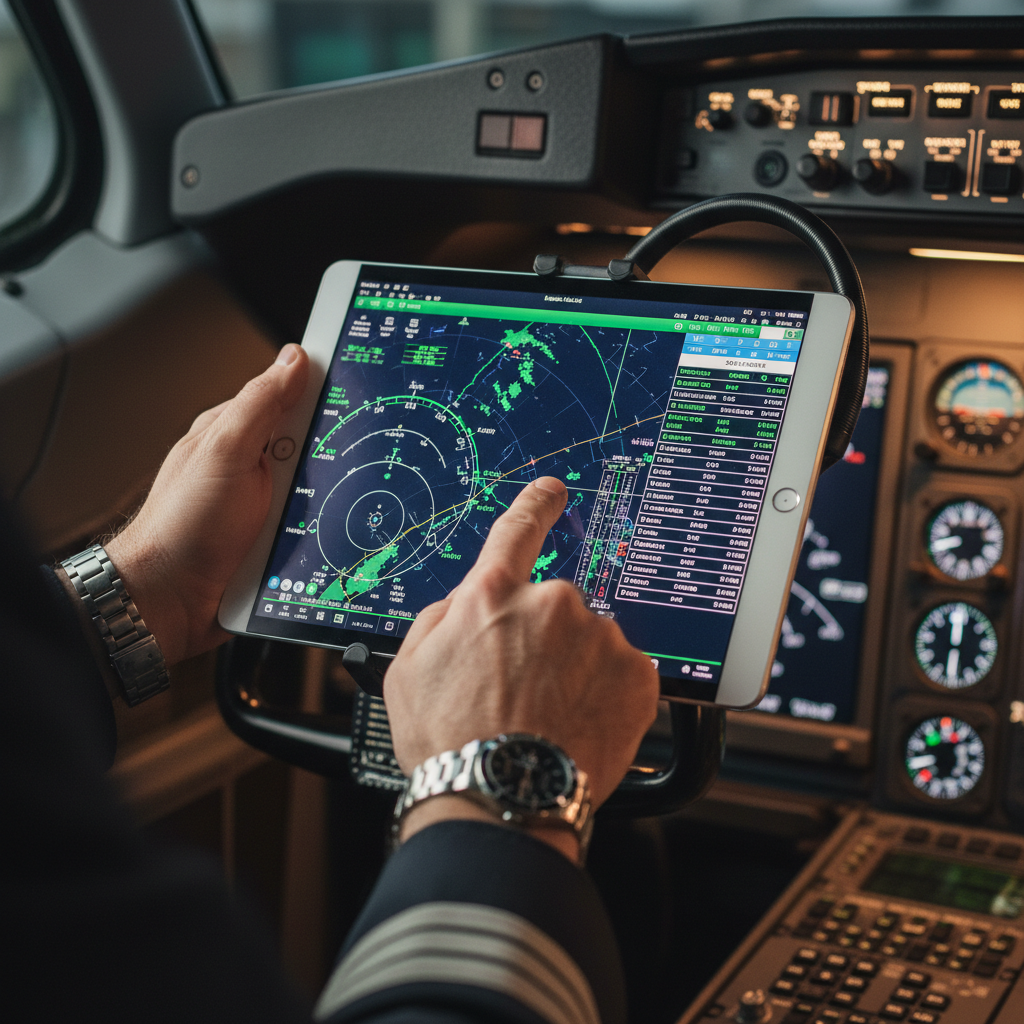
Fuel accounts for 25 to 30% of airline operating costs and stays volatile. That makes it the single largest cost lever most carriers can pull with digital tools.
The mechanism is straightforward. Digital-twin models built from historical flight data create tail-specific performance profiles for each aircraft. Instead of generic fuel-loading tables, dispatchers receive per-flight recommendations tied to the actual aerodynamic condition of a specific airframe and the weather ahead.
Air India deployed SITA OptiFlight and SITA eWAS across its fleet in September 2025, one of the largest recent rollouts of digital-twin fuel optimization. On the airframer side, Delta’s use of Airbus Skywise contributed to a 2.5-million metric-tonne annual reduction in carbon emissions through data-driven route and turnaround optimization.
When capital is constrained (and when isn’t it?), fuel optimization should get funded first. The payback is faster than AI-led passenger projects, there’s no privacy regulation to navigate, and the math is simple: even a 1% per-flight fuel improvement compounds across thousands of daily departures.
Predictive Maintenance: 10-20% Savings (for the 16% Who Scale It)
This is the benefit everyone cites and almost nobody delivers at enterprise scale.
McKinsey’s survey of 45 MRO executives found that digitally mature organizations saw revenue uplifts above 5%, engineering productivity gains above 10%, and more than a quarter achieved 10-20% reductions in maintenance spending. US carriers had seen a 15% rise in maintenance costs and a 14% increase in delays over the five years prior.
The need is obvious. The results are proven. The problem? Only 6% of MROs have integrated digital at scale. 80% cite data limitations as the primary barrier. Over 70% point to organizational resistance and internal talent gaps. And the long-term success rate sits at 16%.
I’ve seen this firsthand with MRO clients. The failure mode is almost never the technology. It’s the data layer underneath. Legacy maintenance systems were built for regulatory compliance, not analytics. Extracting clean, structured data from decades of paper records is the real project, and most teams underestimate it by a factor of three or four.
The 16% that succeed share a pattern. They run narrow vertical pilots: one fleet type, one station, one process. They prove savings on a single line before asking for the next budget cycle. They treat data cleanup as the project itself, not as a prerequisite to the project. That distinction sounds semantic. It’s not. It determines whether the program gets funded long enough to compound.
AI Agents in Operations: The 2026 Leverage Point
BCG reports that AI agents can reduce engineering team sizes by 40% and that one airline achieved a 15+ percentage-point improvement in on-time performance through AI-led operations. Cost reductions and revenue uplifts from AI are projected to grow up to 4x by 2027.
Hard to dismiss. But context matters: only 4% of travel and hospitality companies had deployed agentic AI at scale as of mid-2025. The gap between pilot and production remains wide, which also means the first-mover advantage is still available.
The highest-leverage first use case is disruption management. When a flight cancels, the rebooking cascade touches crew scheduling, gate assignments, baggage routing, and customer communications simultaneously. Most airlines still handle this with manual intervention layered on rigid rule engines. Agentic AI replaces that with real-time, multi-system coordination that resolves disruptions in minutes instead of hours.
If you’re evaluating AI investments right now, pick one high-pain, high-frequency operational process. Deploy there. Prove the math. Then expand. The era of “AI transformation” strategies that touch everything and prove nothing is ending.
Biometric Boarding Already Cuts Wait Times by 60%
43% of airports now use biometric-enabled boarding systems, cutting boarding times by 30% and passenger wait times by up to 60%. 72% of passengers say they’re willing to use biometric solutions. By 2027, three-quarters of airports plan biometrics at multiple touchpoints, and 57% plan 5G private networks to handle the bandwidth load.
The technology works. Passenger acceptance is high. The bottleneck is regulatory: 49% of airports cite privacy as their top concern. A digital identity wallet that lets passengers go curb-to-gate without paper documents is technically feasible today. Cross-border data-sharing agreements are what’s lagging.
For airport operators, the practical move is starting with domestic flights where data governance is simpler, then building toward international corridors as bilateral agreements mature. Waiting for full regulatory alignment means watching competitors capture the passenger-flow advantage first.
The Cybersecurity Bill That Comes with Every Benefit
Every benefit listed above expands the attack surface. Aviation is learning this at full cost.
British Airways’ 2018 breach exposed 9.4 million customers’ data, including 860,000 passport numbers, and resulted in a $230 million GDPR fine. Qantas disclosed in 2025 that a third-party vendor breach had exposed at least 6 million customers. On the physical side, GPS-spoofing incidents affecting aviation rose 193% between 2023 and 2025, with jamming events up 67%.
The industry response has been significant: 87% of airlines now run security operations centres, and 81% use AI for threat detection. But GPS spoofing doesn’t target IT systems. It targets navigation. As single-pilot operations and urban air mobility scale up, the convergence of cyber and physical risk is where the next generation of incidents will originate.
For any digitalization business case, cybersecurity should be a line item inside the investment, not a separate request made after deployment. The BA fine alone would have funded a decade of zero-trust architecture.
Why 84% of Aviation Digital Programs Stall
The 16% success rate for MRO digital transformations isn’t an outlier. It’s the norm across aviation digitalization verticals. Ambitious programs launch with executive sponsorship, produce impressive pilot results, then collapse during scale-up.
The first killer is data. 80% of MROs cite data limitations as their primary barrier. Legacy systems were built for regulatory paper trails, not machine learning pipelines. Decades of maintenance history locked in PDFs and proprietary formats simply don’t feed AI models without years of cleanup work that nobody finds exciting enough to sponsor.
The second is people. Over 70% cite organizational resistance and lack of digital talent. The mechanics, engineers, and controllers who keep aircraft safe have earned their skepticism of systems pitched as replacements for their judgment. Programs framing digitalization as “better information, faster” gain traction. Programs framing it as “fewer humans needed” trigger the kind of resistance that outlasts any executive mandate.
The third is scope. Enterprise-wide rollouts fail at higher rates than vertical pilots. The organizations in the 16% success group share a pattern: focused deployments on a single fleet type, one station, one process. Value proven before scope expanded. This pattern holds whether the investment is AI agents, passenger biometrics, or physical asset tracking.
The Physical Layer Most Digital Strategies Miss
Here’s something I encounter constantly working with airlines and ground operators. The digital strategy deck covers AI, cloud, biometrics, and digital twins. But nobody in the room can say where 30% of their ground support equipment is right now.
ULDs idle at outstations. Rotable parts cycling between three MRO facilities but tracked at only two. Ground power units disappearing into a maintenance queue for weeks, invisible until someone picks up a phone.
This is the physical layer of aviation operations, and it’s consistently the last to get digitized. That creates a compounding problem: you can’t run AI optimization on asset utilization if you lack the location data to feed it. The intelligence layer needs the visibility layer underneath.
IoT-based asset tracking (GNSS, cellular, RFID) fills this gap. Small, battery-powered trackers on GSE, ULDs, tooling, and rotable parts deliver continuous location and status data without manual scans or spreadsheet reconciliation. It’s not the technology that makes the keynote stage. But it’s the foundation that makes the higher-value digital layers actually deliver on their promises.
If your equipment pool goes dark after handoff, that’s the gap asset tracking closes. Our asset tracking solutions cover the hardware side, including DO-160 approved devices built for airfreight environments. If you want to talk specifics for your operation, reach out here or email info@datanetiot.com.
Frequently Asked Questions
What are the main benefits of aviation digitalization?
Documented benefits include 10-20% reductions in MRO spending for digitally mature organizations, 30% faster boarding with biometric systems, 15+ percentage-point gains in on-time performance through AI-led operations, and significant fuel savings from digital-twin airframe models. Delta Airlines reported a 2.5-million metric-tonne annual reduction in carbon emissions through Airbus Skywise.
How much can predictive maintenance save airlines?
Digitally mature MROs report 10-20% reductions in maintenance spend and 10%+ engineering productivity gains. However, only 6% of MROs have integrated digital capabilities at scale, and only 16% of transformation programs succeed long-term. Narrow pilots on a single fleet type at one station consistently outperform enterprise-wide rollouts.
Why do most aviation digital transformation programs fail?
80% of MROs cite data limitations from legacy systems. Over 70% cite organizational resistance and talent gaps. The dominant failure mode is not technology but scope: enterprise-wide launches collapse during scale-up. Successful programs start narrow, prove financial returns on a single process, and expand incrementally.
What role does IoT play in aviation digitalization?
IoT provides the physical visibility layer that higher-value digital systems depend on. GNSS, cellular, and RFID trackers on ground support equipment, ULDs, and rotable parts deliver continuous location and status data. Without this foundation, AI optimization tools lack the real-time inputs needed to produce actionable maintenance, logistics, and utilization recommendations.
Where should airlines start with digitalization?
Digital fuel optimization offers the fastest payback because fuel represents 25-30% of operating costs and requires no privacy regulation. For airports, domestic biometric boarding delivers quick passenger-flow improvements. For MROs, a focused pilot on one fleet type at one station is the path most likely to survive scale-up. In every case: prove the dollars before expanding the scope.




 +1 508 292 2210

One Response