

Cargo theft losses in North America hit an estimated $725 million in 2025, a 60% jump from the previous year. The average stolen load climbed to $273,990. If you manage logistics for electronics, pharmaceuticals, jewelry, or aerospace components, high-value cargo monitoring is the difference between controlled risk and a write-off that makes next quarter’s P&L unrecognizable.
But here’s what I keep seeing in the field: most operations confuse “tracking the truck” with “monitoring the cargo.” The truck moves on schedule, the ELD data looks clean, and the freight still vanishes. That gap, the space between vehicle-level GPS and true item-level visibility, is exactly where hundreds of millions disappear every year.
This piece breaks down what effective high-value cargo monitoring actually requires, why the standard playbook fails, and what a layered defense looks like when it works (documented, not theoretical).
What Counts as High-Value Cargo
There’s no universal dollar cutoff. In practice, high-value cargo is any shipment where loss, theft, or environmental breach would cause outsized financial or operational damage. Logistics practitioners consistently define it as “any shipment that’s super expensive, sensitive, or high-risk”: electronics, luxury goods, pharmaceuticals, jewelry, and items requiring extra-protective layers.
Common categories include consumer electronics (phones, GPUs, servers), pharmaceuticals and biologics under GDP temperature mandates, fine art and cultural property, jewelry and precious metals, luxury retail, aerospace and defense components, and medical devices.
The defining characteristic isn’t just unit price. It’s the combination of value density, theft attractiveness, and regulatory sensitivity. A pallet of GPUs worth $400K is high-value. So is a biologic shipment worth $80K that becomes worthless if temperature deviates 2°C for thirty minutes. The monitoring strategy must cover both dimensions: security and condition.
What Unmonitored Freight Actually Costs
The American Trucking Associations places the total cost of cargo theft to the US economy at up to $35 billion per year. That figure includes direct loss, insurance payouts, investigation, supply chain disruption, and customer churn.
At the carrier level, ATRI research confirms affected carriers lose an average of more than $520,000 annually. High-loss carriers average $1.84 million per year. These aren’t catastrophic one-time events. They’re recurring operational bleed.
The trajectory is accelerating:
- CargoNet recorded 2,852 theft events in 2023, a 59% year-over-year increase.
- Industry reports documented an average of 6.07 thefts per day in 2024, up from 4.06 the year before.
- Q1 2025 saw 505 cargo thefts, a 36% jump from the prior-year quarter.
- By Q1 2026, industry tracking recorded 574 incidents, with 36% concentrated in California.
Those numbers capture reported physical theft. The fastest-growing category is something else entirely: strategic theft (identity impersonation, fictitious pickups, double-brokering). It has surged 1,500% since Q1 2021. The ATA documented cases where fraudsters cloned a legitimate carrier’s identity to intercept truckloads of electronics and consumer goods, diverting them to rogue warehouses. The shipper’s GPS showed everything looked normal. The cargo was already gone.
This is the data point that reframes everything. The question is no longer “can we afford to monitor?” It’s “can we afford the exposure without it?”
The Gap Between Tracking a Truck and Monitoring Cargo
This is the core mistake, and it’s widespread enough that it deserves blunt language.
Standard fleet GPS tracks the vehicle. It confirms where the truck is, generates an ETA, and verifies delivery. It does not confirm whether your cargo is still inside. It doesn’t flag a seal breach. It can’t detect a temperature excursion. It can’t verify the driver was actually authorized to pick up your freight.
Vehicle-level tracking is shipment tracking. It follows the journey. The job ends when the truck reaches the destination.
High-value cargo monitoring is asset tracking. It follows the freight itself through every handoff, mode change, dwell period, and custody transfer. It monitors condition, not just location. It verifies chain of custody, not just position on a map.
Three specific failure modes make this distinction existential for high-value freight:
Strategic theft is invisible to vehicle tracking. The truck moves on schedule. The ELD logs are clean. But the cargo was picked up by an impersonator using cloned credentials. Your GPS was watching the legitimate carrier’s vehicle, which never made the pickup at all. The cargo drove away on a different truck, and nothing in your vehicle-level data flagged it.
Condition breaches are invisible to location-only trackers. A pharmaceutical shipment sits in a hot dock for three hours. The coordinates look correct. The product inside is destroyed. Without shipment condition monitoring and temperature telemetry riding on the cargo, nobody knows until the receiving party files a claim.
Multi-leg journeys create handoff gaps. When freight moves from truck to aircraft to truck, vehicle-level tracking restarts each leg. Item-level monitoring persists across mode changes and borders. For high-value shipments crossing carriers and modes, that persistence is the difference between actual visibility and an assumption.
If your container pool feels invisible after handoff, that’s the gap asset tracking closes.
Five Layers of Monitoring That Actually Prevent Loss
An effective high-value cargo monitoring deployment combines multiple technology layers. Most operations need three or four running simultaneously. Here’s what each layer does and why it matters.
Multi-source location tracking
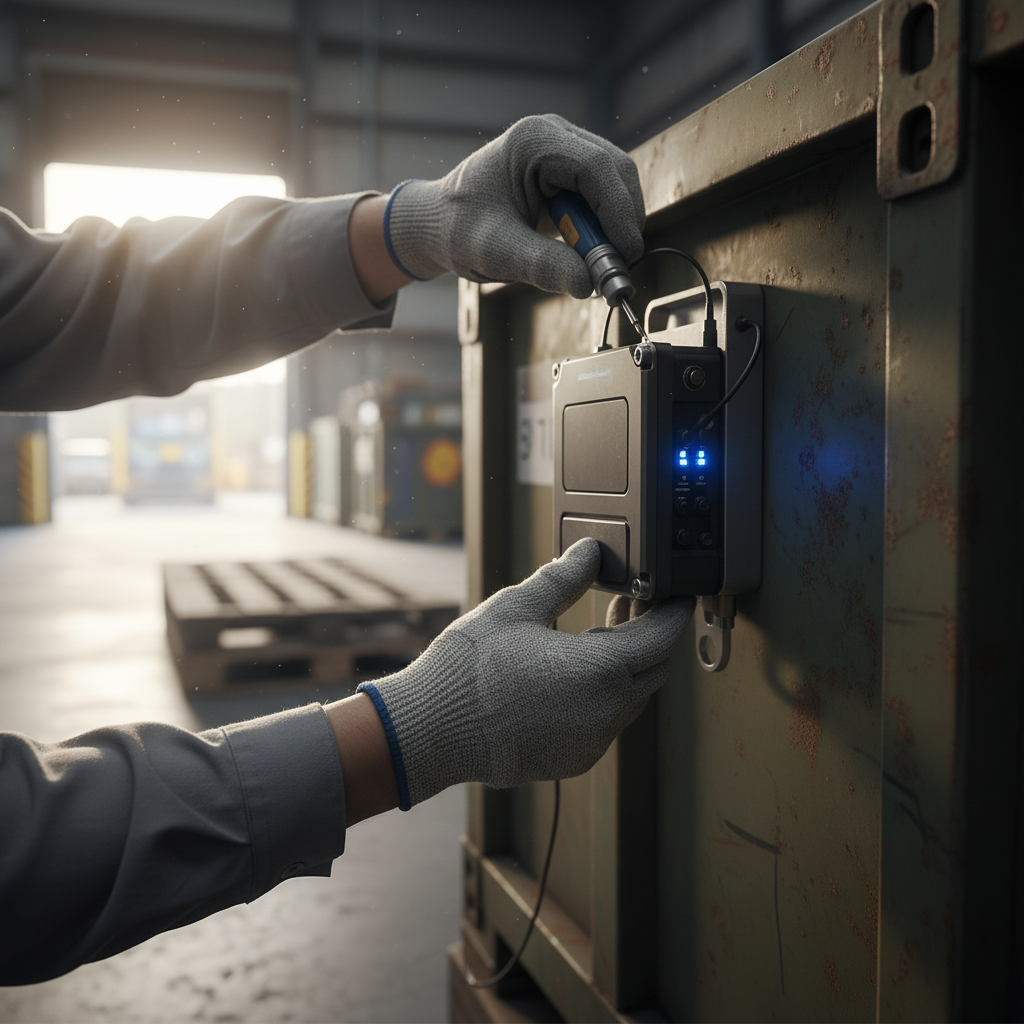
Modern trackers combine GPS, WiFi positioning, and cellular triangulation for continuity from open highway to warehouse interior. The critical differentiator isn’t accuracy on the highway (any tracker does that). It’s whether the device rides on the vehicle or on the cargo itself, and whether it works in the loading dock, the warehouse, and the airport facility where commercial GPS might lose signal.
Battery-powered asset trackers can run for years without external power, which makes them practical for unpowered trailers, containers, and pallets that move between carriers. Datanet’s asset tracking lineup includes devices like the Oyster3 and Oyster Edge that are built for exactly this scenario: long battery life, no wiring, rugged enough for intermodal freight.
For airfreight, hardware must meet DO-160 certification standards. The Thingfox T2 is specifically approved for air cargo environments, which matters when your high-value shipment transits through regulated airline operations.
Multi-sensor condition telemetry
Location alone doesn’t protect pharmaceuticals, biologics, fine art, or sensitive electronics. Cargo condition monitoring uses sensors to measure temperature and humidity (cold-chain GDP compliance), shock and tilt (fragile goods, precision equipment, art), and light exposure. These same environmental monitoring sensors serve double duty across compliance domains. That last one is particularly useful: if light enters a sealed container, someone opened it. It’s a simple, effective tamper indicator.
The current generation of 5G-enabled trackers combines all five sensor types (temperature, humidity, shock, tilt, light) in a single device. This consolidation reduces deployment complexity for teams managing thousands of shipments across multiple carriers and modes, and it’s the same foundation behind reliable wireless environmental monitoring across distributed sites.
Cellular and satellite backhaul
Most cargo tracking runs on 4G/5G cellular networks. The problem: cellular coverage gaps correlate with theft staging zones. Rural corridors, border crossings, and mid-ocean routes are exactly where loads go dark.
Satellite IoT, like the Kinéis 25-nanosatellite constellation, provides global coverage independent of cell towers. The satellite IoT tracking market reached $2.1 billion in 2024 and is projected to hit $8.6 billion by 2033, driven by maritime and transcontinental routes that previously went unmonitored. For ocean equipment tracking, satellite backhaul eliminates the “dark window” between port departure and port arrival, and pairing it with a vessel monitoring system extends that visibility to the ships carrying your freight.
Blockchain for chain of custody
Every handoff in a multi-leg shipment creates a potential dispute. Who had the cargo when damage occurred? Did the temperature excursion happen before or after the freight forwarder took possession?
IBM’s framework documents how combining IoT telemetry with blockchain creates an immutable audit trail: each sensor reading timestamped and anchored to a ledger no single party can alter. This layer matters for insurance claims, customs clearance, and cross-border regulatory compliance.
AI analytics and predictive alerts
The frontier is the shift from descriptive (“here’s where your cargo is”) to predictive (“here’s where your cargo will have a problem”). AI-driven freight systems already report a 20% reduction in logistics expenses, 30% lower maintenance costs, and forecasting accuracy nearing 98%.
For high-value cargo specifically, AI adds route-deviation detection against planned corridors, predictive theft-zone modeling, dwell-time anomaly flagging, and automated escalation when sensor thresholds breach. AI cargo sensors also optimize trailer utilization and reduce empty miles, which directly affects the economics of dedicated high-value lanes.
What Zero Theft Looks Like: A Documented Case
The cleanest public case study I can point to comes from Schneider, working with a high-value electronics manufacturer.
Before intervention: every load qualified as high-value freight. For ten years, the manufacturer lost 2 to 4 loads annually to cargo theft. Cumulative revenue loss ran into the millions. They had standard carrier tracking. It didn’t prevent anything. It just confirmed what was already gone.
The intervention layered four technologies on a single operational dashboard:
- Carrier ELDs for driver compliance and route data
- In-trailer GPS for cargo-level location independent of the tractor unit
- SkyBitz trailer trackers for redundant trailer-level positioning
- Driver mobile apps with geofenced no-stop zones through high-risk corridors
The result: since implementation, there have been zero successful load thefts.
Not “reduced.” Zero.
Two elements drove the outcome. First, monitoring operated at the trailer and cargo level, not just the tractor. If the tractor disconnected from the trailer in a no-stop zone, the system flagged it before the cargo could be staged. Second, the geofenced zones created enforceable rules, not just data. A stop in a designated high-risk area triggered immediate escalation, giving security teams and law enforcement a response window while the cargo was still in motion.
The pattern that works isn’t more gadgets. It’s layered telemetry combined with enforceable operational rules, acted on in real time.
Cold Chain, Insurance, ESG: One Infrastructure, Three Mandates
Something I’ve been watching closely: the same cargo monitoring infrastructure that prevents theft is pulling double and triple duty across compliance domains that used to be separate budgets.
Cold chain and condition compliance. GDP guidelines from the EU and WHO require documented temperature integrity from production to end-use. The cold-chain monitoring market reached $7.47 billion in 2024, and the broader cold-chain logistics market sits at $382.3 billion, growing 13.8% per year. But here’s what’s changed: electronics manufacturers now need humidity and temperature logs because moisture-driven warranty exposure is eating margins. The boundary between cold-chain monitoring and high-value cargo monitoring is dissolving. The sensors are identical.
Fine art and cultural property. Museum loans require end-to-end monitoring of temperature, humidity, light, and shock to protect cultural property in transit. The instrumentation is the same as what a pharma cold chain demands. The regulatory wrapper differs, but the technology layer is shared.
Insurance pricing. Cargo monitoring has shifted from reactive to predictive thanks to IoT, geofencing, and real-time analytics. Insurers now tie premiums directly to telemetry coverage. Monitored freight gets better rates, faster claims resolution, and fewer coverage exclusions. Unmonitored freight gets the opposite. For many high-value shippers, the insurance savings alone pay for the monitoring stack in the first year.
ESG and Scope 3 reporting. Scope 3 emissions represent over 75% of a typical company’s footprint and remain the hardest category to track. Fleet operators already track shipments representing over 60% of freight spend for carbon disclosure. The same telemetry that reroutes around theft zones also calculates per-ton-mile emissions for CSRD-style reporting. Monitoring is becoming a sustainability prerequisite, not just a security line item.
The operational implication is straightforward. If you’re deploying monitoring for security, you’re already 80% of the way to cold-chain compliance and ESG reporting. The cost of maintaining three separate systems for problems that share one technology stack is a cost you shouldn’t be carrying.
What Comes Next: Privacy, 5G, and Prescriptive AI
Three developments are reshaping this space right now.
First, a 2025 study found 58% of respondents express concern about constant monitoring in logistics. Data sharing without consent, third-party access, and carrier data breaches are real risks. One firm deployed end-to-end encryption on its monitoring stack and saw NPS improve 40% while complaints dropped 50%. Privacy isn’t the enemy of monitoring. Poor data governance is. The FAA, IMO, and IATA are actively updating rules for cargo tracking devices, including lithium-battery transport requirements and data residency standards. Compliance with these frameworks is now part of technology selection.
Second, 5G is replacing 4G/2G as the default tracker connectivity. The dead spots common to legacy cellular are precisely where theft staging occurs. Eliminating those gaps is a security requirement, not a spec upgrade.
Third, AI is moving from descriptive to prescriptive. Instead of “your cargo deviated from route,” the next iteration prescribes: “reroute now, theft probability just spiked on your planned corridor.” Combined with satellite IoT closing the last cellular gaps on maritime and transcontinental routes, the result is a monitoring layer that covers every mode, every mile, and makes the decision before a human operator would.
The asset tracking market is projected to reach $51.59 billion by 2030. The infrastructure is scaling fast. The question for any operation moving high-value freight isn’t whether to adopt it, but how to architect it so security, compliance, and sustainability run on one stack instead of three.
If you’re evaluating where your gaps are, or just want to pressure-test your current setup, talk to our team. We build this for a living.
Frequently Asked Questions
What is high-value cargo monitoring?
High-value cargo monitoring is the use of real-time location, condition sensors, and chain-of-custody telemetry to protect shipments whose loss, theft, or environmental breach would cause significant financial or regulatory harm. It goes beyond vehicle GPS by tracking the cargo itself through every leg, carrier handoff, and mode change.
What qualifies as high-value cargo?
Any shipment where loss creates outsized damage: electronics, pharmaceuticals, biologics, fine art, jewelry, luxury retail, aerospace parts, and medical devices. There is no universal dollar threshold, but many firms apply a per-shipment cutoff (often $100,000+) combined with categorical risk factors like theft attractiveness and regulatory sensitivity.
How much does cargo theft cost per incident?
Verisk CargoNet data shows the average stolen load reached $273,990 in 2025, up 35% from the prior year. ATRI research found affected carriers lose over $520,000 annually, with high-loss carriers averaging $1.84 million per year. Strategic theft (identity fraud, fictitious pickups) is the fastest-growing category, up 1,500% since early 2021.
What is the difference between shipment tracking and cargo monitoring?
Shipment tracking follows the vehicle. It provides location, ETA, and delivery confirmation. Cargo monitoring follows the freight itself, adding condition telemetry (temperature, humidity, shock, light), chain-of-custody verification, and tamper detection. For high-value freight, this distinction determines whether you see a theft after it happened or prevent it while the cargo is still recoverable.
Does cargo monitoring reduce insurance premiums?
Yes. Insurers increasingly tie premium pricing and coverage terms to telemetry data. Monitored shipments receive better rates, fewer exclusions, and faster claims processing because objective sensor data replaces disputed narratives about when and where damage occurred. For many high-value shippers, insurance savings offset monitoring costs within the first year.
Can high-value cargo be monitored on ocean and remote routes?
Yes. Satellite IoT constellations now provide global coverage independent of cellular networks, which is what makes reliable cargo monitoring at sea possible. The satellite IoT tracking market reached $2.1 billion in 2024 and is forecast to grow to $8.6 billion by 2033, driven specifically by maritime, transcontinental, and remote routes that previously had no item-level visibility.





 +1 508 292 2210

4 Responses