

Organizations without asset tracking software lose up to 35% of their physical assets annually. That includes tools walking off construction sites where rental equipment tracking would flag them, containers sitting idle in ports nobody monitors, and infusion pumps hoarded in supply closets because nurses don’t trust the system to have one available when they need it.
If you’re evaluating asset tracking, or you’ve deployed it and the results are underwhelming, this piece is for you. I’ve spent 15+ years deploying IoT tracking solutions across aviation, logistics and industrial operations. If you want a step-by-step breakdown of what a real rollout involves, this asset tracking implementation guide maps the phases and true costs. The pattern is consistent: the technology works, but the deployment breaks. And it breaks for reasons most vendors won’t surface because they’d rather sell hardware first and manage expectations never.
Here’s where asset tracking challenges actually live, and what to do about each one.
Most “Asset Tracking” Problems Start Before the First Tag
The single most common mistake I see is definitional. Companies say “asset tracking” when they mean “shipment tracking.” These are not the same thing, and confusing them sets up every downstream failure.
Shipment tracking follows a package from origin to destination. The job ends at delivery. Carrier container visibility, air cargo milestones, last-mile delivery confirmation: all shipment tracking. The unit of interest is the shipment, and once it arrives, the tracking relationship is over.
Asset tracking follows the asset through its entire lifecycle: deployment, use, maintenance, return, dwell, redeployment. A reusable ULD in aviation. A chassis pool in intermodal. A ground power unit sitting on a ramp. A returnable container circulating between three factories and two countries.
When companies buy shipment tracking and expect asset tracking behavior, they get visibility until delivery and then a black hole. The container arrives at the port, the GPS ping stops mattering to the carrier’s system, and nobody knows where it sits for the next 47 days. That dwell time is invisible. That’s where money dies quietly.
If your container pool becomes invisible after delivery, that’s the gap asset tracking closes. Every technology decision that follows depends on getting this definition right first.
Picking Technology Before Picking the Problem
The second most common failure: someone reads a whitepaper about RFID (or GPS, or BLE) and decides that’s the technology before mapping the operational environment where the assets actually live.
Every tracking technology has physics-driven limitations that no software can override:
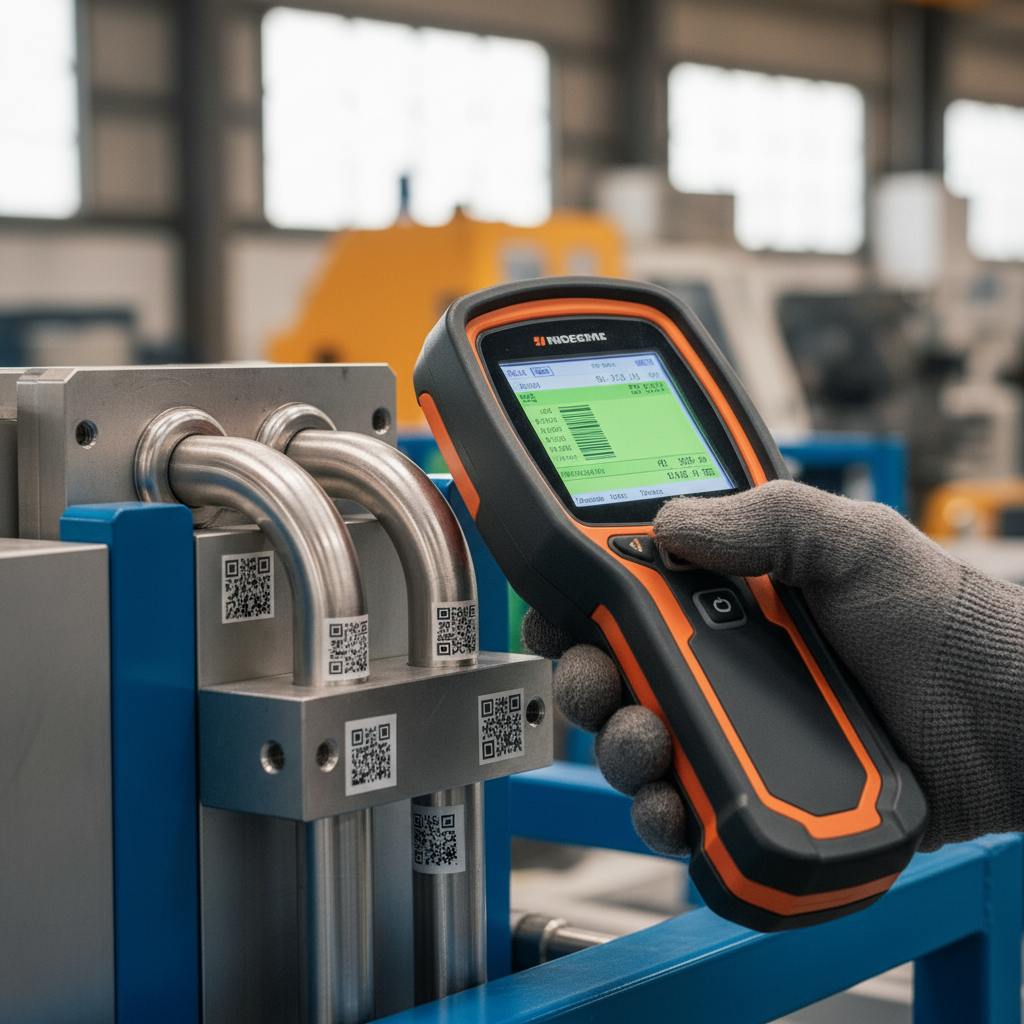
- Passive RFID: Reads within about 1 meter, and cannot read reliably through metal or liquid. Excellent for bulk scanning at dock doors, tool cribs and kitting stations. Unreliable for tracking assets across a multi-acre yard or inside metal containers.
- GPS/GNSS: The outdoor standard, but GPS signals go dark in buildings, tunnels, urban canyons and dense industrial sites. If your assets spend meaningful time indoors, GPS alone produces blind spots exactly where you need eyes.
- BLE: Low power, smartphone-friendly, effective for room-level and zone-level indoor positioning. The trade-off is limited range and the hard reality that high-frequency BLE updates drain batteries fast.
- UWB: Sub-meter accuracy, often within 30 centimeters, at a range of up to 100 meters. Impressive precision, but it requires installed anchor infrastructure and costs more per tag.
The right answer is almost always a combination. GPS plus cellular for assets that move between sites. BLE or UWB for indoor zones where GPS fails. RFID at chokepoints for high-throughput scanning. The challenge is not picking a technology. It’s mapping your asset journey and letting the environment dictate the stack.
I’ve seen aviation MRO shops deploy GPS trackers on ground support equipment that never leaves the ramp perimeter. The GPS worked, technically. But the operational question was “which bay is this GPU parked at right now?” GPS couldn’t answer with enough precision in that environment. A BLE gateway system would have cost less and answered the actual question.
Ghost Assets: The Expensive Fiction in Your Register
A ghost asset is an item in your asset register that no longer physically exists. It was scrapped, stolen, lost or transferred years ago, but nobody updated the record. You’re still depreciating it. You may still be insuring it. You’re paying property taxes on it in jurisdictions that tax fixed assets, which is exactly why disciplined fixed asset management matters.
This problem is more common than anyone admits. Lack of asset visibility and insufficient tagging consistently rank among the top causes of asset management failure across industries. The cost isn’t theoretical: ghost assets inflate your book value, distort capital planning and create compliance exposure every audit cycle.
The fix sounds simple. Tag everything, reconcile the register, delete the ghosts. In practice, it means physically touching thousands of assets (sometimes tens of thousands), applying tags, scanning them into a system, and then maintaining that discipline every time an asset moves, retires or transfers.
Most organizations underestimate the labor involved in that initial tagging sweep by 3x to 5x. And once you’ve cleaned the register, keeping it clean requires process discipline that outlasts the initial project enthusiasm. That’s where the challenge shifts from technical to cultural.
Legacy Systems Fight Every Integration
Your asset tags generate data. That data is only useful if it reaches the systems where decisions get made: your ERP, your CMMS, your supply chain visibility platform.
Most enterprises run ERPs and maintenance systems designed before IoT existed. SAP modules from 2012. Oracle instances customized so heavily the original vendor can barely support them. Homegrown databases that one person understood, and that person left in 2021.
Common integration failure modes:
- Data format mismatches: the tracker sends JSON events; the ERP expects flat files on a nightly schedule.
- No canonical asset ID: the tracker uses a serial number, the ERP uses an internal asset code, the maintenance system uses a third identifier, and nobody mapped the three together.
- Batch vs. real-time mismatch: the tracker generates real-time events; the ERP processes assets in nightly batch runs. By morning, the data is already stale.
The result is predictable. A perfectly functional tracking layer producing data that sits in a dashboard nobody checks, because it never made it into the workflow where the maintenance planner or fleet manager actually works.
The integration layer is frequently the most expensive part of an enterprise asset tracking deployment, and the part most RFPs skip. If your vendor can’t articulate exactly how tracking data reaches your ERP and triggers an operational action, you don’t have a solution. You have a sensor.
Your Team Will Resist It
This is the challenge most tracking vendors skip over, because it’s uncomfortable. But in every deployment I’ve led or advised on, the single most reliable predictor of failure is not technology. It’s people.
In warehouse asset tracking, teams worry that tracking means surveillance. Nurses hoard equipment because they’ve been burned by not having it available when needed. Drivers remove GPS devices because they feel monitored. Site managers resist data transparency because it exposes inefficiencies they’ve been managing around for years.
In healthcare asset tracking, deliberate staff hoarding of equipment is so common that hospitals routinely over-purchase 15 to 20 percent extra inventory just to compensate. The tracking system works, but without disciplined asset utilization tracking human behavior makes it irrelevant.
The fix is not more technology. It’s change management deployed before the hardware arrives:
- Explain what the system tracks (assets, not people) and make that distinction enforceable in policy.
- Show front-line teams what’s in it for them: less time searching, more predictable equipment availability, fewer emergency calls.
- Involve operations leads in the deployment design so they own it, not just comply with it.
- Measure and share wins quickly. When cycle time improves or stockouts drop in the first month, make that visible before the novelty fades.
Skip this step and you’ll have an expensive system producing accurate data that nobody trusts or uses.
Hidden Costs That Kill the Business Case
Most asset tracking business cases model three lines: hardware, software license and installation. The real cost structure has at least seven.
- Hardware per unit. Passive RFID tags cost as little as $0.10 at scale. Active RFID runs $10 to $100+. Rugged GPS/cellular trackers for outdoor industrial use typically fall in the $100 to $500 range per device.
- Initial tagging labor. Physically tagging 10,000 assets takes weeks, not days. If assets are dispersed across multiple sites, add travel and coordination.
- Software and platform licensing. SMB packages start around $10 to $50/month; enterprise deployments often exceed $10,000/month before integration work.
- Integration and middleware. Connecting the tracking layer to your ERP, CMMS and BI tools. Often the largest single cost line, and the most frequently underestimated.
- Training. Not a one-time event. Every shift change, new hire and process update requires refresher training or data quality degrades within weeks.
- Battery replacement and device maintenance. GPS trackers need battery swaps or recharging. BLE beacons degrade. RFID tags get physically crushed in industrial environments. Budget an annual replacement rate of 5 to 15% of your installed base.
- Ongoing data hygiene. Reconciliation sweeps, ghost asset cleanup, register audits. Without this budget line, your clean database has a shelf life of about six months.
Total cost of ownership for a serious deployment runs 2x to 4x the hardware-plus-license number most vendors quote. That doesn’t mean the ROI is bad. It means the ROI looks bad when you don’t model it honestly upfront and the unexpected costs hit after executive sponsorship has moved on to the next initiative.
Security and Privacy Are Real Constraints Now
Two years ago, security was a footnote in asset tracking RFPs. In 2026, it’s a procurement gate.
On the enterprise side, RFID systems are vulnerable to denial-of-service attacks that flood the tag-to-reader communication channel, plus tag cloning and spoofing that feed false location data into your system. An attacker doesn’t need to breach your corporate network. A $30 RFID emulator and proximity to your dock door is enough.
On the consumer-adjacent side, the explosion of BLE trackers (AirTags, SmartTags) into workplace use cases has created a stalking and liability surface that didn’t exist five years ago. Research from TU Darmstadt documented 222 stalking victims who reported unwanted Bluetooth tracker surveillance, and a class-action lawsuit against Apple over AirTag-enabled stalking was allowed to proceed in 2024.
The implications for enterprise deployments:
- Any BLE tracker deployment targeting people-adjacent assets (vehicles, laptops, bags, badges) needs an anti-stalking audit before rollout.
- RFID deployments need encryption, authentication and process-level access controls. One layer alone is insufficient.
- Container and fleet tracking using cellular or satellite devices avoids the BLE stalking surface entirely, but still needs data encryption in transit and at rest.
In regulated verticals like aviation, healthcare and defense, privacy compliance is a gate, not a nice-to-have. If your tracking vendor doesn’t have a security architecture document ready on request, treat that as a disqualifying signal.
What Getting It Right Actually Looks Like
Despite every challenge above, the ROI evidence for well-executed asset tracking is hard to argue with:
- RF Code’s deployment across IBM’s global data centers delivered $42 million in savings over five years by replacing manual inventory sweeps with real-time wireless sensors and automated asset management.
- A mid-sized manufacturer with 2,000 tracked assets reported $180,000 in annual savings against a $30,000 software investment: a 500% ROI driven by reduced search time, fewer duplicate purchases and better maintenance scheduling.
- In healthcare, where 10 to 20% of mobile equipment is lost or stolen at roughly $3,000 per item, RTLS deployments at facilities like Grady Health System in Atlanta have measurably improved utilization across a 953-bed trauma center.
The pattern in every successful deployment I’ve seen is the same: teams spent more time on problem definition, integration planning and change management than on hardware selection. These asset tracking best practices are what separate deployments that pay for themselves from the ones that stall. The hardware is the easy part. Everything around it is where projects succeed or fail.
In aviation and logistics, where we work most at Datanet, the challenge is compounded by the lifecycle nature of the assets. Containers, ULDs, GSE, tooling: these assets don’t just need a location ping. They need cycle-time visibility, dwell-time alerts, maintenance triggers and return-loop tracking. Asset tracking in aircraft manufacturing faces unique complexities around regulatory compliance, environmental conditions and asset variety. That demands devices built for the environment, whether it’s a DO-160 certified tracker for airfreight or a ruggedized cellular device for yard and fleet operations. The ROI comes from compressing cycle times and eliminating dwell, not from knowing where something is at one isolated moment.
Where the Industry Is Heading
The asset tracking market is projected to reach $51.59 billion by 2030, and the growth is not driven by more of the same. Three shifts are reshaping what “tracking” means in practice.
AI turns location data into prediction. The AI-powered asset tracking segment is expected to grow from $2.4 billion in 2024 to $15.6 billion by 2034 at a 20.6% CAGR. Tracking moves from “where is it?” to “what will fail, and when?” When you layer predictive analytics on top of location and condition data, asset tracking becomes the sensor pipeline for predictive maintenance.
Digital twins create virtual replicas of physical asset fleets. When tracking data feeds a digital twin, you can simulate scenarios (what happens if we reroute 200 containers from Rotterdam to Antwerp?) before committing real assets. The digital twin market is forecast to exceed $384 billion by 2034, led by manufacturing and logistics, where manufacturing asset visibility is now a core operational requirement rather than a reporting afterthought.
Battery engineering extends deployment life. The hardware battleground in 2026 is battery longevity at a given reporting interval. Devices that shift to low-power states when stationary, combined with energy-efficient cellular chipsets, are pushing useful life from months to multiple years without a battery swap. That changes the TCO math substantially, because the device maintenance cost line shrinks and field labor drops.
The procurement implication is clear. If you’re buying asset tracking in 2026, buy a platform with an AI and integration roadmap. Point solutions you’ll replace in 18 months are the most expensive option on a three-year horizon.
If you’re working through any of these challenges right now, or trying to figure out which ones apply to your operation, talk to our team. We build end-to-end tracking solutions across aviation, logistics and industrial operations, and we’d rather help you avoid the expensive mistakes than sell you hardware that doesn’t fit.

Frequently Asked Questions
What is the biggest challenge in asset tracking?
Integration. Getting tracking data from the tag into the system where operational decisions happen (ERP, CMMS, supply chain platform) is where most deployments stall. The hardware works. The data pipeline between the hardware and the business process is where complexity and cost concentrate.
How much does asset tracking cost?
Total cost of ownership varies widely. Passive RFID tags cost cents at scale; rugged GPS/cellular trackers run $100 to $500 per device. Software ranges from $10/month for small operations to $10,000+/month for enterprise. The hidden costs (tagging labor, integration, training, battery maintenance, data hygiene) typically push total spend to 2x to 4x the initial hardware-plus-license quote.
Which tracking technology should I choose?
Match the technology to the environment. Passive RFID for short-range bulk scanning in controlled spaces. GPS/GNSS for outdoor long-range tracking across yards and routes. BLE for indoor zone-level positioning. UWB for sub-meter indoor precision. Most serious deployments combine two or more technologies based on where the asset actually travels.
What is a ghost asset?
An asset that appears in your financial register but no longer physically exists. It was scrapped, lost, stolen or transferred, but the record was never updated. Ghost assets inflate book value, distort depreciation schedules and create audit liability. The fix is physical tagging, system reconciliation and ongoing data hygiene.
What ROI can I expect from asset tracking?
Mature deployments report 40 to 60% operational cost savings, 50 to 70% shorter audit preparation, and up to 90% reduction in asset loss. Named benchmarks include $42 million in five-year savings (IBM data centers) and 500% ROI for a mid-sized manufacturer with 2,000 tracked assets against a $30,000 annual software spend.
How do I handle employee resistance to asset tracking?
Start change management before the hardware arrives. Clarify that the system tracks assets, not people, and make that distinction enforceable. Show front-line teams the direct benefit: less searching, more reliable availability. Involve operational leads in the design. Share measurable early wins visibly and quickly, before novelty fades.







 +1 508 292 2210

8 Responses