

The global Industry 4.0 market hit $149.2 billion in 2025, with aerospace as one of its two largest verticals. By 2035, that figure should cross $1.2 trillion. Every major OEM has a digital transformation program with a name, a budget, and a slide deck full of digital twins.
And yet. Only 16% of digital transformation programs sustain long-term change. Success rates in comparable benchmarks land between 4% and 11%. The remaining 84% don’t crash on day one. They decay. Pilots that never scale. Dashboards nobody opens after month three. Teams that revert to paper job cards because the system is slower than the clipboard.
I work the IoT and asset tracking layer of the aerospace supply chain. The layer that feeds sensor data into every digital twin, every predictive maintenance model, every “AI-powered” dashboard. What I see, consistently, is that transformation breaks not at the top of the stack but at the bottom: the physical data infrastructure that nobody wants to talk about because it’s boring compared to generative AI.
This piece covers what digital transformation in aerospace manufacturing actually looks like in 2026, which programs are proving it works, why most still fail, and where the next five years are headed.
What Digital Transformation Looks Like on the Factory Floor
Strip away the jargon and digital transformation in aerospace manufacturing comes down to one architectural concept: the digital thread. A continuous flow of data that connects an aircraft’s earliest design parameters to its final retirement, passing through engineering, production, supply chain, in-service operations, and MRO along the way.
Before the digital thread, each stage of the lifecycle operated in its own data silo. Engineering worked in CAD. Manufacturing worked in MES. MRO teams worked off paper technical manuals and tribal knowledge. Design changes took months to propagate. The digital thread collapses those silos into a single, continuously updated data chain.
Supporting that chain is a stack of seven interlocking technology layers:
- PLM and Model-Based Systems Engineering (MBSE). Platforms like Siemens Teamcenter, Dassault Systèmes 3DEXPERIENCE, and PTC Windchill form the backbone. Boeing’s 777X program runs 100% MBSE: no 2D drawings, every engineering artifact governed through digital models.
- Digital twins. A virtual replica of a physical asset (engine, airframe, entire factory) synchronized with sensor data in near-real time. The concept traces back to NASA’s Apollo missions, where a “living model” of spacecraft systems helped engineers diagnose the Apollo 13 oxygen tank failure. The term “digital twin” was coined by Dr. Michael Grieves at the University of Michigan in 2002. Today, Siemens alone reports over 400 million digital twins created across its customer base.
- AI and generative AI. Classical ML handles predictive maintenance and quality inspection (deployed since roughly 2018). Deep learning handles image-based defect detection. Generative AI handles design exploration. The latest: GE Aerospace’s generative AI app produced hundreds of hypersonic ramjet engine layouts in seconds in May 2026, replacing months of manual CAD iteration.
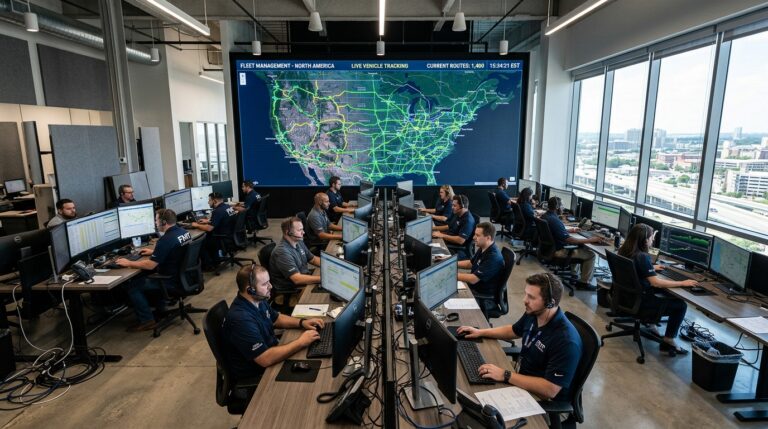
- Industrial IoT (IIoT) and edge-to-cloud data pipelines. Connected IoT devices grew from 923 million in 2020 to a projected 21.1 billion in 2025. In aerospace, IIoT powers the real-time telemetry that feeds digital twins and predictive maintenance. Rolls-Royce’s “power-by-the-hour” model, Airbus’s Skywise platform, private 5G factory networks: all depend on reliable sensor data from physical assets.
- Additive manufacturing. No longer prototyping-only. Airbus and Norsk Titanium are industrializing wire-DED plasma technology for high-criticality structural titanium parts. GKN Aerospace has had load-bearing additive components in flight for two decades. The US aerospace additive manufacturing market alone is projected to reach $10.48 billion by 2033.
- Cloud platforms and data ecosystems. Airbus’s Skywise, spun out as a standalone entity in April 2026, aggregates data from thousands of connected aircraft and serves airlines, MROs, and lessors. Data platforms are becoming the product, not just an internal IT tool.
- Mixed reality and human-robot collaboration. Airbus uses HoloLens for cabin marking and engineering visualization. Boeing deploys AR to give technicians real-time 3D wiring diagrams hands-free.
None of these layers works in isolation. A digital twin without reliable sensor data is a static 3D model with a marketing name. AI without clean data from the production line produces confident-sounding garbage. The stack is coupled, and its weakest layer determines the ceiling for everything above it.
The $149 Billion Bet (and the Pilot Purgatory Problem)
The money flowing into aerospace’s digital transformation is real. Here’s how the major sub-markets break down:
| Sub-market | 2025 size (USD) | Next milestone | CAGR |
|---|---|---|---|
| Global Industry 4.0 | $149.2B | $172.5B (2026); $1.2T (2035) | 24% |
| North America digital twin | $8.08B | $58.92B (2030) | 48.8% |
| Digital MRO (global) | $1.17B | $3.84B (2034) | 14.1% |
| A&D additive manufacturing | $5.19B | $6.12B (2026) | ~18% |
Sources: GMI Insights, MarketsandMarkets, Fortune Business Insights, The Business Research Company
But spending and adoption are different things. McKinsey’s 2024 global MRO survey of 45 executives found only 33% view digital as critically important today. Over 70% expect it to be critical within three to five years. That gap tells you everything about where the industry sits: most organizations know they’ll need this, but only a fraction have committed.
The more telling number: just 6% of MROs have integrated digital and analytics at scale. Meanwhile, roughly 50% have multiple digital pilots running. That’s pilot purgatory. Dozens of proof-of-concept projects generating positive results in controlled environments, none of them reaching full production deployment.
The digital MRO market itself reveals where spending concentrates. North America holds 40% of it, Europe 25%, Asia-Pacific 25%. By end user, MRO service providers account for 30%, engine OEMs 25%, airlines 25%, and aircraft OEMs 20%. The technology has spread well beyond the largest OEMs. The problem isn’t access to tools. It’s the organizational capacity to scale them.
Six Programs Proving It Works
When digital transformation does work in aerospace, it shares common traits. Six programs illustrate them.
Airbus DDMS and the A321 Digital Factory
Airbus reorganized engineering, manufacturing, and services into a single Digital Design, Manufacturing & Services (DDMS) program. The goal: a smart factory ecosystem with a digital thread integrating aircraft design, supply chain management, production, and in-service support. On the A321 line in Toulouse, Airbus combined 3D-printed titanium parts, robotic seat installation, and digital twin simulations to retrofit the former A380 assembly building for a new production line. Digital twinning now spans the A350, A320, Eurodrone, and FCAS programs.
GE Aerospace Generative AI for Engine Design
In May 2026, GE Aerospace demonstrated a generative AI application that produces hundreds of preliminary hypersonic ramjet engine layouts in seconds. The same engineering work previously required weeks or months of manual CAD iteration. The platform extends to commercial engine work through the CFM International RISE program, including open-fan architecture for next-generation narrow-body engines. This is the first documented production-grade use of generative AI in early-stage propulsion design.
Spirit AeroSystems Spirit One
Spirit AeroSystems implemented Spirit One as its enterprise digital thread, built on Dassault 3DEXPERIENCE. The 45,000-square-foot Global Digital Logistics Center stores over 120,000 parts and achieves 99.97% delivery accuracy. At Prestwick, Scotland, Spirit used AR walk-throughs to redesign A320 spoilers from sandwich core to monolithic resin transfer molding. At Wichita, a digital twin of tooling and equipment automates 737 MAX-8 floor beam assembly across 400+ configurations.
A necessary caveat: Spirit’s broader business deteriorated through 2024-2025 as it struggled with Boeing 737 MAX production rates, eventually agreeing to be reacquired by Boeing. Digital excellence at the process level did not buffer the company from program-level commercial shocks. Transformation is not a shield against bad contracts.
Rolls-Royce Digital FIRST
Rolls-Royce’s Digital FIRST program spans defense and civil aerospace. The Advanced Visualization Lab uses VR-based “virtual factory” simulations to evaluate ergonomics and material flow before committing capital to physical changes. The company’s “power-by-the-hour” business model, selling engine availability rather than engines, makes continuous digital monitoring not optional but commercial. When your revenue depends on uptime, the business case for IIoT and predictive analytics writes itself.
Lockheed Martin 1LMX
Announced in August 2024, 1LMX consolidates ERP, MES, PLM, and supply-chain orchestration onto a unified digital backbone across defense and space. It’s described as a “mission-driven business and digital transformation program” transforming end-to-end processes. The scale is notable: Lockheed is attempting enterprise-wide transformation, not isolated factory modernization.
Cross-Cutting Patterns
Across all six, what works follows the same pattern. Start with a single high-value program (one engine, one assembly line, one logistics center) rather than an enterprise-wide “big bang.” Connect PLM, MES, and ERP into a single digital thread backed by real sensor data. And embed AI into a specific high-friction process (design layout, predictive maintenance, inspection) before attempting to generalize it.
What fails is the inverse: treating digital transformation as an IT project disconnected from the line of business it’s supposed to serve.
Why 84% of Programs Don’t Survive Long-Term
The failure pattern isn’t mysterious. NI (National Instruments) identifies five root causes specific to aerospace and defense:
- Digitizing broken processes instead of redesigning them. If your work order routing is chaotic on paper, it’ll be chaotic in MES too, just faster.
- Treating transformation as an IT project rather than a business program. Digital twins don’t fix anything unless operations leadership owns the use case.
- Ignoring cultural and workforce change. Maintenance teams who’ve worked the same way for 25 years won’t adopt tablets because IT says so.
- Data silos and data quality issues. The most common barrier by far.
- Lack of sustained executive sponsorship. The pilot gets VP attention. The scale-up doesn’t.
McKinsey’s survey data quantifies the gap. Roughly 80% of firms cite data limitations as a barrier. Over 70% cite organizational resistance. Over 70% cite lack of internal digital talent. These aren’t separate problems. They compound. Bad data breeds distrust in the system. Distrust breeds resistance. Resistance drives talented digital hires to leave for companies where their work gets deployed.
The talent picture is tightening. Between 2025 and 2028, job postings requiring data-analysis skills in A&D are projected to rise from 9% to nearly 14%, and data science postings from 3% to 5%. The competition for these roles extends well beyond aerospace. You’re competing with fintech, autonomous vehicles, and big tech for the same people.
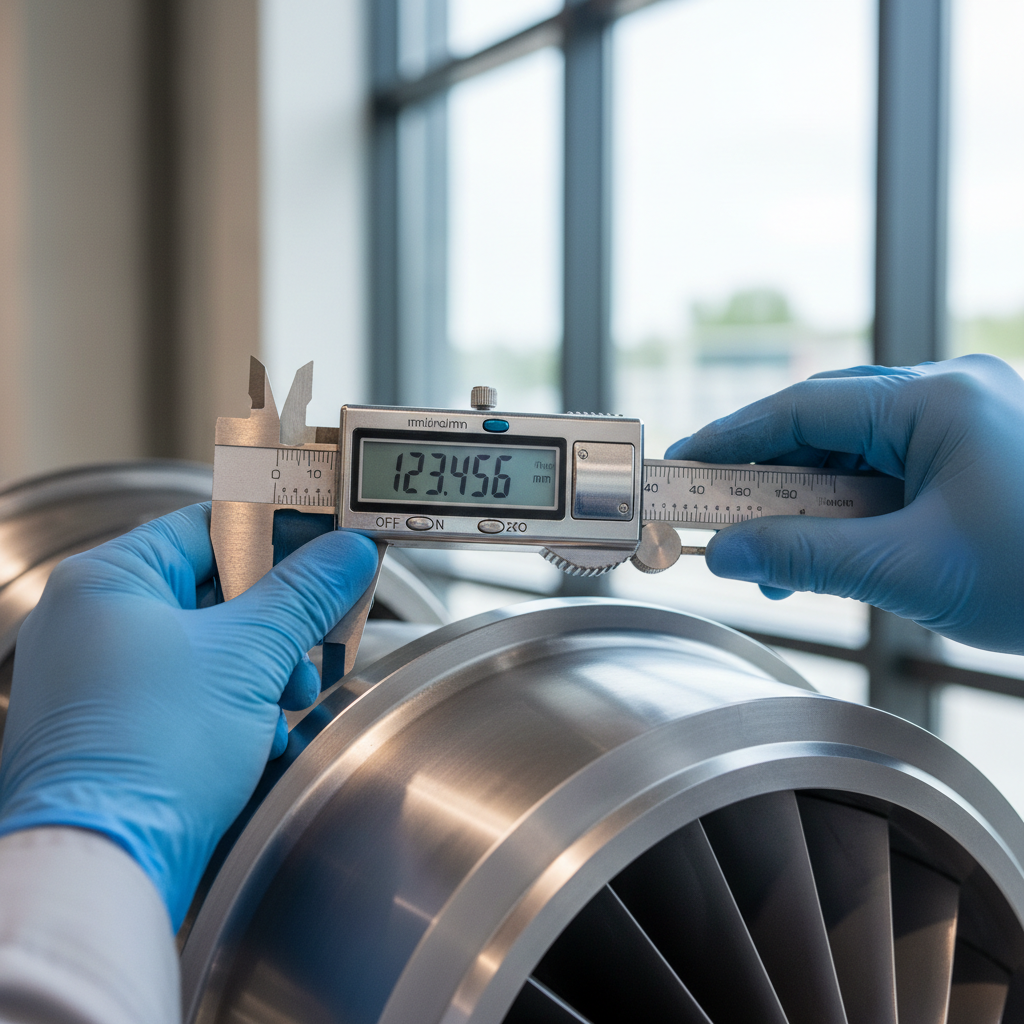
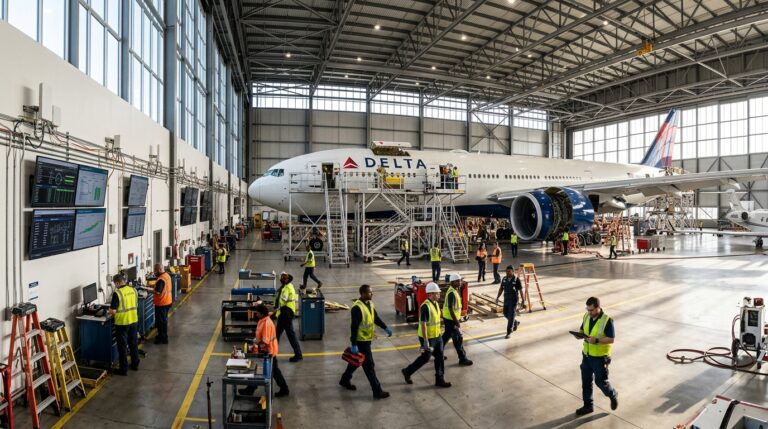
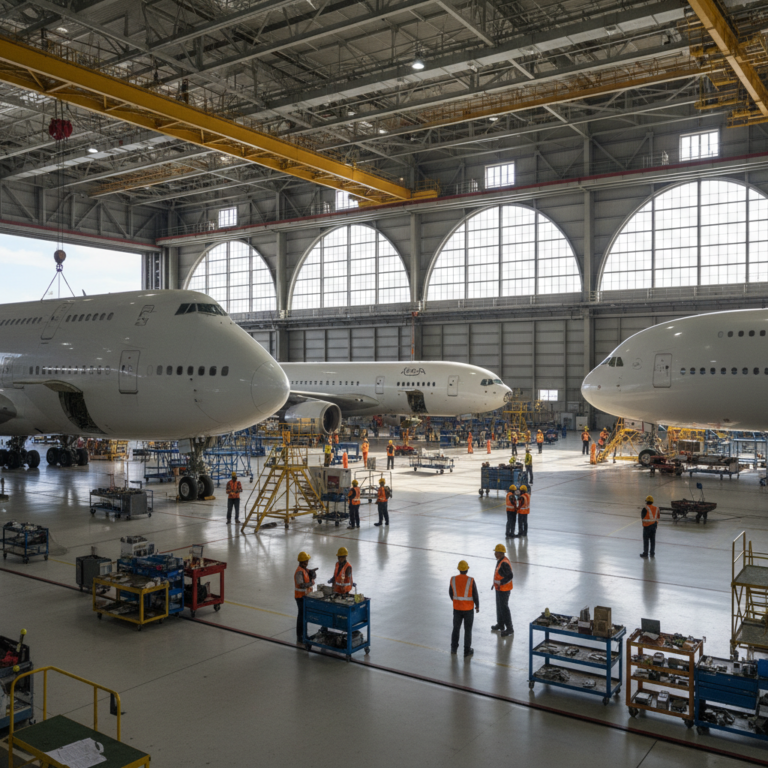
The deepest structural issue, though, is the one consultants rarely mention: most aerospace factories aren’t greenfield smart factories. They’re brownfield halls with 20- to 30-year-old CNC machines, legacy PLC architectures, and wiring that predates the internet. Retrofitting these environments with IIoT sensors, edge gateways, and reliable connectivity is hard, unglamorous work. But without it, every layer above (digital twins, AI, predictive maintenance) has nothing reliable to feed on.
The Supplier Digital Divide
Most of the transformation narrative focuses on OEMs: Airbus, Boeing, GE Aerospace, Lockheed Martin. But the aerospace supply chain is a pyramid, and the base of that pyramid is thousands of Tier 2 and Tier 3 suppliers who machine parts, treat surfaces, and assemble sub-components in shops far smaller than any Airbus hall.
Roland Berger’s 2025 aerospace supply chain survey found 65% of respondents citing personnel shortages. 49% lack financial resources (up from 41% in 2024). 34% are missing production capacity. The good news: roughly 70% now feel well-prepared for ramp-up, up from about 35% in 2024. The supply chain crisis is easing, but the digital gap within it is widening.
Here’s the mechanism that will force the issue: OEMs are beginning to mandate PLM and digital-thread compliance through contractual supplier requirements. If you’re a Tier 2 supplier machining titanium forgings for an Airbus program, you may soon be required to deliver not just parts but digital data packages that feed the OEM’s digital twin. Academic research on the digitalization of aerospace SMEs confirms what field experience suggests: smaller firms must embrace digitalization to remain competitive, but the path to get there looks nothing like the OEM playbook.
For Tier 2/3 shops, the starting point isn’t a $50 million PLM deployment. It’s basic asset visibility: knowing where tooling is, tracking work-in-progress through the shop, capturing machine utilization data, and feeding quality records digitally to the customer. Affordable IIoT devices and cellular trackers are solving parts of this problem today. Not glamorous. Not on any Gartner Magic Quadrant. But it’s the floor the rest of the stack stands on.
What’s Coming: 2026 to 2030
Five trends will shape the next chapter.
Agentic AI Moves From Labs to Procurement and Planning
Deloitte’s 2026 aerospace outlook predicts agentic AI (autonomous systems that plan and execute multi-step tasks) will scale across procurement, planning, logistics, and maintenance this year. For core shop-floor manufacturing processes, widespread agentic orchestration is unlikely before 2028. The Aerospace Industries Association published its “Vision for Agentic AI in U.S. Defense-Industrial Collaboration” in February 2026, signaling top-down alignment on timeline and scope.
Quantum Computing Enters Production Design Loops
Airbus runs the most aggressive aerospace quantum program. Quantum Challenge 3.0 is underway in 2026, working with IonQ, Quantinuum, QC Ware, and Q-CTRL on hybrid classical-quantum algorithms for aerodynamic flow modeling. In March 2026, Airbus announced the first aircraft-grade quantum navigation system using Earth’s magnetic field as an unspoofable GPS backup. Expect production-grade quantum use in computational fluid dynamics and finite element analysis by 2028.
Additive Manufacturing Qualifies for Primary Structures
Today, certified additive parts in production aircraft are mostly secondary structures and engine components. The Airbus-Norsk Titanium partnership and GKN Aerospace’s ongoing qualification work are pushing toward primary structural airframe parts. By 2028, expect the first primary structural components produced additively to be flying on commercial aircraft. The A&D additive manufacturing market crossed $5 billion in 2025 and continues at roughly 18% CAGR.
The Cybersecurity Crisis Grows With Every Connected Device
With 21.1 billion connected IoT devices projected for 2025, the IT/OT attack surface in aerospace has expanded enormously. The July 2024 CrowdStrike outage, caused by a faulty security software update, crashed roughly 8.5 million Windows machines worldwide and disrupted commercial aviation operations, baggage handling, and manufacturing execution systems. That wasn’t even a cyberattack. It was a bad update. Cybersecurity now holds an 8% share of the Industry 4.0 market and is growing faster than most other subsegments. Any digital transformation program that treats cybersecurity as an IT afterthought is building on sand.
Defense Tech Insurgents Reshape the Competitive Landscape
Anduril Industries, Palantir Technologies, and Relativity Space are taking share from traditional defense primes on software-defined mission systems and additive-first manufacturing. In June 2026, the U.S. Air Force selected Anduril to bring mission autonomy to the Collaborative Combat Aircraft program. Palantir delivers “decision advantage” software across the air, space, and cyber domains. For incumbents, the implication is clear: digital transformation is no longer just about internal productivity. It’s about defending platform share against companies whose first product is software.
Where This Leaves You
Digital transformation in aerospace manufacturing is not one project. It’s the progressive layering of a technology stack where each layer depends on the one beneath it. Skip the foundational IIoT data infrastructure, and your digital twins render pretty but lie. Skip the cultural change, and your MES gathers dust. Skip cybersecurity, and a single faulty update grounds your operations.
The 16% of programs that survive long-term share two things: they start small with a real operational problem (not a technology in search of a use case), and they build the data layer first.
At Datanet, we work the IIoT layer. Asset tracking and environmental monitoring for aerospace, MRO, ground support, and supply chain operations. If your tooling, containers, or equipment go invisible once they leave a controlled zone, that’s the gap where transformation programs quietly break. See what we deploy, or reach out directly at datanetiot.com/contact-us.

Frequently Asked Questions
What is digital transformation in aerospace manufacturing?
It’s the integration of digital technologies (digital twins, AI, IIoT, PLM, additive manufacturing, AR/VR, cloud platforms) into the full product lifecycle, from early design through in-service support and MRO. The goal is replacing disconnected data silos, paper processes, and tribal knowledge with a continuous digital thread linking every stage of an aircraft’s life.
What is a digital thread vs. a digital twin?
A digital thread is the continuous data chain connecting engineering, manufacturing, supply chain, and MRO for a given product. A digital twin is a virtual replica of a specific physical asset (engine, airframe, factory) that updates with real-time sensor data. The thread is the highway. The twin is a vehicle on it.
Why do most aerospace digital transformation programs fail?
Five root causes dominate: digitizing broken processes instead of redesigning them, treating transformation as an IT project, ignoring workforce culture change, poor data quality and siloed systems, and lack of sustained executive sponsorship. McKinsey data shows 80% of firms cite data limitations and over 70% cite organizational resistance as primary barriers.
What ROI does predictive maintenance deliver in aerospace?
Industry benchmarks show predictive maintenance delivers an average 10:1 ROI, with 25-40% reduction in maintenance costs and up to 50% decrease in unplanned downtime. McKinsey’s survey found over 25% of digital adopters achieved a 10-20% reduction in maintenance spending, while GMI Insights reports that large enterprises adopting Industry 4.0 technologies see production output increases of 10-20% and employee productivity gains of 7-20%.
How are Tier 2 and Tier 3 aerospace suppliers affected?
Smaller suppliers face sharper constraints: 65% cite personnel shortages, 49% lack financial resources, and OEMs are increasingly mandating digital-thread compliance contractually. The starting point for most Tier 2/3 shops isn’t enterprise PLM but basic asset visibility (tracking tooling, work-in-progress, and machine utilization through affordable IIoT devices).
What role does IIoT play in aerospace digital transformation?
IIoT provides the foundational data layer. Connected sensors on machines, tooling, containers, and equipment generate the real-time telemetry that feeds digital twins, predictive maintenance models, and AI analytics. Aerospace production asset monitoring enables this continuous data flow across manufacturing operations. Without reliable IIoT infrastructure, every technology layer above it operates on incomplete or stale data.





 +1 508 292 2210

2 Responses