

The global fleet management market crossed $75.8 billion in 2025 and is projected above $400 billion by 2036. Those numbers sound impressive until you examine what most of that spending actually delivers: a dot on a screen showing where a vessel is right now.
Fleet monitoring for shipping companies has moved well past paper logs and VHF radio. But AIS tracking tells you position, course, and speed. It does not explain why fuel costs climbed last quarter, which engine bearing is weeks from failure, or how your CO₂ reporting stands under the EU ETS rules that now require 100% allowance surrender. The returns come from the layers beneath that dot: engine telemetry, emissions compliance, predictive maintenance, and (the most overlooked) asset-level visibility for the containers and equipment your vessels carry.
I have spent 15+ years integrating IoT for transport and logistics. The pattern repeats: shipping companies invest in vessel-level visibility and leave the asset layer almost entirely dark. Below is a practical breakdown of what fleet monitoring means today, where measurable ROI concentrates, and which layers most operators still ignore.
What Fleet Monitoring Actually Means Today
Fleet monitoring is the continuous observation of vessel position, performance, condition, and compliance status, combined with analytics that turn raw data into operational decisions. It is not one system. It is four technology layers working in sequence, and the gap between “we track our ships” and “we monitor our fleet” lives in how many of those layers you actually run.
It starts with position and identification. The Automatic Identification System (AIS), mandatory for most commercial vessels under SOLAS, broadcasts identity, course, and speed over VHF radio. Satellite receivers extend that coverage to mid-ocean where terrestrial stations cannot reach. Long-Range Identification and Tracking (LRIT) adds a security dimension. Every shipping company has this. It is the baseline, not the goal.
On top of position sits sensor telemetry. Modern vessels carry dozens of IoT sensors measuring engine RPM, fuel flow, exhaust gas temperature, lube-oil pressure, hull stress, draft, and trim. For temperature-sensitive cargo, these same monitoring principles apply across transport modes—similar to temperature monitoring for air freight, where continuous sensor telemetry ensures cargo integrity. Edge devices aggregate these signals on board, run initial anomaly detection, and prepare data for transmission. This is the layer where operational intelligence actually begins.
The third layer is communications. Legacy satellite systems (Inmarsat Fleet Xpress, Iridium Certus) still carry most ship-to-shore data, but LEO constellations like Starlink Maritime and OneWeb now deliver broadband at substantially lower cost. That shift makes always-on streaming telemetry practical for vessel classes that could not justify it five years ago.
Software and analytics sit at the top: dashboards, AI models, compliance reporting, route optimization, hull performance scoring, and predictive maintenance engines. Carnival Corporation’s Fleet Operations Center, powered by NAPA, monitors 26+ cruise ships in real time from Miami, optimizing safety and energy efficiency from shore. This is where data converts to dollars, but only if the layers beneath it produce clean, continuous signals.
Most fleet monitoring investments cluster at position (Layer 1) and software (Layer 4). The hardware in between, the sensors, edge devices, and communications infrastructure, is where implementation quality separates operators who see ROI from those who bought an expensive dashboard.
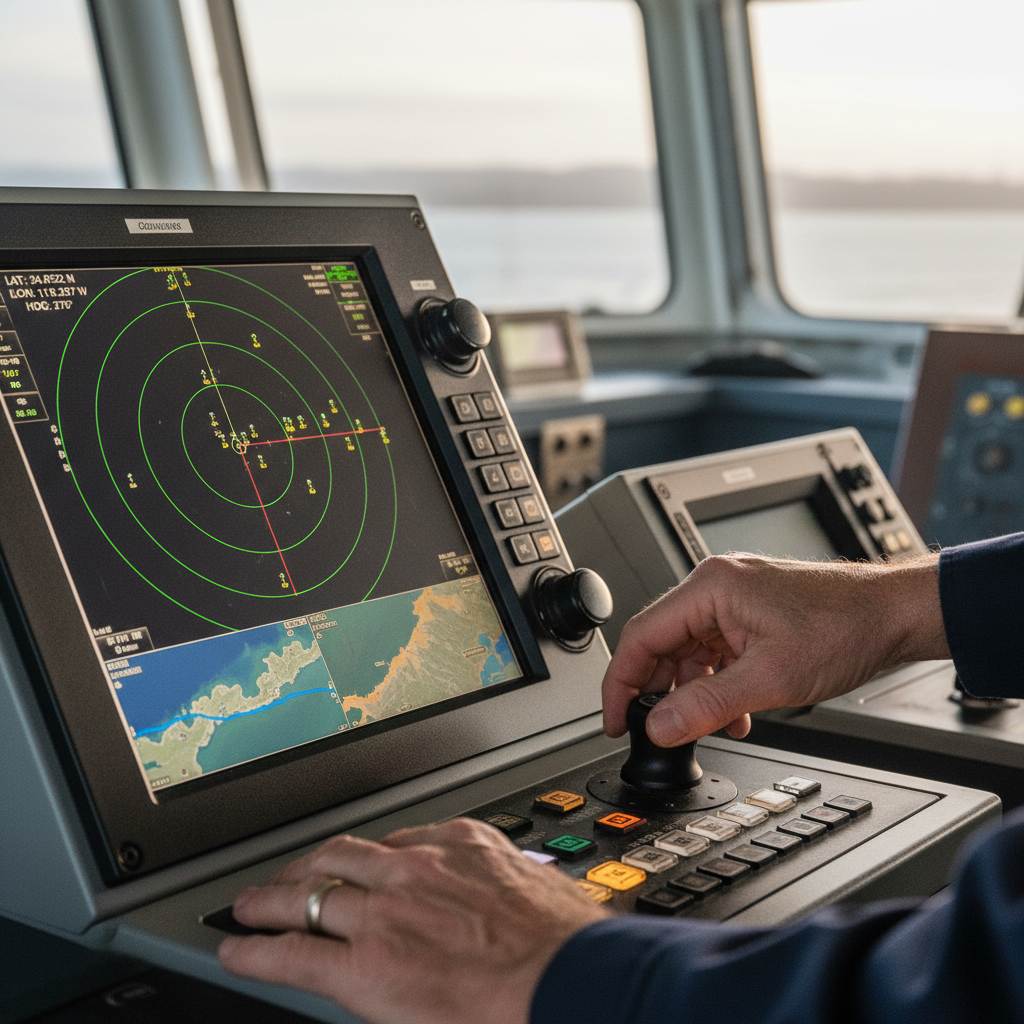
Regulatory Pressure That Eliminated the “Optional” Label
Three regulatory regimes now make continuous fleet monitoring a compliance requirement, not a competitive advantage.
The IMO started the cascade with its 0.5% sulphur cap on marine fuel, effective January 1, 2020. Then came the Carbon Intensity Indicator (CII) and SEEMP Part III requirements, mandatory since January 2024. Vessels must calculate, report, and progressively improve their carbon intensity ratings. A ship rated D for three consecutive years, or E in any single year, faces corrective action. Without continuous fuel and voyage monitoring, calculating CII accurately is guesswork. Improving it is impossible.
The EU raised the stakes further. Since January 2024, shipping companies must surrender carbon allowances for emissions from vessels of 5,000 gross tonnage and above calling at EU ports. The phase-in schedule: 40% of emissions in 2024, 70% in 2025, 100% from 2026 onward. If your monitoring cannot produce auditable fuel consumption and voyage data, your EU ETS compliance is a spreadsheet built on estimates.
Then came cyber. The U.S. Coast Guard’s January 2025 final rule established baseline cybersecurity requirements for the marine transportation system. Navigation electronics, engine control systems, and onboard IoT endpoints are all in scope. The monitoring systems designed to improve efficiency are themselves assets that need protection.
The combined effect is that monitoring is no longer about knowing where your fleet is. It is about proving, continuously and auditably, that your fleet meets environmental, safety, and cyber standards. The penalty for failure goes beyond fines: port state detention, degraded CII ratings, and loss of commercial contracts from cargo owners with their own ESG commitments.
Five ROI Levers Most Shipping Companies Leave on the Table
Fleet monitoring generates returns in predictable categories. These five have the strongest documented evidence, listed in order of how often I see them underutilized in practice.
Hull performance monitoring
Even moderate biofouling imposes a 20 to 30% annual fuel penalty, with worst-case poor management pushing that figure higher. Continuous hull condition monitoring (draft sensors, speed-through-water, propeller torque) tells you exactly when cleaning is economically justified. Not before (wasting dock time) and not after (burning fuel on drag). For a fleet consuming thousands of tonnes of bunker monthly, the difference between “clean on schedule” and “clean when data says so” is a seven-figure annual swing.
Voyage and route optimization
Weather routing engines combine meteorological forecasts, current data, and vessel-specific performance models to recommend course, speed, and RPM adjustments. Wärtsilä’s Fleet Operations Solution delivered 5% fuel savings for Stena Line: 23,000 tonnes of fuel and 70,000 tonnes of CO₂ avoided annually across the fleet. Five percent sounds modest in isolation. Multiply it by a fleet fuel bill running into tens of millions and the number demands attention.
Predictive maintenance
Vibration, thermal, and oil-quality sensors stream data to shore-based analytics that flag anomalies before they become failures. The evidence is consistent across multiple peer-reviewed studies: AI-driven predictive maintenance delivers 30 to 40% lower maintenance costs and 50 to 60% fewer unexpected breakdowns compared to scheduled or reactive approaches. A single avoided engine failure at sea can prevent hundreds of thousands in emergency repair, towing, and schedule disruption.
Emissions compliance automation
With the EU ETS at 100% allowance surrender from 2026, manual emissions tracking at fleet scale is unworkable. Monitoring platforms that integrate fuel flow meters, voyage records, and port call data can generate MRV-compliant reports without the spreadsheet archaeology that currently consumes days of analyst time per vessel per quarter. The ROI here is not just labor savings. It is the avoidance of reporting errors that trigger regulatory scrutiny.
Asset-level visibility
This is the layer most shipping companies skip entirely. You know where your vessel is. Do you know where the 2,000 containers it just discharged across three ports ended up? Where your ULDs are pooling? Which reusable transport assets are sitting idle at a terminal for 40 days when the planned dwell was 5? Effective cargo monitoring at sea addresses exactly this visibility gap during the ocean transit phase, much like environmental monitoring for agriculture closes visibility gaps across distributed field assets.
Shipment tracking ends at delivery. Asset tracking follows the container, the pallet, the ULD through the full cycle: load, transit, discharge, return, reuse. The economics are direct. If you cannot see an asset, you cannot manage its cycle time. If you cannot manage cycle time, you buy more assets to cover the ones stuck somewhere invisible. For a container pool of 50,000 units, even a modest improvement in average cycle time eliminates the need for thousands of additional units. At $2,500 per container, the avoided capital adds up fast.
The Cyber Blind Spot in Maritime Monitoring
Every connected sensor, every satellite link, every cloud platform in your monitoring stack is also an attack surface. Maritime cyber incidents surged 103% in 2025 versus 2024. The canonical warning remains the 2017 NotPetya attack on Maersk, which cost the carrier an estimated $300 million.
The specific vulnerability in fleet monitoring is legacy vessels digitized under pressure. A 15-year-old bulk carrier was not designed with cybersecurity in mind. Retrofitting IoT sensors on that vessel, connecting engine PLCs to satellite broadband, and streaming data to cloud dashboards expands the threat surface in ways the original builders never anticipated. If those systems are not segmented, authenticated, and actively monitored for intrusion, the platform built to improve efficiency becomes the vector for disruption.
The USCG’s 2025 cybersecurity rule responds directly to this reality. For shipping companies, the practical takeaway is simple: any fleet monitoring investment that does not include a cyber-risk assessment of the monitoring infrastructure itself is incomplete. You would not install a new engine without a maintenance plan. Do not install a monitoring network without a security plan.
From Vessel Monitoring to Asset Tracking: Closing the Visibility Gap
Vessel monitoring answers: where is my ship, how is it performing, and is it compliant? Those are critical questions. But none of them answer: where are the thousands of containers, chassis, and equipment units that cycle through my fleet after discharge?
This is a fundamentally different tracking problem. Vessel monitoring follows a single high-value asset (the ship) with onboard power, a dedicated crew, and permanent sensor installations. Asset tracking follows thousands of distributed, lower-unit-cost items with no crew, no onboard power, and no fixed infrastructure. The items cycle through multiple operators, ports, and jurisdictions. They need battery-powered GNSS trackers with cellular or satellite connectivity, ruggedized to survive salt spray, shock, and temperature extremes over multi-year deployments without maintenance.
This is the domain where our work at Datanet concentrates. Our ocean equipment tracking devices are built for exactly this environment: configurable position reporting, sleep modes during transit to conserve battery, wake-on-motion and geofence triggers. Paired with our broader asset tracking portfolio, they extend the monitoring chain from vessel level down to the individual container or equipment unit.
The business case is not theoretical. If your fleet discharges 10,000 containers per month and you have no visibility into dwell time, return velocity, or idle asset location, you are managing the most expensive part of your logistics chain by assumption. Asset tracking replaces assumption with data. And the same IoT integration approach that powers vessel telemetry scales naturally to the equipment layer.
How to Evaluate a Fleet Monitoring Stack
The right monitoring stack depends on fleet size, vessel type, trade routes, and operational priorities. A few criteria that matter more than typical vendor comparisons reveal:
- Integration depth. Can the platform ingest data from your existing bridge electronics (Furuno, JRC, Simrad), engine monitoring systems, and third-party IoT sensors? Closed ecosystems create data silos that defeat the purpose of integrated monitoring.
- Connectivity range. LEO satellite, GEO satellite, and cellular. Your fleet probably needs more than one mode, especially for asset trackers that cycle between mid-ocean transit (satellite) and port-side operations (cellular).
- Compliance reporting. Does the platform generate EU MRV, IMO DCS, and CII reports natively? If emissions compliance requires manual data exports and separate calculation tools, you will fall behind as reporting obligations tighten.
- Scale to the asset level. Monitoring 50 vessels is an architecturally different challenge from tracking 50,000 containers. If extending visibility below the vessel level is on your roadmap, confirm the platform can handle high-volume, low-power device ingestion from the start.
- Cybersecurity posture. Ask about data encryption (in transit and at rest), device authentication, network segmentation between IT and OT systems, and alignment with the USCG cyber rule. Vague answers here are a disqualifying signal.
The maritime AI software market alone is growing at 40.6% CAGR toward $32.7 billion by 2030. Vendors will not get fewer. Choosing well now, based on integration capability and scalability rather than feature count, prevents expensive platform migrations later.
If you are evaluating how to extend fleet monitoring to the asset and equipment layer, or need help selecting IoT hardware that survives ocean conditions, our team can walk you through the options. No pitch deck required. Just a conversation about what your fleet actually needs. Reach us at info@datanetiot.com.

Frequently Asked Questions
What is fleet monitoring for shipping companies?
Fleet monitoring is the continuous tracking of vessel position, engine performance, fuel consumption, emissions, and equipment condition using AIS, IoT sensors, satellite communications, and analytics software. It enables data-driven decisions on routing, maintenance, compliance, and cost control across an entire fleet.
How much can fleet monitoring reduce fuel costs?
Documented savings range from 5% with route optimization alone to 30-40% with full digital suites that include hull performance monitoring, trim optimization, and weather routing. Stena Line reported 5% fleet-wide savings (23,000 tonnes of fuel per year) using a single voyage optimization platform.
What regulations require fleet monitoring systems?
The IMO CII and SEEMP Part III (mandatory since 2024), the EU Emissions Trading System for shipping (100% CO₂ allowance surrender from 2026), and the USCG cybersecurity final rule (January 2025) all require continuous data collection that practically mandates monitoring infrastructure.
What is the difference between fleet monitoring and asset tracking?
Fleet monitoring tracks vessels: position, performance, compliance. Asset tracking follows the equipment those vessels carry (containers, ULDs, chassis) through their full lifecycle, including dwell time at terminals, return cycles, and reuse. Fleet monitoring ends at the ship. Asset tracking extends to every unit that moves through the supply chain.
How large is the fleet monitoring market?
The broader fleet management market was $75.8 billion in 2025, projected to reach $406.9 billion by 2036. The maritime boat-and-ship telematics segment stood at $5.56 billion in 2025. Maritime AI software, a key enabler of advanced monitoring, is on track to reach $32.7 billion by 2030.
What cybersecurity risks does fleet monitoring introduce?
Connected sensors, satellite links, and cloud platforms expand the attack surface. Maritime cyber incidents rose 103% year-over-year in 2025. Legacy vessels retrofitted with IoT are especially vulnerable. The 2017 Maersk NotPetya incident ($300 million in damages) is the industry’s most cited warning of what unprotected maritime IT infrastructure can cost.






 +1 508 292 2210