

The container tracking technology market crossed $10.85 billion in 2025 and is on track for $15.73 billion by 2030. Cargo monitoring at sea has never been more instrumented, more connected, more data-rich. And yet, a 2024 industry survey found only 24% of supply-chain executives had visibility into 75% or more of their ocean shipments. Almost half could see less than 50%.
That gap between technology available and technology deployed is where cargo spoils, disappears, or arrives too late to matter. This is a persistent theme across maritime logistics technology, and it explains why so many shippers still lack real ocean freight visibility. If you manage container pools, move perishables, or operate ground support equipment that touches ocean freight, this is the breakdown of what actually works at sea today, where the blind spots persist, and where the ROI sits.
What Cargo Monitoring at Sea Covers Today
Cargo monitoring at sea is the continuous observation of containerized, bulk, and break-bulk shipments during ocean transit. It spans four dimensions: location (where the box is), condition (temperature, humidity, shock, tilt), security (door-open events, route deviations), and documentation (customs status, carrier milestone events).
Here is where most confusion starts: people use “shipment tracking” and “cargo monitoring” interchangeably. They are not the same thing.
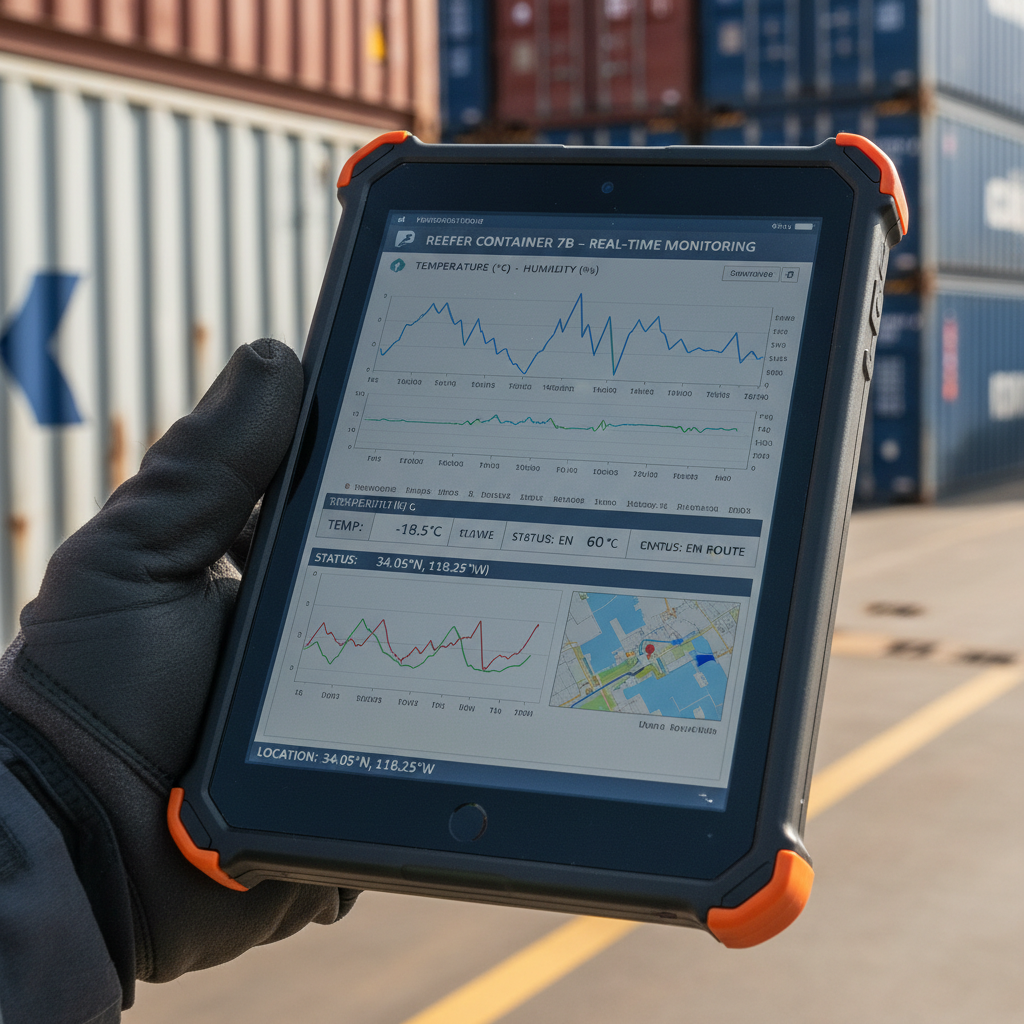
Shipment tracking tells you a container left Shanghai and arrived in Rotterdam. Cargo monitoring tells you the reefer climbed to 12°C for six hours mid-Pacific, the door triggered a light-sensor alert during transshipment in Singapore, and the container sat in a Rotterdam yard for nine days before anyone moved it. One answers “where.” The other answers “what happened, and is the cargo still intact?”
For dry and liquid bulk carriers, monitoring shifts to a different register entirely: gas detection (methane, hydrogen sulfide), temperature surveillance (coal self-heats above 55°C), pH measurement, and structural load monitoring. The IMO’s IMSBC Code lists over 270 bulk cargoes with specific monitoring protocols. Ignoring them is not a compliance footnote. It is a casualty risk.
The Technology Stack Behind Modern Ocean Monitoring
No single system delivers full ocean cargo monitoring. It takes five layers working together, and the weak link in any one of them degrades the whole picture.
The first layer is identification and sensor hardware. Battery-powered GPS/cellular trackers mounted on containers report position and condition at intervals ranging from 15 minutes to several hours. They switch between LTE-M, NB-IoT, and satellite networks (Iridium, Astrocast) when cellular coverage disappears mid-ocean. Reefer units add temperature, humidity, O₂/CO₂, and door-open telemetry from built-in controllers by Carrier, Thermo King, or Daikin. Hapag-Lloyd crossed one million installed tracking devices in early 2024. That is fleet-scale deployment, not a pilot.
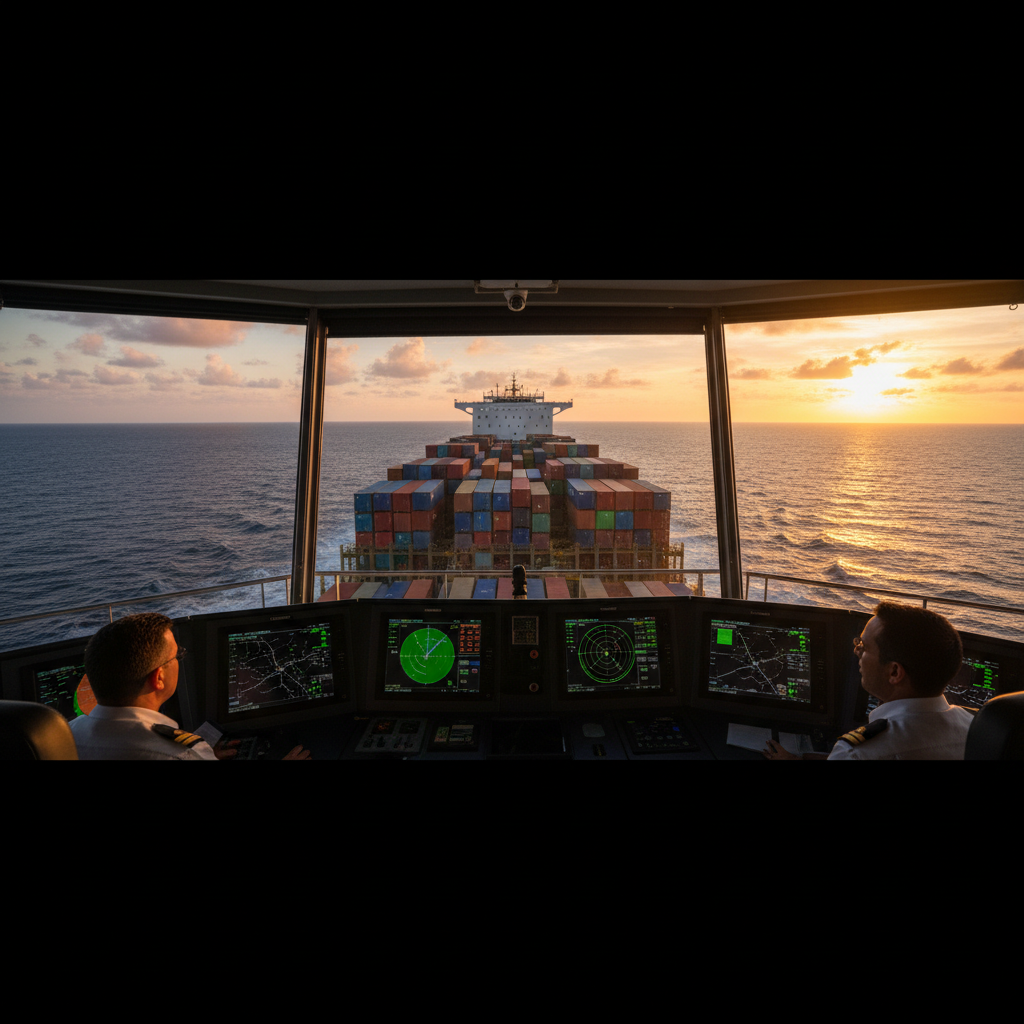
The second layer is AIS and satellite AIS. The Automatic Identification System, mandated by IMO SOLAS for vessels above 300 GT, broadcasts position, course, and speed over VHF. Satellite constellations (Spire, ORBCOMM) extend coverage to open ocean, achieving detection rates above 95% on major trade lanes through satellite tracking for vessels. AIS tells you where the vessel is. It tells you nothing about what is happening inside any given container on that vessel.
The third layer is carrier EDI and terminal operating systems. Vessel operators publish booking, tracking, and status events through EDI messaging and, increasingly, DCSA-aligned JSON APIs. Terminal operating systems feed yard moves and crane events into the same data stream. This is the “milestone” layer: loaded, discharged, gated out.
The fourth layer is IoT environmental sensors. Multi-modal devices combine accelerometers, temperature probes, humidity sensors, light sensors, and GPS into a single unit. A GPS ping tells you the container is at Tanjung Pelepas. An accelerometer spike followed by a light-sensor trigger tells you something hit the container and someone opened the door. The two together paint a story that no milestone event can.
The fifth layer is AI-driven analytics. Predictive ETA models from platforms like project44, FourKites, and Shippeo ingest carrier events, AIS data, port congestion signals, and weather routing to compute dynamic arrival estimates. AI-driven ETA accuracy on major trade lanes is now within 12 to 24 hours, down from three to five days a decade ago. That compression alone has reshaped how consignees plan receiving operations.
Five Risks That Make Monitoring Non-Negotiable
Monitoring sounds like an operational upgrade until you look at what happens without it. These five risks are not hypothetical. They are recurring, measurable, and expensive.
Container losses at sea. The World Shipping Council recorded 576 containers lost overboard in 2024, more than double the 221 reported for 2023. The 10-year average sits near 1,274 per year. Roughly 2,700 of the 11,500 containers lost in the past decade contained hazardous materials. When a high-value or regulated box goes overboard, the absence of geofencing and real-time position data turns a bad situation into an unresolvable one.
Cargo theft. CargoNet documented 884 cargo theft events in the US and Canada in Q2 2025, a 13% year-on-year increase, with an average loss of $273,990 per incident. Ocean containers are most vulnerable during intermodal handoffs, at port terminals, and in yard storage, which is why port equipment tracking matters. A container sitting without monitoring for days is an invitation.
Temperature and condition excursions. A reefer carrying pharmaceuticals at +2°C to +8°C that drifts to +15°C for six hours can destroy an entire shipment. Perishable food, biologics, and specialty chemicals all have hard condition thresholds. Without continuous monitoring, the damage only surfaces at destination, when the only option left is a claim.
Cybersecurity. Maritime cyber incidents jumped 103% in 2025 over the prior year, driven by ransomware targeting port operators and the OT systems behind cargo-handling equipment. The 2017 NotPetya attack on Maersk cost an estimated $300 million and disrupted operations for two full weeks. As monitoring systems become more connected, their attack surface grows with them.
Regulatory non-compliance. The regulatory bar has risen sharply. The EU ETS for shipping, the IMO’s Carbon Intensity Indicator, the MASS Code for autonomous vessels, and the EU’s ICS2 pre-loading declaration regime all require continuous digital data. Fines are the least of it. Port delays, insurance surcharges, and commercial exclusion hit harder.
Carrier Tracking Ends at Discharge. Then What?
Every major container line now offers proprietary tracking. Maersk’s Captain Peter covers its reefer fleet with continuous telemetry. CMA CGM’s SMART Reefer expanded to full fleet coverage by the end of 2024. Hapag-Lloyd’s Live Position delivers real-time GPS and AIS-based tracking to booking customers.
These tools are genuinely useful. They are also structurally limited.
Carrier tracking follows the shipment. Once the container is discharged at the destination port, visibility drops off a cliff. The box enters a terminal yard. Gets moved to an inland depot. Sits. Maybe gets returned empty. Maybe gets repositioned to another trade lane. The carrier’s job, and its tracking, ended at delivery.
This is the distinction I keep making in conversations with customers: shipment tracking vs. asset tracking.
Shipment tracking asks: “Did the cargo arrive?” Asset tracking asks: “Where is my container right now, what condition is it in, how long has it been idle, and when does it cycle back into service?” If you run a reusable container pool of 500 units and lose visibility on 30% of them after discharge, you are not just losing data. You are losing containers. Dwell time climbs. Cycle time balloons. You end up purchasing replacements for assets that are sitting in a yard somewhere, completely invisible to you.
Independent monitoring hardware, trackers that belong to the shipper or asset owner rather than the carrier, closes that gap. A device mounted on the container itself reports regardless of which carrier moves it, which port it passes through, which yard it sits in, which is the foundation of tracking shipping containers globally. The asset stays visible across its entire lifecycle, not just one voyage leg.
That is the practical difference between a $150 tracking device and a $4,000 replacement container.
Regulations Accelerating the Shift
The regulatory landscape has moved from “we encourage digital reporting” to “you will report digitally or face consequences.”
SOLAS VGM (2016): Verified Gross Mass requirements for every packed container before loading. This was the first global regulatory push toward container-level data integrity.
IMO FAL Convention (2024 enforcement): The Maritime Single Window mandates digitized port reporting. Flag states began enforcing compliance in 2025, with full global rollout in progress through 2026.
EU ETS for Shipping (January 2024): Ships of 5,000 GT and above calling at EU ports must monitor, report, and surrender allowances for CO₂ emissions. The surrender obligation started at 40% of reported emissions in 2024, rising to 70% in 2025 and 100% in 2026.
IMO CII and EEXI: The Carbon Intensity Indicator assigns annual ratings (A through E) to qualifying vessels. Poor ratings trigger corrective action plans and are already influencing charter rates and shipper selection criteria.
MASS Code (July 2026): The IMO’s Maritime Autonomous Surface Ships Code, adopted in May 2026, is the first international safety framework for autonomous and remotely operated vessels. It requires continuous telemetry, remote monitoring, and cargo-condition oversight by design. This is where vessel monitoring and cargo monitoring merge into a single mandatory data stream.
EU ICS2: Pre-loading electronic cargo declarations are now required before vessel departure from non-EU ports. Better advance data means more automated risk profiling and fewer physical inspections for compliant shippers.
The common thread: data must flow continuously, digitally, and in standardized formats. Manual logbooks and end-of-voyage reports no longer meet the bar.
Building a Strategy That Outlasts the Voyage
Start with the question that actually matters: what do you need to know, and when do you need to know it?
If you only need delivery confirmation, carrier tracking is enough. But if you manage reusable container pools, move temperature-sensitive goods, handle hazardous materials, or operate high-value equipment that cycles between ocean legs, you need monitoring that persists beyond the carrier’s visibility window.
Three principles worth anchoring your approach to:
First, choose hardware built for the maritime environment. Salt spray, vibration, wide temperature swings, and months without maintenance access are the norm. A tracker designed for ocean containers, with multi-year battery life and hybrid satellite/cellular connectivity, will outlast and outperform a repurposed terrestrial device. Check the ocean equipment tracking category if you want to see what purpose-built looks like.
Second, think lifecycle, not leg. The most expensive container is the one you cannot find. Tracking a box from origin port to destination port is shipment tracking. Tracking it from first deployment to retirement, across every carrier, every port, every intermediate yard, is asset tracking. That is where cycle time compresses, idle dwell drops, and fleet utilization climbs. The ROI shows up not in better delivery notifications, but in fewer lost assets and tighter pool management.
Third, integrate with the systems you already run. A tracking device that feeds data only into its own dashboard creates another silo. The value multiplies when position and condition data flow directly into your TMS, WMS, or ERP. Connected data drives decisions. Isolated dashboards drive frustration.
If your container pool feels invisible after discharge, that is exactly the gap asset tracking closes. Our team works with port operators, freight forwarders, and fleet managers to design monitoring that follows the asset, not just the shipment, including fleet monitoring for shipping companies. Talk to us if that conversation would be useful.
Frequently Asked Questions
What is the difference between shipment tracking and cargo monitoring at sea?
Shipment tracking follows a container from origin to destination using carrier milestones and AIS vessel data. Cargo monitoring adds continuous condition sensing (temperature, humidity, shock, door-open events) and can extend beyond delivery to cover yard dwell, repositioning, and asset lifecycle. Tracking tells you where. Monitoring tells you what happened along the way.
How do IoT sensors work on ocean containers without cellular coverage?
Modern trackers switch automatically between LTE-M or NB-IoT (when near shore or in port) and low-earth-orbit satellite networks (Iridium, Astrocast) when mid-ocean. They store readings locally and transmit in batches when connectivity returns, ensuring no data gaps even on long transoceanic legs.
How many containers are lost at sea each year?
The World Shipping Council reported 576 containers lost overboard in 2024. The 10-year average is approximately 1,274 per year. Severe weather events in the Pacific and Atlantic are the primary driver, though improper stowage and weight misdeclaration contribute significantly.
What regulations require cargo monitoring on ocean vessels?
Key regulations include SOLAS VGM (verified container weights), the IMO IMSBC Code (bulk cargo monitoring protocols), the EU ETS for shipping (emissions reporting from January 2024), the IMO CII rating system, and the MASS Code for autonomous vessels (effective July 2026). The EU’s ICS2 also requires pre-loading electronic cargo declarations.
Does carrier-provided tracking replace the need for independent monitoring devices?
For basic delivery visibility, yes. For companies managing reusable container pools, temperature-sensitive cargo, or multi-carrier logistics, no. Carrier tracking ends at discharge. Independent devices mounted on the asset itself provide visibility across carriers, ports, and yards throughout the container’s full lifecycle.
What is the typical ROI of ocean cargo monitoring?
Hardware costs range from $150 to $400 per device with multi-year battery life. For shippers of high-value or perishable goods, reduced spoilage, fewer lost assets, lower demurrage, and faster insurance resolution routinely deliver five to ten times the device cost within the first year of deployment.





 +1 508 292 2210

11 Responses