

You’ve seen the pitch. BLE tags for $5 to $15 each. Battery life measured in years. A 1,000-unit bluetooth asset tracking system for roughly $10,890, versus $39,100 for active RFID. The economics look obvious.
Then you deploy. And you discover that cost-per-tag and cost-per-answer are two very different numbers.
I’ve spent 15 years deploying tracking systems across aviation MRO bays, container yards, and warehouse floors. The pattern repeats: teams buy BLE because it’s cheap, lose visibility the moment assets leave the building, and end up layering a second system on top. Bluetooth asset tracking is a powerful tool when matched to the right problem. This guide covers how it works, where it genuinely delivers ROI, and the gaps most vendors won’t mention until you’ve already signed.
What Bluetooth Asset Tracking Actually Means
Bluetooth asset tracking uses Bluetooth Low Energy (BLE) radio to identify and locate physical assets: tools, equipment, containers, medical devices, vehicles. Anything with a tag attached.
The “Low Energy” distinction matters. Classic Bluetooth (the kind streaming audio to your headphones) burns through batteries in hours. BLE was introduced with the Bluetooth 4.0 specification in 2010, designed specifically for devices that broadcast small data packets for months or years on a coin cell. It operates at 2.4 GHz, the same frequency band as Wi-Fi, and draws a fraction of the power.
Two fundamentally different architectures share the same BLE radio.
Consumer crowd-sourced networks rely on nearby smartphones as relay points. Apple AirTags broadcast a BLE signal that any iPhone picks up and forwards to iCloud. Apple’s Find My network leverages over a billion devices worldwide to create global coverage without installing a single piece of infrastructure. Samsung SmartTags do the same through SmartThings Find. Tile taps the Life360 user base. You don’t build anything. You depend on other people’s phones.
Enterprise RTLS (Real-Time Location Systems) install fixed BLE gateways at known positions inside a facility. Each gateway picks up tag broadcasts, measures the signal, and triangulates position. No reliance on random smartphones. Full control over accuracy and coverage. But you’re building and maintaining dedicated infrastructure.
Same radio. Completely different cost models, accuracy levels, and reliability profiles. Confusing one for the other is where most buying mistakes start.
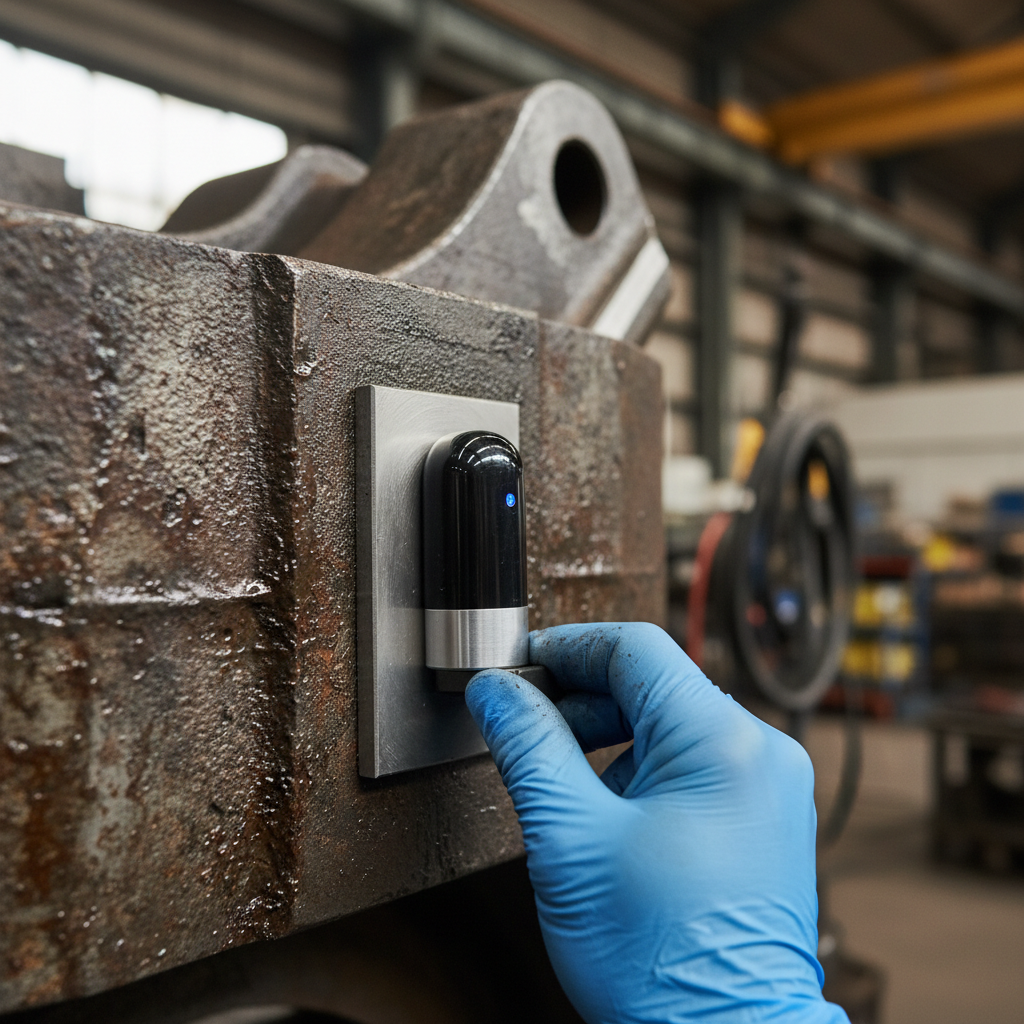
How BLE Tracking Works: Tags, Gateways, and the Signal Chain
Every BLE tracking system has three layers, regardless of vendor or vertical.
The tag is a small battery-powered transmitter. It wakes at a configured interval (every 1 to 10 seconds, adjustable) and broadcasts an advertisement packet containing its unique ID and, depending on the model, sensor data like temperature or motion state. The tag has no internet connection, no GPS chip, and no awareness of its own position. It broadcasts its identity into open air and waits for something to listen.
The receiver captures that broadcast. In enterprise setups, this is a fixed gateway mounted on a wall or ceiling. In consumer systems, any compatible smartphone fills this role. The receiver notes the signal strength (RSSI) and, in newer BLE 5.1 systems, measures the signal’s angle of arrival using an antenna array. It then forwards the data upstream.
The platform (cloud-hosted software) maps tag IDs to asset records, triangulates positions from multiple receiver inputs, and generates the dashboards, geofence alerts, and asset utilization tracking reports your operations team actually works from.
The accuracy you get depends on which layer you invest in.
Basic RSSI triangulation delivers room-level accuracy: roughly 3 meters. Fine for knowing which floor a wheelchair is on. Not fine for locating a specific tool in a 50,000 sq ft hangar.
BLE 5.1’s Angle of Arrival (AoA) and Angle of Departure (AoD) features, introduced in 2019, use antenna arrays and phase-difference calculations to push accuracy below one meter in well-calibrated environments. Quuppa, Sewio, and Pozyx all sell commercial AoA infrastructure today.
Bluetooth 5.4, released in 2023, added Periodic Advertising with Responses (PAwR). This allows a single gateway to maintain bidirectional communication with thousands of tags, compressing infrastructure cost for large deployments. And Bluetooth Channel Sounding, finalized in 2024 with production silicon shipping in 2025, brings centimeter-level ranging using round-trip time measurement. That’s UWB-grade precision from a standard BLE chip.
BLE vs GPS vs RFID vs UWB: An Honest Comparison
Every tracking vendor shows you a table that makes their technology look like the obvious winner. Here’s one built from field experience, not product sheets.
| Factor | BLE | GPS / Cellular | Passive RFID | UWB |
|---|---|---|---|---|
| Best environment | Indoor, campus | Outdoor, cross-country | Chokepoints (dock doors, gates) | Indoor, high-precision zones |
| Typical accuracy | 1-3 m (sub-meter with AoA) | 3-10 m outdoor | Zonal (yes/no at reader) | 10-30 cm |
| Tag unit cost | $5-30 | $30-150 | $0.05-5 | $15-50 |
| Infrastructure per zone | Low ($50-100/gateway) | None (cell towers/satellites) | High ($1,000-5,000/reader) | Medium ($200-500/anchor) |
| Battery life | 1-8 years | Weeks to months | None (passive) / 3-5 years (active) | 6 months-3 years |
| Signal through metal | Poor | None (needs sky view) | Poor | Poor |
| Outdoor range | 50-150 m typical | Global | 1-12 m | 50-100 m |
No single technology wins across every row. The question isn’t “which is best?” It’s “which combination matches how my assets actually move?”
BLE wins on indoor cost-per-tag and battery life. GPS wins when assets cross city limits. Passive RFID wins at chokepoints where you scan hundreds of items per second through a dock door. UWB wins when you need surgical indoor precision (think: automated guided vehicles in a manufacturing cell), where manufacturing asset visibility depends as much on process as on hardware.
The strongest deployments I’ve worked on combine at least two. A BLE tag for warehouse presence, handing off to cellular/GPS when the asset moves between sites. That’s not marketing. That’s physics, and it reflects the kind of asset tracking best practices that actually pay for themselves.
Where BLE Asset Tracking Delivers Real ROI
BLE tracking earns its keep where three conditions overlap: assets move within a bounded area, search time is measured in minutes (costing real labor dollars), and the asset population is large enough that losing 1-2% per quarter creates visible financial drag. Those losses also distort your books, which is why disciplined fixed asset management matters as much as the tracking hardware. Understanding the business case for asset tracking helps validate whether these conditions exist in your operation.
Healthcare
Hospitals lose infusion pumps. It’s a running joke in clinical engineering, except those pumps cost $3,000 to $8,000 each. BLE RTLS gives nursing staff real-time visibility into the location of crash carts, wheelchairs, and diagnostic equipment. CenTrak layers BLE with low-frequency and infrared to reach clinical-grade certainty, because pure BLE’s 3-meter accuracy can mean the difference between “on this floor” and “in this room.” Effective healthcare asset tracking proves the point: the smarter healthcare deployments don’t rely on any single radio.
Construction
Tool theft on job sites isn’t a rounding error. It’s an operational tax. Tenna deploys BLE for small-to-mid-sized construction assets like generators, lighting towers, and power tools, and the economics hold: the tags are cheap enough to justify putting on a $200 tool, and rugged enough (IP67) to survive rain, dust, and repeated drops. The same math applies to rental equipment tracking, where a single unreturned machine can wipe out a month of margin.
Warehousing and logistics
Pallets, totes, and reusable containers have a way of disappearing into someone else’s supply chain. BLE tags on returnable transport items provide zone-level visibility inside the four walls, the foundation of any effective warehouse asset tracking program. The global asset tracking market hit $24.14 billion in 2024, and warehouse automation is a primary driver. But note the limit: BLE tells you where the pallet is inside your building. It goes silent once the asset leaves.
Aviation ground support
This is my daily operating environment. Ground support equipment, ULD containers, tooling carts, maintenance stands: these assets cycle between hangars, ramps, and MRO bays. BLE handles indoor presence detection in the maintenance facility reliably. The challenge starts at the apron, where there are no gateways and no crowd-sourced phone density worth relying on. For deeper context on tracking solutions in this vertical, see our guide on asset tracking in aircraft manufacturing.
Three Catches the Brochure Skips
Metal kills BLE signals
Bluetooth operates at 2.4 GHz. Metal reflects and absorbs energy at this frequency aggressively. Inside a steel shipping container, effective range can drop from 50 meters to under 5. Inside an aircraft cargo hold lined with aluminum, it’s worse.
If your assets spend meaningful time inside metal enclosures (and in aviation, maritime, and industrial supply chains, they do), your BLE coverage map has holes you won’t see until deployment. The workaround is strategic gateway placement and higher beacon density, both of which add to cost and complexity. Neither appears in the tag-price comparison, which is why a structured asset tracking implementation guide is worth following before you commit to hardware.
Battery maintenance at scale
A vendor quoting “8-year battery life” is giving you a lab number at an optimal advertising interval. Temperature extremes, higher broadcast frequencies (needed for tighter accuracy), and firmware updates all shorten real-world battery life.
Even at 5 years average, run the math on a 10,000-tag fleet. That’s 2,000 battery swaps per year, every year, in perpetuity. At 5 minutes per swap (find the asset, open the tag housing, replace the cell, confirm re-registration), you’re burning roughly 170 hours of technician time annually. Nobody budgets for that during the sales cycle. Tags with sealed non-replaceable batteries avoid the swap but force full tag replacement at end-of-life. Either way, total cost of ownership (TCO) over five years rarely matches the brochure.
Interoperability is still a promise, not a reality
BLE is a standard. The advertising payload formats, cloud APIs, device management protocols, and firmware update mechanisms on top of it are not. Buy tags from one vendor and gateways from another, and you’ll spend weeks on integration middleware before a single asset appears on a map.
Bluetooth 5.4’s PAwR standard may improve this over time by normalizing hub-to-endpoint communication. But today, mixing hardware from different manufacturers requires integration effort that adds cost and timeline to every deployment. Evaluate vendor lock-in risk upfront, not after procurement.
When You Need More Than Bluetooth
This is where most “bluetooth asset tracking” articles end. They cover the indoor use case, list benefits, and link to a demo. But if your assets move between buildings, between airports, between countries, or through environments where BLE infrastructure doesn’t exist, you haven’t solved asset tracking. You’ve solved room-level presence detection for one segment of the asset lifecycle.
The distinction I come back to with every client: shipment tracking ends at delivery. Asset tracking follows the asset through deployment, use, return, dwell time, maintenance, and redeployment. Most BLE-only systems cover only the indoor chapter of that cycle.
For assets that cross boundaries (GSE cycling between airports, containers moving between ports, MRO tooling shipped to partner facilities), you need a device that combines BLE for indoor presence with GPS/GNSS for outdoor positioning and cellular connectivity for reporting when no gateway is nearby.
Hardware like the Oyster3 and Oyster Edge exist for exactly this use pattern: rugged, battery-powered GPS trackers with BLE capability that report position regardless of whether the asset is in a warehouse, on a flatbed, or sitting in a yard 4,000 miles from home. For airfreight-specific applications, the Thingfox T2 carries DO-160 certification, meaning it’s cleared to fly in the cargo hold.
BLE is not the wrong choice. BLE alone is often an incomplete one. The assets that hurt your P&L the most are the ones that leave your four walls and go invisible.
What’s Next: Channel Sounding, PAwR, and Edge AI
Three developments are reshaping what BLE can do from 2026 forward.
Channel Sounding puts centimeter-level distance measurement onto standard BLE silicon. First production chips shipped in 2025. This closes the precision gap that previously required dedicated UWB hardware, potentially eliminating an entire infrastructure layer for applications that need tight ranging without the cost of a separate UWB deployment.
PAwR-native asset tags, built on the Bluetooth 5.4 bidirectional advertising spec, are entering production now. A single PAwR hub can manage thousands of endpoints with battery lives stretching toward a decade. For large returnable-container pools or tool fleets, this materially reduces the gateway count needed per facility.
Edge AI on the tag itself is the less obvious shift. Instead of streaming raw data to the cloud and processing it there, newer tags detect geofence breaches, vibration anomalies, or temperature excursions locally and transmit only the alert. Less data traffic, longer battery life, faster response. HERE’s 2025 asset tracking trends review flagged this convergence of edge processing and on-device intelligence as the defining infrastructure change of the next two years.
For anyone evaluating BLE hardware today, the practical takeaway is simple: spec Bluetooth 5.4-compatible devices. The firmware path to Channel Sounding and PAwR-native operation protects your hardware investment through at least 2030. The Bluetooth SIG projects 5.3 billion Bluetooth device shipments in 2025, with single-mode BLE growing at a 22% CAGR. The ecosystem is only getting denser.
Frequently Asked Questions
How far does a Bluetooth asset tracker reach?
Consumer BLE trackers (AirTags, SmartTags, Tile) function within 30 to 150 meters in line of sight. Enterprise RTLS gateways cover 50 to 70 meters reliably under typical indoor conditions. With Bluetooth 5.0 long-range PHY and a directional gateway, range can extend to 1,500 meters, though accuracy degrades significantly at that distance.
How long do BLE tag batteries last?
It depends on the advertising interval. At a 1-second broadcast cycle, coin-cell tags typically last 1 to 5 years. Specialist tags designed for asset tracking are rated for 8 years. Larger industrial beacons with 5,200 mAh batteries can reach 10 years. Higher broadcast frequencies (required for tighter accuracy) and temperature extremes shorten all of these numbers in the field.
Can BLE track assets outdoors?
Only within range of a fixed gateway or a compatible smartphone acting as relay. BLE has no satellite capability and no cellular radio. For assets that move between sites, across metro areas, or internationally, BLE needs to be paired with GPS/GNSS and cellular connectivity. BLE excels indoors. Outdoors, it requires another technology to close the gap.
How does BLE compare to RFID for asset tracking cost?
BLE tags cost more per unit ($5-30) than passive RFID ($0.05-5), but total system cost is lower. A 1,000-unit BLE deployment runs roughly $10,890 versus $39,100 for active RFID, mainly because BLE gateways cost under $100 versus $1,000 to $5,000 for RFID readers. BLE also provides continuous location updates, while passive RFID only registers an asset when it physically passes a reader.
Is Bluetooth asset tracking accurate enough for industrial operations?
With RSSI-only triangulation, expect 3-meter accuracy (zone or room level). BLE 5.1 AoA pushes that under 1 meter. Bluetooth Channel Sounding, now in production silicon, delivers centimeter-level ranging. For most warehouse and hospital use cases, sub-meter AoA accuracy is sufficient. For precision manufacturing or automated material handling, UWB or Channel Sounding is the better specification.
What is the difference between an AirTag and enterprise BLE tracking?
An AirTag is a consumer BLE tracker relying on Apple’s crowd-sourced Find My network. Enterprise BLE asset tracking uses dedicated fixed gateways, provides configurable accuracy down to sub-meter with AoA, integrates with ERP, WMS, and CMMS platforms, and does not depend on the density of nearby smartphones. The hardware radio is similar. The architecture, reliability, and data integration capabilities are not.
If your container pool, tool fleet, or ground support equipment feels invisible once it leaves the warehouse, that’s the gap between presence detection and true asset tracking, a challenge no software alone solves, as our breakdown of enterprise asset tracking explains. Our team builds systems that close that gap. Talk to us, or browse the full device catalog to see what fits your operation.







 +1 508 292 2210

4 Responses