

Most results for “locate lost assets” point to unclaimed bank accounts and forgotten insurance policies. U.S. states hold roughly $70 billion in that kind of unclaimed financial property. If that’s what you need, government portals can help for free.
This article is about the other kind. Physical assets. The containers your logistics team can’t account for. The ground support equipment that vanished between shifts. The reusable transport packaging that left your facility two months ago and never came back.
I’ve spent 15+ years deploying asset tracking across aviation, port logistics, and industrial supply chains. The pattern is the same everywhere: most “lost” assets aren’t stolen. They’re sitting somewhere perfectly intact, completely invisible to the organization that owns them. That distinction changes the solution entirely.
What “Lost” Actually Means in Operations
Theft gets the attention. Invisibility does the damage.
In my experience, fewer than 5% of missing industrial assets are genuinely stolen. The rest fall into five predictable patterns:
- Misplaced. Moved to a staging area or alternate yard, never logged. A towbar goes from Terminal A to a remote stand. Next shift can’t find it.
- Misrouted. Sent to the wrong facility, the wrong customer, or the wrong return depot. The paperwork says one thing. The GPS (if it existed) would say another.
- Orphaned. The project ended. The contract closed. The asset stayed on-site. Nobody initiated a recall because nobody knew it was there.
- Phantom-purchased. Bought again because inventory showed zero. The original units surface during a yard audit, by which time you’ve already paid twice.
- Cannibalized. Parts stripped for an urgent job, the chassis sitting in a corner, no status update in any system.
The thread connecting all five isn’t criminal. It’s architectural. The moment an asset crosses out of a tracked zone, whether that’s a warehouse door, a dock gate, or a maintenance bay, it becomes a guess. And in operations, guesses multiply fast. One missing towbar becomes ten, which becomes a $200K purchase order that shouldn’t exist.
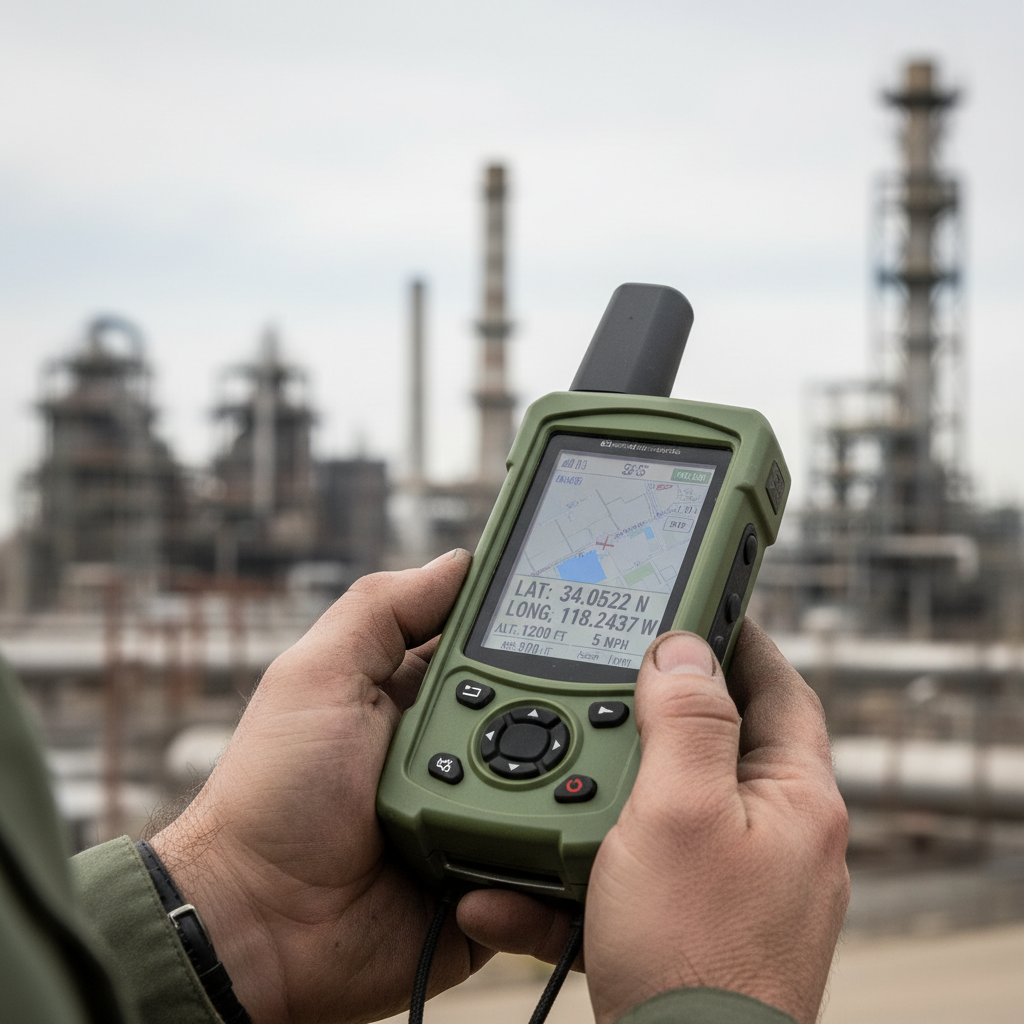
The Real Cost of Invisible Assets
Replacement cost is what shows up on the balance sheet. It’s the tip of the problem.
Here’s what doesn’t make it onto a purchase order:
Search labor. Maintenance crews spending 20 to 30 minutes per shift hunting for equipment they should already know the location of. Across a 150-person operation, that compounds into thousands of unproductive hours per year. Every hour searching is an hour not maintaining, not turning, not building.
Rental buffers. Can’t find your own ULDs or containers? You rent someone else’s. At $15 to $40 per unit per day, a pool of 200 “missing” containers generates $1M to $3M in avoidable rental costs annually.
Duplicate procurement. Your system says 400 pallets on hand. Only 280 are visible. Procurement orders 120 more. The original 120 surface in a yard audit three months later. You now own 520 pallets and storage space for 400.
Operational downtime. An aircraft waiting for ground power equipment that’s “somewhere on the ramp” isn’t a tracking annoyance. It’s a delay measured in thousands of dollars per minute.
Compliance exposure. In regulated environments (aerospace, pharma, defense), unlocated assets trigger audit findings, delay certifications, and complicate chain-of-custody records. IATA’s ULD regulations require operators to maintain traceability of unit load devices throughout their lifecycle. An invisible ULD is, by definition, an uncontrolled one.
Add it up and a mid-size operation (500 to 2,000 tracked assets) typically uncovers six to seven figures in hidden losses the first time someone maps the full cost of asset invisibility. The replacement line item? Usually less than a third of the total. For aviation operations specifically, these hidden costs of lost aviation assets compound across ground support equipment, ULDs, and tooling.
Five Steps to Locate a Lost Asset Today
If you’re reading this because something is actually missing right now, here’s the sequence that works:
- Pull the last recorded data point. Any system counts: a CMMS log, a spreadsheet check-out record, a delivery signature. Find the last time this asset was documented, where, and by whom.
- Trace the chain of custody. Contact every handoff point between the last known location and where the asset should be now. In shipping, that’s the freight forwarder, customs broker, and receiving dock. In aviation, the ramp crew, maintenance planner, and outstation coordinator.
- Search adjacent locations. Assets drift. A container assigned to Yard B ends up in Yard C because the driver parked it where there was space. A toolbox from Bay 4 migrated to Bay 7 during a shift overlap. Check the neighbors first.
- Check repair and return loops. Assets pulled for maintenance, calibration, or inspection often vanish into a repair queue. The work order system knows about the repair. The asset ledger doesn’t. Cross-reference both.
- Set a search window. After 72 hours of active searching, the probability of recovering an untracked asset drops sharply. At that point, escalate to a formal loss report, insurance claim, or write-off process. Don’t spend $15,000 in labor chasing a $5,000 asset.
This sequence works. It’s also a symptom. If you’re running it more than once a quarter, the individual asset isn’t the problem. The tracking architecture is.
Where Tracking Stops, Losses Start
Most asset losses share a root cause: tracking that ends too early.
Shipment tracking follows a package from origin to destination. The freight forwarder confirms the container reached the port. The courier confirms delivery to the dock. Tracking ends. Job done.
Asset tracking is a different discipline entirely. It follows the item through its full lifecycle: deployment, active use, idle time, maintenance, return, redeployment. It measures dwell time, cycle count, utilization rate, and geolocation across every phase. The job doesn’t end at delivery. It restarts.
This gap is where assets disappear. Not during the tracked shipment, but during the untracked life after arrival. A reusable container that was fully visible through ocean freight goes dark the moment it reaches the customer’s yard. Ground support equipment that’s dispatched to the ramp becomes a ghost when it moves between terminals without a scan.
No amount of better spreadsheets or stricter manual check-in procedures closes a gap that’s built into the system itself. You close it with continuous visibility technology that matches how the asset actually moves.
Matching Tracking Technology to Your Assets
The technology for locating and monitoring physical assets has matured significantly. In 2026, the question isn’t whether a solution exists. It’s which one fits your asset profile. Modern IoT monitoring solutions offer multiple approaches depending on your operational requirements.
Four categories cover most industrial use cases:
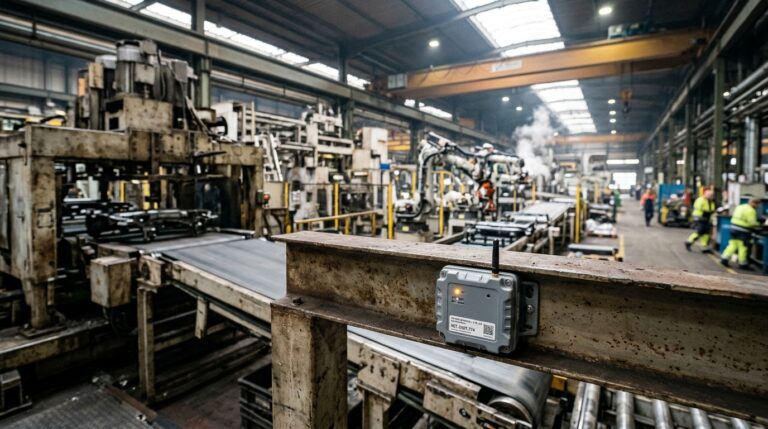
Cellular GPS trackers are the workhorses for high-value mobile assets: trailers, generators, ground support equipment, reusable containers, fleet vehicles. Devices like the Oyster3 and Oyster Edge deliver precise position data with multi-year battery life and rugged enclosures. Geofence alerts, movement history, dwell-time analytics, no wiring required. Choosing the best GPS tracker for assets comes down to a few key decisions before you buy.
RFID and BLE beacons handle high-volume, lower-unit-value items where zone-level presence matters more than pinpoint coordinates: hand tools, parts bins, medical devices, warehouse inventory. Cost per tag is low enough to scale to thousands of items. Adopting standardized identification like GS1 identification keys makes the data interoperable across systems and partners.
Satellite-enabled trackers cover ocean freight and remote operations where cellular networks don’t reach. If your assets cross oceans or sit in mining sites far from any tower, satellite keeps the signal alive.
Aviation-certified devices solve a specific regulatory barrier. Standard electronics aren’t permitted in pressurized cargo holds. The Thingfox T2 carries DO-160 certification for airfreight, enabling continuous tracking of ULDs, containers, and cargo through the entire air logistics chain without compliance exceptions.
| Asset Profile | Best Fit | Why |
|---|---|---|
| High-value, mobile (trailers, GSE, generators) | Cellular GPS | Precise location, geofencing, multi-year battery |
| High-volume, lower-value (tools, bins, pallets) | RFID / BLE | Low cost per unit, zone-level presence detection |
| Ocean and remote (shipping containers, mining gear) | Satellite | Coverage where cellular doesn’t exist |
| Airfreight and regulated cargo (ULDs, pharma) | DO-160 certified | Approved for pressurized cargo environments |
| Environmentally sensitive (cold chain, chemicals) | GPS + environmental sensors | Location plus temperature, humidity, shock |
Most operations need a combination. A port operator might use cellular GPS on chassis and satellite on ocean containers. An airline might deploy DO-160 devices on ULDs and BLE tags on ground tools. The principle is matching technology to how the asset actually moves, not forcing one solution onto everything. You can browse the full device catalog to see what maps to your specific environment.
What Changes When Your Assets Stay Visible
Three outcomes show up consistently within 90 days of deploying asset-level tracking across 200+ units:
- Cycle time drops 20 to 40%. When you see where a container or ULD sits idle, you pull it back into rotation faster. A pool of 1,000 reusable containers with 30% better cycle time means roughly 300 fewer units needed to handle the same throughput. That’s capital you don’t deploy and warehouse space you don’t rent.
- Shrinkage approaches zero. Not because tracking prevents theft (though geofence alerts help). The biggest source of “loss” is administrative: assets that exist but can’t be located. Real-time visibility eliminates that entire category. If every unit pings its position daily, the “missing” column in your ledger goes blank.
- Utilization goes up, procurement goes down. Most operations own more assets than they need. They just can’t prove it because they can’t see what they have. Once visibility reaches 95%+, the data shows existing inventory covers demand. The next purchase order gets canceled. Finance starts asking good questions about the previous ones.
These aren’t projections. They’re repeatable patterns across container pools, aviation ground operations, and industrial supply chains I’ve worked with directly. The ROI calculation isn’t complicated: compare the annual cost of lost, idle, and over-purchased assets against a tracking deployment. In every case I’ve been part of, the payback window lands under 12 months.
If your asset pool feels invisible after the first handoff, that’s exactly the gap continuous tracking closes. The fastest path forward is a conversation about your asset profile, movement patterns, and operating environment. Reach out to our team or email info@datanetiot.com.
Frequently Asked Questions
What is the fastest way to locate a lost physical asset?
Start with the last recorded data point in any system: CMMS, delivery log, check-out sheet. Trace the chain of custody through every handoff, then search adjacent locations and repair queues. Without tracking technology in place, this manual sequence is your main option. Its effectiveness drops sharply after 72 hours.
What is the difference between asset tracking and shipment tracking?
Shipment tracking follows a package from origin to delivery and ends. Asset tracking follows the item through its full lifecycle: use, idle time, maintenance, return, and redeployment. Most physical asset losses happen in the untracked phases after the shipment job is complete.
How much does an asset tracking system cost?
Hardware ranges from $15 to $150+ per device depending on technology type (RFID, cellular GPS, satellite, or certified airfreight). Platform and connectivity fees vary by provider and scale. The better question is cost versus loss: if annual replacement, rental, and search labor already runs six figures, even a modest deployment pays for itself within months.
Do I need GPS on every asset?
No. GPS fits high-value mobile assets like trailers or generators. For high-volume, lower-value items (tools, bins, pallets), RFID or BLE beacons provide zone-level presence at a fraction of the per-unit cost. Match the tracking method to the asset’s value and movement frequency.
Can I track assets inside airfreight?
Yes, but standard electronics are not allowed in pressurized cargo holds without certification. Devices like the Thingfox T2 hold DO-160 approval specifically for this environment, enabling uninterrupted tracking of ULDs and containers through the entire air logistics chain.
How long does it take to deploy an asset tracking system?
A basic deployment covering hardware installation, platform configuration, and geofence setup is typically operational in two to four weeks. Larger rollouts across multiple sites take 60 to 90 days, depending on integration complexity with existing warehouse management or ERP systems.




 +1 508 292 2210

3 Responses