

Most asset tracking projects don’t fail because of bad hardware. They fail because somebody opened a vendor catalog before answering a basic question: what decision does this system need to improve?
I’ve deployed IoT tracking across aviation MRO, container pools, ground support equipment, freight operations, and specialized environments like military asset tracking for over 15 years. The pattern repeats itself. Teams that start with operational questions build systems that survive. Teams that start with “which GPS tracker should we buy” end up with expensive dots on a map nobody checks after month three. If you’re figuring out how to create an asset tracking system, this guide covers what actually matters: the strategic decisions, the architecture, the technology tradeoffs, the data model underneath, and the failure modes I keep seeing in the field.
Here’s the core sequence, condensed:
- Define which operational decisions the system must improve
- Map your assets, environments, and lifecycle stages
- Select technology by environment, not by vendor brochure
- Design the data model and event architecture
- Choose connectivity and model power consumption realistically
- Implement security and privacy controls from day one
- Pilot with 50 to 100 assets, measure against a hard baseline, then scale
Every section below expands on one or more of these steps. Let’s get into it.
What “Asset Tracking” Actually Means (and What It Doesn’t)
Before you build anything, get clear on what you’re building.
Shipment tracking follows a package from origin to destination. The job ends at delivery confirmation. Asset tracking follows a physical object through its entire operational life: procurement, deployment, utilization, maintenance, idle time, redistribution, and retirement. These are fundamentally different systems with different data models, different ROI calculations, and different technology requirements.
A freight forwarder needs to know where a shipment is right now. An operations director managing 800 reusable containers across 14 depots needs to know which are idle, which are overdue for inspection, and whether to buy 200 more or just reposition the ones sitting unused at the wrong site. That second problem is asset tracking, and it closely parallels the challenge of digitizing asset visibility in MRO facilities.
The broader asset management system market is projected to reach $26.41B by 2030, growing at an 8.4% CAGR. That growth reflects organizations moving beyond “where is it?” toward “is it available, maintained, compliant, and earning its cost?”
If your system can show a location pin but can’t answer questions about availability, utilization, or condition, you’ve built a shipment tracker with a longer battery. Not an asset tracking system.
Start With the Decision, Not the Tag
Five questions to answer before evaluating hardware:
- What decisions will this system improve? Theft recovery? Utilization rates? Maintenance compliance? Audit readiness? Customer proof of custody?
- What’s the financial cost of the current gap? Annual asset loss, search hours, emergency replacement purchases, idle asset capital, failed audits, customer penalty clauses.
- Where do the assets operate? Single facility? Multiple sites across countries? In transit on ocean or air? Underground or in remote terrain?
- How often do you need evidence? Continuous real-time? Every few hours? Only at controlled checkpoints like gates or docks?
- Who consumes the data? Operations floor, C-suite finance, maintenance planners, external customers, regulatory auditors?
These five answers shape everything downstream: the technology mix, reporting frequency (which directly determines battery life and connectivity cost), the data model, and what “success” looks like in operational dollars.
Consider a logistics provider with over 1,000 reusable containers. They didn’t need real-time GPS on every unit. They needed to know which containers sat idle at which depot. G+D reports that implementing precise location management for that fleet delivered $262K+ in first-year savings and reduced the untracked portion by 12%. The hardware was secondary. The decision, optimize container allocation and stop buying unnecessary replacements, came first.
Write your acceptance criteria before your purchase order. “Reduce average container dwell time from 18 days to 11 days” is a system requirement. “We need GPS trackers” is a shopping list.
Match Technology to the Real Environment
Most guides list tracking technologies by theoretical capability. That’s backwards. You should choose by where the asset actually spends its time.
| Technology | Best Environment | Strengths | Key Trade-offs |
|---|---|---|---|
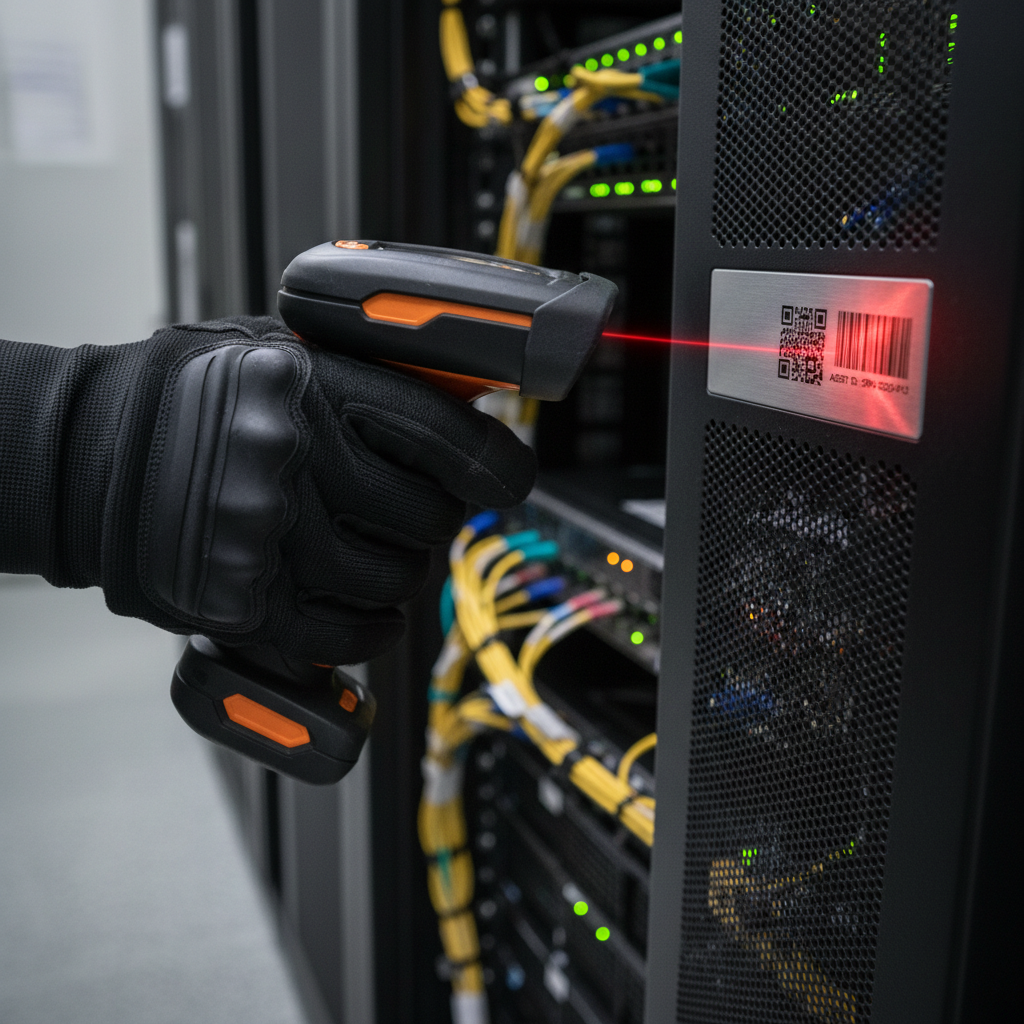
| Barcode / QR | Warehouses, check-in/out points | Extremely cheap, simple, human-readable | Requires manual scan and line of sight; no autonomous location |
| Passive RFID | Warehouses, dock portals, hospitals | Fast automated reads at chokepoints, no tag battery | Readers needed; metal and liquid surfaces complicate RF |
| BLE Beacons | Indoor zones, facility proximity | Low power, inexpensive tags, smartphone-readable | Range limited to installed gateways or readers |
| GPS / GNSS | Outdoor vehicles, containers, heavy equipment | Broad outdoor coverage, direct coordinates | Poor indoors, high power draw, degraded near structures |
| Cellular | Mobile assets within carrier coverage | No extra location infrastructure needed | Accuracy depends on tower density; coverage gaps in remote areas |
| LoRaWAN | Distributed low-data sensors, large campuses | Long range, very low power, multi-year battery | Low throughput, needs gateways or operator network |
| Satellite / NTN | Oceans, mines, rural zones, zero-cell areas | Global reach with sky view | Higher per-message cost, latency, power requirements |
| UWB | High-precision indoor RTLS | Centimeter-level accuracy for industrial workflows | Anchor infrastructure, calibration, and cost limit scalability |
The practical reality: most real-world deployments are hybrids. A reusable container might need GPS/cellular while in transit, BLE proximity detection at the warehouse, and a barcode scan at the maintenance bay. An aviation ULD might require a DO-160 approved cellular tracker like the Thingfox T2 during flight, then RFID at the cargo terminal. In manufacturing contexts, this same layered approach shows how real-time tracking supports aircraft production across assembly stages.
AWS IoT Core Device Location supports exactly this hybrid model, comparing cloud-assisted GNSS, cellular triangulation, Wi-Fi positioning, and reverse IP lookup to return whichever result delivers the highest accuracy for that specific fix.
Don’t force one radio onto every asset class. Match sensing to environment. Accept that different lifecycle stages often need different technologies working together.
Build the Data Model Before the Dashboard
Here’s what separates a tracking project from a tracking system: the data architecture underneath.
Every asset needs two separate identity records. The asset record holds the unique asset ID, class, owner, current custodian, site, cost center, criticality rating, lifecycle state (active, idle, maintenance, retired), maintenance history, and linked documents. The device record holds the tag ID, firmware version, battery state, radio identity, installation date, calibration status, last heartbeat, and tamper flag.
Keep these separate. A reusable tracker can move between assets over its lifetime. If you merge asset identity with device identity, you corrupt your audit trail the first time you reassign a tag. This sounds like a small design choice. It becomes a painful data migration when you discover the mistake at scale.
Then design for events, not snapshots. Don’t overwrite a single “current location” field. Record every observation as an immutable event: asset ID, tracker ID, timestamp (device time and ingestion time), source method, coordinates or zone, accuracy and confidence, motion state, sensor readings (temperature, shock, humidity), battery level, network metadata, geofence result, and custody context.
GS1’s EPCIS standard provides a strong interoperable model for this: it captures the what, when, where, why, and how of every asset event, supports sensor data and JSON/REST APIs, and enables cross-organization event sharing. For an internal system, the same principle works with a relational event table plus an immutable audit log.
An event-based architecture means you can audit chain of custody, prove cold-chain compliance, or reconstruct exactly where something went wrong, months after the fact. A snapshot database can only tell you where something is right now, with no memory of how it got there.
Connectivity and Power: Where Projects Stall
The exciting part of any tracking project is the map with moving dots. The part where projects actually stall is connectivity planning and battery math.
Two realities to internalize before procurement:
First, reporting frequency directly determines battery life. A tracker pinging every 10 minutes drains in weeks. The same device reporting every 4 hours might last years. Semtech reported over 125 million LoRaWAN devices deployed with 25% annual growth, with device battery life reaching 5 to 10 years. But those numbers assume low-frequency, small-payload reporting under favorable conditions. Change the fix rate, add GPS computation, drop the temperature, or increase payload size, and the math changes dramatically. Treat vendor battery specs as testable claims under specific conditions, not guarantees.
Second, no single connectivity technology covers every environment. A cellular tracker works in urban corridors and fails in a mine. A satellite tracker works mid-ocean but costs more per message and needs sky view. LoRaWAN covers large campuses with minimal gateway infrastructure but has low throughput and downlink constraints. For assets that move between urban and remote environments, hybrid cellular-satellite devices are becoming practical as 3GPP standards extend NB-IoT and eMTC through non-terrestrial networks.
The architecture pattern that works: devices publish telemetry over MQTT or HTTP to a message broker. A rules engine processes incoming events, resolves positions, evaluates geofences, and routes alerts. You store telemetry in a time-series database, the asset register in a relational database, and raw events in object storage for audit and replay. Azure IoT Hub supports bidirectional device messaging, management, and firmware updates, with Fabric providing dashboards, anomaly detection, and time-series analysis downstream.
The implementation detail that saves you: build offline buffering and retry logic into the device firmware. When connectivity drops (and it will), the device should queue events and transmit them when the link recovers. Dead spots are normal operating conditions. Lost data is not.
Security and Privacy from Day One
Two problems that will bite you if treated as afterthoughts.
On device security: NIST’s IoT device cybersecurity baseline (NISTIR 8259A) specifies six foundational capabilities: unique device identification, authorized configuration, protection of stored and transmitted data, restricted local and network interface access, secure authorized software updates, and cybersecurity state awareness. In field terms, this means unique device credentials (not shared keys across a fleet), encrypted transport, signed firmware, least-privilege API access, tamper detection, and audit logging. If your tracker vendor can’t explain their firmware update process and vulnerability response, that’s a red flag.
On worker privacy: the moment a tracker attaches to something a person uses regularly (a vehicle, a tool cart, a laptop), location data can become personal data under multiple regulatory frameworks. Ireland’s Data Protection Commission is explicit: vehicle tracking should not be used for general staff monitoring, and tracking driver behavior merely because the vehicle has a tracker is not a legitimate purpose. The UK ICO adds that continuous monitoring outside working hours is likely excessive and that drivers should be able to deactivate recording.
The practical response: define a legitimate asset-focused purpose for every tracking deployment, minimize the data you collect, notify workers transparently, restrict data access by role, separate work and personal use modes where applicable, set data retention limits, and conduct a privacy impact assessment for high-risk scenarios. Track the equipment to the extent the operation requires. Not the person’s entire day.
Pilot Small, Measure Everything, Then Scale
Deploy to 50 to 100 assets first. Not 5,000.
What to validate in the pilot:
- Indoor and outdoor position accuracy (are the coordinates operationally useful, or just decorative?)
- Event completeness (what percentage of expected heartbeats actually arrive?)
- Battery consumption under real conditions vs. vendor projections
- Physical installation time, difficulty, and required skills
- Tamper resistance (how easily can a tag be removed or damaged in the working environment?)
- Connectivity gaps (where does the network fail, and does store-and-forward recover the data?)
- User adoption (does the operations team actually open the dashboard and act on it?)
Before tagging anything, establish a hard baseline. Measure annual asset loss, average time spent searching for equipment, emergency replacement spend, average idle or dwell time, maintenance compliance rate, and manual audit hours. Compare pilot results against that baseline with actual numbers, not impressions.
Then calculate ROI honestly. Total the cost of devices, installation labor, connectivity subscriptions, software licensing, integration work, user training, battery replacements, and ongoing support. Subtract from measurable savings: recovered assets, eliminated searches, avoided purchases, reduced dwell, fewer audit hours, and improved maintenance compliance. For aviation fleets in particular, understanding how GPS tracking improves aircraft maintenance shows where these savings concentrate, and the same logic explains how tracking technology improves aircraft uptime.
Vendor case studies are useful starting points for hypothesis building, not proof for your specific environment. Validate against your own operation.
Five Failures I Keep Seeing in the Field
After 15 years of deployments, the failure modes are predictable. Recognizing them early saves months of rework.
Tagging everything at once. Start with high-value or high-loss asset classes. A $3 tracker on a $15 tool is not asset tracking. It’s a hobby. Focus on assets where loss, downtime, or poor utilization creates measurable cost. Expand from there.
Ignoring the physical environment. RFID tags on bare metal surfaces behave unpredictably. Adhesive labels in wet, oily, or abrasive conditions peel off within weeks. GPS antennas sealed inside metal containers need external antenna routing or alternative position methods. I’ve seen teams demo a system in a climate-controlled office, deploy it on an airport ramp in July, and wonder why performance collapsed. Test in the actual operating environment. For outdoor ruggedized use cases, purpose-built industrial trackers exist for a reason.
Building alerts nobody owns. An alert without an assigned owner, escalation timer, and resolution workflow is noise. Every alert should carry asset ID, event time, position with confidence level, severity classification, and a recommended action. If nobody acts on a particular alert type within 24 hours, consistently, remove it or redesign it. Alert fatigue kills systems faster than bad hardware.
Treating the dashboard as the system. The map is a view. The system is the data model, the event log, the integrations with ERP, CMMS, dispatch, and billing, and the action workflows underneath. If your tracking data lives in a silo that can’t talk to procurement or maintenance scheduling, you’ve built a screen that looks good in a presentation. Not a system that changes operations.
Trusting every GPS fix as truth. GPS.gov reports smartphone GPS accuracy within a 4.9-meter radius under open sky. Near buildings, bridges, underground, or indoors, accuracy degrades significantly, sometimes to hundreds of meters. Worse, IMCA warns that GNSS spoofing can produce stable but completely incorrect positions, appearing valid while being wrong. Build alarms for stale data, impossible travel speed, sudden position jumps, contradictory sensor readings, and low battery. Store accuracy confidence and method metadata with every fix. A position without context is just a number on a map.

Frequently Asked Questions
What’s the cheapest way to start asset tracking?
Barcodes or QR codes paired with a mobile scanning app and a centralized asset register. This handles check-in/out, audits, custody, and basic maintenance tracking at very low cost per asset. It won’t provide autonomous location, but it builds the data discipline you need before adding GPS, BLE, or RFID to higher-value asset classes. For detailed guidance on implementing this approach, see our complete guide on barcode asset tracking systems.
Should I build a custom system or buy a platform?
Buy the hardware and connectivity layer unless you have a specialized requirement no vendor covers. Build or configure the data model, business rules, integrations, and reporting where those workflows differentiate your operation. Cloud IoT foundations like AWS or Azure provide device messaging, provisioning, and analytics, but a complete operational system still requires asset identity, lifecycle logic, alerting workflows, permissions, and support.
Does GPS work indoors?
Rarely well enough to be useful on its own. Under open sky, accuracy is typically within 4.9 meters, but buildings, bridges, dense tree cover, and underground environments degrade it sharply. Use RFID, BLE, UWB, or Wi-Fi positioning for indoor zones, and pair them with GPS for outdoor transit. Always store the positioning method and confidence score alongside the coordinates.
How long do tracker batteries actually last?
It depends entirely on reporting frequency, GNSS fix rate, radio technology, temperature, motion patterns, payload size, and network conditions. LoRaWAN devices can reach 5 to 10 years under low-frequency conditions. A cellular GPS tracker reporting every 15 minutes might last weeks. Model power consumption for your specific use case during the pilot. Vendor battery specs describe best-case scenarios, not your operating environment.
How do I avoid turning asset tracking into employee surveillance?
Define a legitimate asset-focused purpose for every deployment. Minimize collection to what the operation actually needs. Notify workers before tracking begins. Restrict data access by role. Allow deactivation for personal use of company vehicles outside working hours. Run a privacy impact assessment when the risk is high. Regulators across the EU and UK stress necessity, proportionality, and transparency as non-negotiable principles.
What ROI should I expect from an asset tracking system?
ROI varies enormously by asset value, fleet size, loss rate, and operational context. Establish a quantified baseline (annual losses, search hours, emergency purchases, idle capital, audit costs) before deployment, then measure the pilot against that baseline. Subtract full system costs including devices, connectivity, integration, training, and maintenance. The strongest returns come from utilization improvement and avoided capital purchases, not just theft prevention.
If your container pool, ground equipment fleet, or reusable transport assets feel invisible after they leave your dock, that’s exactly the gap a properly built asset tracking system closes. We help organizations design and deploy end-to-end tracking solutions, from hardware selection through platform integration, with fast implementation and minimal operational disruption. Talk to our team or reach us at info@datanetiot.com.








 +1 508 292 2210

6 Responses