

A logistics VP told me last quarter that he tracks everything. When I asked where his 4,000 reusable containers were at that moment, he pulled up a spreadsheet last updated six weeks ago.
That’s not asset tracking. That’s organized guessing.
Asset tracking is the continuous identification, location, and condition monitoring of physical things your operation depends on. Not just during a shipment. Through the entire lifecycle: deployment, transit, use, idle time, maintenance, return, reuse. The global market is projected to reach $54.3 billion by 2030, driven by organizations that realized the cost of not knowing exceeds the cost of knowing.
The median enterprise spends $110 per asset per year on tracking. 74% of organizations report meeting or exceeding their ROI targets. The other 26% usually made the same handful of mistakes.
Here’s what the technology actually involves, what it costs beyond the sticker price, and where the return shows up.
What Asset Tracking Actually Means
At its simplest, asset tracking answers five questions about every physical asset in your operation: what is it, where is it, what condition is it in, who has custody, and what should happen next.
Most organizations only answer the first two. Often with a delay that makes the answer useless.
“Where is it” alone doesn’t prevent a missed maintenance cycle, an expired certification, a temperature excursion, or a container sitting idle for three months at a depot nobody checks. The difference between knowing location and knowing status is the difference between a map pin and an operating system.
A production-grade tracking system operates across six layers. The identity layer assigns a unique, durable ID to every asset. The sensing layer (the physical tag or device) detects location, motion, temperature, shock, or door events. Positioning comes from GPS, RFID read zones, Bluetooth beacons, UWB ranging, Wi-Fi, or a manual scan. The communications layer moves data from device to cloud through cellular, LoRaWAN, satellite, or mesh networks. Software turns those raw events into dashboards, alerts, inventory records, and audit trails. And the action layer connects everything to your ERP, CMMS, WMS, or dispatch system so that an event triggers a decision, not just a notification.
Most tracking failures happen at the first and last layers. Companies skip proper asset IDs. Or they get a beautiful dashboard that never connects to the systems where operational decisions are actually made. A GPS dot on a screen that nobody acts on is decoration.
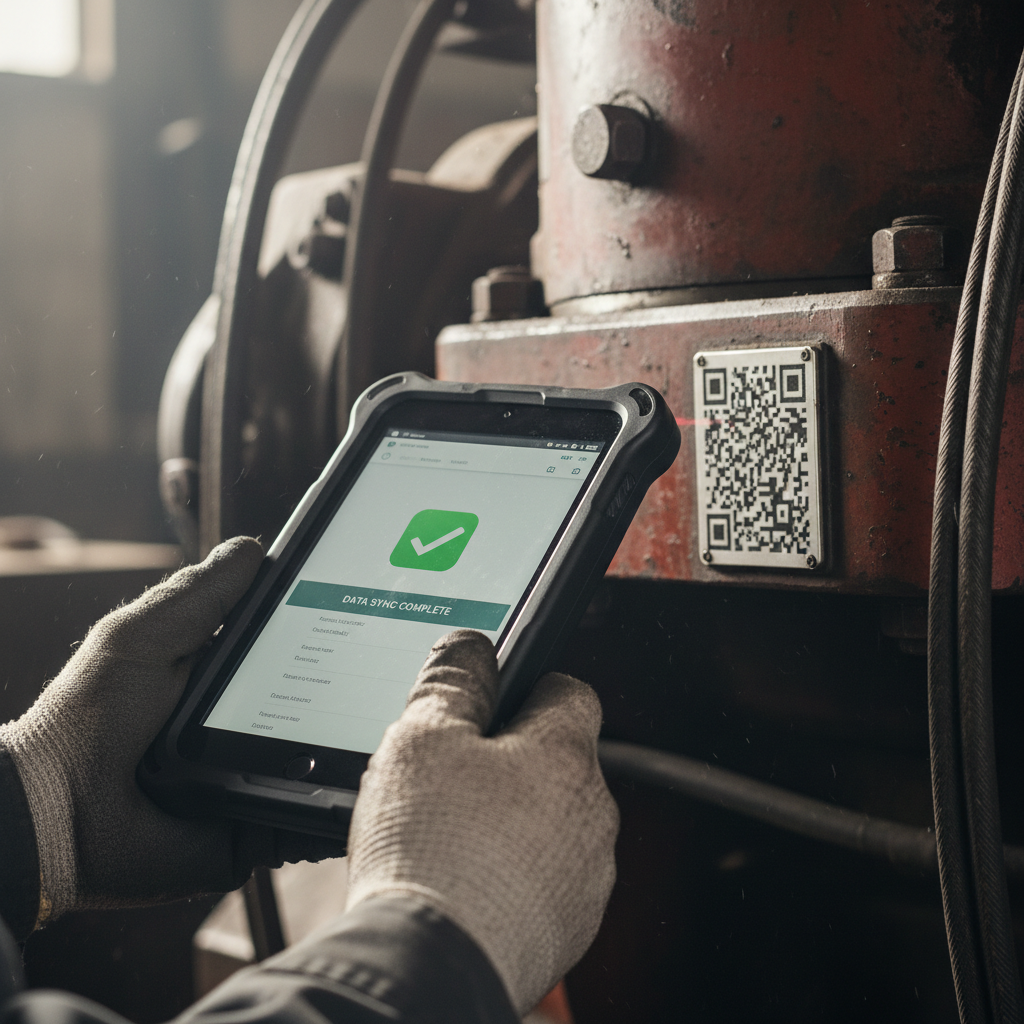
Shipment Tracking vs Asset Tracking
This is the distinction that separates companies who control their physical assets from companies who just watch packages move.
Shipment tracking follows a consignment from origin to destination. The job ends at delivery. The tracking number expires. The data stops.
Asset tracking follows the physical thing itself through its entire lifecycle. Deployment, transit, use, idle time, maintenance, return, reuse, retirement. The data accumulates. Every cycle teaches you something about utilization, dwell time, loss rates, and total cost of ownership.
Consider a pool of 5,000 reusable containers. A shipment tracker tells you container #4271 arrived at the port on Tuesday. An asset tracker tells you #4271 has been sitting at that port for 47 days, has completed only 3.2 cycles this year (versus the fleet average of 5.8), and is due for inspection in two weeks.
The first gives you logistics visibility. The second gives you operational intelligence.
For freight forwarders, airlines, MRO operations, and anyone managing reusable transport assets like ULDs, GSE, pallets, or maritime containers, this distinction isn’t academic. It’s the difference between buying replacement assets to compensate for the ones you can’t find and right-sizing your pool based on actual cycle data.
Core Technologies: Picking the Right Signal
There’s no single best tracking technology. There’s only the best combination for your specific assets, environment, accuracy needs, and budget.
IoT Analytics data shows that 86% of companies use barcodes or QR codes, 77% use GPS, 59% use passive RFID, and 53% use Wi-Fi for at least one asset type. Most mature operations run a hybrid stack.
| Technology | Best For | Typical Accuracy | Power Needs | Key Trade-off |
|---|---|---|---|---|
| Barcode / QR | Low-cost identity, check-in/out | Scan location | None (passive) | Requires line-of-sight scan; no continuous tracking |
| Passive RFID | High-volume inventory, portal reads | Read zone (1-10m) | None (passive) | Needs reader infrastructure; sensitive to metal and liquids |
| BLE / Bluetooth | Indoor equipment, room-level location | 1-5m with gateways | Months to years | Accuracy depends on gateway density and calibration |
| UWB (RTLS) | Precision indoor positioning | 10-30cm | Hours to days | Higher infrastructure cost; metal and multipath sensitive |
| GPS + Cellular | Vehicles, trailers, containers, in-transit | 2-10m outdoors | Weeks to years | Indoor limitations; recurring connectivity subscription |
| LoRaWAN / NB-IoT | Low-power wide-area, remote sites | Cell-level to GPS-assisted | Years | Network availability; message size constraints |
| Satellite (NTN) | Remote, offshore, cross-border | GPS-level | Weeks to months | Higher per-message cost; antenna and power trade-offs |
A warehouse might use RFID for receiving and cycle counts, BLE for room-level equipment location, and cellular GPS for trailers leaving the yard. Understanding how fleet tracking works for vehicles and trailers helps here, and if you manage a mobile pool you’ll also want to know how to track my fleet from GPS dots to real ROI. An airline MRO operation might combine RFID for parts traceability with GPS/cellular for ground support equipment on the tarmac and a DO-160 certified tracker for airfreight containers that need to survive pressure, vibration, and temperature extremes.
The right question isn’t “which technology is best?” It’s “which combination covers my accuracy needs, latency requirements, battery constraints, and integration stack at a cost the use case justifies?”
What Asset Tracking Actually Costs
The most-cited benchmark is $110 per asset per year, based on IoT Analytics research across 100 enterprise decision-makers. It’s a useful starting point. It’s also incomplete.
That $110 typically covers hardware amortized over its lifespan, software licensing, and basic connectivity. What it usually doesn’t account for:
- Battery replacement at scale. A fleet of 2,000 trackers with 3-year batteries means roughly 660 replacements every year, indefinitely. Devices rated for 5+ years cut that burden, but the cost still needs to be modeled from day one.
- Cellular or satellite data plans. These are recurring, and they compound fast across thousands of devices.
- Integration engineering. Connecting tracker events to your ERP, WMS, CMMS, or TMS is where projects stall and budgets overrun.
- Process change and training. A tracker is worthless if the warehouse team doesn’t scan, drivers ignore alerts, or the ops desk doesn’t act on exceptions.
- Data governance. Asset master data degrades over time. Someone has to own the cleanup, or the system rots from the inside.
The honest total cost of ownership for a well-run deployment ranges from $80 to $250 per asset per year, depending on hardware tier, reporting frequency, connectivity type, and integration depth. For fleet-specific budgeting, see how much does fleet tracking cost for a full price breakdown.
But the cost of not tracking is almost always higher. A Michigan hospital found clinicians spending 500 hours annually just looking for IV pumps. An emergency service discovered it could only locate two-thirds of its $30,000 defibrillators and had spent $600,000 on spares to fill the gap. In asset-heavy operations, search time alone can consume 1.5 hours per employee per day.
The 74% of projects that meet or exceed ROI expectations share a pattern: they quantified the cost of loss, search, downtime, underutilization, or spoilage before deploying, then connected tracker data to action workflows after. If you’re planning a deployment, this guide on how to create an asset tracking system walks through the steps that make the difference. It also helps to understand how to locate lost assets before the losses accumulate.
Where the ROI Shows Up
Asset tracking pays for itself differently depending on the industry. The returns are strongest where the cost of not knowing is tangible, measurable, and recurring.
Logistics and Container Pools
The primary value: cycle time reduction, dwell time visibility, loss prevention, and pool right-sizing. When you can see that 15% of your reusable containers have been sitting idle at three depots for weeks, you stop ordering replacements and start managing the fleet you already own. For operations running container pools across multiple regions, even a 10% improvement in cycle time can defer six or seven figures in annual capital expenditure.
Aviation and MRO
Ground support equipment alone represents millions in capital per airport. Add ULD tracking, tooling traceability for airworthiness compliance, and parts lifecycle management for fleet maintenance, and the case compounds fast. Airfreight operations require devices certified to DO-160 environmental standards for pressure, vibration, and temperature extremes.
On the baggage side, IATA estimated 33.4 million mishandled bags in 2024 at a rate of 6.3 per 1,000 passengers, while RFID tracking had reached only 27% of surveyed airports. The gap between available technology and actual deployment remains enormous.
Healthcare
UMC Utrecht tracks equipment across 1,100 beds using mesh-network tags at roughly 16-foot accuracy. That precision is deliberately “good enough” for the use case: find the pump, verify its sanitation status, move it to the patient. They didn’t need centimeter resolution. They needed nurses to stop spending their shifts hunting for gear instead of treating patients.
Cold Chain and Pharma
Temperature is tracked by 69% of companies in the IoT Analytics survey. Humidity by 58%. The value here goes beyond location. A temperature excursion on a pharma shipment can destroy hundreds of thousands of dollars in product. The tracker that flags a 2°C deviation before it becomes a 10°C breach pays for the entire environmental monitoring deployment.
Construction and Field Operations
Tools and heavy equipment move between jobsites, get loaned out, and sit idle. GPS/cellular trackers on high-value equipment combined with BLE tags for smaller tools create a two-tier asset visibility system. The gains are straightforward: fewer lost tools, higher equipment utilization, less time dispatching to the wrong site.
Across all these verticals, a pattern repeats. The hardware and the technology are rarely the failure point. The gap between deploying a tracker and changing how operational decisions get made is where value is captured or lost. In mission-critical environments like military asset tracking, where equipment accountability and operational readiness are non-negotiable, this integration between technology and decision workflow becomes even more critical.
The Integration Problem Nobody Warns You About
74% of companies already use ERP software to support asset tracking. Integration is still the number-one reported challenge. That should tell you where projects actually break down.
Most vendors sell you hardware and a dashboard. The dashboard shows dots on a map. Your ERP, WMS, CMMS, fleet management system, and dispatch tools are where decisions happen. If a geofence exit doesn’t trigger a dispatch alert, if a temperature breach doesn’t create an exception report, if a dwell-time threshold doesn’t fire a reallocation workflow, you’ve added a screen to your operation. Not a capability. This is exactly why effective IoT monitoring solutions connect events to action rather than stopping at visualization.
The integration points that determine whether tracking becomes operational:
- Every tracker must map to an asset record in your master data, including asset type, owner, status, maintenance schedule, and location history. No record means no context.
- Events must flow into workflows, not just dashboards. Geofence triggers, condition alerts, and utilization thresholds all routed to the person or system that can act.
- Data standards prevent multi-party supply chains from drowning in proprietary formats. GS1 EPCIS provides a common event language that captures what, when, where, why, and how across trading partners.
- Open APIs (RESTful, event-driven) let you push tracking events to any downstream system, not just the vendor’s own portal.
Enterprise asset management (EAM) platforms add another layer by connecting tracking data to maintenance scheduling, work orders, compliance, and lifecycle planning. For organizations where downtime or regulatory exposure is the primary cost driver, EAM integration is where asset tracking stops being a map and starts being a management system.
This is also why selecting an integrator matters as much as selecting hardware. A device manufacturer builds great trackers. A software vendor builds a powerful platform. An integrator connects device, network, platform, and your operational systems into something that changes how work gets done.
Security, Privacy, and the Line You Cannot Cross
Every asset tracker is a connected computer. Procure and manage them accordingly.
On the security side: NIST updated its IoT cybersecurity guidance in 2025, covering device identity, firmware integrity, credential management, secure updates, and end-of-life procedures. In a concrete warning from the field, Bitsight researchers discovered six severe vulnerabilities in a widely deployed vehicle GPS tracker that could have allowed unauthorized location access and device control. The minimum for any deployment: unique device credentials, encrypted communications, secure firmware updates, least-privilege access, and a retirement process for decommissioned hardware.
On the privacy side: tracking assets is legally straightforward. Tracking people is not.
France’s data authority fined Amazon €32 million for warehouse scanner monitoring that enabled worker surveillance so granular employees could be pressed to justify each break. The regulator found the monitoring excessive, the data retention too long, and the necessity insufficient.
The operational rule: track assets, not people. If your system incidentally captures worker location or movement patterns, you need legal review, transparency, purpose limitation, data minimization, and defined retention limits before anything goes live. Enforcement intensity varies by jurisdiction. The principle doesn’t.
Where Asset Tracking Is Heading
Three shifts are reshaping what’s possible and what’s economical.
Battery-Free Tracking at Item Level
GSMA describes ambient IoT as low-cost, battery-free devices powered by harvested RF energy. If the economics hold at production scale, tracking moves from containers and equipment down to individual cases, packages, and items. Real-world constraints remain (read range, energy harvesting reliability, network density), but the direction is clear: the cost floor for making a physical object intelligent is dropping fast.
Satellite and Hybrid Connectivity
eSIM and iSIM enable remote network provisioning without physical SIM changes. Non-terrestrial networks (NTN) extend coverage through satellites and high-altitude platforms to areas where cellular cannot reach. The architecture taking shape in 2026 is hybrid: cellular where available, LPWAN locally, satellite for the gaps. That combination makes global asset visibility technically feasible for the first time, even for assets moving through remote corridors or open ocean.
AI Applied to Tracking Data
Years of accumulated tracking data become far more valuable when systems can predict failure, detect utilization anomalies, optimize dispatch, and flag maintenance windows. But AI doesn’t fix bad input. The sequence matters: establish clean asset identity, reliable telemetry, event history, and working integration first. Then layer on predictive and prescriptive models. Companies with solid tracking fundamentals in place today are the ones positioned to capture those gains as the tooling matures.
If your containers, equipment, or transport assets become invisible the moment they leave your facility, that’s the visibility gap asset tracking closes. At Datanet, we design and deploy end-to-end tracking systems for aviation, logistics, and industrial operations, from device selection through platform integration. When you’re ready for that conversation, talk to our team or email info@datanetiot.com.
Frequently Asked Questions
What is asset tracking?
Asset tracking is the continuous identification, location, condition, and status monitoring of physical assets throughout their lifecycle. It uses technologies like GPS, RFID, Bluetooth, cellular networks, and barcodes to provide visibility into where assets are, who has custody, what condition they’re in, and what action should happen next.
How is asset tracking different from inventory management?
Inventory management tracks stock quantities, reorder points, and consumption of items that get used up or sold. Asset tracking monitors durable, reusable items (equipment, containers, vehicles, tools) across their full lifecycle, including deployment, use, maintenance, return, and retirement.
How much does asset tracking cost per asset?
The median reported spend is $110 per asset per year. Total cost of ownership, including hardware, connectivity, software, integration, batteries, and training, typically ranges from $80 to $250 per asset annually depending on device complexity and reporting frequency.
What ROI can I expect from asset tracking?
74% of organizations report meeting or exceeding ROI targets. The strongest business cases start by quantifying specific baselines: search labor hours, asset loss rates, equipment utilization, emergency procurement costs, or compliance audit effort. Those measured baselines are what make the return defensible.
Which tracking technology should I choose?
No single technology fits every use case. GPS/cellular excels for outdoor mobile assets. RFID handles high-volume identity and inventory at speed. BLE covers indoor equipment at room level. UWB delivers sub-meter precision. Most production deployments combine two or more technologies based on accuracy, battery, coverage, and integration needs.
What is the difference between shipment tracking and asset tracking?
Shipment tracking follows a consignment from origin to delivery and then stops. Asset tracking follows the physical asset through its entire lifecycle: use, idle time, maintenance, return, and reuse. The distinction matters most for organizations managing reusable containers, equipment pools, or transport assets across multiple cycles.






 +1 508 292 2210

10 Responses