

There were over 21 billion active IoT devices by the end of 2025. Enterprise IoT spending that same year grew at just 10%, the slowest rate in over a decade. Those two facts tell the same story: the problem with IoT monitoring solutions is no longer getting devices online. It is connecting sensor data to decisions that prevent failures, protect assets, and hold up under audit.
If you manage operations, assets, fleets, or supply chains, you have probably seen this firsthand. Dashboards full of green lights. Alerts nobody acts on. Sensors reporting to a platform nobody checks until something breaks. The gap is not technology. It is architecture: the right signal, in front of the right person, with enough context to act.
This article covers what IoT monitoring actually requires, where it creates measurable value, how to build a credible ROI case, and what to look for so you do not end up locked into a platform that solves yesterday’s problem.
IoT Monitoring Is Not a Dashboard
IoT monitoring means collecting, structuring, analyzing, and visualizing data from connected devices to support secure and efficient operations. That definition, from Splunk’s technical overview, is accurate as far as it goes. But it stops short of the part that matters most: the action. This operational focus is central to industrial IoT solutions that connect sensor data directly to business outcomes.
A dashboard tells you what happened. A monitoring solution tells someone what to do about it. The difference is the complete loop: measurement, context, analysis, alert, intervention, feedback. If your system collects temperature data from a cold-chain shipment but nobody sees the excursion until the cargo is already damaged, you had telemetry. You did not have monitoring.
This matters because most platforms on the market sell visualization and alerting as the finished product. They assume the buyer will figure out the rest: which events justify a response, who owns the response, what the escalation path is, and how to verify the action was taken. In practice, that “rest” is where the value lives or dies.
There is a parallel distinction worth drawing. Shipment tracking ends when the package arrives. Asset tracking follows equipment through its full lifecycle: deployment, operation, return, dwell, maintenance, reuse. IoT monitoring for assets means knowing where a container is, what condition it is in, and whether it is being used or sitting idle, across every cycle. Most solutions quietly stop working at the point of delivery. Full-lifecycle visibility is rare, and it is where operational dollars leak out.
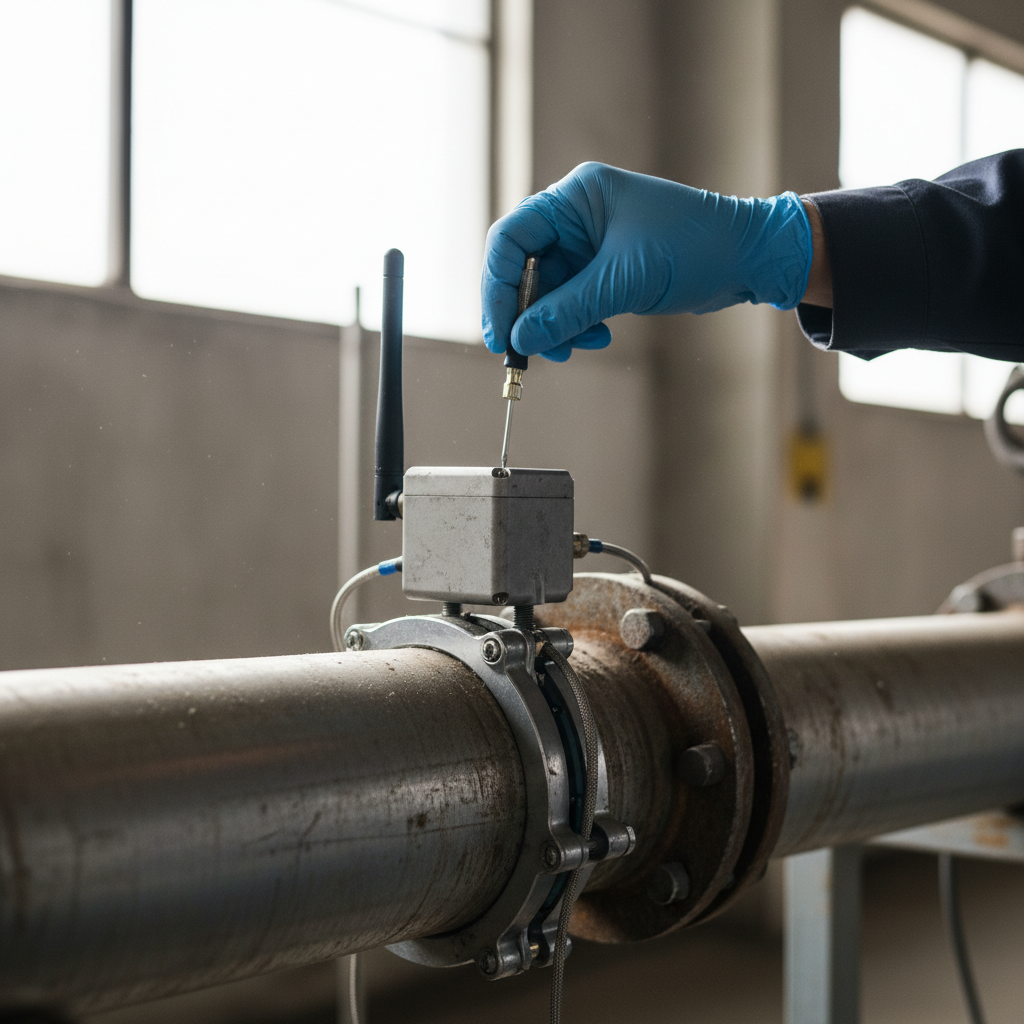
Six Layers Between a Sensor and a Decision
Every IoT monitoring solution, whether it costs $500 or $500,000, has to handle six layers. The question is which layers it owns, which it outsources, and which it ignores entirely.
| Layer | What it does | Common gap |
|---|---|---|
| 1. Instrumentation | Sensors, actuators, and gateways generate measurements with identity, timestamp, and location | Wrong sensor for the environment (battery life, IP rating, certification) |
| 2. Connectivity | Transports data via cellular, LPWAN, Wi-Fi, satellite, or wired protocols | Assuming stable Wi-Fi where none exists (warehouses, tarmacs, ocean) |
| 3. Edge processing | Filters noise, buffers during outages, runs local rules close to the asset | Skipped entirely, making the system blind during connectivity loss |
| 4. Ingestion and context | Authenticates devices, routes events, maps raw data to assets and business metrics | Data arrives with no asset relationship, so it cannot be prioritized |
| 5. Analytics and visualization | Dashboards, threshold alarms, trend analysis, anomaly detection | Dozens of dashboards, no ranked priority for the operator |
| 6. Action | Notification, work order, dispatch, control response, compliance record | Alert fires, nobody acts, no feedback loop exists |
Most vendors sell layer 5. Some bundle layers 1 and 2 as hardware kits. Very few own the complete measurement-to-action loop, because layer 6 requires integration with maintenance systems, dispatch workflows, or compliance platforms that vary by industry and operation.
AWS IoT SiteWise is a good example of a platform that explicitly spans layers 3 through 5: local processing, asset models, dashboards, alarms, and anomaly detection. But even there, the action layer depends on how well the buyer integrates SiteWise outputs into their operational workflow. The platform does not dispatch a technician. It gives the signal. Someone, or some system, still has to close the loop.
When evaluating a solution, map it against all six layers. Ask where the vendor stops and where you are expected to build.
Edge, Cloud, or Both
This is not an abstract architecture debate. It determines whether your monitoring works when the network does not.
Edge processing keeps safety-critical logic local. If a temperature excursion in a pharmaceutical container requires an immediate alert, that logic needs to run on the gateway or device itself, not in a data center 2,000 miles away. Edge also reduces bandwidth costs for high-frequency sensors and keeps operations running during connectivity outages.
Cloud is where fleet-wide intelligence lives. Cross-site comparison, long-term trend analysis, model training, and compliance reporting all require centralized data. Bayer Crop Science used cloud-based OEE visibility with AWS IoT SiteWise to compare performance across crop-processing sites, identifying abnormal waste patterns that no single-site view could have revealed. Their target was roughly 80% OEE, and the cross-site lens made the previously invisible visible.
For most real operations, the answer is hybrid. Process critical signals locally. Send context and history to the cloud. This is especially true in aviation, maritime, and field logistics, where connectivity is intermittent by nature. A container on a vessel mid-Atlantic cannot wait for a cloud round-trip to determine whether its cargo is at risk.
Cellular IoT is expanding the envelope. Ericsson reports roughly 4.5 billion cellular IoT connections at the end of 2025, with NB-IoT and Cat-M supporting large fleets of low-power, wide-area devices. Technologies like 5G RedCap are moving from specification to commercial deployment. But cellular does not eliminate battery, coverage, or roaming constraints. It widens the options. It does not remove the need for edge resilience.
Where IoT Monitoring Pays for Itself
The strongest ROI cases share a structure: a monitored event triggers a specific action that prevents a quantifiable loss. Four patterns hold up consistently.
Industrial performance
Bayer’s case starts with a business metric (OEE), not with a sensor count. The same reading becomes actionable when attached to a line, asset, shift, and production target. Cross-site comparison exposed waste patterns invisible at the individual plant level. The lesson: standardize the KPI before you scale the sensors. If you do not know what “good” looks like, more data just means more noise.
Environmental and cold-chain monitoring
A museum using connected environmental sensors discovered that humidity fluctuated significantly throughout the day. Their previous approach, one manual reading per day, completely missed the problem. Moving to 15-minute automated sampling did not just improve data resolution. It revealed a control failure that threatened the collection. Sampling frequency is not a spec to maximize. It is a tool matched to the variability of the condition being watched.
Fleet and logistics
Vendor-reported fleet monitoring case studies cite outcomes like 90% reductions in service failures and 30% reductions in vehicle idling. Those numbers are compelling but vendor-curated. The mechanism is sound: consolidating location, vehicle state, driver behavior, and maintenance triggers into a single platform replaces fragmented point solutions and gives dispatchers something they can act on. The caution: define your own baseline and measurement period before adopting someone else’s headline percentage.
Asset lifecycle tracking
This is where shipment tracking stops and real asset intelligence begins. A freight forwarder knows when a container was delivered. But what happens after? Where is it sitting? Is it being returned? How long is the dwell time? What is the cycle rate across the pool?
IoT monitoring applied to reusable assets (containers, ULDs, ground support equipment, MRO tooling) tracks the full cycle. The ROI comes from reducing lost or idle assets, improving utilization rates, and avoiding unnecessary replacement purchases. In my experience, companies underestimate how much capital is tied up in assets they simply cannot see after the point of delivery.
How to Calculate ROI Before You Buy
Most IoT monitoring ROI calculations I see are backwards. They start with the vendor’s claimed savings and work back to justify the spend. A credible business case works the other way.
Step one: define your baseline. Before a single sensor is deployed, document the current state of the metric you want to improve:
- Unplanned downtime hours per month (or per asset)
- Mean time to detect and mean time to repair
- Asset loss or shrinkage rate
- Energy, fuel, or waste costs per period
- Compliance excursions or safety incidents per quarter
- Labor hours spent on manual checks or data collection
Step two: define the monitored event and required action. What does the system detect, who receives the alert, and what do they do? If you cannot describe that chain in one sentence per event type, the solution is not ready to deploy.
Step three: estimate the financial impact. Avoided downtime has a cost. Recovered assets have a replacement value. Prevented compliance failures carry a penalty. Reduced fuel has a price. These are your numerators.
Step four: sum the full cost. Hardware, connectivity subscriptions, platform fees, integration labor, training, and ongoing maintenance. These are your denominators.
After deployment, track three outcomes:
- Reduction in unplanned downtime or asset loss (measured monthly)
- Change in mean time to detect and respond (measured weekly)
- Net operating cost change attributable to the monitoring system (measured quarterly)
Vendor case studies are hypotheses, not evidence. Your baseline, your measurement period, and your financial attribution are the proof.
Security: Design It In or Pay Later
IoT monitoring creates a new attack surface by definition. Every sensor, gateway, and cloud endpoint is a potential entry point. The question is whether security was part of the architecture or added after the purchase order.
NIST’s IoT cybersecurity program frames the challenge around five principles: risk-based understanding, no one-size-fits-all approach, ecosystem thinking, outcome-based solutions, and stakeholder engagement. In practical terms, that means every device needs identity management, credential rotation, least-privilege access, encrypted communication, signed firmware updates, vulnerability response, and a defined end-of-support date.
Regulation is now concrete. The EU Cyber Resilience Act entered into force in December 2024. Vulnerability reporting obligations take effect this September, with full compliance required by December 2027. In the US, the FCC’s Cyber Trust Mark program for consumer wireless IoT is actively enrolling participants, with ioXt Alliance serving as lead administrator since April of this year.
The consequences of ignoring this are not hypothetical. The FTC alleged that Ring allowed employees and contractors to access private customer videos and failed to prevent hackers from taking over accounts and cameras. The result: a $5.8 million consumer-refund order, mandatory data deletion, and enforced security program requirements. On the infrastructure side, CISA documented Mirai botnet attacks exceeding 1.1 Tbps, built entirely on IoT devices still running default credentials.
At minimum, your monitoring solution should address:
- Unique device identity and credential management
- Encrypted data in transit and at rest
- Firmware signing and over-the-air update capability
- Role-based access control
- Vulnerability disclosure and patching process
- Defined support duration and end-of-life policy
- Audit logging for compliance and incident response
If a vendor cannot answer these questions clearly during evaluation, treat that as a disqualifying signal, not a minor concern.
Choosing a Platform Without Getting Locked In
The fastest way to regret an IoT monitoring investment is to discover, 18 months in, that your data, device configurations, and alert logic cannot move to another platform.
Score every candidate on five dimensions before comparing price:
- Device and protocol coverage. Does the platform support the sensors and protocols your operation actually uses? Cellular, LPWAN, Bluetooth, MQTT, OPC UA? If the answer requires proprietary adapters for everything, the integration cost will dwarf the license fee.
- Data portability. Can you export raw and processed data in standard formats? If the vendor owns your data model, you own nothing.
- Edge behavior. What happens during a network outage? Does the system buffer, process locally, and sync when connectivity returns? Or does it go dark?
- Workflow integration. Can alerts trigger work orders, dispatch, or compliance records in your existing systems? A monitoring solution that lives in its own silo creates more manual work, not less.
- Security lifecycle. Does the vendor provide patching, vulnerability response, and a defined support period? Or does the contract effectively end at delivery?
One approach that reduces lock-in risk is working with an integrator that supports multiple hardware and software vendors. Instead of buying a monolithic platform, you select best-fit devices (cellular trackers for fleet, environmental sensors for cold chain, airfreight-certified tags for aviation) and connect them through a solution architected for your specific operation. The hardware can change. The connectivity can evolve. The data stays yours.
That is how we work at Datanet. We integrate hardware from partners like Digital Matter and Thingfox, including the DO-160 airfreight-approved Thingfox T2, with platforms configured for the specific workflow: aviation MRO, ground support equipment tracking, reusable container pools, or environmental compliance. The goal is not to sell a dashboard. It is to build the complete loop from sensor to decision, with hardware you can swap and data you control.
If your operation needs asset visibility that extends beyond the point of delivery, talk to our team. We will tell you honestly whether we are the right fit.
Frequently Asked Questions
What is an IoT monitoring solution?
It is a system that collects, structures, analyzes, and acts on data from connected devices. A complete solution includes instrumentation (sensors and gateways), connectivity, edge and cloud processing, visualization, alerting, and a defined intervention workflow. The value comes from closing the loop between detection and action, not from the dashboard alone.
What is the difference between IoT monitoring and asset tracking?
IoT monitoring is the broader discipline of watching device and environmental data for operational decisions. Asset tracking is a specific application that follows physical assets (containers, equipment, tooling) through their full lifecycle: deployment, operation, return, dwell, and reuse. Asset tracking uses IoT monitoring infrastructure but focuses on location, condition, utilization, and cycle time.
Does IoT monitoring work without constant internet access?
Yes, if the architecture includes edge processing. Devices and gateways can buffer data, apply local rules, and trigger alerts independently of cloud connectivity. When the connection returns, buffered data syncs to the central platform. This hybrid approach is standard in aviation, maritime, and remote industrial environments where connectivity is intermittent by nature.
How do I calculate the ROI of an IoT monitoring deployment?
Document baseline metrics before deployment: downtime, detection time, asset loss, energy costs, or compliance incidents. After deployment, measure the same metrics over a defined period. ROI equals the financial value of improvement (avoided losses, recovered assets, reduced labor) divided by total cost (hardware, connectivity, platform, integration, maintenance). Vendor case studies are starting points, not substitutes for your own data.
What security regulations apply to IoT monitoring in 2026?
The EU Cyber Resilience Act requires lifecycle vulnerability handling, with reporting obligations active since September 2026. The FCC’s Cyber Trust Mark covers consumer wireless IoT with QR-code security transparency and support-period information. NIST’s cybersecurity framework applies broadly, emphasizing risk-based, ecosystem-oriented security. Industrial and medical deployments carry additional sector-specific requirements.








 +1 508 292 2210

3 Responses