

Roughly 12,000 pieces of construction equipment are stolen every year in the United States, with an average loss of about $30,000 per incident. Recovery rate without GPS tracking: around 23%.
Theft is the number that sells rental equipment tracking to executives. But it’s not where most of the money leaks. The quieter losses hit harder: machines sitting idle because nobody logged them back into inventory, generators running billable hours with no utilization data to prove it, a skid steer that needed a filter swap 200 hours ago and just threw a rod on a customer’s jobsite.
Rental equipment tracking solves all of it. Not just “where is my machine,” but who has it, how hard is it running, and what does it need next. This is the guide I’d hand a fleet manager starting from scratch or an operator upgrading from spreadsheets and phone calls. The tech, the math, and the implementation lessons that don’t show up in product brochures.
What Rental Equipment Tracking Actually Means
Rental equipment tracking is the practice of monitoring the real-time location, usage, and condition of every asset a rental company puts into the field. It covers heavy machinery (excavators, loaders, boom lifts), powered equipment (generators, compressors, light towers), and small tools (power drills, concrete vibrators, scaffolding). While healthcare asset tracking focuses on medical devices and patient equipment, rental operations face similar challenges around utilization visibility and maintenance scheduling.
The system runs in three layers:
- An identifier on the asset: barcode, QR code, RFID tag, BLE beacon, or GPS/cellular tracker.
- A connectivity layer that moves data from the field to a dashboard: cellular, satellite, LoRaWAN, or a person scanning a code.
- Software that turns raw signals into rental decisions: ERP, telematics platform, or a dedicated asset management system.
Here’s the distinction that matters most. Rental equipment tracking is asset tracking, not shipment tracking. Shipment tracking ends at delivery. Asset tracking follows the machine through every loop: deployment, utilization, return, inspection, maintenance, redeployment. If your visibility ends when the asset leaves the yard, you’re doing shipment tracking with a fancier name. The difference has a direct effect on utilization rates, maintenance costs, and revenue per asset.
The Math Behind Not Tracking
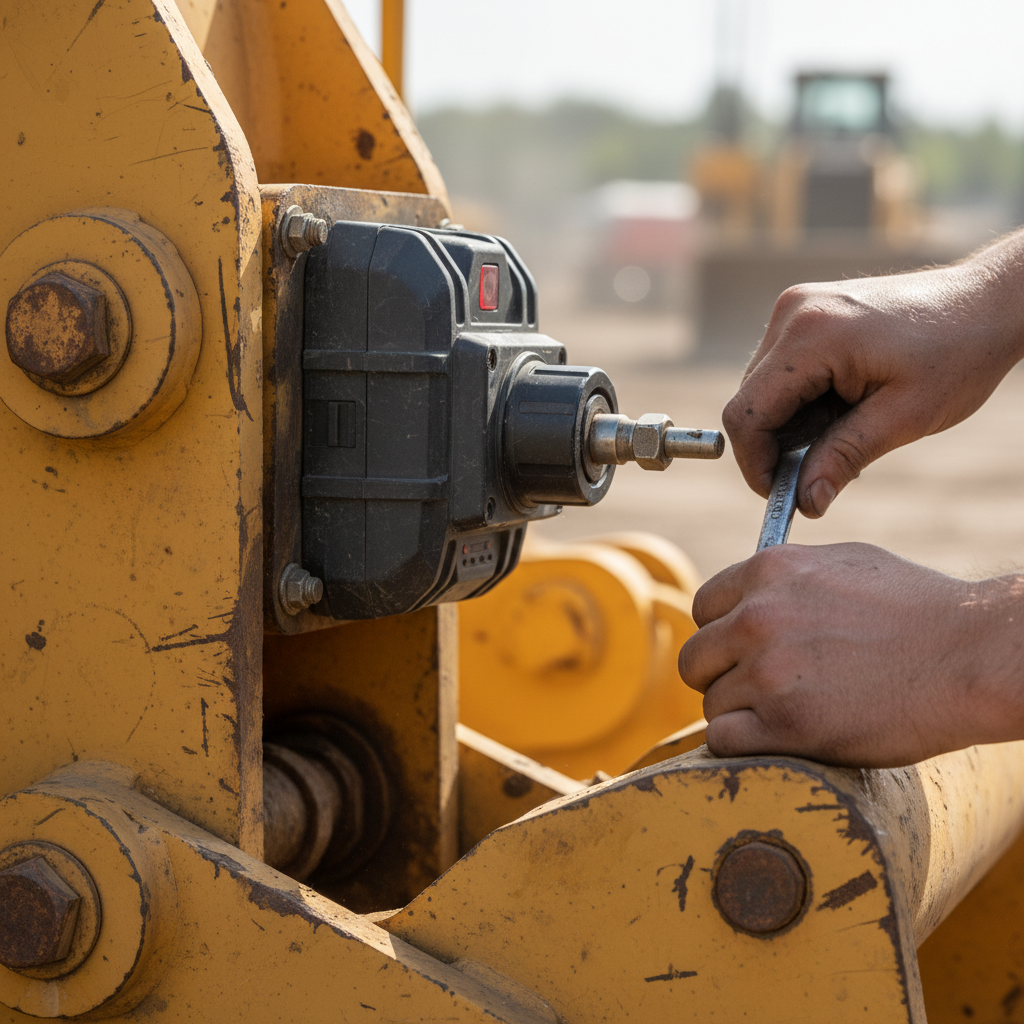
Three categories of loss compound when rental operators lack real-time fleet visibility.
Theft and non-recovery
US construction and heavy equipment theft causes annual losses estimated between $300 million and $1 billion. One documented case: a regional rental company managing a 900-unit Bobcat fleet recovered four stolen mini track loaders worth $140,000 total using GPS geofencing and coordinated law enforcement across state lines. The thieves had used fake IDs and stolen credit cards to run fraudulent Friday-afternoon rentals. Without GPS, those four machines would have been a write-off. The tracking hardware that made the recovery possible costs less than a single day’s rental revenue on one of those loaders.
Ghost utilization
This is the one that doesn’t make headlines. You have 400 assets in the fleet. You can account for maybe 300 at any given moment. The other 100 are somewhere: on a jobsite past contract end, in a customer’s yard uninspected, in your own depot but not scanned back in. You cannot rent what you cannot see.
The ARA projects the combined US construction and general tool rental industry at $83.5 billion in 2026. Even a 2% improvement in fleet utilization from better visibility moves billions in aggregate across the industry. For an individual operator with a 500-asset fleet, recapturing a handful of ghost assets can shift thousands of dollars per month in incremental rental revenue.
Unplanned maintenance
A machine that throws a fault code on a customer’s site costs you the repair, the emergency transport, the downtime, and possibly the relationship. Telematics data (engine hours, fault codes, fuel consumption, vibration patterns) lets you schedule service before that failure. Planned maintenance runs three to five times cheaper than emergency repair by any industry benchmark. The data doesn’t just prevent breakdowns. It also extends asset lifespan, which directly protects your depreciation curve.
The Technology Stack, Layer by Layer
Layer 1: Identify it
At the simplest level, barcodes and QR codes get the job done. A sticker and a phone camera. They handle check-in and check-out at the yard, tying each scan to a database entry. The limitation: they tell you nothing once the asset leaves your gate.
RFID tags (passive, no battery) are read by fixed readers or handheld scanners. They’re effective for automating gate counts and warehouse inventory. Range varies from inches at low frequency to roughly 30 feet at UHF, depending on the tag and reader.
BLE beacons are battery-powered and broadcast a signal every few seconds. Line-of-sight range reaches about 300 feet. They answer the proximity question: is this attachment on this jobsite right now? Battery life typically spans two to three years, with no wiring required.
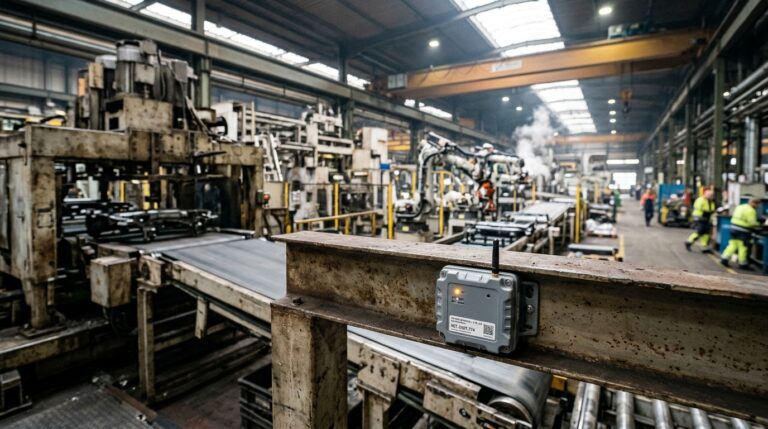
GPS/cellular trackers report position via the cellular network at intervals you configure. They come in battery-powered form (for easy retrofit on unpowered assets) or wired (drawing from the machine’s electrical system for unlimited runtime). This is the layer that delivers real-time location, geofencing, movement history, and, when wired into a machine’s CAN bus, engine diagnostics and utilization data.
Layer 2: Connect it
Cellular (LTE-M, CAT-1) is the standard for high-value assets in areas with network coverage. It supports over-the-air firmware updates, two-way communication, and relatively low power draw. For most urban and suburban rental operations, cellular handles everything.
Satellite IoT fills the gap where cellular fails. LoRaWAN over non-terrestrial networks extends connectivity to ranges up to 36,000 km for geostationary satellites, covering mining sites, remote pipeline corridors, and offshore operations. If you serve remote infrastructure projects, this is the layer that keeps assets visible when cellular drops to zero bars.
Wi-Fi works only inside fixed locations like warehouses and depots. It’s not a field-tracking solution.
Layer 3: Make decisions with it
ERP and rental management platforms (Point of Rental, InTempo, EZRentOut) handle contracts, billing, dispatch, and CRM. Most now integrate telematics data through APIs, pulling location and utilization data into the same view as your financials.
Dedicated telematics platforms aggregate location and usage data from the hardware layer. They provide dashboards, geofencing rules, alert triggers, and utilization reports that drive daily dispatch decisions.
OEM-embedded telematics (Cat VisionLink, Komatsu KomTrax, John Deere Connected Support) ship free on new machines. They offer a solid baseline, but they lock you into that manufacturer’s ecosystem. Worth noting: even the largest rental operators have standardized on third-party telematics feeds rather than depending solely on OEM systems. They want one normalized data stream regardless of the machine’s brand.
Most rental operations end up running a hybrid. QR codes on hand tools, BLE beacons on mid-value attachments, GPS/cellular trackers on everything above a certain value threshold, and software that aggregates all of it into a single dashboard.
Matching the Right Tracker to the Right Asset
This is where budget gets wasted or gaps form. Not every asset needs GPS. Not every asset can survive on a QR code. The framework below is based on what I’ve seen work across dozens of fleet deployments.
| Asset Class | Typical Value | Recommended Tech | Rationale |
|---|---|---|---|
| Hand tools, small power tools | $50 to $500 | QR code or BLE beacon | GPS subscription cost exceeds the asset’s value. QR for yard check-out, BLE for proximity detection at the jobsite. |
| Mid-value attachments (buckets, blades, scaffolding) | $500 to $5,000 | BLE beacon or passive RFID | Proximity-level visibility is sufficient. BLE updates automatically without manual scanning. |
| Powered equipment (generators, compressors, light towers) | $5,000 to $50,000 | Battery-powered GPS/cellular tracker | Requires real-time location and geofencing. Battery power avoids wiring on assets that move frequently between sites. |
| Heavy machinery (excavators, loaders, boom lifts) | $50,000+ | Wired GPS/cellular tracker or OEM telematics | Location plus engine hours, fault codes, utilization data. Wired connection to machine power eliminates battery constraints. |
| Any asset at remote or off-grid sites | Any | Satellite IoT or solar-powered GPS | Cellular dead zones require alternative connectivity. Solar extends runtime indefinitely in outdoor environments. |
The expensive mistake: buying 500 GPS trackers for everything, including $200 drill sets. The monthly cellular subscription alone kills any ROI on low-value tools. The opposite mistake is just as common: putting QR stickers on $150,000 excavators and wondering why three disappear in a year.
Match the tech to the asset value and risk profile. Everything else is overspending or under-protecting.
What the Largest Fleets Already Prove
The three biggest rental companies in the US have all standardized on fleet-wide telematics, and the same logic extends to specialized environments like port equipment tracking. Their deployments aren’t endorsements. They’re proof that the numbers work at scale.
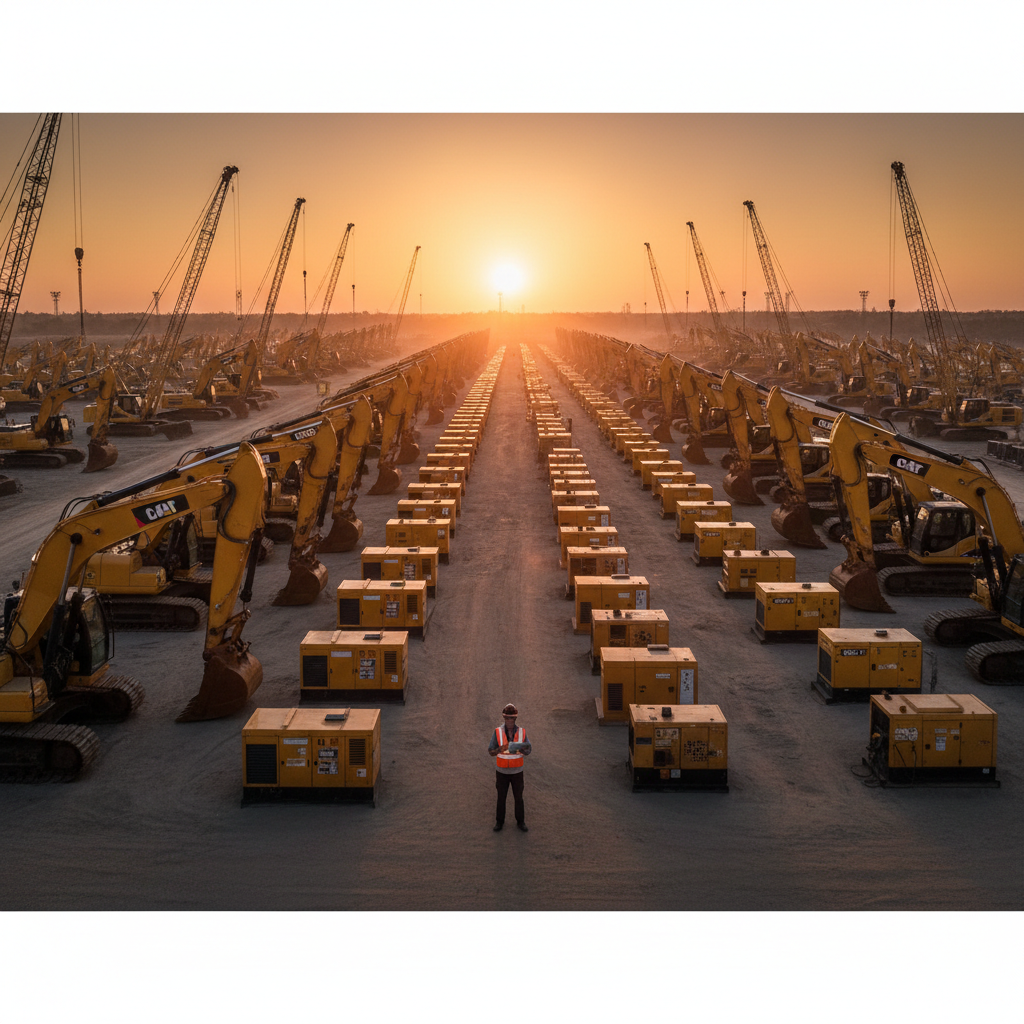
United Rentals equips more than 200,000 units with telematics through its Total Control platform: geofencing, remote engine start/stop, fuel alerts, emissions monitoring, and environmental sensors for temperature and humidity. At that fleet size, every percentage point of utilization improvement is worth hundreds of millions in revenue.
Sunbelt Rentals ($10.86 billion in fiscal year 2024 revenue) standardized telematics data feeds across its OEM partners and integrated with a dedicated construction tracking platform. The signal: even a $10B company doesn’t rely solely on embedded OEM systems. They built a unified data layer across brands.
Herc Rentals ($3.19 billion in 2024 equipment rental revenue) runs ProControl with real-time visibility, Bluetooth mobile access control, and remote light-tower operation. The remote control feature is practical, not gimmicky: it eliminates sending a person to a site just to flip a switch.
For independent operators, the same principles hold at smaller scale. Roughly 13,749 rental businesses operate in the US, most of them well below the billion-dollar tier. Off-the-shelf GPS hardware paired with a SaaS telematics platform delivers most of what the big three run internally, without the seven-figure development cost. The technology has democratized. The only question is whether you deploy it.
Implementation Realities Nobody Puts in the Brochure
Crew resistance
When GPS appears on every machine, field crews often read it as surveillance. “They’re watching us.” This perception kills adoption faster than any technical problem. The fix is straightforward in concept, harder in practice: make the data visible to the crew, not just to the front office. When operators see faster dispatch, fewer unnecessary return trips, and accurate proof of hours for billing disputes, the tracker becomes an ally rather than a spy. Track the asset, not the person. Make that distinction explicit and enforce it.
Legacy equipment without embedded telematics
A 2012 Cat loader doesn’t come with OEM telematics you can tap into. Tracking legacy equipment means retrofitting an external GPS/cellular device: either wired into the machine’s battery or running on its own internal power source. The hardware must survive jobsite conditions. That means IP67 or better water and dust resistance, vibration tolerance, wide operating temperature range, and tamper detection. Purpose-built industrial trackers like the Oyster3 exist precisely for this scenario. Consumer-grade GPS devices do not last in construction environments. They fail at the first rain, the first dust storm, or the first time a forklift bumps into them.
Privacy and disclosure
GPS tracking of rental equipment is legal when disclosed to the renter. But civil liberties advocates have flagged undisclosed GPS tracking as an excessive invasion of privacy, particularly in consumer-facing rentals. For B2B heavy equipment, the risk is lower but not zero. Best practice: include tracking disclosure in the rental agreement, specify what data is collected (location and utilization, not personal behavior), and separate asset telemetry from employee data wherever crews are involved. Clear disclosure prevents disputes and keeps you on the right side of an evolving regulatory landscape.
Data integration
If your tracking platform doesn’t communicate with your ERP, billing system, or maintenance scheduler, you’ve built another silo. Before buying hardware, confirm the integration path: does the tracker’s platform offer API access? Does it connect to your existing rental management software? Can it export data to your accounting system? A tracker is only as useful as the decisions it feeds into. Position matters less than what happens with the data once you have it.
What’s Coming Next
The construction equipment tracking market is projected to reach $3.9 billion by 2032, growing at 9.8% annually. That growth trails the rental industry it serves by nearly double, which means tracking’s share-of-wallet is rising even when fleet size stays flat. The next wave isn’t more GPS dots on maps. It’s intelligence on top of existing data.
Agentic AI is moving from proof-of-concept to deployment. AI agents that monitor equipment telemetry, predict mechanical failures, and autonomously generate maintenance work orders are in commercial use at the largest fleets. Within 24 months, mid-market operators will access equivalent capabilities through SaaS platforms, removing the need for custom development.
Satellite IoT is closing the last connectivity gaps. LoRaWAN over non-terrestrial networks allows rental equipment tracking in places cellular has never worked: deep mines, northern pipeline corridors, and offshore energy installations where tracking offshore equipment and marine equipment tracking face the same dead-zone challenges. The broader asset tracking market is expected to reach $14 billion by 2030, with satellite connectivity as a primary growth driver.
Computer vision is eliminating manual scanning at yard gates. Cameras trained on equipment silhouettes can identify assets in motion with up to 99% accuracy. The machine drives through the gate, the camera reads it, and inventory updates with zero human input. For high-volume yards processing dozens of assets per day, this compresses check-in and check-out to near zero labor.
None of these replace the foundation. You still need a tracker on the asset and a database behind it. But the intelligence layer on top is what turns rental equipment tracking from a cost center into a profit lever.
If your fleet includes assets that go invisible once they leave the yard, that’s the gap where tracking pays for itself. We build tracking solutions around industrial-grade hardware from Digital Matter and other proven partners, configured for the conditions your equipment actually operates in. Questions are welcome at info@datanetiot.com.
Frequently Asked Questions
What is rental equipment tracking?
Rental equipment tracking is the practice of monitoring the location, usage, and condition of machinery and tools that a rental company lends to customers. It combines physical identifiers (barcodes, RFID, BLE beacons, GPS devices) with software platforms that turn field data into decisions about billing, maintenance, dispatch, and theft recovery.
How much does it cost to track rental equipment?
Costs scale with the technology. QR code stickers cost pennies with no ongoing fee. BLE beacons run $15 to $50 per unit with multi-year battery life. GPS/cellular trackers range from $50 to $300 for the device plus $10 to $30 per month for the data subscription. Most operations achieve positive ROI within 90 days by preventing a single theft or recapturing one idle asset.
Can I track equipment that doesn’t have built-in telematics?
Yes. Retrofitting legacy machines with an external GPS/cellular tracker is standard practice. Battery-powered units mount without wiring. Wired units connect to the machine’s electrical system for continuous power. Look for IP67-rated housings, vibration tolerance, and tamper detection to ensure the device survives construction environments long-term.
Is GPS tracking of rental equipment legal?
GPS tracking of rental assets is legal in the US and most jurisdictions when disclosed to the renter. Best practice is to include tracking disclosure in the rental contract, specify what data you collect (location, utilization), and keep asset data separate from personal or employee data. Consumer-facing rentals carry higher privacy scrutiny than B2B heavy equipment transactions.
What is the difference between asset tracking and shipment tracking?
Shipment tracking ends when the item reaches its destination. Asset tracking follows the item through its full lifecycle: deployment, utilization, return, inspection, maintenance, and redeployment. Rental equipment is a reusable asset by definition. If your visibility stops at delivery, you lose data on the phases where utilization and maintenance decisions happen.
Do I need GPS on every asset in my fleet?
No. A hybrid approach works best for most operators. Use QR codes or BLE beacons on assets below $5,000 in value, and deploy GPS/cellular trackers on higher-value equipment where real-time location, geofencing, and utilization data justify the monthly subscription cost. Match the technology to the asset’s risk profile and value.



 +1 508 292 2210

4 Responses