
Here’s a number that should keep fleet managers and MRO directors awake: cargo theft losses in aviation and logistics hit nearly $725 million in 2025, with the average value per incident climbing 36% year-over-year to roughly $274,000. And that’s just what gets reported. When a CFM56 engine module disappears between facilities—or worse, shows up with forged paperwork on someone else’s wing—the real cost isn’t the hardware. It’s the AOG event, the audit trail collapse, and the regulatory exposure that follows. Tracking high-value aviation assets isn’t a nice-to-have anymore. It’s the difference between operational control and operational chaos.
Yet most organizations still confuse shipment tracking with asset tracking. They know where a part is during transit—then lose visibility the moment it’s delivered. That gap between “delivered” and “installed, maintained, returned, or scrapped” is where fraud, theft, and compliance failures live.
What Counts as a “High-Value Aviation Asset”?
The scope is broader than most assume. We’re not just talking about complete aircraft (though that matters—more on GADSS in a moment). The category includes:
- Engines and APUs — individual units worth $5M–$30M+
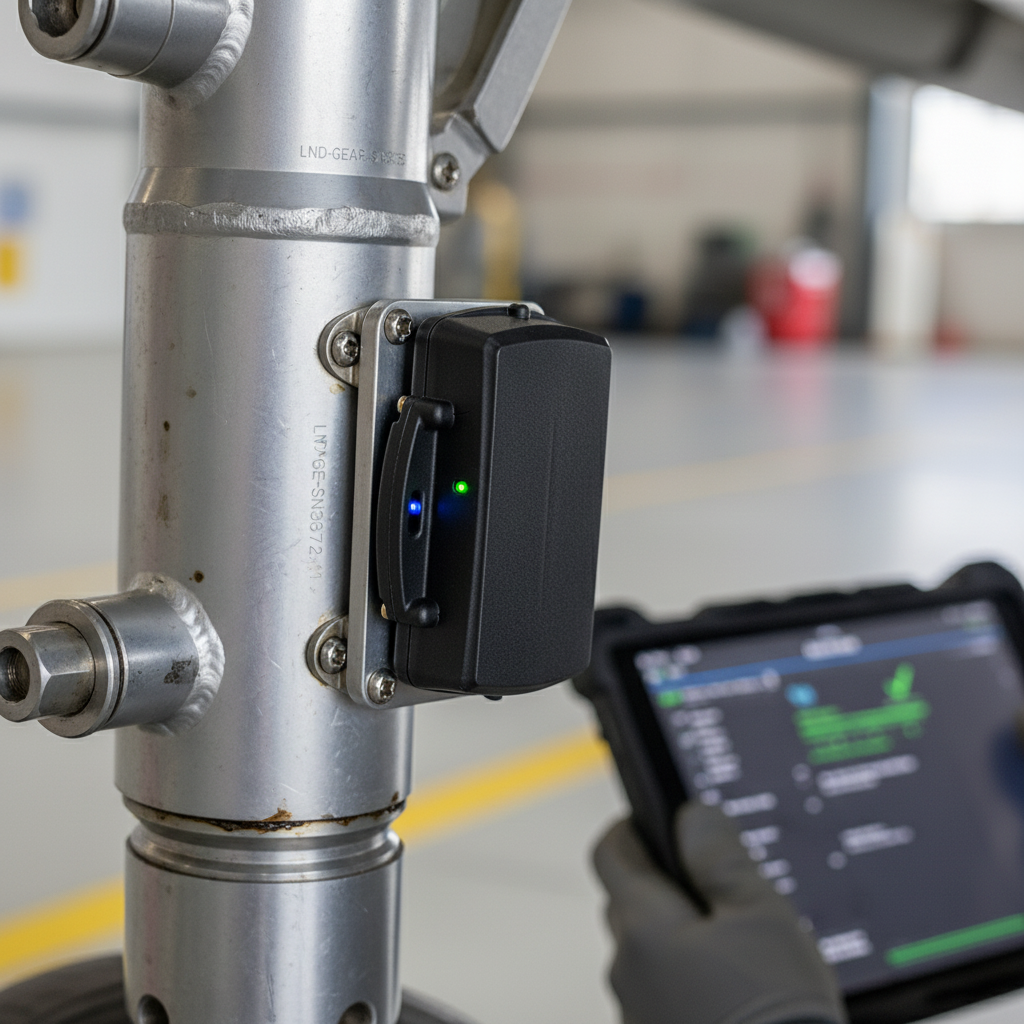
- Landing gear assemblies — $1M–$5M per set
- Avionics and Line-Replaceable Units (LRUs) — high unit cost, high theft target
- Ground Support Equipment (GSE) — tugs, loaders, power units scattered across ramps
- Engine transport stands and shipping fixtures — the containers themselves are six-figure assets
- Flight recorders (FDR/CVR) — critical safety hardware
- High-value consignments — spare engines in transit, pharma cargo, defense components
Each category has a different risk profile. Each demands a different tracking approach. Treating them all the same is the first mistake.
Shipment Tracking vs. Asset Tracking: The Distinction That Matters
Shipment tracking answers one question: Where is it right now, between origin and destination? It’s a logistics function. The job ends at delivery confirmation.
Asset tracking answers a harder set of questions: Where has it been? Who had custody? What’s its current status? When does it need maintenance? Has it been tampered with? Is it due for return? The job never ends—it follows the asset through its entire lifecycle, including return loops, dwell time, reuse, and eventual end-of-life disposition.
The European Union Aviation Safety Agency (EASA) made this distinction painfully clear in March 2026 when it issued an alert about 600+ turbofan engine parts stolen in Spain. Those parts—destined for mutilation and destruction—were diverted because the chain of custody broke at a logistics handoff. Shipment tracking said “delivered.” Asset tracking would have flagged that the receiving party wasn’t the contracted destruction provider.
This is the gap. If your container pool, your engine stands, or your rotable inventory feels invisible after delivery, that’s exactly the gap asset tracking closes.
The Regulatory Landscape: GADSS, ADT, and the Post-MH370 World
The disappearance of Malaysia Airlines Flight MH370 in 2014 exposed a systemic failure: we could lose a 200-ton aircraft carrying 239 people and not know where it went. The response was ICAO’s Global Aeronautical Distress & Safety System (GADSS)—a framework, not a single technology—built around four functions:
- Normal-operations tracking — position reports every 15 minutes or less
- Autonomous Distress Tracking (ADT) — position every 60 seconds without pilot intervention
- Post-flight localization — pinpointing accident sites
- Flight recorder data recovery — getting the data, period
The ADT mandate (ICAO Annex 6, Part I, Standard 6.18.1) became effective January 1, 2025 for newly manufactured aircraft over 27,000 kg. The system must have its own independent power source and transmit without crew action. Compliance options include distress-tracking ELTs (ELT-DTs), automatic deployable flight recorders, or high-rate satellite data streaming.
EASA vs. FAA: Two Approaches, Same Goal
EASA transposed GADSS into binding EU law (Regulation 2022/2203), adding specificity around passenger seating capacity thresholds. The FAA has taken a different path, arguing that its existing surveillance infrastructure—ground radar, terrestrial ADS-B, plus space-based ADS-B—already provides adequate coverage. The FAA hasn’t mandated specific new equipment but has indicated it will accept EASA-approved installations as an acceptable means of compliance.
For operators flying transatlantic or global routes, this divergence means navigating two compliance regimes simultaneously. It’s not contradictory—but it’s not simple either.
In-Flight Tracking Technology: Space-Based ADS-B
The biggest advancement in aircraft-level tracking is space-based ADS-B. Systems like Aireon’s network—hosted on 66 Iridium NEXT LEO satellites—capture 1090 MHz ADS-B Out signals directly from aircraft transponders, even over oceans, polar routes, and remote terrain where ground receivers don’t exist.
Performance numbers:
- Detection rate: approximately every 2 seconds in oceanic/polar airspace
- Latency: under 400ms satellite-to-ground; under 30 seconds for packaged data products
- Availability: 99%+ globally
The practical impact: search areas that once spanned thousands of square kilometers now shrink to 1–2 km². Aireon’s ALERT service has handled over 100 SAR assistance requests since 2019, including successful rescues from ditchings in the mid-Pacific and Bahamas—situations where terrestrial surveillance would have lost contact entirely.
The Cybersecurity Problem: GNSS Jamming and ADS-B Spoofing
Here’s the uncomfortable reality: ADS-B messages are unauthenticated and unencrypted. The position data they carry comes from the aircraft’s GNSS receiver. Jam or spoof that GNSS signal, and the aircraft broadcasts incorrect position data—creating ghost targets or making real aircraft appear where they aren’t.
This isn’t theoretical. According to FAA guidance citing IATA data, the rate of GNSS signal loss per 1,000 flights increased 65% in H1 2024 versus H1 2023. Hotspots include the Eastern Mediterranean, Black Sea, Baltic region, and parts of South Asia.
Mitigations exist but aren’t universally deployed:
- Multi-constellation, dual-frequency GNSS receivers (GPS + Galileo + GLONASS + BeiDou)
- Receiver Autonomous Integrity Monitoring (RAIM/ARAIM)
- Inertial Reference System (IRS) integration for short-term backup
- Cross-validation against radar, multilateration, and ADS-C
Authenticated ADS-B remains a long-term research goal—not a near-term solution. For now, resilience is layered, not singular.
Ground-Level Asset Tracking: Where MRO Meets Reality
In-flight tracking gets the headlines. But for MRO operations, freight forwarders, and lessors managing engine pools, the daily problem is far more mundane—and far more expensive: Where is that engine stand? Who signed for the LRU? How long has that rotable been sitting in a bonded warehouse?
The technology stack for ground-level aviation asset tracking typically layers three approaches:
1. Passive RFID — Warehouse and Facility Inventory
Low-cost tags on components and tooling. Great for zone-level visibility within a controlled environment. Limited range, no autonomous reporting.
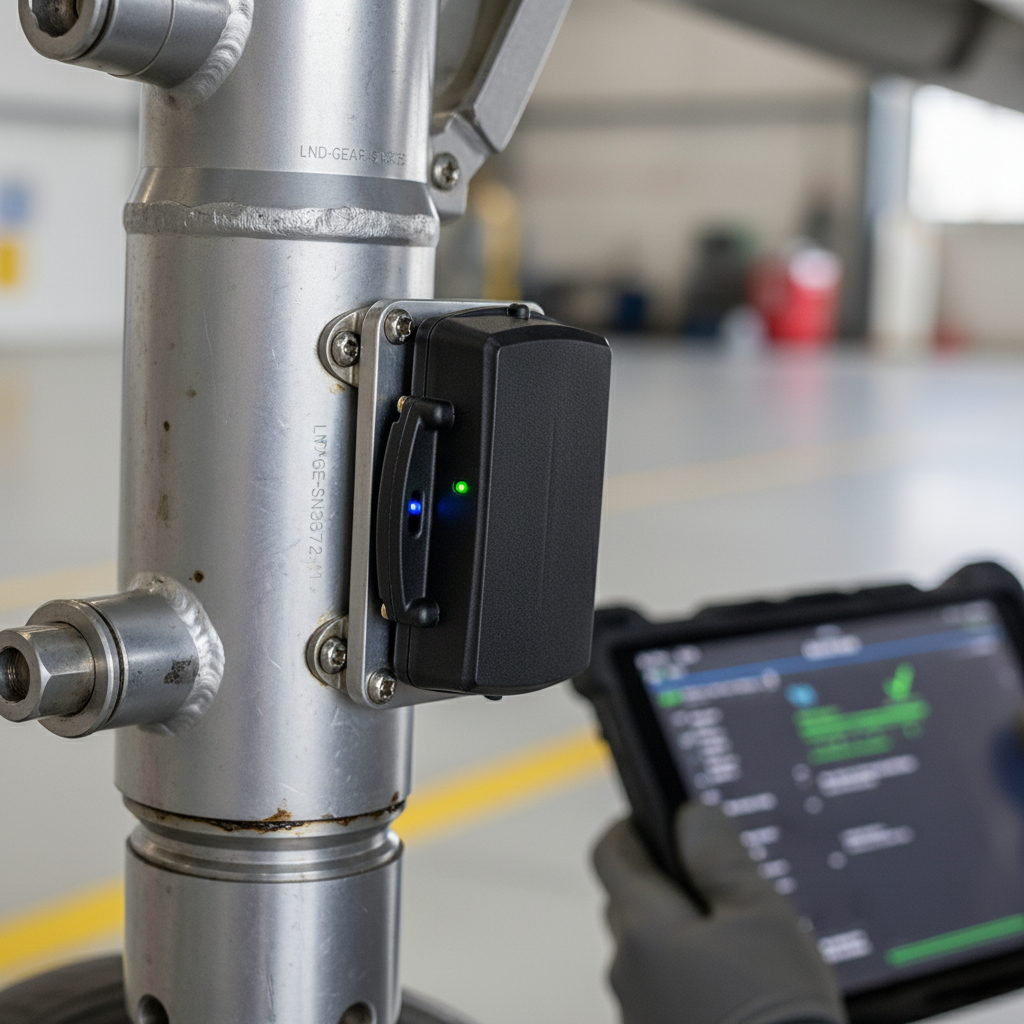
2. Cellular IoT Trackers (LTE-M/NB-IoT + GNSS) — In-Transit and Yard
These provide outdoor accuracy within 3–5 meters via GNSS, with multi-year battery life on adaptive duty cycles. Modern devices like the Digital Matter Remora2 or Oyster3 can operate 5–10 years on standard batteries by intelligently reducing power when stationary. Data flows to cloud platforms with REST APIs for integration into MRO systems like AMOS, TRAX, or IBM Maximo.
3. Air-Certified Satellite/Cellular Trackers — In-Flight Cargo
For tracking high-value consignments during air transport, devices must meet DO-160 environmental qualification. The Thingfox T2, for instance, is airfreight-approved and continues reporting through the logistics chain without requiring removal for flight segments.
The integration point matters. A tracker that reports to a standalone dashboard creates another data silo. The value multiplies when location telemetry feeds directly into your ERP or MRO platform—turning “where is it?” into automated cycle-time calculations, dwell alerts, and maintenance triggers.
The Supply Chain Integrity Problem: Fraud, Theft, and Chain of Custody
Two recent cases illustrate why asset tracking must extend beyond location to encompass provenance and custody:
AOG Technics (2019–2023, prosecuted 2026): A London broker distributed thousands of CFM56 engine parts with forged documentation. The fraud wasn’t a tracking failure—it was a custody verification failure. Aircraft were grounded industry-wide for inspections. The founder received a prison sentence from the UK’s Serious Fraud Office.
Spanish engine parts theft (January 2026): Twelve containers holding 600+ turbofan parts were stolen by criminals impersonating a contracted destruction provider. The parts—declared non-airworthy—could re-enter the supply chain with fabricated paperwork. EASA issued an emergency alert.
Both cases share a common thread: the chain of custody broke at a handoff point. Continuous asset tracking—including geofence alerts, custody-change verification, and end-of-life confirmation—would have flagged both anomalies in near-real-time.
Three Outcomes That Justify the Investment
When organizations move from shipment tracking to full-lifecycle asset tracking, three measurable outcomes emerge consistently:
- Cycle time reduction of 15–30%. Knowing where assets dwell—and for how long—exposes bottlenecks. One airline MRO operation found 22% of its engine stand fleet was sitting idle at third-party facilities for 40+ days beyond need. Visibility alone recovered those assets without purchasing new ones.
- Theft and fraud exposure drops measurably. Real-time geofencing and custody-change alerts create an auditable chain that makes diversion detectable within hours, not months. With average theft values at $274,000 per incident, preventing even one event per year covers the tracking investment multiple times over.
- Regulatory compliance becomes continuous, not episodic. When every custody transfer, location change, and dwell period is logged automatically, audit preparation shifts from a weeks-long scramble to a report pull. EASA and FAA traceability requirements become a byproduct of operations, not an overhead activity.
The Privacy and Data Governance Layer
Asset tracking generates data—and data creates obligations. For aircraft-level tracking, the FAA’s LADD and PIA programs let operators limit public visibility of their flights, though they can’t stop the physical ADS-B broadcast. Independent aggregators still capture and display unblocked data.
For component-level and operational telemetry, data ownership is contractual, not statutory. OEMs, operators, lessors, and MROs all have legitimate claims on different slices of the data. When personal data is involved (crew identifiers, for example) and crosses borders, GDPR and equivalent frameworks apply—requiring Standard Contractual Clauses and clear processing bases.
The practical takeaway: choose tracking platforms that offer role-based access, data residency options, and audit trails. The technology that generates visibility shouldn’t itself become a compliance risk.
What’s Next: 2025–2028 Outlook
Three trends will shape tracking of high-value aviation assets over the next three years:
- GNSS resilience investment accelerates. Multi-constellation/dual-frequency receivers, tighter IRS coupling, and multi-sensor fusion become standard expectations rather than optional upgrades.
- Digital provenance goes mainstream. Electronic Authorized Release Certificates (e-ARCs) and blockchain-based parts registries move from pilot programs to operational deployment, driven by post-AOG Technics regulatory pressure.
- IoT tracker costs continue falling while battery life extends. The combination makes it economically viable to track not just engines and landing gear, but individual LRUs, tooling kits, and reusable shipping containers—assets that were previously “below the threshold” for tracking investment.
Building a Tracking Strategy That Works
The gap in most aviation asset tracking programs isn’t technology—it’s architecture. Organizations deploy point solutions: one system for in-flight awareness, another for warehouse RFID, a third for in-transit GPS. Each answers one question. None answers the lifecycle question. Implementing comprehensive aviation asset visibility solutions bridges these silos by unifying data streams into a single operational view.
An effective strategy layers technologies by use case—passive RFID for tool control, cellular GNSS trackers for mobile high-value assets, DO-160-rated devices for in-flight cargo—and unifies them through a single visibility platform that feeds your existing MRO/ERP systems. Fast implementation matters (every day without visibility is a day of exposure), but so does scalability—because the asset pool you track today won’t be the same pool you track in 18 months.
If your current setup loses sight of assets after delivery, or if you’re stitching together spreadsheets to answer “where is it and who has it?”—that’s the gap worth closing. Our team builds exactly this kind of layered, end-to-end tracking architecture for aviation and MRO operations. Talk to us: info@datanetiot.com.
Frequently Asked Questions
What is GADSS and how does it affect aviation asset tracking?
GADSS (Global Aeronautical Distress & Safety System) is an ICAO framework created after MH370’s disappearance. Its key 2025 mandate requires new large aircraft to autonomously transmit position every 60 seconds during distress, without pilot intervention. It drives adoption of space-based ADS-B, ELT-DTs, and deployable recorders.
What’s the difference between shipment tracking and asset tracking in aviation?
Shipment tracking ends at delivery—it confirms an item moved from A to B. Asset tracking follows the item through its full lifecycle: custody changes, dwell time, maintenance cycles, return logistics, and end-of-life disposition. For high-value parts like engines or landing gear, only lifecycle tracking prevents fraud and ensures regulatory compliance.
How serious is GNSS jamming and spoofing for aviation operations?
It’s an operational reality, not a theoretical risk. IATA data shows a 65% increase in GNSS signal loss per 1,000 flights in H1 2024 versus H1 2023. Spoofed signals cause aircraft to broadcast false ADS-B positions. Mitigations include multi-constellation receivers, inertial backup, and cross-validation with radar and multilateration.
What technologies are used to track aviation parts and equipment on the ground?
A layered approach: passive RFID for warehouse inventory, cellular IoT trackers (LTE-M/NB-IoT with GNSS) for mobile assets like engine stands, and DO-160-certified devices for in-flight cargo. Integration with MRO/ERP systems like AMOS or TRAX turns location data into actionable maintenance and custody intelligence.
How much does aviation cargo and parts theft cost the industry?
CargoNet estimated cargo theft losses at nearly $725 million in 2025, with average per-incident values of approximately $274,000—a 36% increase from 2024. High-profile cases include the 2026 theft of 600+ turbofan parts in Spain, prompting an emergency EASA alert.
What battery life can I expect from modern aviation asset trackers?
Modern cellular IoT trackers using LTE-M or NB-IoT with adaptive duty cycles achieve 5–10+ years on standard batteries. They reduce power consumption when stationary and wake on movement. Reporting frequency, environmental conditions, and cellular coverage quality all influence actual longevity.






 +1 508 292 2210