
“`html
Aviation asset visibility solutions have become the backbone of modern airline, airport, and MRO operations. Whether you’re tracking a $200,000 engine part crossing the Atlantic or locating one of 30,000 tools inside a hangar, the underlying principle is the same: real-time data about where assets are, what condition they’re in, and when they’ll arrive where they’re needed. This guide breaks down every major subdomain, compares technologies, and shows how organizations are turning IoT-driven visibility into measurable operational gains.
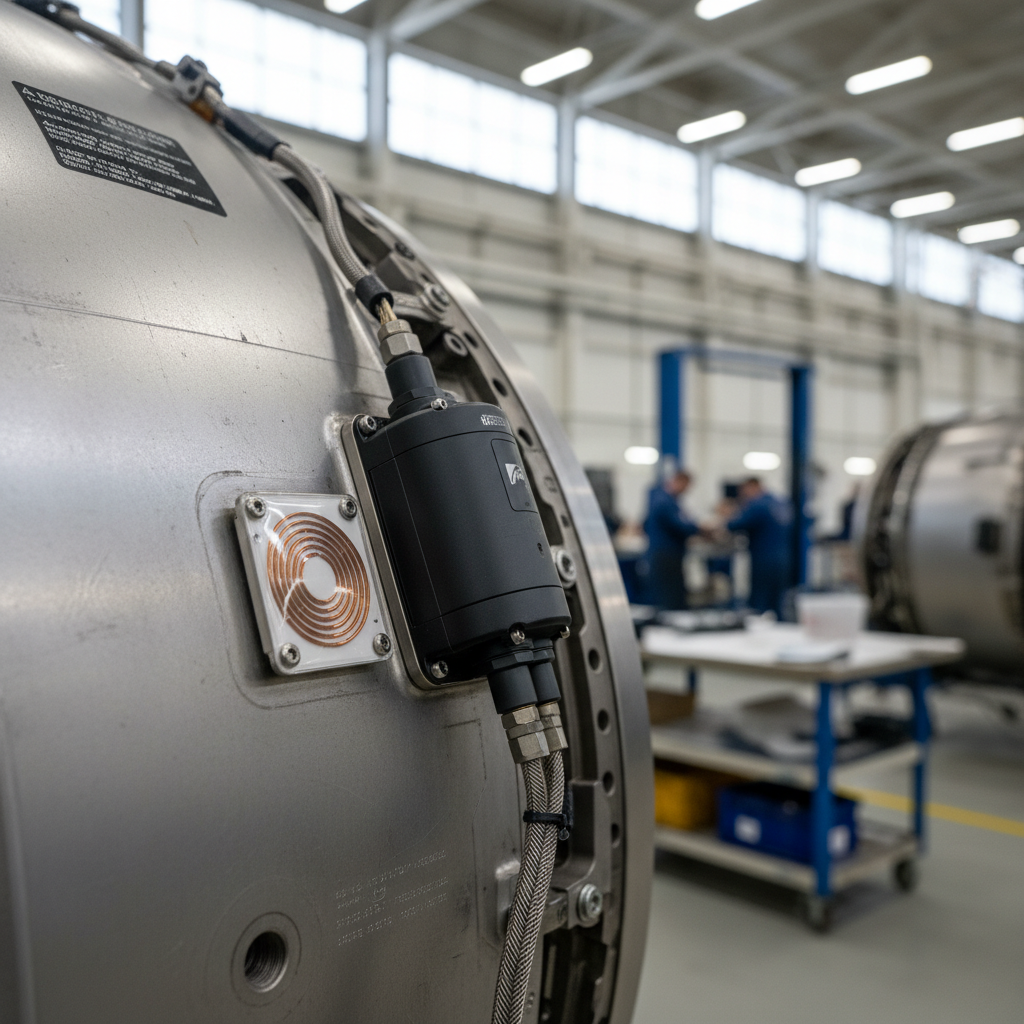
What Aviation Asset Visibility Actually Means in 2025
At its core, aviation asset visibility is the ability to know the location, status, and condition of physical assets across the aviation value chain — in real time. That sounds simple. In practice, it spans five distinct subdomains, each with its own technology stack, regulatory context, and operational challenges:
- Digital Records Management (DRM) — maintaining auditable, digital airworthiness records for aircraft, engines, and components
- Aircraft Health Monitoring (AHM) — collecting in-flight telemetry to predict failures before they ground a plane
- Real-Time Location Systems (RTLS) — pinpointing Ground Support Equipment (GSE) and tooling on the ramp or in the hangar
- Baggage and ULD Tracking — following bags and Unit Load Devices from check-in to carousel, driven by IATA Resolution 753
- AOG Spares Shipment Visibility — monitoring high-value spare parts in transit, especially during Aircraft On Ground emergencies
The global asset-tracking market (cross-industry) was valued at USD 24.14 billion in 2024 and is projected to reach USD 51.59 billion by 2030, growing at a 14.9% CAGR according to Grand View Research. Aviation is one of the fastest-growing verticals within that market because the cost of not knowing — a grounded aircraft, a missing tool, a misrouted part — runs into hundreds of thousands of dollars per incident.
Digital Records Management: The Foundation of Asset Value
An aircraft without complete records loses millions in market value. Digital Records Management systems solve this by creating a persistent, searchable digital trail for every component — from FAA Form 8130-3 airworthiness certificates to full maintenance histories.
How DRM Works
- Ingestion: Paper or PDF documents are scanned, processed via OCR (Optical Character Recognition), and enriched with AI-assisted data extraction.
- Linking: Each record is associated with a specific aircraft, engine, or serialized part in a cloud-based platform.
- Integration: APIs connect the DRM system to MRO/ERP platforms like IFS Maintenix, AMOS, or TRAX, so maintenance events update automatically.
- Audit and Redelivery: At lease return, the system compiles a complete compliance package — automatically flagging gaps in Airworthiness Directives or Service Bulletins.
Real-World Impact
Spirit Airlines achieved FAA approval for digital records using flydocs’ platform in 2025. Staff became proficient in lease-return processes within approximately two weeks — a process that previously required months of manual paper research. In November 2024, GE Aerospace, Microsoft, and Accenture announced a generative AI tool that reduces maintenance record retrieval and normalization from days to minutes.
Aircraft Health Monitoring and Predictive Maintenance
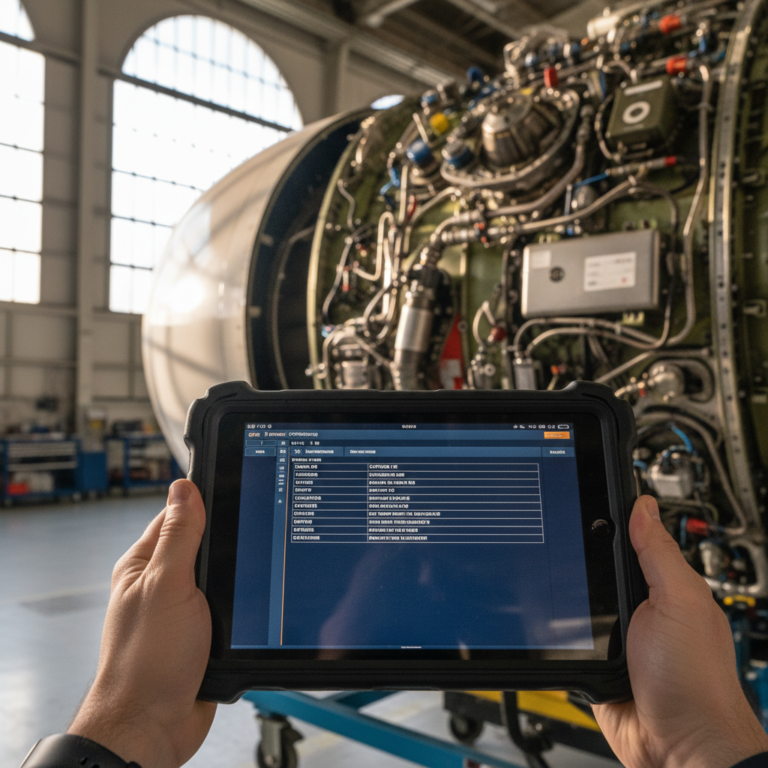
A modern Airbus A350 generates up to 1 terabyte of sensor data per day. Aircraft Health Monitoring platforms collect this data — from engine FADEC (Full Authority Digital Engine Control) units, APUs, avionics buses — and feed it through cloud analytics to predict failures before they happen, similar to how tracking aircraft components in real time enables proactive maintenance decisions.
Architecture at a Glance
| Stage | What Happens | Technologies |
|---|---|---|
| Onboard Collection | Thousands of sensors generate flight data | ARINC 717/429/664, FADEC, LRU sensors |
| Edge Processing | Filtering, compression, trigger detection | Aircraft Interface Device (AID), FDAU |
| Transmission | Real-time alerts + bulk offload | ACARS (VHF/SATCOM), 4G/5G Wi-Fi at gate |
| Cloud Analytics | Anomaly detection, RUL estimation | ML models, digital twins, physics-based algorithms |
| Action | Automated work orders, parts pre-positioning | API integration with MRO/ERP systems |
Proven Results
Boeing’s Aircraft Data Reasoner (ADR), deployed on the C-17 military fleet over 10 years, delivered a 2–3% increase in aircraft availability, a 12.1% reduction in unscheduled maintenance, and savings of over 35,000 maintenance man-hours. Airbus Skywise, now connected to more than 12,300 aircraft, reports 10–20% time savings on specific analytical workflows for participating airlines.
The Data Ownership Challenge
The biggest obstacle isn’t technology — it’s who controls the data. OEMs view telemetry and predictive algorithms as intellectual property. Airlines need that data for independent maintenance decisions and asset value protection during lease transitions. The industry is resolving this through tiered API access, anonymization frameworks, and shared-value platforms like Skywise where airlines contribute data in exchange for aggregated fleet insights.
RTLS for Ground Support Equipment and Tooling
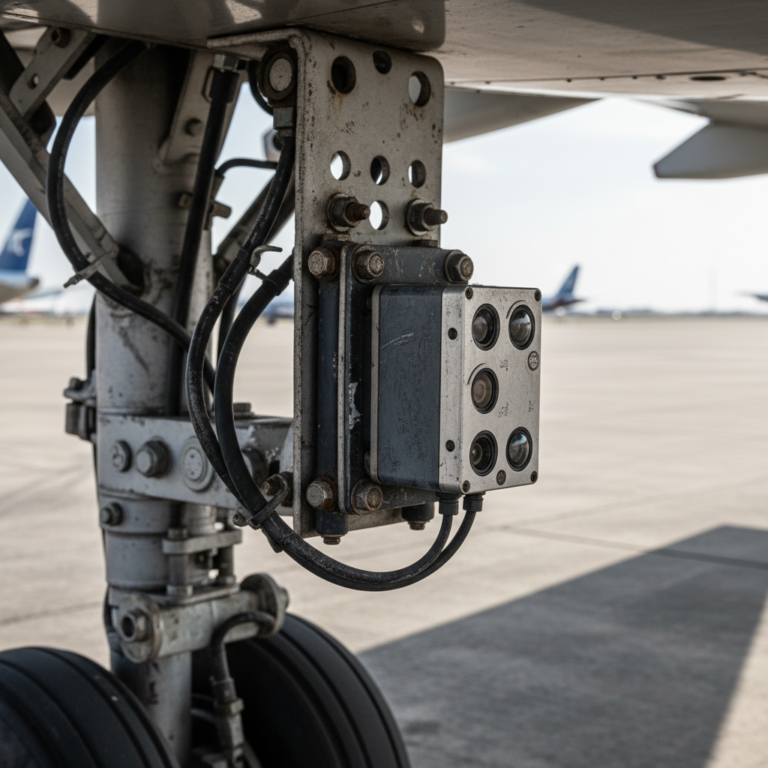
Search time is dead time. In MRO hangars and on airport aprons, technicians routinely waste 15–30 minutes per shift looking for tools or equipment. Real-Time Location Systems eliminate this waste by providing continuous visibility of every tagged asset, much like aircraft tooling tracking systems provide for specialized MRO tools.
Technology Comparison
| Technology | Accuracy | Best For | Tag Cost | Battery Life |
|---|---|---|---|---|
| Ultra-Wideband (UWB) | 10–30 cm | Tool control in hangars, process enforcement | $12–$60 | 1–3 years |
| Bluetooth Low Energy (BLE) | 0.5–3 meters | Zone-level GSE visibility on aprons | $8–$30 | 3–10 years |
| LoRaWAN / NB-IoT | Tens to hundreds of meters | Wide-area GSE tracking across large airports | $15–$50 | 2–10+ years |
Case Studies
Safran Aircraft Engines deployed Quuppa’s BLE/AoA RTLS to track over 30,000 tools across 75,000 m² of facilities, drastically reducing search times and enabling preventive maintenance scheduling.
Condor Technik at Frankfurt Airport (2025) used Sensolus NB-IoT/GNSS/BLE hybrid trackers to eliminate unnecessary cross-airport trips for GSE. The system was operational within two days.
A confidential pilot at a Tier-1 international hub reported a 20% increase in GSE utilization and a 12% reduction in aircraft turnaround time by eliminating “search and wait” delays, demonstrating the power of aircraft ground support equipment tracking.
Hybrid Approach: The Practical Answer
Most successful deployments blend technologies. UWB handles precision tracking inside hangars where sub-meter accuracy matters for tool control compliance. BLE or NB-IoT covers the broader apron where you just need to know which zone a tug or belt loader is in. GPS bridges the gap for assets that move between facilities, providing the comprehensive coverage needed for effective aircraft equipment location tracking.
Baggage and ULD Tracking: The IATA R753 Mandate
IATA Resolution 753 requires member airlines to track baggage at four points: check-in, loading, transfer, and arrival. As of 2024, 44% of airlines had fully implemented the resolution, with 41% in progress. The industry achieved a 60% reduction in baggage mishandling between 2007 and 2022.
The Numbers Still Hurt
Despite progress, 33.4 million bags were mishandled globally in 2024 — a rate of 6.3 per 1,000 passengers — costing the industry an estimated $5 billion (SITA Baggage IT Insights 2025).
Technology Choices
- Barcode: Still used in 73% of airports. Cost per tag under $0.10. Requires line-of-sight, leading to missed scans.
- Passive UHF RFID: Deployed at 27% of airports. Achieves 99%+ read rates without line-of-sight. Delta Air Lines invested ~$50 million and reached 99.9% accuracy across 344 airports.
- BLE / Consumer Trackers (e.g., Apple AirTag): Complementary, not a replacement. In late 2024, SITA integrated Apple’s Find My network with WorldTracer, allowing passengers on British Airways, Lufthansa, and United to share bag location data to speed recovery.
Smart ULDs: A $300 Million Problem
Approximately 1.2 million ULDs are in global service, valued collectively at around $1 billion. Annual losses from damage and misplacement exceed $300 million. Smart ULD pilots — using BLE sensors, LPWAN, and even blockchain for immutable data sharing — are demonstrating how real-time condition monitoring (temperature, shock, geolocation) can reduce these losses while improving handling of sensitive cargo.
AOG Spares: When Minutes Cost Millions
An Aircraft On Ground event can cost an airline $150,000+ per day in lost revenue, re-accommodation, and crew costs. In-transit visibility for critical spare parts is no longer optional — it’s a financial imperative, similar to how aircraft parts tracking prevents costly delays across the supply chain.
How AOG Tracking Works
Modern AOG trackers combine multiple technologies for global, uninterrupted coverage:
- GNSS (GPS/GLONASS) for precise outdoor positioning
- Multi-band cellular (LTE-M/NB-IoT/5G) with eSIM for automatic carrier switching across borders
- Satellite IoT (Iridium, Globalstar) as fallback over oceans and remote areas
- BLE handoff for indoor/warehouse visibility
- Onboard sensors: accelerometers (shock), temperature, light (tamper detection)
Swiss International Air Lines: From Days to Minutes
Swiss deployed Aeris’s IoT Watchtower platform across approximately 10,000 devices. The result: incident diagnosis time dropped from days to minutes. Proactive anomaly detection identifies connectivity or device issues before they impact a time-critical shipment.
Regulatory Constraints
All battery-powered trackers must pass UN38.3 testing for air transport certification. IATA Dangerous Goods Regulations govern Watt-hour limits. Each airline maintains its own acceptance policies — vendors typically provide airline-specific acceptance letters to prevent shipment rejections at the last minute.
The Integration Challenge: Why Data Coordination Matters More Than Hardware
According to SITA’s 2025 industry report, the primary obstacle to realizing the value of technology investments in aviation is not hardware capability — it’s data coordination between stakeholders. Airlines, airports, ground handlers, OEMs, and lessors each hold pieces of the visibility puzzle. Without integration, you get islands of data instead of actionable intelligence.
What’s Driving Convergence
- Cloud platforms that aggregate data from multiple subsystems into a single operational picture
- AI/ML analytics that identify patterns across previously siloed datasets
- Standards like IATA ONE Record that define common data-exchange protocols
- Modern messaging (MBM) replacing expensive legacy Type B formats
- Digital twins that combine physical telemetry with lifecycle records for predictive modeling
Comprehensive aviation equipment tracking software helps organizations bridge these integration gaps by providing unified platforms that connect disparate data sources and enable cross-functional visibility.
Emerging Trends: 2025–2027 Outlook
- Generative AI for Records: GE Aerospace/Microsoft/Accenture’s tool signals a shift where AI ingests, normalizes, and queries unstructured maintenance records at scale.
- Sensor Fusion Tags: Multi-mode tags combining UWB + BLE + GNSS + cellular provide seamless indoor/outdoor tracking without manual handoff.
- Computer Vision as RTLS Complement: Cameras verify RTLS data, monitor gate activity, and detect Foreign Object Debris.
- Cybersecurity as a Priority: Expanded data sharing elevates the importance of encryption, role-based access, and regulatory compliance in every procurement decision.
- 5G Smart Labels: Disposable peel-and-ship trackers (like Roambee’s 2024 5G GPS smart label) make per-shipment visibility economically viable even for lower-value parts.
Choosing the Right Solution: A Decision Framework
| Your Primary Challenge | Subdomain | Core Technology | Key Metric to Track |
|---|---|---|---|
| Aircraft grounding from unplanned failures | AHM / Predictive Maintenance | Cloud analytics, digital twins | Unscheduled maintenance rate |
| Tools and GSE disappearing on the ramp | RTLS | UWB (indoor), BLE/NB-IoT (outdoor) | Search time, asset utilization % |
| Baggage mishandling complaints | Baggage Tracking | Passive UHF RFID | Read rate, mishandled bags per 1,000 pax |
| AOG parts arriving late or damaged | Shipment Visibility | GPS + cellular + satellite IoT | ETA accuracy, condition exceptions |
| Lease returns taking months | DRM / Lifecycle Management | Cloud SaaS, AI ingestion | Redelivery cycle time |
Organizations can implement specialized solutions such as aircraft component traceability systems for regulatory compliance and aircraft inventory tracking solutions for optimized warehouse and supply chain operations.
How We Approach Aviation Asset Visibility
At Datanet IoT Solutions, we work with operations leaders who need to stop guessing and start seeing — in real time. Our IoT-based tracking and monitoring platform combines GPS, cellular connectivity, and environmental sensors to deliver the kind of continuous, multi-condition visibility that aviation operations demand. Whether you’re tracking GSE across a sprawling airport, monitoring temperature-sensitive spares in transit, or building a centralized view of distributed assets, our platform integrates with your existing systems via open APIs. Our aviation GPS tracking solutions provide the foundation for comprehensive asset visibility. If you’re evaluating how IoT can reduce your losses, accelerate turnaround, or satisfy compliance mandates, we’d welcome the conversation.
Frequently Asked Questions
What is IATA Resolution 753 and how does it affect asset tracking?
IATA Resolution 753 is a mandate requiring member airlines to track passenger baggage at four key journey points: check-in, loading onto the aircraft, transfer, and arrival. It drives investment in RFID infrastructure, modern messaging systems, and data-sharing agreements between airlines, airports, and ground handlers. As of 2024, 44% of airlines have fully implemented it.
What technologies are used for aviation asset visibility?
The technology stack depends on the use case. Passive UHF RFID handles high-volume items like baggage. UWB and BLE provide precision RTLS for tools and GSE. GPS combined with cellular and satellite IoT enables long-range tracking of spare parts and shipments. Cloud platforms with AI/ML tie everything together for analytics and decision support.
How does real-time tracking reduce AOG (Aircraft On Ground) costs?
AOG events cost airlines $150,000+ per day. IoT trackers with GPS, cellular, and satellite connectivity provide accurate ETAs and condition data for critical spare parts in transit. This lets operations teams pre-position resources, avoid emergency charters, and reduce the mean time to repair — turning days of uncertainty into minutes of diagnosis.
What is the ROI of RTLS for ground support equipment?
Published case studies report 20% increases in GSE utilization and 12% reductions in aircraft turnaround time after deploying RTLS. The primary savings come from eliminating search time, optimizing equipment routes, and reducing unnecessary capital purchases by improving utilization of existing fleets.
How do digital twins support aviation asset management?
Digital twins combine real-time telemetry from onboard sensors with historical maintenance records to create a living virtual model of an aircraft or component. This enables predictive modeling of remaining useful life, optimized maintenance scheduling, and informed decisions during lease transitions — all based on actual operational data rather than conservative calendar-based intervals.
What are the main challenges in implementing aviation visibility solutions?
The primary challenge is data coordination between stakeholders — not hardware. Airlines, OEMs, lessors, and ground handlers each hold pieces of the visibility puzzle. Commercial tensions around data ownership, legacy system integration, cybersecurity requirements, and regulatory compliance (especially for battery-powered devices in cargo) represent the most common barriers to full implementation.
“`



 +1 508 292 2210