

Here is the problem with the “active RFID vs BLE” question: half the vendors answering it cannot agree on what the terms mean. Some call any battery-powered beacon “active RFID,” including BLE tags. Others treat them as entirely separate ecosystems. If you are about to commit six figures to an asset tracking deployment, that ambiguity alone can send your budget sideways.
I have sat in procurement meetings where a logistics director thought he was buying active RFID and received BLE beacons in the box. Different protocol. Different reader infrastructure. Different maintenance cycle. Same purchase order. That is the kind of confusion this article exists to kill.
Both technologies power a tag with a battery and broadcast a signal. Both can locate assets. But the radio, the infrastructure, the cost curve, and the operational burden diverge fast. Let me walk you through where each one earns its place, where it does not, and how to avoid the mistakes I keep seeing in the field.
First, Let’s Fix the Vocabulary
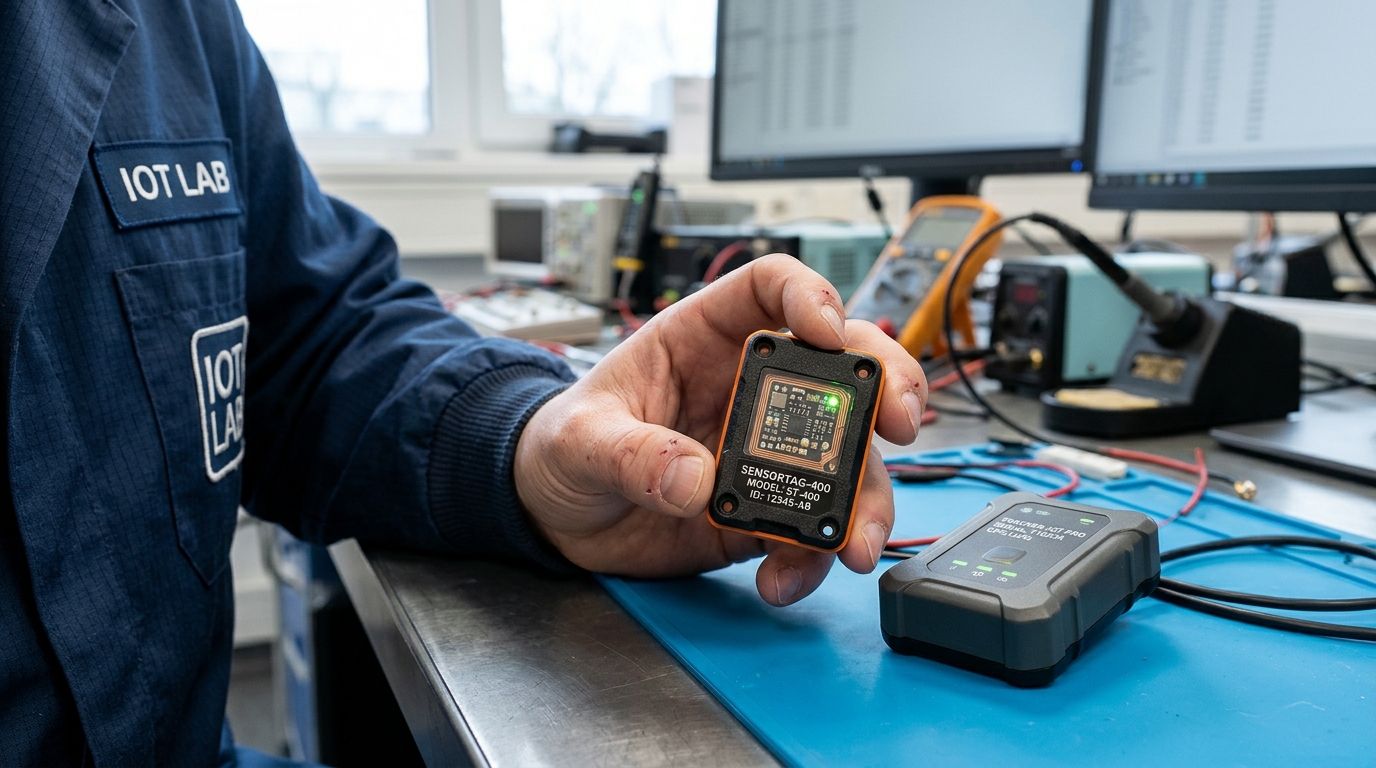
Active RFID, in the traditional sense, refers to battery-powered tags communicating over a dedicated RFID air interface. The most documented example: Savi’s ST-654 operates at 433.92 MHz under ISO 18000-7, with a specified outdoor range of 400 feet (roughly 122 m) and about five years of battery life at two reads per day. These tags talk to purpose-built RFID readers. Nothing else.
BLE (Bluetooth Low Energy) is a Bluetooth radio protocol running at 2.4 GHz. A BLE tag advertises its ID (and sometimes sensor data) to any Bluetooth-capable receiver: gateways, phones, tablets. The ecosystem is broad, the hardware options are multiplying, and the location methods have evolved from crude signal-strength guessing to direction finding and phase-based ranging.
The EUIPO defines active RFID tags as battery-powered units with their own transmitter, receiver, antenna, and circuit. By that definition, a BLE beacon technically qualifies. But protocol-level, they are different animals. When a vendor says “active RFID,” pin them down: what frequency, what standard, what reader?
If your RFP does not specify the radio protocol, you will get proposals that look comparable on paper but require completely different infrastructure on the ground.
What Actually Separates Them
Forget the marketing decks for a moment. Here is what matters when you are planning a deployment.
| Dimension | Traditional Active RFID (433 MHz) | BLE Tracking |
|---|---|---|
| Radio frequency | Typically 433 MHz (ISO 18000-7) | 2.4 GHz (Bluetooth LE) |
| Reader/receiver ecosystem | Proprietary RFID readers; limited vendors | BLE gateways, smartphones, tablets, laptops |
| Typical outdoor range | Up to 122 m (Savi spec, unobstructed) | Up to 100 m (product dependent) |
| Location method | Last-seen reader, zone, or active RTLS | RSSI (coarse), AoA/AoD (direction), Channel Sounding (fine ranging) |
| Tag size | Generally larger (dedicated radio + battery) | Shrinking fast; sub-1mm labels now entering market |
| Battery life | ~5 years at low duty cycle (Savi example) | Varies widely by product and beacon interval |
| Interoperability | Locked to vendor reader infrastructure | Any Bluetooth 4.0+ device can detect the tag |
| Interference profile | 433 MHz band; less congested in most facilities | 2.4 GHz; shares spectrum with Wi-Fi, microwaves, other Bluetooth |
Two things jump out of this table. First, range numbers look similar, but they come from different vendors under different conditions. Never compare two spec sheets as if they were run side by side. Second, the receiver ecosystem is the real differentiator. Active RFID locks you into a specific reader vendor. BLE gives you options, including the phones already in your team’s pockets.
When Active RFID Still Wins
Active RFID is not dead. It earned its place in specific environments, and replacing it with BLE just because BLE is newer is a recipe for regret.
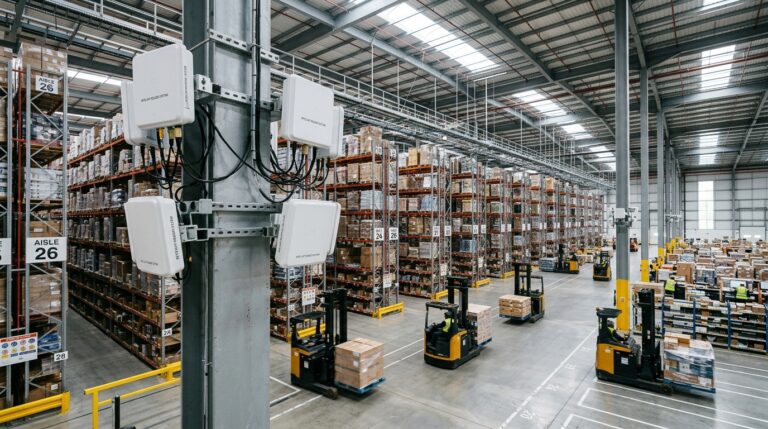
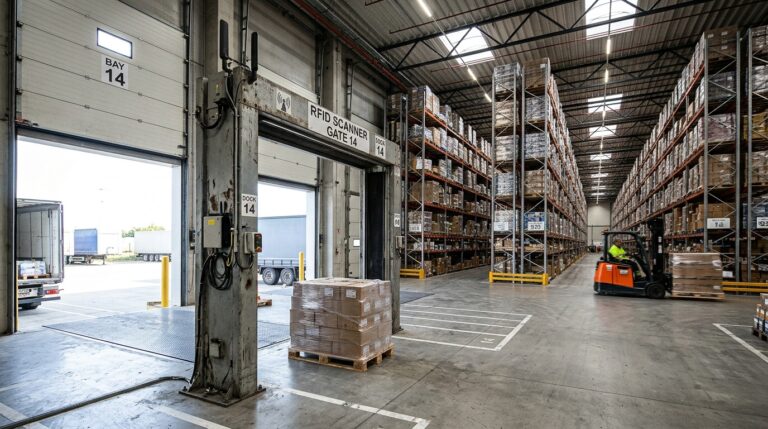
Long-range, low-density monitoring. If you need to detect a container or high-value asset entering a yard from 100+ meters away, and you only need to know “it passed this reader,” active RFID at 433 MHz does this reliably. The lower frequency penetrates obstacles better than 2.4 GHz, and the reader infrastructure is simple: a few fixed readers covering large zones.
Established defense and supply chain systems. Savi’s ISO 18000-7 infrastructure is embedded in military and government logistics. Ripping it out to install BLE gateways introduces migration risk with questionable payoff if the existing system meets the requirement.
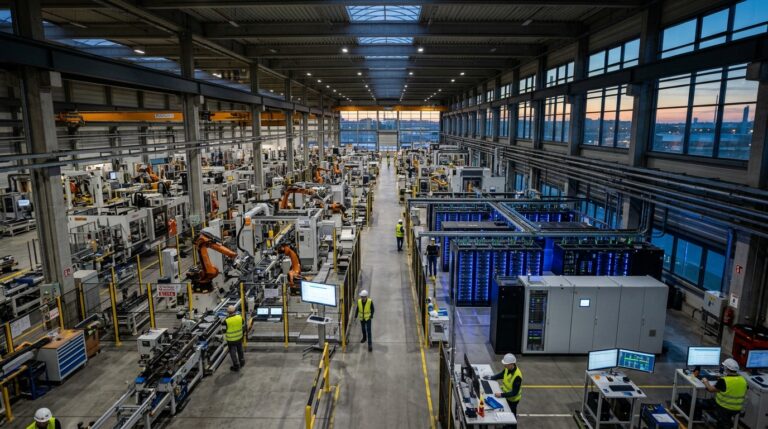
Harsh RF environments. In facilities saturated with Wi-Fi access points, microwaves, and dozens of Bluetooth peripherals, a 2.4 GHz BLE tag competes for airtime. A 433 MHz active RFID tag operates in a quieter band. I have seen BLE deployments in dense manufacturing plants lose 15 to 20% of expected reads because of Wi-Fi congestion. Nobody talks about this in the sales cycle.
The honest assessment: if your operation already runs on active RFID readers, your assets are high-value and low-count, and you need zone-level visibility without room-level precision, switching to BLE may cost more than it saves.
When BLE Is the Stronger Play
BLE’s advantage is not just technical. It is economic and operational.
Flexible receiver infrastructure. Instead of $1,000 to $5,000 per fixed RFID reader, BLE gateways are cheaper and phones can double as mobile readers. Riverside Healthcare deployed Kontakt.io BLE tags on 2,500 assets, and two facility staff handled the gateway installation without a third-party contractor. That kind of deployment speed matters when you need visibility this quarter, not next year.
Evolving precision. RSSI alone is unreliable. A NIST study on BLE encounter devices found that signal strength at about 1 meter registered around -55 dBm, which triggered false positives under a -60 dBm threshold meant for 2-meter proximity. That is a known limitation. But Bluetooth 5.1 direction finding (AoA/AoD) and the newer Channel Sounding protocol target centimeter-level accuracy using phase-based ranging and round-trip time. Early implementations report plus or minus 20 cm. The technology is catching up to the promise.
Ecosystem breadth. BLE connects to the broader IoT world. Your asset tracking platform can pull data from BLE tags, environmental sensors, and even battery-free Bluetooth devices (like Wiliot’s sensors on Royal Mail’s 900,000+ rolling cages). Active RFID lives in its own lane.
Form factor trajectory. Active BLE labels less than 1 mm thick, using non-lithium printed batteries and specified for up to 100 m range, entered the market in late 2026. That is a shift from bulky hard tags toward something you can apply like a sticker. The battery life is not yet published on these early thin-label products, which is a red flag worth watching, but the direction is clear.
The Accuracy Trap Nobody Warns You About
Here is where I see the most expensive mistakes. A vendor says “our BLE system provides room-level accuracy” or “our active RFID reads at 400 feet.” The buyer signs. Then reality hits.
Range is not accuracy. A tag heard at 100 meters gives you a presence event, not a coordinate. Knowing the asset is “somewhere within range of Reader 7” may be fine for yard management. It is useless for finding a specific pump on a specific shelf in a warehouse.
Princess Alexandra Hospital NHS Trust learned this the hard way. Their initial RTLS proof of concept (using active and passive tags with Wi-Fi infrastructure) delivered about 6-meter accuracy and sometimes identified the wrong room. That did not meet clinical requirements. After refining the system, they got it working and reported saving 30 minutes a day for clinical staff. But “it works after refinement” is a very different story from “it works out of the box.”
CenTrak’s deployment at Mission Hospital combined active RFID with infrared emitters to get room-level certainty. The result: equipment losses dropped from 13.8% to 0%, with $200,000 in annual savings. That is not the RFID tag doing the precision work alone. It is the system architecture, including the infrared overlay.
The lesson: do not buy a radio. Buy a location outcome. Then test it in your actual facility with your actual assets, mounted where they will actually be mounted, before you commit.
Total Cost of Ownership: The Real Comparison
Tag price is the number everyone fixates on. It is the least important number in the decision.
A complete TCO model for either technology includes:
- Tags. Unit price times quantity, plus a loss/damage replacement rate (plan for 5 to 15% annually in harsh environments).
- Readers or gateways. Active RFID readers run $1,000 to $5,000 each. BLE gateways are typically cheaper per unit, but you may need more of them to cover the same area at higher accuracy.
- Installation and site survey. Someone has to mount, power, and network every reader. In a 50,000 square-foot facility, this is weeks of work.
- Software platform and integration. The tags are useless without a platform that ingests location events and connects to your WMS, ERP, or maintenance system. License fees, API work, and customization add up.
- Battery replacement. This is the sleeper cost. Five-year battery life sounds great until you have 10,000 tags and need to replace 2,000 batteries a year on a rolling schedule. Who does that work? How do you track which tags need service? What happens to dead tags in the field?
- Training. Zone-based BLE systems require operators to interpret location data differently than portal-based RFID systems. The learning curve is real and rarely budgeted.
- Ongoing calibration. BLE RSSI systems need periodic recalibration as the physical environment changes (new shelving, new equipment, seasonal temperature shifts). Active RFID zone systems are more stable but less granular.
I have seen deployments where the BLE tags cost 60% less per unit than active RFID tags, but the total five-year cost was higher because the customer needed three times as many gateways and a full-time technician managing battery swaps. The reverse happens too: an active RFID system with expensive readers but rock-solid five-year tag life can be cheaper at scale.
Run the numbers for your facility, your asset count, your required accuracy. Not someone else’s.
Day 2 Operations: What Happens After the Pilot
Vendors love talking about Day 1. The clean install, the first dashboard screenshot, the “look, we can see everything” moment. Nobody sells you Day 2.
Day 2 is when a forklift crushes three tags. When a gateway loses network connectivity and nobody notices for a week. When the battery replacement schedule falls behind because maintenance has other priorities. When the BLE system starts reporting phantom locations after you rearranged the warehouse layout.
Three operational realities to plan for:
Battery logistics at scale. If you are running 5,000 BLE tags with a two-year average battery life, you are replacing roughly 200 tags per month. That is a supply chain within your supply chain. Active RFID tags with longer battery cycles reduce this burden, but the tags are bulkier and pricier to replace when they do fail.
2.4 GHz coexistence. BLE shares the 2.4 GHz band with your Wi-Fi network. In dense industrial environments (think metal shelving, heavy machinery, dozens of access points), interference is not theoretical. It shows up as missed reads, delayed location updates, and inconsistent zone assignments. A pre-deployment RF survey is not optional. It is table stakes.
Software overhead. BLE systems that beacon continuously generate far more data than active RFID systems that report at fixed intervals. Your backend needs to process, filter, and store that stream. If your IT team is already stretched, continuous BLE telemetry can become a bottleneck nobody anticipated.
None of these are reasons to avoid either technology. They are reasons to budget honestly and build an operations plan before you buy.
The Hybrid Approach: Not a Compromise, a Strategy
The best deployments I have seen do not pick one radio and force it onto every asset. They match the technology to the asset class.
High-value, long-cycle assets (containers, GSE, aircraft tooling): a rugged active tag with multi-year battery life and long-range detection. You need to know it crossed a geofence or entered a yard. Zone-level is enough.
Medium-value, high-volume assets (medical equipment, warehouse bins, reusable packaging): BLE tags with room or zone-level accuracy. The phone-compatible ecosystem makes ad-hoc searches easy. Replacement cost per tag is lower when units get damaged.
Low-value, very high-volume items (pallets, individual shipments, rolling cages): passive RFID at chokepoints, or emerging battery-free Bluetooth sensors. The economics of putting a $15 active tag on a $3 pallet do not work.
Platforms like Zebra’s MotionWorks already support passive RFID, BLE, and UWB under one software layer. The technology exists to run a heterogeneous tracking environment. The challenge is not radio compatibility. It is operational discipline: maintaining three tag types, three maintenance schedules, and one coherent data model.
This is where working with an integrator who understands the full stack pays off. Picking the right hardware is 30% of the problem. Making it produce actionable data inside your existing workflows is the other 70%.
A Decision Framework That Fits on One Page
After 15+ years of deploying tracking systems across aviation, logistics, and industrial operations, here is the framework I use.
Start with the location requirement. Do you need “in this facility,” “in this zone,” “in this room,” or “at these coordinates”? Each answer points to a different technology and reader density.
Count your assets and their value. High-value, low-count assets justify expensive tags and sparse readers. Low-value, high-count assets demand cheap tags (or no battery at all) and more infrastructure.
Audit your existing infrastructure. Already have 433 MHz readers? Active RFID expansion is incremental. Already have dense Wi-Fi and Bluetooth gateways? BLE tags can piggyback on what is there.
Model the five-year TCO. Tags, readers, installation, software, integration, batteries, labor, calibration, replacements. If a vendor cannot give you these numbers broken out, they are not ready for your business.
Run a pilot with acceptance criteria. Define missed-read rate, location error tolerance, update latency, and battery-life validation before you buy 10,000 tags. A pilot without measurable pass/fail criteria is a demo, not a test.
Plan for Day 2. Who replaces batteries? Who recalibrates after a layout change? Who monitors gateway health? If the answer is “we will figure it out,” you will not.
Where This Connects to What We Do
At Datanet, we deploy tracking solutions across aviation, logistics, and industrial operations. We work with hardware partners like Digital Matter and Thingfox because their devices cover the range of use cases our clients actually face: from DO-160 approved airfreight trackers to rugged cellular asset trackers built for years of unattended operation. For long-range cellular connectivity beyond local BLE or RFID networks, understanding NB-IoT vs LTE-M protocols becomes critical for wide-area asset tracking deployments.
We do not sell one radio and call it a solution. We design the system around the asset, the environment, and the workflow. If your container pool disappears after delivery, if your GSE sits idle because nobody knows where it is, if your MRO tooling takes hours to locate: those are the problems we solve.
If you are evaluating active RFID, BLE, or a combination, talk to our team. We will tell you what fits and, just as importantly, what does not.

Frequently Asked Questions
Is BLE considered a type of active RFID?
Some vendors classify any battery-powered beacon as “active RFID,” which technically includes BLE. But they use different protocols and frequencies (BLE at 2.4 GHz vs. traditional active RFID at 433 MHz). Always ask the vendor to specify the radio standard, frequency, and reader type. The label matters less than the architecture.
Which technology has longer range?
It depends on the product and environment. Savi’s 433 MHz active RFID tag specifies 122 m outdoors unobstructed. Some BLE tags spec up to 100 m. These are not comparable test results. In-building range drops significantly for both. Test in your facility, not on a spec sheet.
Can BLE deliver centimeter-level accuracy?
Not with basic signal strength (RSSI), which is coarse and easily distorted. Bluetooth 5.1 direction finding (AoA/AoD) and Channel Sounding improve precision significantly, with early Channel Sounding implementations reporting plus or minus 20 cm. These require compatible hardware, antenna arrays, and calibration. It is not automatic.
Which costs less to deploy?
Neither, universally. BLE tags are often cheaper per unit, but may require denser gateway coverage. Active RFID readers cost more per unit but cover larger zones. Total cost depends on asset count, facility size, required accuracy, battery replacement labor, and software integration. Model the full five-year TCO before comparing.
How long do batteries last in each type?
Battery life is product and duty-cycle specific. Savi rates its active RFID tag at roughly five years with two reads per day. BLE tag life varies from months to several years depending on beacon interval and transmit power. Always require battery-life estimates under your actual operating conditions.
Can I use both technologies in the same deployment?
Yes. Multi-radio platforms exist that support active RFID, BLE, passive RFID, and UWB under one software layer. The practical challenge is maintaining multiple tag types, battery schedules, and calibration routines. A hybrid approach works best when each radio is matched to a specific asset class with a clear operational plan.





 +1 508 292 2210

3 Responses