

If you manage pharmaceutical logistics by air, you already know the stakes. What might surprise you: the FDA estimates $35 billion in pharmaceutical product is lost annually to temperature excursions. Not theft, the concern that drives air cargo security monitoring. Not crashes. Silent thermal failures that leave no visual trace on the vial.
Pharmaceutical air cargo tracking is no longer about knowing where a pallet is. It is about proving, minute by minute, that your product remained within its validated temperature envelope from tarmac to tarmac, through every handoff, every ground stop, every customs hold. The distinction matters because regulators, insurers, and patients all treat “delivered” and “delivered intact” as different outcomes. This article covers how that gap closes: the technology, the compliance architecture, and the practical decisions that separate a tracked shipment from a controlled one. For a broader perspective on air cargo visibility across different freight categories, see our comprehensive guide.
The Numbers That Frame the Problem
Pharma occupies a strange position in air cargo. It accounts for only 4% of global air-cargo tonnage but 11% of revenue, commanding a 39% yield premium per kilo over general freight. Carriers love it, but that premium also makes pharma a prime candidate for high-value cargo monitoring. And the handling complexity that justifies the premium is also where failures concentrate.
The global air-freight pharmaceutical transportation market hit $38.1 billion in 2024 and is projected to reach $56.3 billion by 2030. Volume keeps growing: pharma air-cargo tonnage rose approximately 2% in 2024 even while the broader freight market softened. More shipments in the air means more opportunities for excursions.
And excursions are not rare edge cases. Industry estimates place annual losses from gaps in cold chain air freight monitoring between $20 and $35 billion, with up to 50% of vaccines discarded outside their approved storage range in some emerging-market distribution programs. A peer-reviewed study documented multi-million-dollar annual losses at a single research-intensive hospital from temperature breaches alone.
The financial exposure is one thing. The regulatory exposure is another. When an auditor asks for your shipment-level temperature evidence and you hand them a PDF from a datalogger that was read 48 hours after delivery, you do not have tracking. You have a post-mortem.
Shipment Tracking vs. Cold-Chain Control: The Core Distinction
Most freight forwarders will tell you your pharmaceutical shipment is “tracked.” What they mean: they know which flight it is on, and they can confirm delivery at the destination warehouse. That is shipment tracking. It ends at the dock door.
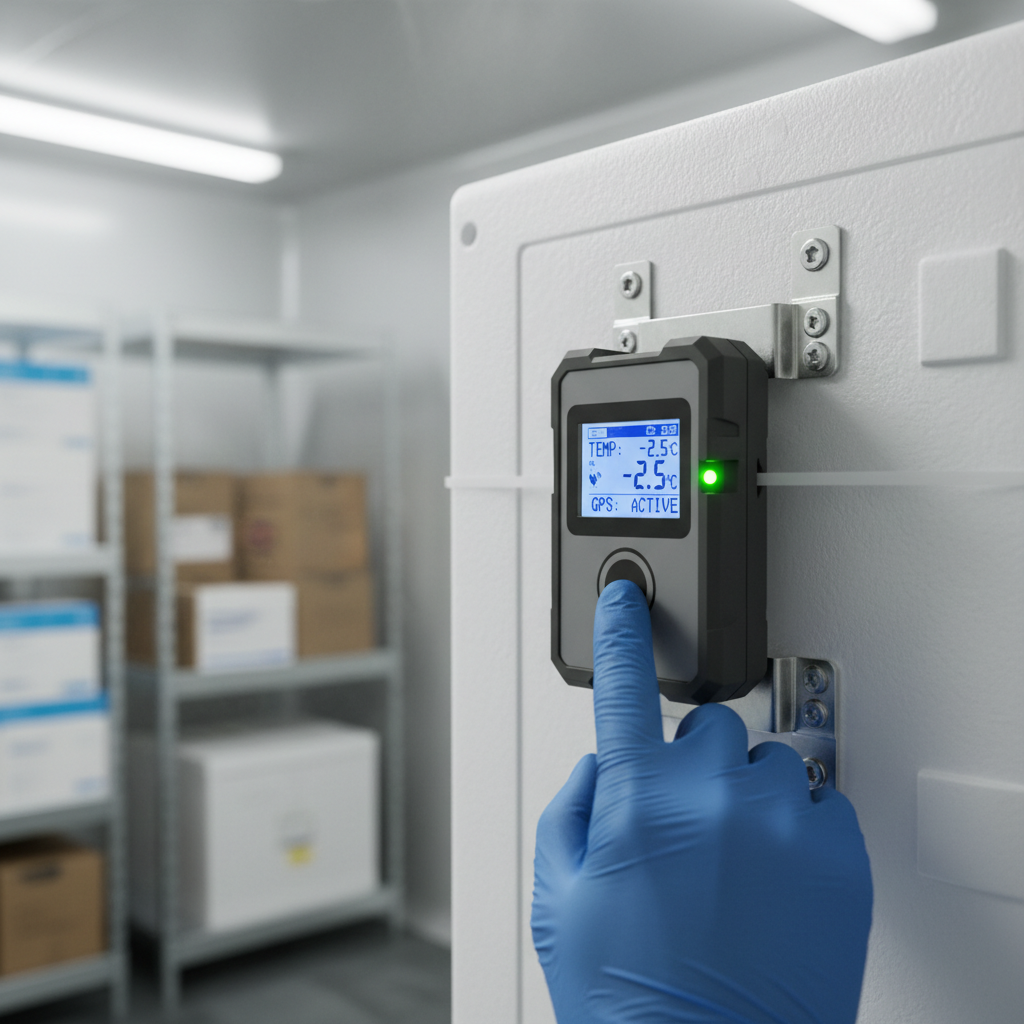
Pharmaceutical air cargo tracking, done properly, is continuous condition monitoring across every segment of the journey. Location is a component, not the whole picture. Temperature, humidity, light exposure, shock events: these are the parameters that determine whether your product arrives as medicine or as waste.
The practical difference shows up in three scenarios:
- Tarmac dwell. Your shipment lands, sits on a ramp in 38°C heat for 90 minutes while ground crew prioritizes general cargo. Shipment tracking says “arrived.” Cold-chain control flags the excursion in real time and triggers an intervention SOP.
- Customs hold. A pallet is pulled for inspection and sits in an un-cooled staging area for four hours. Shipment tracking registers a delay. Cold-chain control tells you exactly how long the product spent above threshold and whether the thermal budget is exhausted.
- Multi-leg transit. Origin to hub, hub to destination, with a truck transfer between terminals. Shipment tracking shows three scan events. Cold-chain control shows a continuous temperature curve with no gaps.
If your tracking system cannot tell you what happened between scan events, you do not have pharmaceutical-grade visibility. You have freight status updates with a pharma label on them.
Container Architecture: Active, Hybrid, and Passive
The container you choose determines how much tracking can actually protect. A tracker on a poorly insulated pallet just documents the failure more precisely.
Active containers
These are compressor-cooled units that regulate temperature independently of ambient conditions. Envirotainer’s RAP e2 holds up to five Euro pallets at 0 to +25°C for 60 hours, while the RKN e1 handles a single pallet at +2 to +8°C for 58 hours. CSafe’s RAP adds optional humidity control for aqueous biologics that degrade in dry cabin air. Active containers are the workhorses for commercial biologics on long-haul routes with multiple ramp exposures.
The trade-off: weight, cost, and ground-handling complexity. The compressor runs continuously, which means ground crews need to manage power connections during extended stops. Envirotainer alone protects approximately 2 million doses per day globally, which gives you a sense of the fleet scale required.
Hybrid containers
SkyCell’s 1500X uses vacuum-insulated panels with a proprietary phase-change matrix to hold temperatures between -90°C and -20°C without batteries or compressors. Their fleet exceeds 5,000 units and reports an independently assessed excursion rate below 0.05%. The design can recover from repeated tarmac openings, which is what kills passive systems on routes with customs inspections mid-transit.
Hybrid containers cannot actively correct an excursion once it begins. They delay it. For ultra-cold mRNA and cell-therapy products on transpacific lanes where ramp time can exceed six hours, that delay margin is what keeps the product viable.
Passive containers
Sonoco ThermoSafe’s ChillTech holds 2-8°C for up to 144 hours in payloads from 5 to 40 liters. Va-Q-tec’s va-Q-tainer covers -60 to -80°C with a global pool of approximately 2,000 units serviced through 35 stations worldwide. Passive systems are ideal for clinical-trial direct-to-patient shipments and short-haul routes where the thermal budget is never at risk.
The reality check: once a passive container is opened for inspection, its thermal budget resets to zero. If your route involves customs holds that require physical access, passive alone is a gamble.
Choosing the right container for the lane
| Factor | Active | Hybrid | Passive |
|---|---|---|---|
| Temperature band | 0 to +25°C or -20°C | -90 to -20°C | 2-8°C or -60 to -80°C |
| Autonomy | 58-60 hours | Varies by thermal load | Up to 144 hours |
| Recovery from opening | Yes (compressor restores) | Partial (PCM re-absorbs) | No (budget consumed) |
| Best for | Long-haul, multi-stop commercial | Ultra-cold transpacific/transatlantic | Short-haul, clinical trial, DTP |
| Ground-handling complexity | High (power, weight) | Medium (weight only) | Low |
Container choice is a lane-specific decision, not a company-wide policy. Validate against the specific transit duration, number of handoffs, ambient temperature range at ground stops, and whether customs inspection requires physical access.
The IoT Tracking Layer: From Datalogger to Audit Evidence
A container keeps the product cold. A tracker proves it stayed cold. In pharmaceutical air cargo, that proof is not optional. It is a regulatory requirement under FDA 21 CFR Part 11, EU GDP, and WHO Annex 5.
The market has moved from passive USB dataloggers (read after arrival) to real-time IoT devices that stream condition data minute by minute. This shift in cargo tracking technology is not just convenience. It is the difference between documenting a failure and preventing one.
What a compliant tracker must do
At minimum, a pharmaceutical air cargo tracker needs to:
- Record temperature at intervals validated for the product’s stability profile (typically every 1-5 minutes for biologics)
- Transmit location via GNSS with sufficient frequency to identify which segment of the journey produced an excursion
- Produce tamper-evident records that satisfy 21 CFR Part 11 (electronic signatures, audit trails, data integrity)
- Survive the aircraft environment without interfering with avionics (DO-160 compliance for devices that remain powered during flight)
- Generate a GxP-compliant shipment report that can be attached to the batch record
Leading IoT trackers now stream temperature, humidity, light, and shock data via 5G and produce tamper-evident PDFs aligned with 21 CFR Part 11. GxP-validated loggers and reusable sensors support clinical-trial shipments where Annex 11 compliance is non-negotiable, while specialized wireless monitoring kits target USP <1079> expertise for validated temperature mapping across storage and transit.
The differentiator has moved from data capture to data validation. Any $30 sensor can record a temperature. The question is whether your tracker produces evidence that survives an FDA inspection or an insurance claim.
DO-160 and the airfreight constraint
Here is a detail that procurement teams often miss: not every IoT tracker is approved for use in aircraft cargo holds during flight. DO-160 is the environmental testing standard for airborne equipment, covering vibration, altitude, temperature cycling, humidity, and electromagnetic interference. A tracker that is not DO-160 tested may be prohibited by the airline, confiscated at check-in, or (worse) silently powered down during the flight segment where you most need visibility.
If your shipments travel on passenger or cargo aircraft and you need continuous in-flight data, your tracker needs DO-160 compliance. This is not negotiable for airlines operating under IATA dangerous goods regulations, particularly when lithium batteries are involved.
CEIV Pharma: The Certification That Became a Procurement Gate
IATA’s Center of Excellence for Independent Validators (CEIV) Pharma certification covers GDP compliance, IATA Chapter 17, and aircraft-side handling protocols for pharmaceutical cargo. It is not a quality badge. It is a procurement gate.
Singapore Airlines leads the 2025 CEIV Pharma ranking, followed by Lufthansa, Air France-KLM, and Emirates SkyCargo. Brussels Airlines, Cathay Pacific, Korean Air Cargo, and Qatar Airways Cargo operate dedicated pharma lanes under the same framework. Brussels Airlines was the first Belgian carrier to receive CEIV Pharma certification, back in February 2018, and has since built Brussels Airport into a European pharma gateway.
Why does this matter for tracking? Because CEIV audits verify that temperature-controlled handling protocols are documented, trained, and executed at every handover point. A CEIV-certified carrier has defined tarmac windows, ramp-transfer timing, and crew procedures for temperature-critical shipments. Your tracker validates that those procedures were actually followed.
Non-certified carriers increasingly face disqualification in pharmaceutical RFPs even when their rates are competitive. If your procurement team is not scoring CEIV status as a weighted criterion, you are accepting handling risk that your tracker will dutifully record but cannot prevent.
The Real Bottleneck: Handoffs, Not Aircraft
Here is what fifteen years of watching IoT data in logistics has taught me: the aircraft leg is rarely where excursions happen. Cargo holds are pressurized and temperature-controlled. The danger zones are the transitions. Truck to warehouse. Warehouse to tarmac. Tarmac to aircraft. And all of it in reverse at destination.
This is why UPS Healthcare invested $48 million in 27 cross-dock facilities across the Americas, EMEA, and Asia-Pacific in June 2026. The investment targets the handoff layer, not the line-haul. More verified pharma capability at mode-transfer points means less dwell time in uncontrolled environments.
The same logic drives the trend toward formalized pharma corridors. In April 2026, Brussels Airlines and Dulles International signed a memorandum of understanding to create a dedicated pharma corridor with locked-in handover SOPs, tarmac windows, and customs pre-clearance. This follows Brussels Airport’s positioning as a European pharma gateway, including its earlier corridor to Chicago Rockford.
For tracking to work, it must span these transitions without gaps. A tracker that reports position every 15 minutes might miss a 12-minute excursion during a ramp transfer. A tracker that only activates after the aircraft door closes provides zero visibility during the most vulnerable segment. The system design matters more than the hardware spec sheet.
What COVID Vaccine Distribution Revealed
Pfizer-BioNTech’s COVID-19 vaccine distribution was the largest pharmaceutical cold-chain operation in history, and it rewrote the rules for everyone else. Pfizer operated from two U.S. hubs (Kalamazoo, Michigan and Pleasant Prairie, Wisconsin) using GPS-enabled thermal shippers with dry-ice replenishment at ground stations and a purpose-built control tower monitoring every shipment at -70°C.
What it proved: success depends on integrating container, tracking, and airline handling into a single orchestrated system. No single component (not the tracker, not the container, not the carrier’s certification) was sufficient alone. The template that emerged is now the de facto standard for mRNA, cell-therapy, and gene-therapy distribution.
It also proved that ultra-cold creates new constraints. At -70°C, dry-ice sublimation is continuous. Re-icing cycles must be timed precisely at every ground stop. The tracking system does not just monitor temperature; it triggers re-icing logistics. Without that integration, you are relying on manual coordination that breaks at scale.
SkyCell and Korean Air formalized a partnership deploying 1,500 hybrid containers across Korean Air’s pharma-network stations specifically to address excursion risk on transpacific lanes. The lesson: even world-class carriers with CEIV certification benefit from container technology purpose-built for ultra-cold, low-humidity conditions rather than generic refrigeration.
Compliance Architecture: GDP, 21 CFR Part 11, and WHO PQS
Pharmaceutical air cargo tracking exists within a regulatory framework that is tightening, not loosening.
The European Medicines Agency’s Good Distribution Practice (GDP) guidelines require validated temperature mapping, qualified equipment, and documented risk management for all human-medicine distribution. The U.S. equivalent under FDA Title 21 CFR, along with WHO Annex 5, establishes parallel expectations with slightly different enforcement mechanisms.
For tracking data specifically, 21 CFR Part 11 governs electronic records. This means:
- Data must have audit trails showing who accessed or modified it
- Electronic signatures must be linked to individual users
- Records must be tamper-evident (cryptographic hashing or equivalent)
- System validation must demonstrate that the tracker and its software produce reliable, reproducible results
An IoT vendor that cannot demonstrate Part 11 alignment should not be in your pharmaceutical shipment. Period. The data they produce is not admissible as batch-record evidence, which means the shipment is effectively untracked from a regulatory standpoint regardless of how many temperature readings they captured.
This is where vendor selection matters enormously. A tracker built for general freight or food logistics may capture identical data points but lack the validation documentation, audit-trail architecture, and tamper-evidence features that make the data legally meaningful in a pharmaceutical context.
Sustainability Is Entering the RFP
Container choice used to be a pure performance decision. Increasingly, it is also an emissions decision.
Envirotainer reports 1.7 kg CO2eq per dose delivered at scope 3, accounting for dry-ice off-gassing, electricity, and ground handling. SkyCell claims up to 54% avoided emissions versus passive alternatives and holds EcoVadis Platinum Top 1% recognition as of March 2025.
This matters because pharmaceutical manufacturers face Scope 3 disclosure obligations under CSRD (EU) and evolving SEC climate-disclosure rules (US). Transportation is a material Scope 3 category. Container weight, dry-ice consumption, and ground-handling energy are all line items that roll up into the manufacturer’s sustainability report.
Procurement teams should request container-level CO2eq disclosures when comparing solutions. The weight difference alone between an active compressor unit and a vacuum-insulated hybrid can shift per-shipment emissions significantly. If you are not asking for this data, you are likely reporting incomplete Scope 3 numbers.
Where AI Fits (and Where It Does Not)
The industry conversation around AI in pharmaceutical tracking is moving from pilot programs to production. Predictive algorithms applied to real-time sensor streams can anticipate excursions before they happen, scoring the probability of a temperature breach given route, time of day, weather, and ground-station historical data.
This shifts the value proposition. The question is no longer “is there a tracking device in the box?” but “does your integrator expose a risk score for in-flight shipments that triggers intervention before the excursion occurs?”
But let me be direct about what AI cannot do here. It cannot cool a pallet sitting on a hot tarmac. It cannot speed up a customs inspection. It cannot override a ground crew that prioritizes general cargo. AI is predictive, not corrective. Its value is in triggering human intervention earlier, not in replacing the physical infrastructure that prevents excursions.
The practical application: if your tracking platform feeds a control tower with AI-scored risk alerts, and that control tower has pre-negotiated intervention SOPs with ground handlers at key airports, then AI adds real value. If it just sends you a prettier notification after the damage is done, it is analytics theater.
Building a Tracking Strategy That Works
After working with airlines, freight forwarders, and ground-support operators across this ecosystem, here is what I see separating organizations that track pharma effectively from those that just buy trackers:
1. Match the tracker to the regulatory requirement, not the budget. A $15 single-use logger that cannot produce 21 CFR Part 11 evidence is not cheaper than a $45 GxP-validated device. It is more expensive, because the shipment it “monitors” is legally untracked.
2. Verify DO-160 compliance before deployment. Airlines are inconsistent about enforcement, which means a non-compliant tracker might work on nine flights and get confiscated on the tenth. That tenth shipment arrives with zero in-transit data.
3. Design for the handoff, not the cruise. Your tracking intervals, alert thresholds, and intervention SOPs should be calibrated for the 15-90 minute ground segments, not the 8-hour flight. The aircraft hold is the safest part of the journey.
4. Demand data continuity across carriers. If your shipment transfers from one airline to another (or from air to ground), your tracking record cannot have a gap at the handover. The same principle applies to any effort to track cargo worldwide across air, ocean, and road segments. Interoperability of tracker data across different carrier portals is a solvable problem, but only if you specify it upfront.
5. Treat the tracker as an asset, not a consumable. Single-use devices make sense for clinical trials with strict chain-of-custody requirements. For commercial distribution at scale, a reusable tracker with validated calibration cycles reduces per-shipment cost and waste. The key is managing the return logistics, and this is where asset tracking discipline (knowing where every device is across its lifecycle, not just during the shipment) becomes the operational backbone.
Perguntas frequentes
What is pharmaceutical air cargo tracking?
It is the combination of IoT sensors, validated software, and certified handling processes that continuously verify a drug shipment’s temperature, humidity, location, and condition across an air-freight route. It produces tamper-evident records compliant with FDA 21 CFR Part 11, EU GDP, and WHO Annex 5, replacing after-the-fact datalogger readings with real-time visibility and intervention capability.
How much do cold-chain failures cost the pharmaceutical industry?
The FDA estimates approximately $35 billion in annual global losses from temperature-related pharmaceutical spoilage. Broader industry estimates range from $20 to $35 billion depending on whether investigational products and clinical-trial losses are included. Up to 50% of vaccines may be discarded outside approved storage ranges in some emerging-market programs.
What is CEIV Pharma certification and why does it matter for tracking?
CEIV Pharma is IATA’s certification for pharmaceutical handling at airlines and ground handlers, covering GDP compliance, Chapter 17 protocols, and tarmac procedures. It verifies that the carrier has documented handling SOPs your tracker can validate against. Non-certified carriers face disqualification in pharmaceutical RFPs regardless of rate competitiveness.
What is the difference between active, hybrid, and passive containers?
Active containers use onboard compressors to regulate temperature (0 to +25°C, 58-60 hours autonomy). Hybrid containers use vacuum-insulated panels with phase-change materials for ultra-cold ranges (-90 to -20°C) without batteries. Passive containers rely solely on PCM thermal mass for shorter durations (up to 144 hours at 2-8°C). Container choice depends on lane duration, temperature band, and whether customs inspection requires opening.
Do tracking devices need aviation certification?
Devices that remain powered during flight should meet DO-160 environmental testing standards covering vibration, altitude, temperature, and electromagnetic interference. Airlines can prohibit or confiscate non-compliant trackers, creating data gaps on the segment where your shipment transitions between ground environments. Always verify DO-160 status before deployment on air-freight lanes.
How is AI being used in pharmaceutical air cargo tracking?
AI applies predictive algorithms to real-time sensor data, scoring excursion probability based on route, weather, ground-station history, and time of day. Its value is in triggering human intervention before a breach occurs, not in replacing physical cold-chain infrastructure. Effective deployment requires pre-negotiated intervention SOPs at airports along the route.
Closing the Visibility Gap
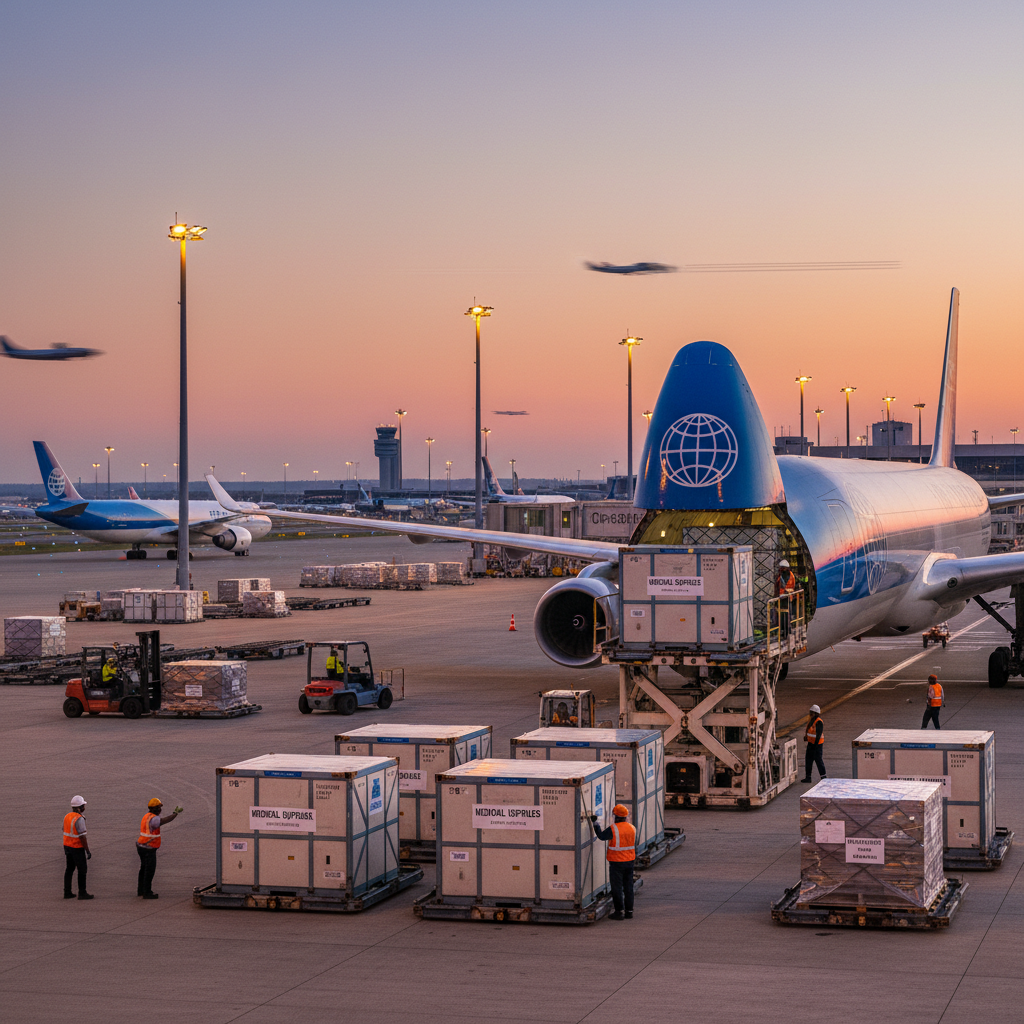
Pharmaceutical air cargo tracking is not a hardware purchase. It is a system design problem that spans containers, sensors, airline certifications, regulatory validation, and intervention protocols. The $35 billion annual loss figure persists not because trackers do not exist, but because too many organizations treat tracking as a check-box (device in the box) rather than a control system (device integrated with the container choice, the carrier’s SOPs, and the regulatory evidence chain).
If your current setup gives you a temperature log after delivery but no ability to intervene during transit, that is the gap. If your trackers work on some airlines but get blocked on others due to DO-160 non-compliance, that is the gap. If your data satisfies your logistics team but would not survive an FDA audit, that is the gap.
We build tracking systems for air cargo that close these gaps: DO-160 approved devices, integration with your existing carrier network, and asset lifecycle management that keeps your tracker fleet visible and functional across every shipment cycle. If your pharmaceutical air cargo tracking feels incomplete, talk to our team.



 +1 508 292 2210

2 Responses