

Most air cargo tracking devices can tell you where a shipment is on the ground. The hard part is what happens between takeoff and landing. 35,000 feet, inside a pressurized metal tube, under strict electromagnetic emission rules. That gap is where shipments go dark. And it’s exactly the gap the Griffin Air was built to close. (See also: global shipment monitoring with griffin air.) (See also: how griffin air supports logistics operations.)
If you’ve been researching griffin air real-time cargo tracking, you’ve probably hit a wall of confusion. Griffin Air is not an airline. It’s not a freight forwarder. It’s a battery-powered GPS/IoT tracker manufactured by Digital Matter, engineered specifically for cargo that moves by air. It’s one of the few tracking devices that major airlines have actually approved for transport in their cargo holds.
At Datanet IoT, we deploy Digital Matter hardware across aviation, logistics, and maritime operations. I’ve seen firsthand how the right device in the right use case eliminates weeks of manual follow-up and cargo tracing calls. Here’s what you need to know about the Griffin Air: what it does well, where it fits, and where it doesn’t.
What Is the Griffin Air?
The Griffin Air is a rugged, long-life asset tracker built by Digital Matter, a company with over 2.5 million IoT devices deployed in 130+ countries. It’s not a consumer GPS repurposed for logistics. It was designed from the ground up for shipments that move by air, with hardware-level features that address aviation-specific regulatory and operational constraints.
It runs on three AA LiFeS2 batteries (user-replaceable in the field) with over two years of deploy-once life. Connectivity comes through 4G Cat 1bis with 2G fallback, plus a Bluetooth 5.2 gateway for relaying data from nearby BLE sensors. The IP67-rated housing handles dust, rain, and temporary submersion. Onboard sensors include multi-constellation GNSS, a barometric pressure sensor, and an accelerometer that captures impact, tip, and rotation events.
The feature that separates it from most competitors is airline-certified automatic flight detection. When the device senses it’s aboard an aircraft in flight, it shuts down its cellular modem automatically. No manual switch. No app toggle. It keeps logging GNSS position and sensor data internally, then resumes cellular transmission and uploads everything once the aircraft lands.
This isn’t optional or cosmetic. It’s the reason United Cargo lists the Griffin Air on its approved GPS tracking device list, alongside devices from Arviem, Sensolus, and Roamly. Southwest Cargo has approved it as well.
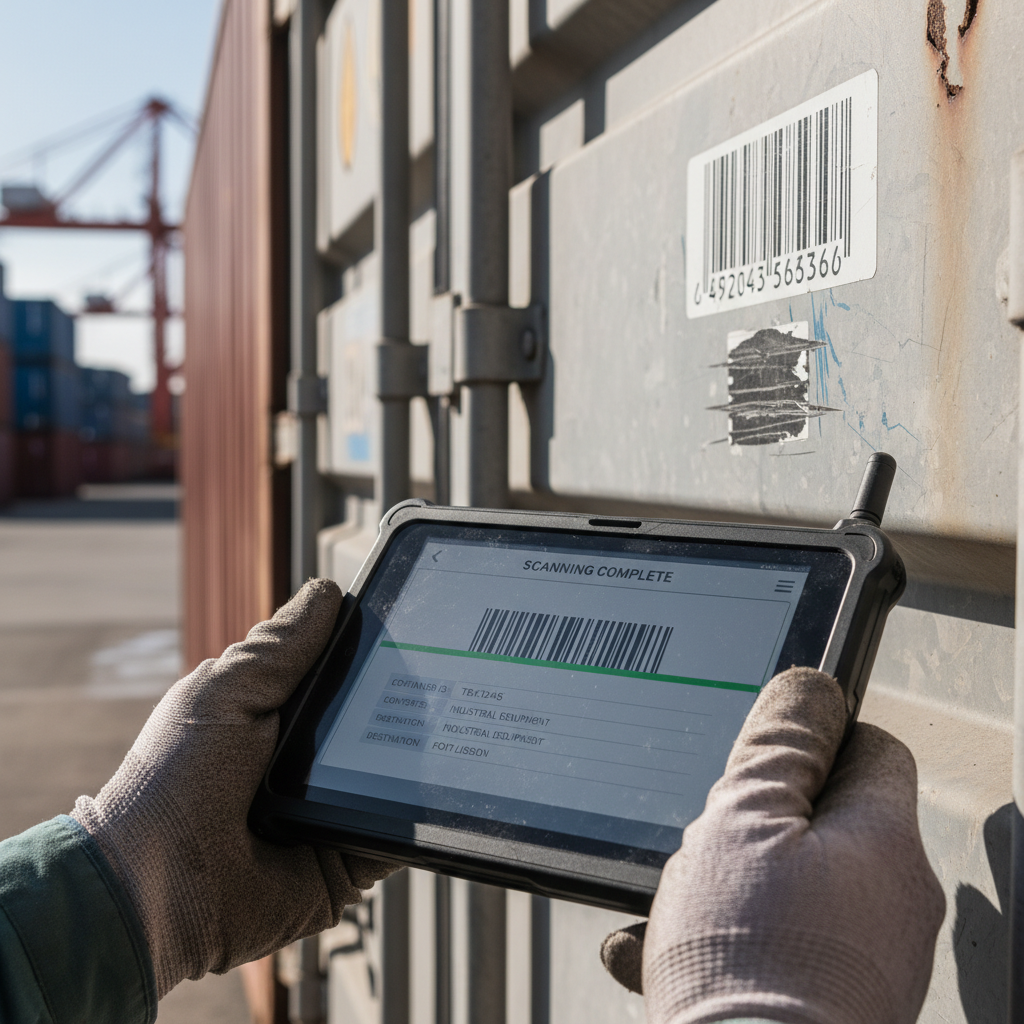
How Real-Time Tracking Works at 35,000 Feet
The phrase “real-time tracking” in air cargo needs a qualifier. No tracking device transmits continuously through an aircraft fuselage mid-flight. Physics and aviation regulations both prevent it. What “real-time” means in this context is continuous data logging with near-real-time uploads whenever cellular connectivity is available.
The Griffin Air handles this through a three-tier location system:
- Multi-constellation GNSS for primary outdoor positioning. During movement, the device captures GPS fixes every two minutes and uploads them in batches every 30 minutes.
- Wi-Fi MAC address scanning for indoor and urban environments where satellite signal is weak. Cloud-based location solving processes the scan data server-side, saving significant battery.
- Cell tower triangulation as a fallback when neither GNSS nor Wi-Fi delivers a usable fix.
When stationary, the device sends a heartbeat with position every 12 hours. A trip ends after five minutes of accelerometer inactivity, triggering a data upload.
In practice, this means you get a location trail from origin to airport, a data gap during the airborne segment (with internally logged positions and sensor readings), then a burst upload after landing with all in-flight data reconstructed. The net result: a continuous position trail across the entire journey, with the airborne segment filled in retroactively rather than streamed live.
The Bluetooth 5.2 gateway adds another dimension. The Griffin Air can detect and report on nearby BLE tags and sensors without those tags needing their own cellular connection. Attach a BLE temperature sensor to a cold-chain shipment, place a Griffin Air in the same ULD, and the Griffin relays that temperature data alongside its own position stream. One device, multiple data streams, one cellular bill.
Airline Approvals and the IATA Certification Landscape
Here’s a reality that surprises people new to air cargo tracking: there is no single global certification that lets you put a GPS tracker on any airline’s cargo. Each airline runs its own approval process. Your device must pass that carrier’s specific EMC (electromagnetic compatibility) and battery safety review before it’s allowed in their cargo compartment. The device manufacturer and model must be declared on the air waybill.
The Griffin Air has cleared this hurdle with United Cargo and Southwest Cargo. Korean Air also maintains an approved cargo GPS tracker list that includes Digital Matter devices. Each approval required independent testing and documentation.
This airline-by-airline process is slow, expensive, and frustrating for shippers who move cargo across multiple carriers. IATA launched its Air Cargo Device Assessment Program in December 2024 to address exactly this problem. The program validates tracking devices against Recommended Practice 1693, covering electromagnetic compatibility and battery safety. Validated device data is accessible through IATA’s ONE Source platform, giving airlines a centralized repository of pre-tested devices.
The first product validated under the program was LivingPackets’ THE BOX. More devices will follow through 2025 and 2026. For a device like the Griffin Air, which already holds multiple airline approvals, IATA validation would significantly reduce friction when onboarding with new carriers.
EASA’s regulatory guidance layers on additional requirements: all cargo tracking devices must comply with ICAO Technical Instructions for the Safe Transport of Dangerous Goods and must be declared on the air waybill. Devices with lithium batteries face additional dangerous goods labeling under UN3481.
IATA’s 2026 Air Cargo Technology Trends report rated connected devices and real-time visibility platforms as “Very High impact” with mainstream adoption expected within five years. The regulatory infrastructure is catching up with the technology. Devices that already have airline approvals and align with RP 1693 are better positioned than those still navigating the process for the first time.
Griffin Air vs. Other Air Cargo Trackers
The competitive landscape in air cargo tracking splits along three axes: reusable vs. disposable, hardware-managed vs. service-managed, and lithium vs. non-lithium battery chemistry. No single device wins on all three. The tradeoffs are real.
| Device | Battery Life | Airline Compliance Approach | Model |
|---|---|---|---|
| Griffin Air (Digital Matter) | 2+ years (AA LiFeS2) | Certified flight detection hardware | Reusable, deploy-once |
| Tive Solo 5G Non-Lithium | 30-90 days (NiMH) | Non-lithium chemistry avoids UN3481 | Disposable/single-use |
| Arviem (Roof 52, AT Lite, AT Pro) | Varies | Per-airline approval (5 United-approved models) | Full-service monitoring |
| Trackonomy SmartTape | Integrated | Air cargo capable | Consumable (embedded in packing tape) |
The tension between Griffin Air and Tive illustrates the central engineering tradeoff in this market. Tive’s Non-Lithium Solo 5G uses NiMH batteries, avoiding dangerous goods classification entirely. No UN3481 label. No special handling documentation. It achieves airline compliance by removing the hazardous material from the equation. The Griffin Air achieves it through hardware behavior: intelligent flight detection that disables the cellular modem during flight.
Each approach has costs. Tive’s NiMH battery lasts 30 to 90 days. The Griffin Air’s LiFeS2 batteries last over two years. If you’re tracking a single high-value shipment on a one-way trip, Tive’s disposable model can work. If you’re tracking a returnable asset pool (ULDs, reusable containers, MRO equipment) that cycles continuously, the Griffin Air’s deploy-once economics pull ahead fast. Replacing a 30-day battery every month across a pool of 500 containers is a logistical operation in itself.
Arviem occupies a fundamentally different niche. They sell monitoring as a managed service: you subscribe, they handle the hardware, data, and alerts. For teams that don’t want to manage a device fleet internally, Arviem removes that burden. The tradeoff is per-shipment cost, vendor dependency, and less flexibility when you need granular control over tracking parameters.
Trackonomy represents the longer-term wildcard. Embedding tracking sensors into packaging tape eliminates the separate device entirely. IATA’s 2026 report rated smart labels as “Very High impact.” But today, smart labels lack the sensor depth the Griffin Air provides (barometric pressure, impact detection, BLE gateway), and the cost-per-shipment economics for high-volume reusable asset pools remain unfavorable. The likely outcome is market segmentation: smart labels for standard parcels; standalone devices like the Griffin Air for high-value, condition-sensitive, and returnable cargo.
Battery Chemistry and Lithium Regulations: The Hidden Variable
Battery chemistry might sound like a spec-sheet detail. In air cargo, it’s a compliance variable that can block your tracking program before it starts.
IATA’s guidance on battery-powered cargo tracking devices notes that most trackers use lithium cells classified as dangerous goods. Devices containing lithium-ion batteries require UN38.3 certification and UN3481 labeling for air transport. That means special handling, extra documentation, and in some cases, restrictions on which aircraft types can carry them.
The Griffin Air sidesteps most of this complexity by using LiFeS2 (lithium iron disulfide) AA cells instead of lithium-ion packs. LiFeS2 batteries are primary (non-rechargeable) and face fewer regulatory restrictions than their rechargeable counterparts. They’re also user-replaceable in the field, which means you don’t ship the device back to a depot for battery service.
International regulators are actively tightening rules for cargo tracking devices, driven by growing concerns about lithium battery fire risk in aircraft holds. The FAA, IATA, and ICAO have progressively increased requirements since 2016. This regulatory trajectory favors devices that either avoid lithium-ion chemistry entirely (like Tive’s NiMH approach) or use less restricted lithium chemistries (like the Griffin Air’s LiFeS2).
The question for teams evaluating trackers today isn’t just “which device has the best GPS accuracy.” It’s “which device will still be compliant in 2027 when the next round of regulations takes effect.”
Where the Griffin Air Fits in a Visibility Stack
A tracking device on its own produces location data. Valuable, but incomplete. The Griffin Air becomes operationally powerful when its data feeds into a real-time transportation visibility platform (RTTVP) that combines device telemetry with carrier milestones, predicted ETAs, and exception alerting.
The RTTVP market was valued at $9.2 billion in 2025 and is projected to reach $28.6 billion by 2034 at a 13.4% CAGR. That spending reflects a fundamental shift in how logistics teams operate: from reactive cargo tracing (“where’s my shipment?”) to predictive exception management (“what’s about to go wrong, and what do I do about it?”).
IATA’s technology trends report confirms this. Connected devices, real-time visibility, and AI all received “Very High impact” ratings. API technology scored the highest of any technology in the assessment, with mainstream adoption already underway. The practical implication: the value of raw tracking data from the Griffin Air multiplies when it’s accessible through APIs that your ERP, TMS, or customer portal can consume natively.
The Bluetooth 5.2 gateway capability deserves emphasis here. Instead of deploying a separate cellular tracker for every sensor in a shipment, you can pair BLE temperature sensors, humidity sensors, or lightweight asset tags with a single Griffin Air acting as the cellular uplink. This consolidation reduces hardware cost per ULD and simplifies connectivity management at scale.
For operations already running platforms like FourKites, project44, or Overhaul, the Griffin Air serves as a hardware data source that plugs into the existing stack. For operations starting from scratch, the device data feeds into Digital Matter’s Device Manager interface for configuration, geofencing, and alert rules.
Use Cases Where the Griffin Air Delivers
Pharmaceutical cold chain
Drug shipments that move by air require continuous location and condition monitoring under strict regulatory oversight. The Griffin Air’s BLE gateway lets it relay temperature data from external sensors without requiring a separate cellular device per data stream. Its LiFeS2 battery chemistry faces fewer air transport restrictions than lithium-ion alternatives, reducing compliance overhead on pharma shipments where documentation burden is already heavy.
High-value and fragile goods
Electronics, aerospace components, and precision equipment suffer from handling abuse during ground transfers between flights. The Griffin Air’s impact, tip, and rotation sensors capture these events with timestamps. Geofencing alerts trigger if cargo deviates from approved routes. This data serves double duty: real-time exception management during transit and post-incident evidence for insurance and liability claims. Learn more about tracking high-value aviation assets in complex operational environments.
Returnable asset pools
ULDs, reusable containers, and MRO equipment cycle continuously between facilities. These assets need tracking not just during a single shipment but across their entire lifecycle: dwell time at outstations, return legs, maintenance windows, pool rebalancing. The Griffin Air’s two-year battery life eliminates the operational nightmare of frequent recharging or device swaps across a distributed fleet. This is the core difference between shipment tracking (the job ends at delivery) and asset tracking that follows the full cycle.
Freight forwarder compliance
Forwarders handling high-value or perishable accounts increasingly face contractual requirements for real-time visibility from their end customers. The Griffin Air provides the hardware layer for that compliance without requiring the forwarder to build proprietary tracking infrastructure. The device integrates into existing visibility platforms, and the data becomes part of the service offering the forwarder sells to its own clients.
If your cargo goes dark somewhere between the warehouse and the customer, that’s a visibility gap with operational dollars attached to it. Whether the Griffin Air is the right device for your operation depends on your carrier mix, shipment frequency, and whether you’re tracking one-way shipments or cycling reusable assets. We configure and deploy tracking solutions across all three scenarios. Talk to our team if you want to map the right hardware to your specific operation.

Frequently Asked Questions
Is the Griffin Air a GPS tracker or a full visibility platform?
It’s a GPS/IoT hardware device, not a software platform. It captures location, motion, and environmental data, then transmits it via cellular to cloud-based systems for visualization and alerting. It integrates with visibility platforms like FourKites and project44, or can be managed through Digital Matter’s Device Manager interface.
Which airlines have approved the Griffin Air for cargo?
United Cargo and Southwest Cargo both list the Griffin Air on their approved GPS tracking device lists. Korean Air also maintains an approved list that includes Digital Matter devices. Each airline’s approval is independent, so always verify with your specific carrier before deployment.
Does the Griffin Air track cargo during flight?
It logs GNSS position and sensor data internally throughout the flight, but it does not transmit that data until the aircraft lands. Its automatic flight detection disables the cellular modem in-flight to prevent interference with avionics. After landing, all stored data uploads and the full flight path is reconstructed.
What battery does the Griffin Air use?
Three AA LiFeS2 (lithium iron disulfide) cells, which are user-replaceable and provide over two years of operation. LiFeS2 batteries face fewer dangerous goods restrictions for air transport than lithium-ion packs, reducing UN3481 labeling and documentation requirements.
Can the Griffin Air monitor temperature?
Not with an onboard sensor. It includes barometric pressure and impact/tip/rotation detection, but not a temperature probe. Its Bluetooth 5.2 gateway can relay data from external BLE temperature and humidity sensors, extending condition monitoring without requiring a separate cellular device per sensor.
How does the Griffin Air compare to disposable trackers?
Disposable trackers like the Tive Solo 5G offer 30 to 90 days of battery life and are designed for single shipments. The Griffin Air is reusable with two-year battery life, designed for repeated deployment across multiple shipment cycles. For one-way, high-frequency shipments, disposable makes sense. For returnable asset pools and long-cycle operations, the Griffin Air’s economics win.








 +1 508 292 2210

9 Responses