

A wrench left inside a nacelle doesn’t just fail an audit. It grounds a plane, delays a flight, and becomes a Foreign Object Debris (FOD) incident that keeps your safety manager up at night. Every MRO knows this. And yet, most hangars still run daily tool counts with clipboards, shadow boards, and a healthy dose of hope. (See also: digital transformation in aircraft maintenance 2026.) (See also: griffin air real-time cargo tracking.) (See also: griffin air certified tracking technology.) (See also: griffin air airfreight visibility tools.)
An aircraft tooling tracking system replaces that hope with data: which tool, who checked it out, when it left the crib, when it came back, and whether its calibration is still valid. The operators who have deployed these systems aren’t debating the concept anymore. HAECO cut inventory checks from 20 minutes to under 3 minutes across 3,200 tools in a single pilot. That’s 17 minutes back per mechanic, per shift. Multiply that across a 200-person hangar and the math stops being theoretical pretty fast.
If you’re a maintenance director evaluating your options, a quality inspector preparing for your next EASA or FAA audit, or the finance lead who keeps approving replacement purchases for “lost” torque wrenches, this is the breakdown you need. Technology choices, regulatory realities, real deployment numbers, and the implementation traps nobody puts in the brochure.
What an Aircraft Tooling Tracking System Actually Does
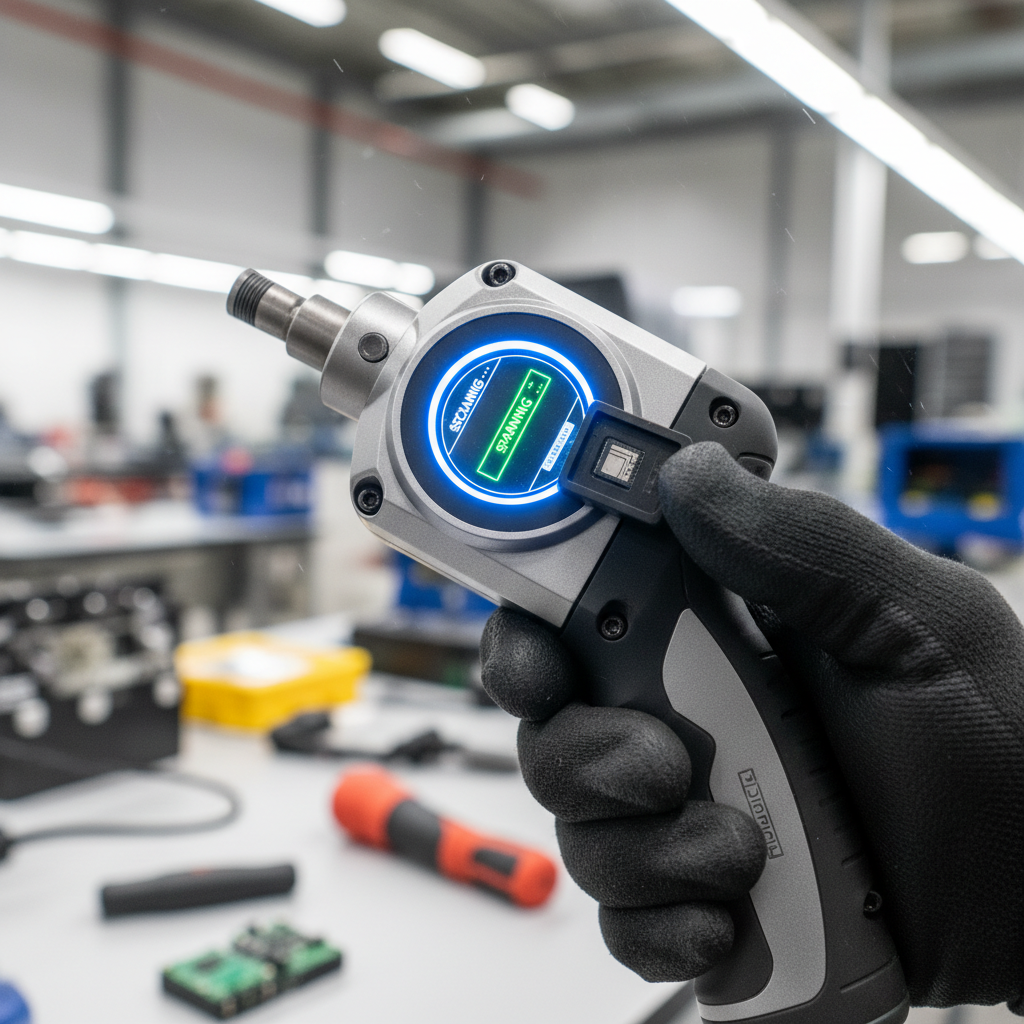
Let’s cut through vendor language. An aircraft tooling tracking system is an integrated layer of hardware (tags, readers, sensors), software (asset database, dashboards, alerts), and process controls that maintains continuous accountability over every tool in your MRO operation.
Continuous accountability is the key phrase. This isn’t shipment tracking, where the job ends at delivery. A torque wrench doesn’t get “delivered” once. It cycles: crib to mechanic, mechanic to aircraft, aircraft back to crib, crib to calibration lab, lab back to crib. Over and over. The system has to follow that full lifecycle, or you’re just tracking check-outs and praying about returns.
A complete system handles four things simultaneously:
- Custody chain: who has the tool, for which work order, on which aircraft tail number.
- Location awareness: cabinet-level, zone-level, or real-time coordinates depending on the technology deployed.
- Calibration and certification status: is this tool still within its valid calibration window? When is the next inspection due?
- Audit trail: timestamped, automated, exportable for FAA, EASA, or customer audits.
Miss any one of those four, and you’ve got a partial solution. Partial solutions create a dangerous illusion of control, because now people trust the system instead of double-checking manually, but the system has blind spots. For broader component lifecycle management beyond tooling, an aircraft component traceability system extends these same accountability principles across all serviceable parts.
The FOD Problem Is Not Hypothetical
Foreign Object Debris is the operational nightmare that drives most tooling tracking investments. A forgotten socket, a stray drill bit, a misplaced safety wire plier: any of these, left inside an aircraft structure, can cause catastrophic failure in flight.
FOD-related tool control failures aren’t rare edge cases. They’re recurring findings in safety management systems across the industry. The financial cost of a single AOG (Aircraft on Ground) event runs into six figures per day for a widebody operator. The reputational cost of a FOD incident that makes it into an NTSB or EASA investigation report? Incalculable.
Shadow boards catch maybe 80% of missing tools if someone actually looks at them. RFID-gated tool cribs and smart cabinets catch close to 100%, automatically, every time a mechanic walks through. That gap between 80% and 100% is where the serious risk lives.
Technology Choices: RFID, UWB, BLE, and Why You Probably Need More Than One
No single wireless protocol covers every scenario in a hangar. Metal-dense environments, large open bays, confined fuselage interiors, outdoor ramp areas: each zone has different RF characteristics. Here’s what actually works where.
Passive UHF RFID (RAIN)
The workhorse. Passive RAIN RFID tags need no battery, cost under $5 per tag at scale, and work brilliantly at choke points: tool crib gates, smart cabinet shelves, maintenance bay entry/exit portals. When a mechanic checks out a tool, the reader logs it. When the tool comes back, same thing. No manual scan needed.
Limitation: passive RFID tells you the tool passed a reader. It doesn’t tell you where the tool is right now in a 50,000 sq ft hangar.
Ultra-Wideband (UWB)
UWB delivers real-time positioning accuracy of 10 to 30 cm, even in reflective metal environments. That level of precision means you can locate a specific tool on a specific workbench or inside a specific aircraft bay. The trade-off: UWB tags are active (battery-powered), more expensive, and require a denser anchor infrastructure.
Best fit: high-value tools, calibrated instruments, and areas where real-time location (not just check-in/check-out) is operationally critical.
Bluetooth Low Energy (BLE) Angle of Arrival
BLE AoA provides sub-meter accuracy at a lower infrastructure cost than UWB. It’s the practical middle ground for zone-level tracking: you know the tool is in Bay 3, not the exact shelf. Many facilities use BLE for general zone monitoring and reserve UWB for critical precision zones.
The Hybrid Architecture
The MROs getting this right aren’t picking one technology. They’re layering:
- Passive RFID at cabinet level for automated check-in/check-out.
- BLE AoA at zone level for general hangar awareness.
- UWB in high-criticality zones (engine bays, landing gear areas) for centimeter-level precision.
This tiered approach keeps cost proportional to risk. You don’t need 30 cm accuracy on a $15 screwdriver. You absolutely do on a $4,000 bore gauge.
Regulatory Framework: What Compliance Actually Requires
Aviation is not a “move fast and break things” industry. Every piece of technology attached to or used near an aircraft operates under strict regulatory oversight. Here’s the compliance landscape for tooling tracking.
FAA Advisory Circular 20-162A
AC 20-162A governs passive UHF RFID tags installed on aircraft, engines, propellers, and components. It confirms that passive RFID part marking is acceptable but does not replace the marking requirements of 14 CFR 45.15 or 45.16. If you’re tagging tools that are permanently affixed to airborne equipment, this is your baseline document.
SAE AS5678B
SAE AS5678B provides the certification standard for RFID tags permanently installed on airborne equipment. Tags must survive the environmental tests defined in RTCA DO-160: vibration, temperature extremes, humidity, altitude, and electromagnetic interference. This is non-negotiable for any tag that goes on or near the aircraft.
ATA Spec 2000 Chapter 9
ATA Spec 2000 Chapter 9 standardizes how RFID data is encoded for commercial aviation parts. For multi-station MROs that share tooling data across facilities (or with airline customers), adhering to this spec ensures interoperability. Your RFID data from Station A needs to be readable, interpretable, and actionable at Station B without custom middleware.
Calibration Traceability
This is the compliance layer most tracking vendors underplay. Knowing where a tool is means nothing if it’s three weeks past its calibration due date. Your tracking system must integrate with your calibration management process, flagging tools approaching expiration, auto-quarantining expired tools in the software, and providing proof of calibration status at the moment of use for every work order. AS9100 auditors don’t just ask “where are your tools?” They ask “can you prove this tool was calibrated when it was used on this aircraft on this date?” The same authentication rigor applies to preventing aircraft parts fraud through asset tracking, where chain of custody verification protects against counterfeit components entering the supply chain.
Real Deployments, Real Numbers
Vendor brochures are full of promises. Here’s what operators have actually reported.
HAECO: 3,200 Tools, 85% Faster Inventory
HAECO, one of Asia’s largest independent MROs, deployed passive UHF RFID tags across 3,200 hand tools in a line maintenance operation. Using mobile apps and handheld readers, they reduced daily tool inventory from 20 minutes to under 3 minutes. Full traceability and reconciliation per mechanic, per shift. The system paid for itself in labor savings alone within months.
Jet Time: RFID Gates and the Union Factor
Jet Time integrated RFID tool gates with their OASES MRO software to address FOD-related safety findings. The system used two antennae and a pressure plate to automatically log tool movements. It worked. Mechanics reported easier daily routines and management gained real-time visibility into tool custody.
But here’s the part most case studies skip: Jet Time hit friction with their mechanics’ union. The concern wasn’t about the tools. It was about tracking when people clocked in and out. The system captured timestamps that, from the union’s perspective, could double as attendance monitoring. This is a pattern I’ve seen across multiple implementations. The technology works. The cultural adoption requires a separate, deliberate strategy.
Boeing and GE Aerospace: Enterprise Scale
Boeing reported a 70% reduction in part search times after RFID implementation, and GE Aerospace documented a 40% reduction in inventory discrepancies. These are enterprise-scale validations of the same principles smaller MROs can apply at smaller scale with proportionally smaller investment.
Smart Cabinets vs. RTLS vs. Hybrid: A Decision Framework
Choosing between a smart cabinet system and a full RTLS deployment isn’t a technology decision. It’s an operational maturity decision. Here’s how to think about it.
| Approach | Best For | Accuracy | Cost Profile | Limitation |
|---|---|---|---|---|
| Smart Cabinets (RFID) | Line maintenance, small to mid-size cribs | Item-level at cabinet | Lower upfront, per-cabinet pricing | No visibility once tool leaves the cabinet area |
| Zone RTLS (BLE AoA) | Large hangars, multi-bay facilities | Sub-meter zone level | Moderate infrastructure | Not precise enough for FOD-critical accountability |
| Precision RTLS (UWB) | Engine shops, landing gear bays, high-value areas | 10 to 30 cm | Higher infrastructure density | Cost per anchor; battery management on tags |
| Hybrid (RFID + BLE + UWB) | Full MRO campus coverage | Tiered by zone criticality | Highest total, but proportional to risk | Integration complexity across protocols |
Most MROs starting from scratch should begin with smart cabinets and RFID gate portals. That handles 80% of the FOD risk and 90% of the audit trail requirement. Layer BLE and UWB later in the zones where cabinet-level visibility isn’t enough.
Implementation: Where Projects Actually Stall
After 15 years in IoT deployments across aviation and industrial logistics, I can tell you the technology is rarely the bottleneck. Here’s where aircraft tooling tracking projects actually stall.
1. Tool Inventory Cleanliness
You can’t track what you haven’t cataloged. Most MROs discover during implementation that their tool inventory is 10 to 20% inaccurate: missing items listed as active, duplicate entries, unrecorded purchases from local suppliers. The tagging phase forces a full physical audit, and that audit often takes longer than the system installation itself.
2. Change Management on the Hangar Floor
Mechanics are skilled professionals with deeply ingrained workflows. Asking them to scan a badge, wait for a green light, and return tools to a specific slot (not just “roughly that shelf”) changes their daily rhythm. Without early buy-in, you get workarounds: tools checked out under one name and passed to a colleague, tags removed, cabinets propped open.
The Jet Time experience is typical. Address the human element before you address the RF element.
3. Integration with Existing MRO Software
Your tracking system is only as useful as its connection to your MRO/ERP platform. If tool check-out data doesn’t flow into work order records, you still can’t prove compliance at audit time. API integration with platforms like AMOS, Ramco, or OASES should be scoped in Phase 1, not treated as a “nice to have” for later.
4. Multi-Station Interoperability
This gap is wide open across the industry. A tool calibrated and tagged at your Hong Kong facility should be readable and valid at your Frankfurt station. Most deployments today are single-site. Multi-site MROs need to architect for data standardization (ATA Spec 2000) from Day 1, even if they deploy site by site.
What’s Coming: AI, Battery-Free Tags, and Ambient IoT
The tooling tracking space is evolving fast. Three trends are worth watching if you’re planning a deployment with a 5-year horizon.
AI-driven calibration prediction. Today, calibration schedules are time-based: every 90 days, every 6 months, regardless of actual usage. AI and machine learning are moving the industry toward usage-based prediction, where calibration intervals adapt to how often and how intensely a tool is actually used. A torque wrench used 200 times a week needs recalibration sooner than one used 10 times. This alone could reduce unnecessary calibration costs by 30 to 40% while improving actual compliance.
Battery-free BLE tags. Powercast has introduced an RF-powered BLE sensor tag that operates without batteries, harvesting energy wirelessly from ambient RF signals. If this scales to hangar environments, it eliminates the biggest maintenance headache with active tags: battery replacement cycles across thousands of tools.
Hybrid RTLS as standard practice. Combining AoA and RSSI capabilities in a single infrastructure lets facilities use high-precision tracking in critical zones and general monitoring everywhere else, from one platform. This architectural pattern will become the default for new MRO facility builds within the next three to five years.
Three Outcomes That Justify the Investment
If you’re building the business case internally, anchor it on these:
- FOD risk reduction to near-zero. Automated gate detection and smart cabinet reconciliation eliminate the human error gap in manual counts. This is the safety case, and it’s the one that gets executive and regulatory attention fastest.
- Audit readiness on demand. Timestamped, automated custody chains exportable in minutes, not the week-long scramble before an EASA or FAA visit. Quality inspectors stop dreading audits. Auditors get clean data.
- Measurable labor recovery. At the HAECO benchmark of 17 minutes saved per mechanic per shift, a 100-mechanic operation recovers over 28 hours of productive labor per day. Per day. That’s either fewer overtime hours or more aircraft through the hangar.
The cost of doing nothing is easy to calculate, too. Count how many replacement tools you purchased last year that were “lost.” Add the labor hours spent searching. Add one AOG event caused by tooling delay. The number is usually large enough to fund the entire system twice over.
If your tool crib feels like a black box after check-out, that’s exactly the visibility gap asset tracking closes. We work with MROs and airlines to design and deploy these systems end to end, from selecting the right tracking hardware to integrating with your existing MRO platform. If you want to talk through what a deployment looks like for your operation, reach out to our team or drop a line at info@datanetiot.com.

Frequently Asked Questions
What is an aircraft tooling tracking system?
It’s an integrated combination of hardware (RFID tags, readers, sensors), software (asset management platform), and process controls that maintains continuous, automated accountability over every tool in an MRO operation. It tracks custody, location, calibration status, and generates audit-ready records.
How much does an aircraft tooling tracking system cost?
Costs vary widely by scale. Passive RFID tags run under $5 each. Smart cabinets range from $5,000 to $25,000 per unit. Full RTLS infrastructure for a large hangar can reach six figures. Most MROs see positive ROI within 6 to 12 months through labor savings and reduced tool replacement alone.
Which tracking technology is best for aviation tooling: RFID, UWB, or BLE?
No single protocol covers every need. Passive UHF RFID excels at cabinet-level check-in/check-out. UWB delivers 10 to 30 cm real-time accuracy for high-value zones. BLE AoA offers sub-meter zone tracking at lower infrastructure cost. Most effective deployments use a hybrid of two or more.
Are RFID tags safe to use on or near aircraft?
Yes. The FAA’s Advisory Circular 20-162A confirms that passive RFID tags pose no safety risk under specified conditions. Tags installed on airborne equipment must meet SAE AS5678B and pass RTCA DO-160 environmental testing for vibration, temperature, altitude, and EMI.
How do these systems prevent Foreign Object Debris (FOD)?
By assigning a unique identifier to every tool and automating reconciliation at check-out and check-in points. Smart cabinets detect missing tools instantly. RFID gate portals flag any tool still checked out when a mechanic leaves a maintenance bay. The system alerts before the aircraft moves, not after.
Can a tooling tracking system integrate with existing MRO software?
Yes, and it should. Integration with platforms like AMOS, Ramco, or OASES ensures tool custody data flows directly into work order records. This is what makes audit compliance automated rather than manual. Plan for API integration from Phase 1 of any deployment.








 +1 508 292 2210

4 Responses