

Foreign Object Debris costs the aviation industry an estimated $4 billion per year. A forgotten wrench inside a wing assembly. A calibration tool that never returned to the crib. These aren’t hypotheticals. They’re Tuesday in a factory where thousands of assets move across a million-plus square feet of floor space, and visibility ends at the last manual check-in. (See also: improving aircraft maintenance efficiency with tracking.) (See also: geolocation tracking.)
Asset tracking in aircraft manufacturing is the use of RFID, UWB, BLE, and cellular IoT to monitor the real-time position and status of tools, jigs, fixtures, work-in-process parts, and ground support equipment throughout the production lifecycle. It’s how Airbus now locates a misplaced tool in minutes instead of hours. It’s how Boeing connects 27 manufacturing sites into a single asset view. And it’s the foundation that makes FOD prevention, regulatory compliance, and predictive maintenance possible at industrial scale.
If you manage operations, quality, or safety on an aircraft production line, this is the territory map. What works, what doesn’t, and what the vendor brochures leave out.
Why Aircraft Factories Are the Hardest Tracking Environment
Not all manufacturing floors demand the same tracking architecture. Aircraft factories present a combination of challenges that makes off-the-shelf logistics tracking inadequate.
Start with metal. Aluminum fuselages, steel tooling, titanium fixtures. Radio signals bounce off these surfaces (a phenomenon called multipath propagation), creating ghost readings that confuse signal-strength-based systems. A BLE beacon that performs well in a consumer warehouse will give you phantom locations in a hangar full of airframes.
Then consider scale. Finding a specific asset inside an assembly plant spanning more than 1 million square feet is a daily challenge, not an edge case. And assets don’t stay in one building. Jigs carrying fuselage sections travel between countries, crossing borders and switching connectivity networks.
Layer regulation on top. FAA and AS9100 standards require strict traceability of every tool and part that contacts an aircraft. This isn’t optional visibility for efficiency gains. It’s mandatory documentation for airworthiness. Gaps in your calibration records don’t get a second chance with auditors.
Finally, consider asset diversity. A single aircraft program involves passive components worth pennies (fasteners, brackets), precision tools worth thousands (torque wrenches, bore gauges), and capital equipment worth millions (autoclaves, assembly jigs). No single tracking technology covers all of these economically.
Metal interference, multi-site logistics, regulatory pressure, and wildly different asset values. That combination is why aircraft manufacturers need architectures built for their specific environment, not repurposed from retail or road freight.
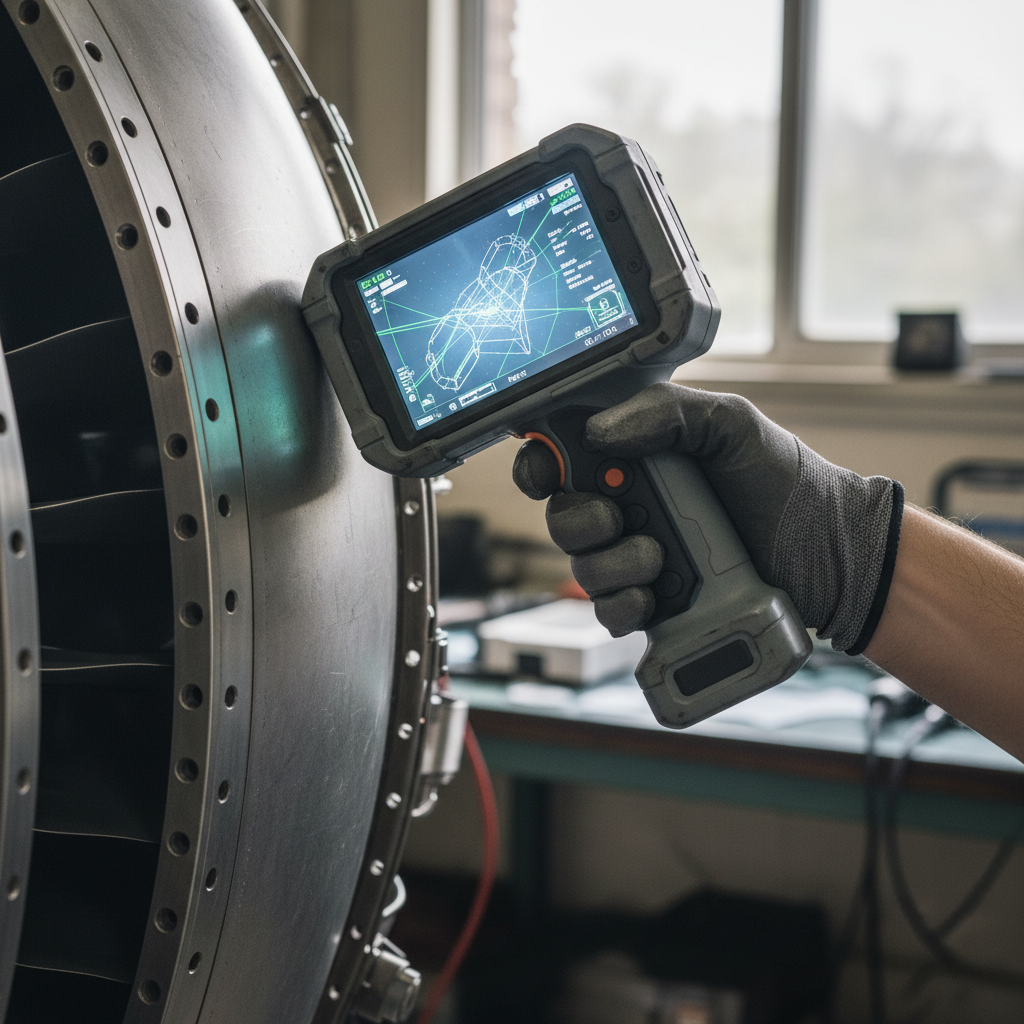
The Technology Stack: What Works Where
I’ve watched companies spend six months evaluating a single technology, only to realize they need three. The practical answer in aircraft manufacturing is almost always a hybrid. But you need to understand the components before you can layer them.
Passive RFID still dominates by volume. RFID held 52.34% of the RTLS market in 2025, and for good reason: tags cost pennies, require no battery, and last indefinitely. Use them for high-volume item identification where zone-level location is enough (parts bins, fastener kits, portal pass-through at receiving docks). Passive RFID doesn’t tell you where something is right now. It tells you where it was last scanned. In metal-dense environments, read rates can degrade unless tags have metal-mount backings, so plan for that.
Ultra-Wideband (UWB) is the segment to watch. It’s growing at a 25.43% CAGR and delivers sub-20 centimeter accuracy using time-of-flight measurement rather than signal strength. That distinction matters in aircraft factories: time-of-flight inherently resists multipath interference from metal structures. Tags run $20 to $50 each with 3 to 5 year battery life. Leading UWB vendors report sub-meter accuracy even in metal-heavy aerospace environments, with FCC-certified tags that don’t interfere with avionics or factory Wi-Fi. When you need to know exactly where a torque wrench is on a production floor full of aluminum, UWB delivers.
BLE (Bluetooth Low Energy) fills the middle ground: 1 to 3 meter accuracy at low power and low tag cost. Good for warehouse zones and tool cribs where you need better precision than RFID but don’t need UWB-grade resolution. Airbus uses BLE beacons for warehouse tool localization alongside NB-IoT for wider-area coverage.
NB-IoT and cellular connectivity extend tracking beyond facility walls. When a jig leaves Toulouse and needs to arrive in Hamburg, indoor RTLS is useless. Battery-powered, weatherproof IoT trackers on cellular networks provide cross-border visibility that Wi-Fi or UWB anchors alone cannot deliver.
| Technology | Accuracy | Tag Cost | Battery Life | Best Use in Aircraft Manufacturing |
|---|---|---|---|---|
| Passive RFID | Zone-level (portal) | $0.05 to $0.50 | None (passive) | Parts inventory, portal pass-through, high-volume ID |
| Active RFID | 5 to 10 m | $10 to $50 | 3 to 5 years | Ground support equipment, large jigs |
| UWB | Sub-20 cm | $20 to $50 | 3 to 5 years | Tool tracking, WIP monitoring, assembly line |
| BLE | 1 to 3 m | $5 to $15 | 1 to 3 years | Warehouse/tool crib localization |
| NB-IoT / Cellular | GPS-level (10 to 50 m) | $20 to $40 | 3 to 5+ years | Cross-border jig/fixture transport |
Match technology to asset value, accuracy requirement, and environment. UWB for precision-critical tooling on the line. Passive RFID for high-volume parts identification. Cellular IoT for assets that leave the building. This layered approach is exactly what the most mature aerospace deployments use.
How Airbus and Boeing Solved This Differently
Two of the world’s largest aircraft OEMs, two fundamentally different approaches. Both achieved near-complete asset visibility. Understanding why they diverged matters more than copying either one.
Airbus chose a focused vendor partnership. After a comparative evaluation, Airbus deployed IoT trackers combining NB-IoT for wide-area coverage and BLE for local precision. The result: nearly 100% visibility of manufacturing assets as they travel between facilities in France, Germany, the UK, and other countries. Engineers locate misplaced tools within minutes. A patented data recovery algorithm guarantees zero information loss during cross-border transfers. Airbus called the solution the “most mature on the market” for energy efficiency and intelligent architecture.
Boeing built an internal platform. Through its Tapestry Solutions subsidiary, Boeing developed the Enterprise Sensor Integration (ESI) platform: a sensor-agnostic integration layer that interconnects 27 major manufacturing sites with passive RFID, active RFID, GPS, and environmental sensors. ESI doesn’t care which tag technology you use. It normalizes everything into a unified supply chain view. Originally built for the Department of Defense, it was adapted for commercial aircraft production.
The lesson: Airbus went deep with a specific stack, optimizing for cross-border jig and tool tracking. Boeing went wide with a platform that prioritizes flexibility across heterogeneous systems. Large OEMs often need both patterns.
For mid-tier manufacturers and Tier 1 suppliers, the Airbus model is usually more practical. Pick a focused technology stack, deploy it against your highest-value pain point, measure results, and expand. The Boeing model requires a large internal engineering team and a multi-year platform investment most organizations can’t resource.
FOD Prevention: When a Missing Tool Grounds an Aircraft
Foreign Object Debris is the safety case that justifies tracking investment on its own, without touching efficiency or search-time arguments. This is particularly critical for aircraft maintenance asset visibility, where tool control directly impacts airworthiness certification.
A wrench left inside a wing. A drill bit behind a panel. A rag wedged into a fuel line. FOD incidents damage engines, sever hydraulic lines, and in catastrophic cases cause in-flight failures. The financial toll runs to $4 billion annually across the industry. The human toll doesn’t fit in a spreadsheet.
Traditional FOD prevention relies on manual tool counts. A mechanic checks out 47 tools at shift start. Someone verifies all 47 are returned before the aircraft moves to the next station. This works until it doesn’t. Fatigue, shift handoffs, borrowed tools, duplicate inventories across stations. One lapse and a tool vanishes into an airframe.
Modern tracking closes that gap entirely. Tagged tools are monitored in real time through tracking tools in maintenance hangars. If a torque wrench leaves its designated zone and enters an aircraft bay, the system knows. If it hasn’t returned by the time the aircraft is scheduled to move, an alert fires before anything else happens. Aviation MROs using this approach report 100% tool audit verification before an aircraft leaves a maintenance bay.
And this isn’t just about preventing incidents. It’s about proving you prevented them. FAA and AS9100 audits demand documentation of tool control processes. MRO asset tracking solutions create an immutable digital record: which tool, where, when, who. That trail turns a compliance burden into operational proof, generated automatically instead of reconstructed from clipboards after the fact.
What the Vendor Brochures Leave Out
Every tracking vendor will show you the ROI of reduced search time and prevented FOD. Here’s what gets left on the cutting room floor.
Battery maintenance at scale is a logistics problem layered on top of your logistics solution. Active RFID, UWB, and BLE tags run on batteries. Vendor claims of 3 to 5 year life are based on specific ping intervals. Increase the update frequency (which operations teams always request), and battery life drops. At a facility with 10,000 tracked assets, you’re replacing 2,000 to 3,000 batteries per year at steady state. Someone has to manage that. Someone has to track which tags need replacement. This operating cost rarely appears in the initial proposal.
Infrastructure isn’t cheap either. UWB requires fixed anchors every 20 to 50 meters for accurate positioning. In a million-square-foot facility, that means hundreds of anchors, plus cabling, mounting hardware, network integration, and ongoing upkeep. Passive RFID needs reader portals at choke points. NB-IoT needs cellular coverage inside metal buildings, which often requires indoor repeaters. The tags are the visible line item. The infrastructure underneath is where the real capital goes.
But the cost that sinks the most deployments isn’t financial. It’s cultural. I’ve watched it happen. A quality engineer champions the system, procurement signs the PO, IT installs the infrastructure, and the mechanics on the floor resist the new workflow. They see tags as surveillance. They strip tags off tools. They work around the system instead of with it.
The fix isn’t technical. Involve floor workers in the pilot from day one. Show them how tracking helps them: finding critical tools in 30 seconds instead of 20 minutes, not getting blamed when someone else misplaces a calibrated instrument. Make the system reduce their friction, not add to it. The manufacturers who succeed with asset tracking treat adoption as a change management project, not an IT rollout.
Building a Hybrid Tracking Architecture
Based on what we see working across aerospace manufacturing clients, here’s a practical framework for designing an architecture that matches real production complexity.
Start by classifying assets by value and mobility. High-value assets that travel between sites (jigs, specialized fixtures) need cellular IoT for wide-area tracking. High-value assets that stay inside the facility (capital equipment, autoclaves) benefit from UWB or active RFID for precise indoor location. Medium-value, high-turnover items (hand tools, calibration instruments) are the sweet spot for UWB or BLE depending on accuracy requirements. Low-value, high-volume items (parts, fasteners, consumables) go on passive RFID for identification and flow tracking.
Next, map your pain points before mapping your technology. Where do people spend time searching? Where do FOD incidents cluster? Which missing assets cause the most expensive production delays? Deploy there first. Wall-to-wall coverage on day one is expensive, slow, and unnecessary.
Plan for integration from the start. Your tracking data needs to flow into existing ERP, MES, and CMMS systems through APIs. A standalone tracking dashboard that operations managers have to check separately from their production system will be abandoned within weeks. The data has to live where decisions get made.
Finally, pilot small and prove ROI before scaling. One production line. One tool crib. Measure search time reduction, FOD audit compliance, and production delay impact over 90 days. Use those numbers to fund the broader rollout. This phased approach is how the most successful aerospace deployments, including Airbus, began before expanding across countries.
If your assets cross facility boundaries or travel internationally, the connectivity transition (indoor to outdoor, one cellular network to another) is where purpose-built industrial IoT tracking devices earn their premium over consumer-grade hardware.
Where This Is Heading: AI, Digital Twins, and Autonomous Delivery
Asset tracking in aircraft manufacturing is shifting from answering “where is it?” to predicting “where should it be?”
Digital twins are the integration layer driving this shift. A 2025 academic framework demonstrated that real-time asset tracking data can populate dynamic virtual replicas of manufacturing environments, enabling simulation and predictive analytics without disrupting the physical shop floor. Airbus already creates digital twins of tracked manufacturing equipment as part of its Industry 4.0 smart factory ecosystem. When your tracking feeds a digital twin, you can simulate production scenarios, spot bottlenecks before they form, and optimize asset allocation across lines.
AI-driven predictive management builds on that foundation. The AI in aviation market is projected to reach $4.86 billion by 2030, with predictive maintenance and asset optimization as primary use cases. When will this tool need recalibration? Which station needs this jig next shift? Why did a fixture take three times longer than normal to transit between sites? All of these depend on tracking data as input. Better tracking data makes better predictions, and better predictions increase the value of the tracking infrastructure. It’s a compounding loop.
Autonomous Mobile Robots (AMRs) are the fastest-growing RTLS application, expanding at a 26.36% CAGR. In aircraft factories, AMRs deliver parts and tools across the floor. They need UWB positioning infrastructure to navigate safely among human workers and high-value assets. This creates dual demand: tracking the assets being delivered and providing navigation infrastructure for the vehicles doing the delivering.
The manufacturers investing in tracking infrastructure now aren’t just solving today’s search-time problem. They’re building the data layer for AI, digital twins, and autonomous logistics that will define aerospace competitiveness through the end of this decade.
Three Outcomes That Justify the Investment
If you’re building the business case internally, anchor it on these measurable outcomes.
- Search time collapses. Workers in untracked environments spend 30 to 60 minutes per shift looking for tools and materials. At scale, across thousands of workers in a facility over a million square feet, that translates to tens of thousands of labor hours recovered per year. Airbus engineers now locate misplaced tools within minutes.
- FOD risk drops to near zero. Automated 100% tool audit verification replaces manual counts. Every tool is accounted for before an aircraft moves to the next station. The $4 billion annual industry cost of FOD starts with one untracked wrench.
- Compliance becomes automatic. FAA and AS9100 audit trails are generated in real time, not reconstructed from paper logs. An estimated 30% of FAA audit failures stem from poor documentation. Automated tracking eliminates that category entirely.
The ROI here isn’t theoretical. It’s operational dollars recovered, safety incidents prevented, and audit risk removed from the equation.
If your tooling and jigs go dark the moment they leave a workstation, that’s exactly the gap asset tracking closes. We help aerospace manufacturers design and deploy hybrid tracking architectures using industrial-grade hardware built for these environments. See what’s available, or reach out at info@datanetiot.com.

Frequently Asked Questions
What is asset tracking in aircraft manufacturing?
It’s the use of identification and location technologies (RFID, UWB, BLE, cellular IoT) to monitor the real-time position, status, and history of production assets: tools, jigs, fixtures, WIP parts, and ground support equipment across the manufacturing lifecycle. The goal is full visibility for operational efficiency, FOD prevention, and regulatory compliance.
Which tracking technology is best for aircraft factories?
No single technology covers every use case economically. Most successful deployments use a hybrid: passive RFID for high-volume parts identification, UWB for precision tool tracking on the assembly line, BLE for warehouse zones, and NB-IoT or cellular for assets that travel between sites or countries. The technology should match the asset’s value, mobility, and accuracy requirement.
How does asset tracking prevent Foreign Object Debris?
Every tagged tool is tracked in real time. If a tool enters an aircraft bay and doesn’t return by the time that aircraft is scheduled to move, the system alerts automatically. This guarantees 100% tool accountability before a bay clears, replacing manual counts that are vulnerable to shift changes, fatigue, and human error.
What does asset tracking cost for an aircraft manufacturing facility?
Costs depend on scale and technology mix. Passive RFID tags cost pennies each. UWB tags run $20 to $50 with 3 to 5 year battery life. The larger investment is often infrastructure (UWB anchors, RFID portals, network integration) and ongoing battery maintenance at scale. Most manufacturers start with a focused pilot on one line to prove ROI before expanding.
Can tracking work across multiple manufacturing sites in different countries?
Yes. Airbus tracks assets across France, Germany, the UK, and other countries using NB-IoT trackers with BLE for local precision. Boeing’s ESI platform unifies 27 sites through a sensor-agnostic integration layer. Cross-border tracking requires wide-area cellular connectivity, cloud platforms, and data recovery mechanisms that handle network transitions without information loss.
Is asset tracking data secure enough for ITAR-regulated programs?
Vendors like WISER Systems offer fully on-premises deployment where all location data stays within the client’s secure network, meeting ITAR export control requirements. Standard enterprise features include data encryption, role-based access controls, and audit logging. As tracking expands to personnel location data, GDPR and workplace privacy frameworks apply as well.








 +1 508 292 2210

15 Responses