

One billion active NB-IoT and LTE-M connections were counted at the end of 2025. NB-IoT asset tracking is not experimental. It’s commercial, scaling, and backed by 140 networks worldwide. Yet the spec sheet alone will not tell you whether your deployment will last five years or burn through batteries in eight months.
I’ve been deploying industrial IoT for over 15 years, with the last several focused on NB-IoT and LTE-M trackers across aviation, logistics, and maritime. The pattern I see again and again: teams pick a radio protocol before defining their asset behavior, update cadence, and cost structure. Then they rearchitect mid-deployment. This guide is built to prevent that.
What NB-IoT Actually Does in Asset Tracking
NB-IoT is a communication pipe, not a location engine. It delivers small data packets from a battery-powered device to a cloud server over licensed cellular spectrum. As part of the broader LPWAN asset tracking landscape, the location of the asset comes from a separate subsystem: a GNSS receiver for outdoor coordinates, Wi-Fi access point scanning for indoor estimates, or cell tower identity for a coarse regional fix.
This matters because buyers often compare NB-IoT to “GPS tracking” as if they’re interchangeable. They aren’t. GSMA describes NB-IoT as a standards-based LPWA technology designed for extended coverage, deep-indoor environments, and battery life exceeding 10 years. That description is about the link, not the location. Your tracker design determines whether you get meter-level GPS accuracy or a rough cell ID that tells you your container is “somewhere in the port of Rotterdam.”
What NB-IoT brings to asset tracking that legacy cellular connections typically did not:
- The protocol reaches deep indoor and underground environments, tolerating up to 164 dB of maximum coupling loss in standalone deployments, per 3GPP’s specifications. That’s the difference between a signal reaching a container stacked four-deep and one that doesn’t.
- NB-IoT operates on licensed spectrum the carrier owns and manages. Unlike LoRaWAN or Sigfox, there are no community gateways or shared collision domains.
- Cellular-grade security is built in: authentication, data integrity, and identity confidentiality at the network layer.
- Power Saving Mode (PSM) enables dormancy between reports, with modern modules drawing as little as 1.2 microamps in sleep.
What NB-IoT does not do well: continuous streaming, real-time telemetry, large file transfers, or rapid handovers between cell towers at highway speeds. For those jobs, LTE-M or Cat 1 is the right radio.
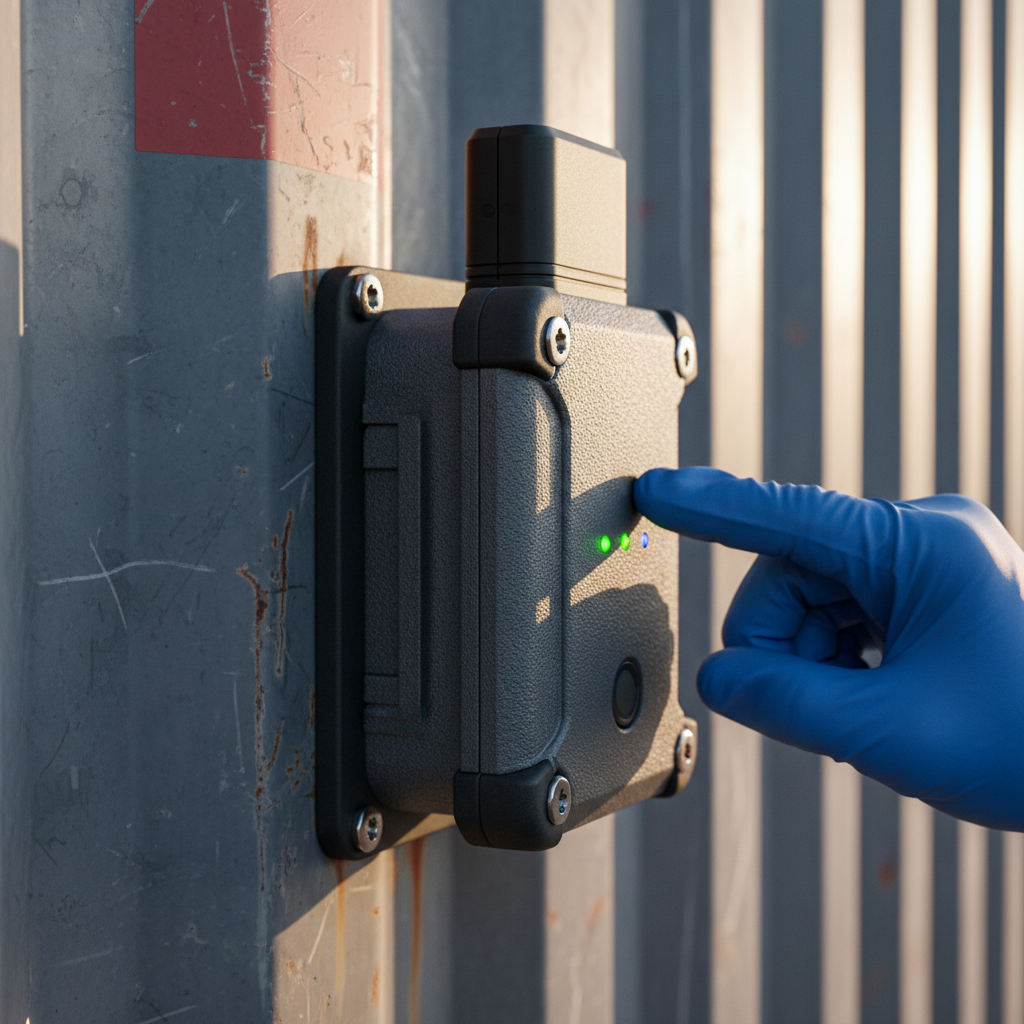
NB-IoT vs LTE-M: Choosing the Right Radio for Your Assets
This is the decision that determines whether your deployment works in the field or only in a demo room. Both NB-IoT and LTE-M are 3GPP-standardized. Both use licensed cellular spectrum. Both support PSM and eDRX for battery savings. The differences are practical, not academic.
| Factor | NB-IoT (NB1) | LTE-M (Cat M1) |
|---|---|---|
| Peak throughput | 26 Kbps down / 66 Kbps up | ~1 Mbps down / ~1 Mbps up |
| Typical latency | ~1 s (normal); several seconds (extended coverage) | ~100-150 ms (normal coverage) |
| Coverage extension | Strongest (164 dB MCL) | Good (156 dB MCL) |
| Mobility and handover | Improved in Release 14, but limited | Full cellular handover |
| Voice support | No | Yes (VoLTE) |
| Best fit | Stationary or slow-moving, deep indoor, underground | Mobile, frequent updates, richer telemetry |
Throughput and latency figures per GSMA’s comparison of LTE-M and NB-IoT data rates.
The common belief is that NB-IoT cannot track anything that moves. That’s not accurate, but the nuance matters. Digital Matter’s field tests in late 2024 recorded average transmission delays of two to four seconds during high-speed mobile NB-IoT sessions, and confirmed that devices maintained server connections during cell tower transitions. Mobile NB-IoT tracking works when updates are moderate (not sub-second), signal is available, and the firmware handles coverage gaps cleanly.
For a trailer that reports its position every 15 minutes, NB-IoT is a strong candidate. For a vehicle that needs second-by-second telemetry or over-the-air firmware updates, LTE-M is the safer default. If your fleet spans both scenarios (and most do), a multimode device that supports both radios gives you fallback flexibility. Devices like the Oyster3 from Digital Matter are built for exactly this: they negotiate the best available network per location.
Why the 2G Sunset Makes This Decision Urgent
The immediate trigger for most NB-IoT evaluations is not a technology roadmap. It’s a shutdown notice. 2G and 3G networks are being decommissioned worldwide, and legacy trackers relying on those radios are going dark.
If your organization deployed cellular trackers five or eight years ago, there’s a good chance they’re on 2G. That network is being switched off market by market. NB-IoT and LTE-M are the designated replacement layer for low-power, low-data IoT devices on licensed cellular spectrum.
But the migration path is not uniform. AT&T stopped selling NB-IoT plans and began decommissioning its US NB-IoT network in late 2024, while T-Mobile and Verizon continue to support it. In one market, NB-IoT is the future. In another, it’s already legacy. The carrier-by-country matrix matters more than any technology comparison table.
What this means for procurement:
- Never design a global asset tracking deployment around a single carrier or a single radio.
- Multimode devices (LTE-M + NB-IoT) with eSIM profiles reduce the risk of a carrier pulling the plug in a specific country.
- Test actual coverage in your operational geography. GSMA’s list of 269 Mobile IoT network launches is a starting point, not a deployment guarantee.
Battery Life: What “Up to 10 Years” Actually Means
The headline claim is 10 years on a single battery. The fine print is a set of very specific assumptions: a small battery (5 Wh), low traffic volume, good radio conditions, and moderate temperatures. 3GPP’s own standard documents lay out these conditions explicitly.
In the real world, four things consume battery faster than the datasheet suggests.
GNSS acquisition is the biggest draw. Every time the device activates a GPS receiver to get a coordinate fix, it consumes significantly more current than the NB-IoT transmission itself. A tracker that fires GNSS every 15 minutes in good sky conditions will last far less than one that relies on cell ID with occasional GNSS.
Poor radio coverage is the second killer. When the device can’t reach the cell tower easily, it retransmits. Each retry costs energy. Extended coverage mode (NB-IoT’s deep-indoor advantage) also means the device is working harder to be heard.
Cold temperatures reduce battery capacity directly. Lithium chemistry delivers less energy at minus 20°C than at 25°C. An asset sitting in a Baltic port drains faster than one in Singapore, even at identical report intervals.
And frequent reporting is the mistake I encounter most often in production. A device that reports every five minutes will not last as long as one that reports every six hours. This sounds obvious, but I regularly see deployments where the update interval was set for a demo and never adjusted for the field.
The practical approach: define your update interval based on the operational decision you need to make, not on what the hardware can theoretically support. A container that sits in a port for three weeks doesn’t need a position update every 10 minutes. A ULD moving through an airport turnaround might.
STMicroelectronics reports PSM floor current below 1.2 microamps on its ST87M01 module, which is excellent at the component level. The system-level draw (sensors, GNSS, antenna matching, firmware behavior) will always be higher. A five-year realistic battery life on a well-designed NB-IoT tracker, with moderate GNSS use and reasonable coverage, is a solid outcome. Ten years is possible for low-frequency, cell-ID-only reporting in benign conditions.
Where NB-IoT Asset Tracking Delivers Measurable ROI
The IoT-based asset tracking market is valued at $5 billion and projected to nearly double by 2029. The business case for NB-IoT’s share of that market is strongest where non-powered assets are distributed across wide areas, report infrequently, and generate cost through invisibility. Three real deployments show the pattern.
Waste containers: ALBA Niedersachsen-Anhalt
ALBA deployed NB-IoT trackers on roughly 1,000 containers across 2,400 square kilometers in Germany. Before the deployment, RFID scans provided no live location, no fill-level data, and no inspection history between service visits. With live tracking, ALBA reduced unused container inventory and shifted from fixed-schedule collection to fill-level-based routing, cutting fuel and labor.
Non-powered chassis: UES Chassis
UES Chassis tracks over 700 non-powered container chassis across Germany using IoT trackers integrated with Microsoft Dynamics 365. Tire changes are now triggered by actual mileage instead of six-month fixed intervals. Flat tires get faster response. A customer-facing tracking portal turned asset visibility into a service differentiator. The tracker isn’t just a map pin; it’s a maintenance and service trigger.
Underground infrastructure: Gutermann and Vodafone
Vodafone deployed thousands of NB-IoT SIMs for Gutermann’s underground acoustic water leak detectors, reporting a 5 to 10x reduction in power consumption compared to 3G/4G. The devices sit underground, report exceptions, and survive on battery for years. No gateway, no wired power, no line of sight required.
The common thread: every deployment generated ROI not from “tracking” in the dashboard sense, but from turning invisible assets into triggers for operational decisions (route changes, proactive maintenance, inventory rebalancing).
In aviation and maritime, the same logic applies. Ground support equipment sitting idle on the tarmac, ULDs dwelling at the wrong station, containers waiting in ports with no visibility. These are the assets where NB-IoT’s combination of low power, deep reach, and licensed reliability pays for itself fastest. Understanding how asset tracking works and what it costs helps frame these decisions. For assets operating in offshore environments, the need for extended coverage and battery longevity becomes even more critical.
Total Cost of Ownership: The Conversation That Gets Skipped
A tracker’s sticker price tells you almost nothing about what it will cost over five years. Here’s what actually drives total cost of ownership in NB-IoT asset tracking.
Connectivity is deceptively simple at first. A single-country data plan is straightforward. A fleet of assets crossing borders introduces roaming fees, multi-IMSI SIMs, or eSIM profiles. Flat-rate providers exist, but the math changes if your assets hit countries where that provider has no roaming agreement. Get the country list first. Negotiate the SIM plan second.
Platform and integration costs are where budgets quietly expand. The tracker generates raw events: timestamps, coordinates, battery levels, sensor readings. Turning those into operational actions (alerts, dashboards, ERP records) requires a platform, API integration, and often middleware connecting to SAP, Oracle, or Dynamics 365. The UES Chassis case above illustrates the point: value came from bidirectional integration, not from the tracker alone.
Battery replacement is a logistics event, not just a spec. If your device is sealed (IP67/IP68) and the battery is not field-replaceable, end of battery life means end of device. If it is replaceable, you’re factoring in labor, shipping, and downtime for every swap. Five-year battery life on 10,000 assets means 10,000 service events in year five, or staggered replacements starting in year three if field conditions aren’t ideal.
Certification gates exist for cross-border fleets. An NB-IoT device that works in the EU may need separate certification for the US (FCC), and vice versa. For aviation assets that fly international routes, the gate is even higher. DO-160 airfreight-approved devices like the Thingfox T2 exist precisely because aviation certification is not a checkbox you can skip.
eSIM and remote profile management are becoming cost levers, not luxuries. GSMA’s SGP.32 eSIM IoT specification, published in 2024, enables remote carrier switching on sealed devices. For long-lived, cross-border assets, this is the difference between a stranded device and one that adapts when a carrier exits a market.
| Cost component | One-time or recurring | Often overlooked? |
|---|---|---|
| Device hardware | One-time | No |
| Connectivity (data plan, roaming) | Recurring | Yes, especially roaming |
| Platform / software license | Recurring | Sometimes |
| ERP / WMS integration | One-time + maintenance | Yes |
| Battery replacement labor | Recurring | Yes |
| Certification (FCC, CE, DO-160) | One-time per SKU | Yes, for cross-border |
| eSIM provisioning | One-time + management | Yes |
| Network migration (sunset risk) | Conditional | Almost always |
Shipment Tracking Stops at Delivery. Asset Tracking Doesn’t.
Most of the NB-IoT discussion focuses on the transit leg: where is the container right now? That’s shipment tracking. It matters, and it’s also only half the problem.
Asset tracking follows the full lifecycle: deploy, transit, dwell, return, reuse. The container sitting empty in a yard for 40 days. The ULD that’s technically available but parked at the wrong station. The chassis that’s overdue for inspection but nobody flagged it because there was no usage data.
This is where NB-IoT’s battery efficiency compounds. A GNSS-heavy tracker might last through one outbound-and-return cycle. An NB-IoT tracker with an intelligent location hierarchy (motion detection first, cell ID for coarse awareness, GNSS only when a business rule demands it) survives multiple cycles, reducing cost per trip and improving pool utilization over years.
Three outcomes that only show up when you track assets beyond delivery:
- Dwell time visibility. Knowing that 30% of your container pool has been idle for over 21 days changes procurement and redistribution decisions.
- Cycle time measurement. Actual return time (not estimated) lets you right-size the pool instead of over-buying assets to compensate for blind spots.
- Usage-triggered maintenance. UES Chassis replaced six-month fixed inspections with mileage-based triggers. Fewer unnecessary inspections. Fewer missed ones.
If your tracking strategy ends when the shipment is delivered, you’re paying for half the picture. The return leg, the idle time, and the reuse cycle are where NB-IoT’s low-power, long-life design creates the most value.
NB-IoT asset tracking is a cost and battery optimization layer, not a universal answer. The right deployment starts with the asset’s behavior, not the radio’s spec sheet. Define the movement pattern, the update cadence, the accuracy requirement, the coverage geography, and the lifecycle cost. Then pick the hardware and connectivity that fit.
At Datanet, we integrate NB-IoT and LTE-M trackers from partners like Digital Matter, Thingfox, and ePlant into end-to-end tracking solutions for aviation, logistics, and maritime. If your container pool feels invisible after delivery, or your ground equipment goes missing between shifts, that’s the gap asset tracking closes. Talk to our team or reach us at info@datanetiot.com.

Frequently Asked Questions
Does NB-IoT include GPS?
No. NB-IoT is a communication protocol, not a positioning system. Location can come from a GNSS receiver, Wi-Fi scanning, or cell tower identity. Many NB-IoT trackers include a GNSS module, but it is a separate hardware component with its own power draw and antenna requirements.
How accurate is NB-IoT location without GPS?
Cell-based methods vary widely. Academic research reports 50 to 70 meter errors using observed time difference of arrival (OTDoA) and larger errors with signal-strength methods in urban settings. For use cases like port yard inventory, this is often sufficient. For theft recovery or precise placement, GNSS is needed.
Can NB-IoT track moving assets?
Yes, with limits. Field tests have shown two- to four-second average transmission delays during mobile NB-IoT sessions, with maintained connections across cell transitions. For assets reporting every few minutes, NB-IoT works. For sub-second telemetry at highway speeds, LTE-M is the safer choice.
Is NB-IoT available globally?
There are 140 commercial NB-IoT networks across dozens of countries. Availability depends on the specific carrier, frequency band, and roaming agreements in each market. AT&T exited NB-IoT in the US in late 2024. Always verify coverage in your operational geographies before committing to a single-radio design.
How long does an NB-IoT tracker battery last in practice?
Targets cite up to 10 years under controlled conditions. Real battery life depends on update frequency, GNSS usage, radio conditions, and temperature. A well-designed tracker reporting every few hours with occasional GNSS can realistically achieve three to seven years. Continuous GNSS at short intervals will cut that significantly.
What happens when an NB-IoT network shuts down?
The device stops connecting. Multimode hardware (supporting NB-IoT and LTE-M) combined with eSIM and remote profile provisioning significantly reduces this risk. Build a migration plan and test carrier fallback before deployment, not after you receive a shutdown notice.








 +1 508 292 2210

One Response