

Boeing projects the aviation industry needs nearly 2.4 million new workers by 2044. U.S. air transportation labor productivity grew 0.2% last year. Those two facts should appear in the same sentence more often.
The reflex from every airline boardroom is the same: hire more people. But the numbers say otherwise. Record revenue, near-full staffing recovery post-COVID, and the output-per-hour needle barely moved. The industry paid more for labor in 2024 than at any point in its history and got almost no productivity gain in return.
I’ve spent 15+ years inside aviation operations, mostly on the asset and equipment side. What I see consistently is an industry that frames aviation workforce productivity as a recruiting problem when it’s actually a deployment problem. You can roster 200 technicians per shift. If 30 of them burn the first hour locating ground equipment, tooling, or parts that moved overnight, your effective workforce just shrank by 15%. Nobody got hired. Nobody quit. You just lost capacity to invisible friction.
Where Aviation Workforce Productivity Stands Right Now
Air transportation was once a productivity machine. From 1990 to 2000, labor productivity in air transportation grew at an average annual rate of 3.1%, placing it among the top four fastest-growing productivity sectors in the U.S. economy. Fleet modernization, hub-and-spoke consolidation, self-service check-in, online booking: each wave pushed more available seat miles through fewer labor hours.
That era ended around 2014. The easy capital-deepening gains were captured. Since then, productivity growth has flatlined. BTS recorded a 0.2% productivity increase from 2023 to 2024, following a 2.2% contraction the year before. The all-transportation-modes average was 0.5%. Aviation came in below average for the second consecutive year.
Revenue-per-employee figures at major carriers tell a more textured story:
| Carrier | Revenue/Employee (2024) | Revenue/Employee (2025) |
|---|---|---|
| Delta Air Lines | $598K | $615K |
| American Airlines | $402K | n/a |
| Alaska Airlines | ~$406K | n/a |
| Southwest Airlines | $379K | $386K |
Delta leads comfortably. Atlanta hub dominance, premium corporate traffic, and disciplined capacity management all contribute. Southwest, running a flatter cost structure with lower yield per seat, sits 37% behind. But even Delta’s numbers mask a widening structural gap: cost per available seat mile has risen 22% since 2019, while revenue per seat mile is up only 11%. The difference? Labor is absorbing it.
Globally, aviation still punches above its weight. Each aviation job generates $92,000 in gross value added, roughly three times the productivity of an average job elsewhere in the economy. The industry supported 86.5 million total jobs worldwide in 2023. This isn’t collapse. It’s stagnation in a sector that historically thrived on compounding efficiency gains, and those gains have stopped compounding.
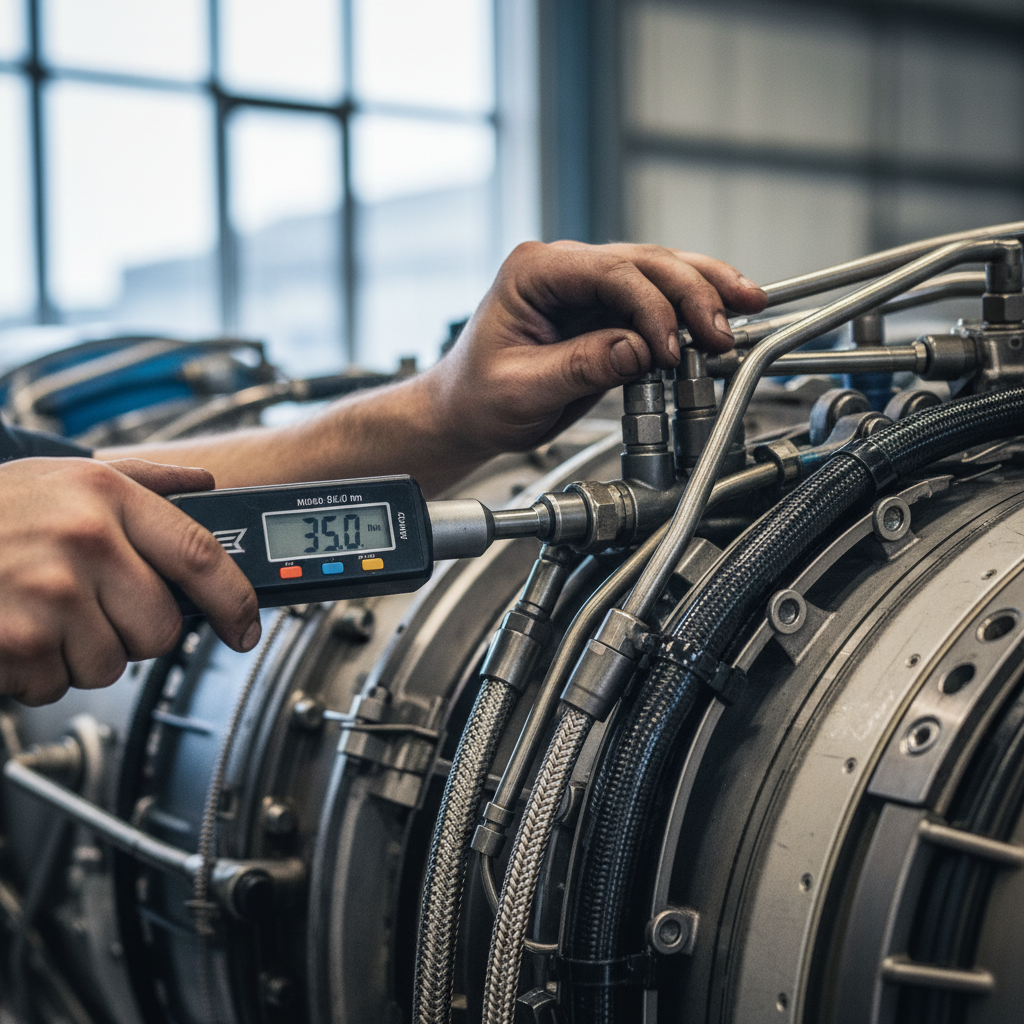
The $50 Billion Question: More Pay, Same Output
Between 2023 and early 2026, the U.S. aviation industry completed the most expensive labor contract cycle in its history. Industry commentary has called it a $50 billion reset. The headline numbers:
- Delta Air Lines (ALPA): +34% over four years, ratified January 2023
- American Airlines (APA): +46% over four years, ratified August 2023
- Southwest Airlines (SWAPA): ~+50% over four years, ratified January 2024
- Regional carriers (Alaska, Frontier, JetBlue): 22-35% multi-year increases across 2024-2026
- United Airlines: announced the highest flight attendant hourly rate in the U.S. at $84.78, scaling to $96.58 by year five
Boeing’s manufacturing side went through its own reckoning. Over 33,000 machinists walked off the line for 53 days in September 2024, stopping 737 MAX and 777 production and costing the company at least $9.66 billion. The ratified contract delivered a 38% base raise (43.65% compounded over four years). A second strike hit Boeing’s defense plants in mid-2025, involving about 3,200 workers on the F-15 line.
These increases were overdue. Aviation workers at regionals and in maintenance roles were chronically underpaid relative to skill, responsibility, and working conditions. Republic Airways captains now earn $144-$222/hour, and first officers at SkyWest start around $92.73/hour, both well above pre-2023 norms.
But here’s the math that matters for productivity. Pilot pay is rising 22-50% per contract cycle. Pilot block-hours per year are flat at best. Technician compensation has jumped. Output per shift hasn’t. The industry is paying substantially more per worker for approximately the same output per worker. Labor remains the single largest input under the A4A Passenger Airline Cost Index, and it’s growing faster than every other cost line except airport fees.
That’s the $50 billion question. Where does the productivity gain come from to justify the spend?
A Supply Crisis with No Quick Fix
Boeing’s 2025 Pilot and Technician Outlook forecasts cumulative demand through 2044 at 660,000 pilots, 710,000 maintenance technicians, and one million cabin crew. CAE’s narrower 10-year window calls for 267,000 commercial pilots by 2034. Both models are driven by fleet growth (from roughly 28,000 to 50,000 commercial aircraft globally), retirement attrition, and route expansion concentrated in Asia-Pacific, which absorbs about 40% of total demand.
The maintenance pipeline is tighter than the pilot pipeline. ATEC’s 2025 Pipeline Report projects a 20% shortfall of certificated mechanics in the U.S. by 2028, narrowing to 7% by 2035 but still leaving a 10,000-worker deficit even after supply catches up. FAA mechanic certificate issuance has risen, but not fast enough to match fleet deliveries plus retirements.
The retirement timing makes the gap worse. Boeing’s data shows pilot retirements peaking at 703 in 2031 and 700 in 2028, before settling near 450 per year after 2032. That’s a five-year window where separations outpace training completions no matter how many cadet programs launch tomorrow.
Air traffic control faces its own parallel crisis. The FAA is roughly 4,000 controllers short despite receiving about 200,000 applications over recent years. Controller staffing fell 6% below 2015 levels while air traffic grew 10%, and controllers logged 2.2 million overtime hours in 2024. The agency has resorted to video-game-based cognitive screening to widen the candidate funnel. When the screening method for a safety-critical federal role involves gaming aptitude, you know the pipeline is strained.
And then there’s the supply lever almost nobody uses. Only 6% of U.S. airline pilots are women. Over 91% are white men. An industry drawing from less than half the available labor pool and wondering why it has a shortage is an industry looking in the wrong places. Even doubling female pilot representation to 12% would shift the supply curve meaningfully, without requiring wage escalation.
Wrench Time Beats Headcount Every Time
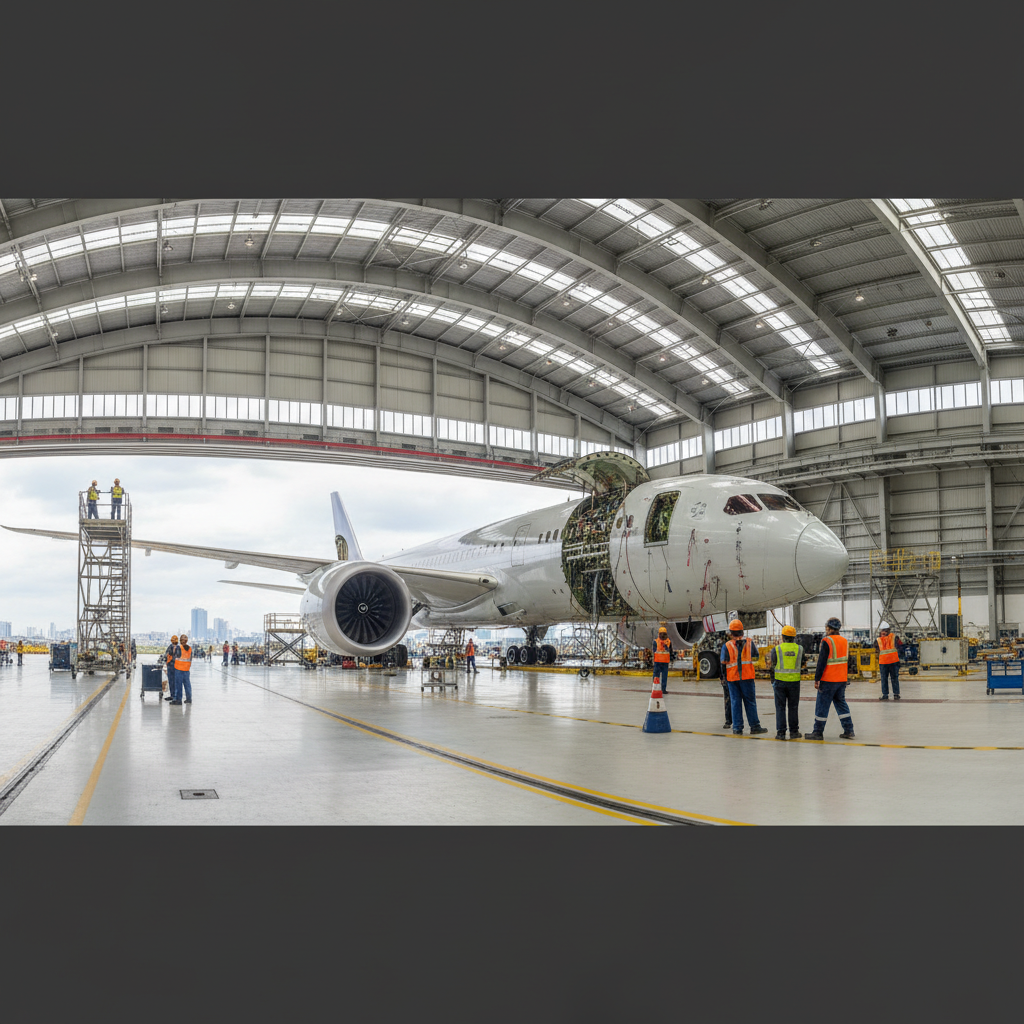
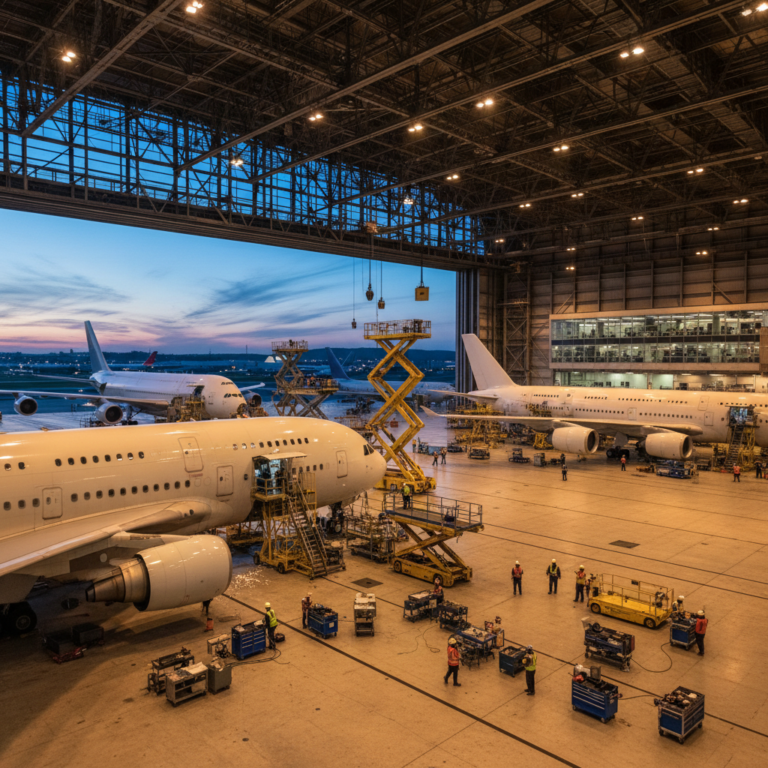
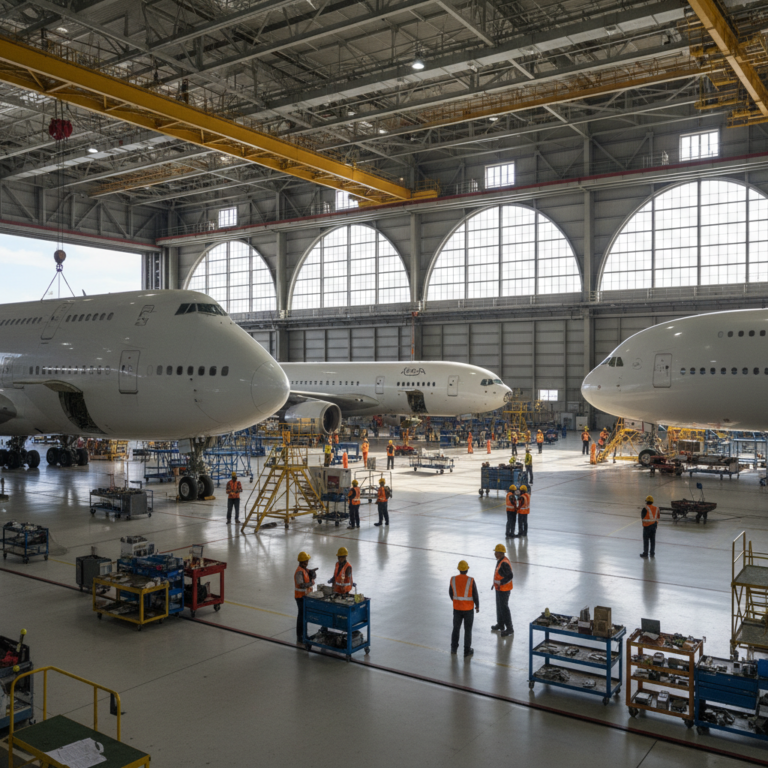
The shortage numbers are real. But they only describe the supply side. Even where staffing levels are adequate, deployment efficiency determines actual output. And in MRO and ground operations, deployment efficiency has a precise name: wrench time.
Wrench time is the percentage of a maintenance technician’s shift spent on direct, hands-on tasks (inspections, component changes, diagnostics, repairs). Best-in-class operations at major carriers report wrench time between 50% and 60%. That means even top programs lose 40-50% of every shift to non-wrench activity: task allocation, walking to parts bins, searching for tooling, waiting on equipment, doing paperwork, traveling between hangars.
Operations without real-time tracking or scheduling visibility run far worse. The difference between a tracked MRO floor and an untracked one can be the gap between 23% and 38% wrench time. To put that in perspective: closing that gap delivers the productive-hour equivalent of hiring 65% more technicians, without hiring a single person.
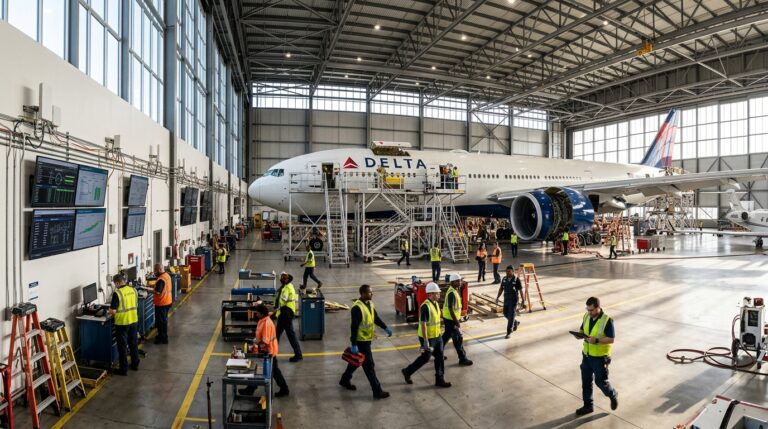
This is where the conversation about aviation workforce productivity consistently misses the mark. Industry forums, analyst reports, and airline earnings calls discuss pilot shortages, mechanic pipelines, and training bottlenecks. Those matter. But nobody talks about the deployment gap: productive hours evaporating because equipment, tooling, and ground support assets are not where they’re expected to be.
A technician who spends 20 minutes locating a GPU that was towed to the wrong gate isn’t turning wrenches. A ramp crew that can’t find the right ULD container for a cargo build is standing idle. A line maintenance team waiting on a tool kit signed out to another hangar and never returned is burning clock. These aren’t edge cases. They happen every shift, at every large operation, and they add up to thousands of lost productive hours per month.
That’s not a staffing gap. It’s a visibility gap. And visibility is something you can fix without a five-year training pipeline or a $50 billion contract reset.
Five Levers That Actually Move the Needle
After a decade and a half in this space, I’ve watched a lot of “productivity solutions” come and go. The ones that stick share a common trait: they increase the ratio of productive-to-unproductive hours without requiring more people. Five levers meet that bar today, with measurable evidence behind each.
AI-Driven Predictive Maintenance
Predictive maintenance platforms using sensor telemetry and machine learning are reducing unplanned aircraft downtime by up to 30% at the carriers and MROs that have deployed them. SIA Engineering (SIAEC) has committed publicly to AI as its primary response to the mechanic shortage in Asia-Pacific. Boeing cited AI, VR, and mixed reality as the technologies that will “enhance and augment training to transform aviation workforce preparation” in its 2025 PTO launch. The value is straightforward: fewer surprise maintenance events means fewer fire drills, fewer overtime hours, and more scheduled (efficient) work.
Digital Crew and Technician Scheduling
BCG’s research on airline crew productivity shows gains of 20-30% are achievable through improved rostering and digital crew management tools. AI-driven scheduling platforms in MRO compress administrative overhead by up to 66% in mature implementations. When a technician’s shift assignment, skill match, and part availability are aligned before they clock in (rather than sorted out during the first hour), wrench time goes up automatically.
Asset Tracking and Visibility
This is the lever closest to what we do at Datanet, so I’ll name the bias upfront. But the underlying logic is independent of who provides the hardware.
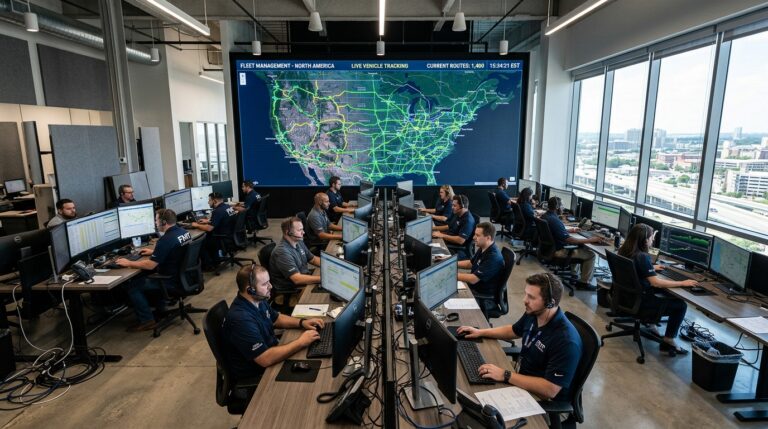
When ground support equipment, ULD containers, maintenance tooling, and rotable parts carry IoT trackers, three things happen. Search time drops: technicians and ramp crews stop walking the apron looking for assets. Utilization goes up: operators discover they don’t need 30% more equipment, they need to see where the equipment they own is sitting. Dwell time shrinks: assets cycle faster, so fewer units do the same work.
Each of those is a direct workforce-productivity gain, measured in recovered hours per shift. Not headcount added. Not contracts renegotiated. Just less friction between a worker and the work.
In aviation-specific environments (DO-160 rated cargo, ramp-exposed GSE, multi-airport ULD pools), device selection matters. Hardware like the Thingfox T2, which carries DO-160 airfreight certification, handles the compliance and durability requirements that generic consumer trackers can’t. For broader ground equipment fleets, cellular and GNSS-based asset tracking devices provide the position and status data that closes the visibility gap on the ramp.
If your MRO floor or ramp operation goes blind between shifts, that’s a workforce productivity leak. Not a hiring one.
Training Pipeline Modernization
The U.S. certified over 8,400 new pilots in 2025, and the student pilot population continues to climb. Airline-backed academies (Delta Propel, United Aviate, American Cadet Academy, Southwest Destination 225) are producing candidates faster than the independent flight school market. VR and mixed-reality training are compressing time-to-competency for both pilots and mechanics. The real bottleneck now is institutional: there aren’t enough FAA-certified school slots to absorb the candidates who want in. Solving that bottleneck is a regulatory capacity problem, not a demand problem.
Expanding the Talent Pool
The 6% female pilot figure isn’t a diversity bullet point. It’s a supply constraint with a dollar sign next to it. An industry that recruits from less than half the available workforce and then reports a labor shortage is leaving its largest supply lever untouched. The same applies to socioeconomic access: integrated flight-training financing and targeted recruitment from underrepresented communities directly expand the candidate pipeline at a fraction of the cost of wage escalation.
Frequently Asked Questions
What is aviation workforce productivity?
It’s the ratio of aviation output (available seat miles, passengers, or revenue) to labor input (employee-hours or headcount). The U.S. Bureau of Transportation Statistics measures it as available seat miles per labor hour. Financial analysts use revenue per employee. In maintenance, the most actionable metric is wrench time: the share of a technician’s shift spent on direct hands-on tasks.
How many new aviation workers are needed by 2044?
Boeing’s 2025 Pilot and Technician Outlook forecasts demand for 660,000 pilots, 710,000 maintenance technicians, and one million cabin crew globally, totaling nearly 2.4 million new aviation professionals over 20 years. About 40% of that demand is concentrated in Asia-Pacific.
Why is airline productivity flat despite record revenue?
Cost per available seat mile is up 22% since 2019, but revenue per seat mile rose only 11%. New labor contracts, estimated at $50 billion in incremental costs, pushed crew and technician pay 22-50% higher per cycle without a corresponding increase in output per labor hour. Margins compressed instead of productivity expanding.
What is wrench time in aviation maintenance?
Wrench time is the percentage of a maintenance shift spent on actual maintenance tasks: inspections, component changes, diagnostics, repairs. Best-in-class MRO operations reach 50-60%. Untracked operations can run as low as 23%. Improving wrench time is the fastest way to increase effective maintenance capacity without hiring.
How does asset tracking improve aviation workforce productivity?
IoT-based trackers on GSE, tooling, ULDs, and rotable parts eliminate search time, increase equipment utilization, and reduce dwell time. Technicians and ramp crews spend fewer minutes locating assets and more minutes in productive work. The gain is measured in recovered hours per shift, not additional headcount.
Is the pilot shortage real in 2026?
Yes, and it’s structural. Pilot retirements peak at about 700 per year between 2028 and 2031. Regional carriers keep losing pilots to mainline airlines despite 22-35% pay raises. Only 6% of U.S. airline pilots are women. Both Boeing and CAE confirm the gap persists across their 10-year and 20-year demand forecasts.




 +1 508 292 2210

2 Responses