

Most asset tracking deployments don’t fail because of bad hardware. They fail because nobody asked the right question before the hardware shipped.
I’ve spent 15+ years deploying IoT tracking across aviation MRO, freight forwarding, port operations, and industrial supply chains. The best practices for asset tracking that separate working systems from expensive decorations have almost nothing to do with tag specifications. They’re about decisions: what you define, what you measure, what you integrate, and who you train. In a market Fortune Business Insights estimates at nearly $29 billion in 2026, the spending is real. The results are optional, unless you get the foundations right. (See also: asset tracking integration.)
Here’s what I’ve seen work, and what I’ve seen burn money.
Shipment Tracking and Asset Tracking Are Not the Same Thing
This is the fork in the road most teams blow right past.
Shipment tracking ends at delivery. A parcel reaches point B, the job is done, the tracker goes quiet. Asset tracking follows the thing through its full lifecycle: deployment, use, maintenance, return, dwell, reuse, retirement. The difference reshapes everything downstream: what data you collect, how long you store it, what systems you integrate with, and how you justify the investment.
A freight forwarder tracking a pallet from Shanghai to Rotterdam needs location pings and an ETA. An airline tracking a ULD through 50 airports, three MRO cycles, and 200+ flights needs custody records, condition data, dwell time, maintenance compliance, and cycle counts. In high-security environments like military asset tracking, the requirements extend further to include chain-of-custody documentation and tamper detection. Same GPS coordinate. Completely different operational value.
If your reusable containers or ocean equipment vanish from visibility the moment they leave your dock, you’re running shipment tracking and calling it asset tracking. That gap costs more than most teams realize. Lost containers aren’t just a procurement line item. They’re cycle time, customer trust, and fleet utilization bleeding out silently.
Before you evaluate any technology, settle this question: does your tracking job end at delivery, or does it follow the asset through the full loop? Every practice below assumes the answer is the full loop.
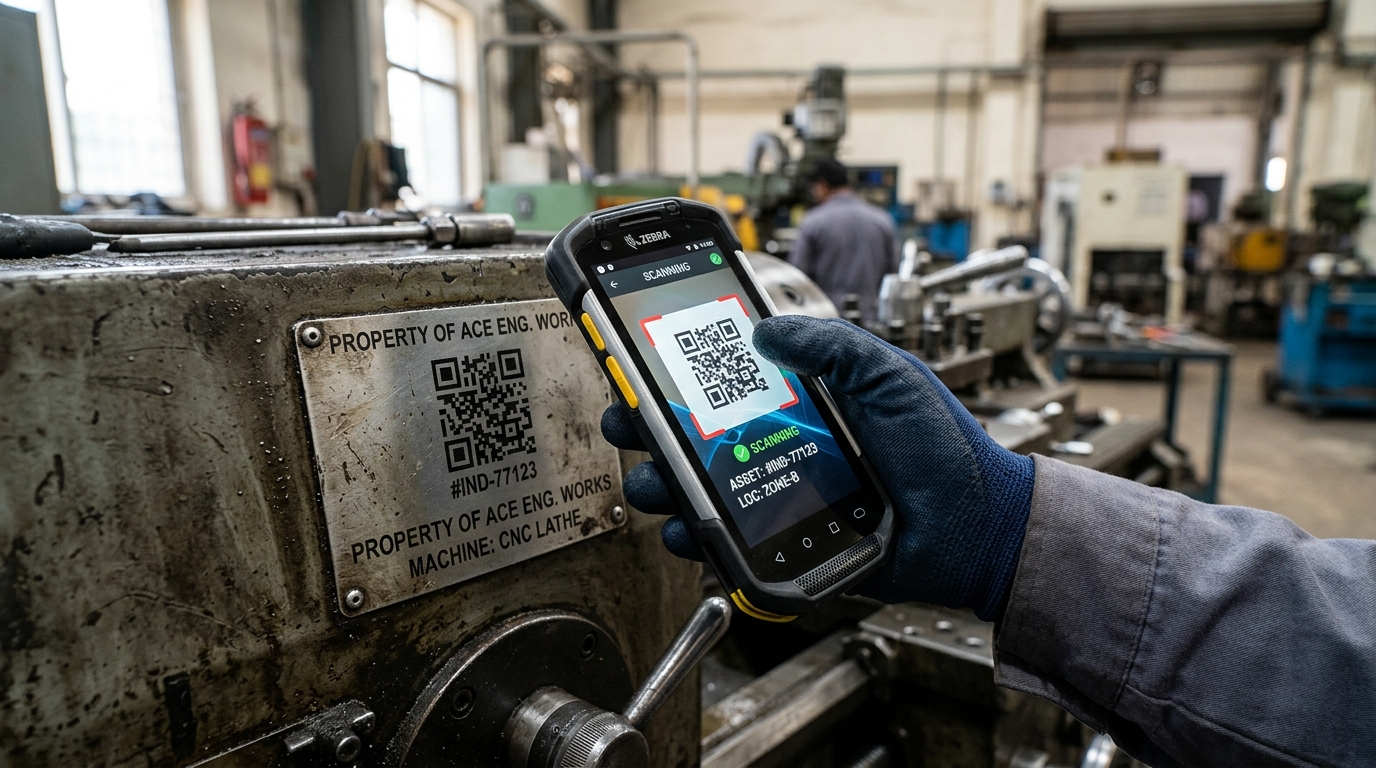
Start With Identity, Not Location
The instinct is to start with “where is it?” The better first question: “what is it, who has custody, and what should happen next?”
Every tracked asset needs a unique, persistent identifier tied to its type, serial number, custodian, home site, condition, maintenance schedule, and disposal pathway. GS1’s asset management guidance links person, product, and place and maps operations from procurement through audit and retirement. ISO 55001’s 2024 revision reinforces lifecycle decisions, value realization, and data governance as foundations, not afterthoughts.
Skip this step, and you get a familiar failure mode: a real-time map full of blinking dots nobody can act on. A capable asset tracking platform shows where a thing is, but it also knows which dot is overdue for calibration, which one belongs to a customer, and which one was supposed to be returned three weeks ago. A well-designed asset tracking dashboard turns that context into decisions instead of noise, and strong asset tracking data analytics turns those decisions into measurable ROI. An asset tracking API is what moves that context from raw pings into the systems where decisions actually get made.
The interoperability layer matters here too. GS1’s EPCIS standard structures visibility events around five dimensions: what, when, where, why, and how. That vocabulary lets location data travel between systems (your WMS, your partner’s ERP, a customs platform) without becoming a proprietary dead end.
When we scope an asset tracking deployment at Datanet, the first deliverable is never a dashboard. It’s a reconciled asset register. The dashboard is useless without it.
Match the Technology to the Decision
The technology demo always looks great. Dots move, alerts fire, the map zooms in. But demos don’t reveal what the system does when the tag is behind a metal shelf, the battery dies at month four, or the asset crosses from indoor to outdoor.
The right question isn’t “which technology is best?” It’s “which decision does this data need to support, and what’s the least complex system that answers reliably?”
| Technology | Works well when | Watch out for |
|---|---|---|
| Barcode / QR | Deliberate scans at handoffs, audits, maintenance checkpoints. Low cost, zero battery. | A missed scan looks like a missing asset. No automation, no continuous visibility. |
| Passive UHF / RAIN RFID | Reading hundreds of items at a doorway or shelf without line of sight. Battery-free. | Reader infrastructure required. Metal, liquids, and compact items complicate tag placement and reads. A read event confirms identity, not a continuously measured coordinate. |
| BLE (Bluetooth Low Energy) | Room-level or zone-level indoor tracking where gateways can be installed. Long tag battery life. | RSSI-based positioning can drift several meters. Bluetooth 6.0 Channel Sounding improves ranging, but adoption requires compatible hardware on both ends. |
| UWB (Ultra-Wideband) | High-precision indoor tracking where centimeter-level accuracy changes a production or safety decision. | Requires synchronized anchors, a positioning engine, and power infrastructure. Higher cost per zone. |
| GNSS/GPS + cellular or satellite | Vehicles, containers, and equipment moving between outdoor sites or across borders. | No indoor coverage. Transmission gaps during connectivity loss demand a last-known-location policy and store-and-forward firmware. |
Most industrial deployments need a mix. MTU Aero Engines uses UWB on-site and evaluates Bluetooth or GPS for assets that leave the premises. A single radio rarely covers both environments.
In aviation and airfreight, the constraint sharpens further: the tracker must survive vibration, altitude, temperature extremes, and regulatory scrutiny. That’s why we work with devices like the Thingfox T2, which carries DO-160 approval for airfreight. Picking a consumer-grade BLE tag because it was cheap in the demo is how you end up with data gaps at 35,000 feet.
Budget for the Full System, Not Just the Tag
A $15 tag is never a $15 decision.
The real cost of asset tracking is the infrastructure behind the tag: readers, gateways, network upgrades, software licensing, integration labor, battery replacements, calibration, and training. NHS infrastructure guidance found that Wi-Fi RTLS commonly needs more access points than standard network coverage, requiring signals from at least three positions for reliable location estimates. If you’re pricing a deployment on per-tag cost alone, you’ll overshoot your budget before the pilot wraps.
A realistic budget accounts for what lives around the hardware:
- Radio doesn’t behave the same way on every floor. Metal walls, liquid tanks, and stacked cargo create dead zones that only a physical site survey catches. Skip the survey, and your coverage map is fiction.
- Tracker data needs to reach your ERP, WMS, or MRO system. If location events live in a standalone app nobody opens, the deployment is decoration. Budget for integration from day one.
- A five-year battery claim assumes specific reporting intervals and ambient temperatures. In cold-chain, high-vibration, or high-frequency reporting environments, expect shorter cycles. Plan replacement logistics accordingly.
- When assets move between a warehouse (BLE or UWB coverage) and a yard or highway (GPS/cellular), you need a defined handoff protocol. What’s the fallback during the connectivity gap? What does “last known location” mean operationally, and who acts on it?
- Someone has to review alerts. An alarm nobody investigates is worse than no alarm at all, because it trains the team to treat the system as background noise.
At Datanet, we design turn-key solutions specifically because piecemeal deployments are where budgets and timelines fracture. A tracker that works for you means the full system, from hardware selection to platform integration, is built around your operation. Not assembled from a parts catalog.
Set Baselines Before You Deploy
You can’t prove ROI from a tracking system if you didn’t measure the pain before it went live.
Before a single tag is provisioned, document your current state. How long does it take to locate a specific asset today? What’s the gap between your register and a physical count? How many assets are lost, written off, or repurchased unnecessarily each quarter? What’s the average cycle time for a reusable container or ULD? How many hours go into manual audits? How often does missing or delayed equipment create downstream downtime?
The numbers don’t need to be pristine. They need to exist.
A hospital in the NHS wireless trials reported that staff saved an estimated 30 minutes per day finding tagged equipment, and critical incidents involving unavailable infusion pumps more than halved. That’s a clear before-and-after. Without the baseline, it would be just a claim on a slide deck.
In aerospace MRO, the contrast is even sharper. At GE Aviation’s ACSC facility, staff had been checking over 2,000 work orders daily, requiring roughly 12 people for three hours each. After deploying UWB-based tracking, that task dropped to 15 to 20 minutes per person. Reported payback: three months. The result is credible because the baseline was measured, not estimated after the fact.
Three outcomes I tell every client to track from the start:
- Search time reduction, which translates directly to labor cost and throughput.
- Asset utilization improvement, because fewer idle or “invisible” assets means fewer unnecessary purchases and shorter cycle times.
- Maintenance compliance rate, since tracked assets don’t miss scheduled service, which reduces unplanned downtime and liability.
If your vendor can’t help you set up a baseline measurement before deployment, that tells you something about how they expect to prove value afterward.
The Human Layer Will Make or Break the System
The technology can be perfect and the deployment still fails. Every time I’ve seen that happen, the root cause is the same: the people who interact with assets daily weren’t part of the design.
A warehouse operator who doesn’t understand why they need to scan at a checkpoint will skip it. A technician who sees tracking as surveillance will resist it. A manager who gets 200 alerts a day will mute them all by Thursday.
Three things consistently fix this.
First, train on the “why,” not just the “how.” People adopt what they understand. When the team sees that tracking reduces their own search frustration and protects them during audits, compliance follows naturally. When they see it as policing, it dies.
Second, separate asset tracking from personnel tracking. The FTC’s 2025 action against GM and OnStar for sharing drivers’ precise location data without adequate consent should be required reading for anyone deploying location technology. Track the equipment, not the person. If location data can identify individual behavior patterns, you need explicit policies, retention limits, and access controls, not just a checkbox in the privacy policy.
Third, assign every alert to a name. An unowned alert is noise. NHS implementation lessons documented Bluetooth access points interfering with medical devices and unsecured sensors requiring removal and reinstallation. These weren’t technology failures. They were governance failures that technology exposed.
Apple and Google introduced cross-platform unwanted-tracker alerts in 2024, and regulatory expectations keep tightening. Privacy isn’t a compliance afterthought. It’s an engineering requirement. Design for it from the first architecture decision.
Bringing It Together
Asset tracking works when it’s built on clear identity, appropriate technology, honest budgeting, measured baselines, and people who understand the system they’re using. It fails when teams chase a map instead of building the decisions the map should feed.
The practices above aren’t theoretical. They come from deployments across airlines, MRO shops, ground support operations, port logistics, and industrial supply chains. The pattern is always the same: the teams that invest in the unglamorous work (reconciling records, surveying sites, training operators, integrating with existing systems) get results. The ones that skip straight to the dashboard get a very expensive screensaver.
If you’re planning a deployment or rethinking one that isn’t delivering, we build complete asset tracking solutions from hardware to platform integration, scoped to your operation. Talk to our team, or reach us directly at info@datanetiot.com.

Frequently Asked Questions
What is the first step in an asset tracking program?
Reconcile a physical count with your existing records. Assign a unique identifier and a custodian to every asset. Pick one high-impact asset class for the pilot, measure its current failure mode (search time, loss rate, utilization), and build from there. A reconciled register before deployment prevents a system full of unactionable data afterward.
Which tracking technology is best for industrial assets?
It depends on the decision the data supports. Barcodes handle manual checkpoints at low cost. Passive RFID reads large populations without batteries. BLE covers room-level indoor visibility. UWB delivers centimeter-level precision for production-critical workflows. GPS serves outdoor, multi-site movement. Most industrial programs combine two or more technologies with a defined handoff protocol.
How do I calculate ROI for asset tracking?
Baseline your current search time, loss rate, asset utilization, audit labor, and downtime before deployment. Compare improvements in those same metrics against total system cost: tags, infrastructure, software, integration, training, and battery maintenance. GE Aviation’s MRO facility reported three-month payback by measuring specific work-order processing improvements against a documented baseline.
What is the difference between asset tracking and asset management?
Tracking answers where an asset is, who has custody, and what condition it’s in. Management adds the lifecycle decisions: acquire, maintain, redeploy, or retire. Tracking feeds management with reliable data. Without it, management decisions rely on assumptions and outdated spreadsheets.
What causes asset tracking deployments to fail?
Unreconciled asset records, infrastructure blind spots, weak integration with operational systems (ERP, WMS, MRO platforms), unassigned alerts, and insufficient end-user training. Technology rarely fails on its own. The system of decisions, processes, and people around it does.
Can asset tracking work across both indoor and outdoor environments?
Yes, but it requires intentional design. Indoor technologies like BLE or UWB don’t function outdoors. GPS doesn’t work inside. You need a handoff protocol between systems, a last-known-location policy for connectivity gaps, and often two complementary device types or a hybrid tracker with multiple radios.





 +1 508 292 2210