

In the first half of 2025, 23.2 million barrels of oil moved through the Strait of Malacca every single day. Another 20.9 million barrels per day passed through Hormuz. For LNG, roughly 20% of global trade squeezed through the Strait of Hormuz, with Qatar alone pushing about 9.3 Bcf/d. At that scale, energy transport tracking is not a logistics convenience. It is an operational survival function.
And yet, most teams treat it as a dot-on-a-map problem. A GPS coordinate. An AIS ping. An ETA estimate.
That covers one of three questions. The other two (“what condition is the cargo in?” and “can we prove where it came from?”) stay unanswered. In 2026, those unanswered questions are where the regulatory fines, the insurance claims, and the stranded assets live.
Energy Transport Tracking Is Three Problems, Not One
The phrase means different things depending on who is asking. A logistics manager wants live location and ETA for fuel, LNG, or equipment. A pipeline operator wants leak detection, pressure anomalies, and control-room situational awareness. A compliance team wants emissions data, chain-of-custody records, or carbon-intensity proof.
These are different jobs. Different technologies. Different accuracy and latency requirements. Treating them as one purchase is how organizations end up with a dashboard that looks great in a demo but cannot close a work order, trigger an actionable alert, or survive an audit.
| Layer | Primary Question | Typical Data Sources | Decision It Supports |
|---|---|---|---|
| Asset and Shipment Location | Where is it, and when does it arrive? | GPS, AIS, IoT sensors, telematics, temperature, pressure | Dispatch, ETA, route optimization, custody transfer |
| Flow and Operational Monitoring | How much energy is moving, and is the system safe? | SCADA, meters, PMUs, acoustic sensing, fiber optics, GIS | Leak detection, anomaly response, grid stability |
| Provenance and Emissions | What is its origin, carbon intensity, and custody history? | MRV records, satellite observation, certificates, digital passports | Regulatory compliance, carbon credits, import documentation |
Each layer depends on the one before it. You cannot certify the carbon intensity of a cargo you cannot locate. You cannot respond to a pipeline leak you cannot detect. And you cannot detect what you have not instrumented.
Why Position Data Alone Keeps Failing
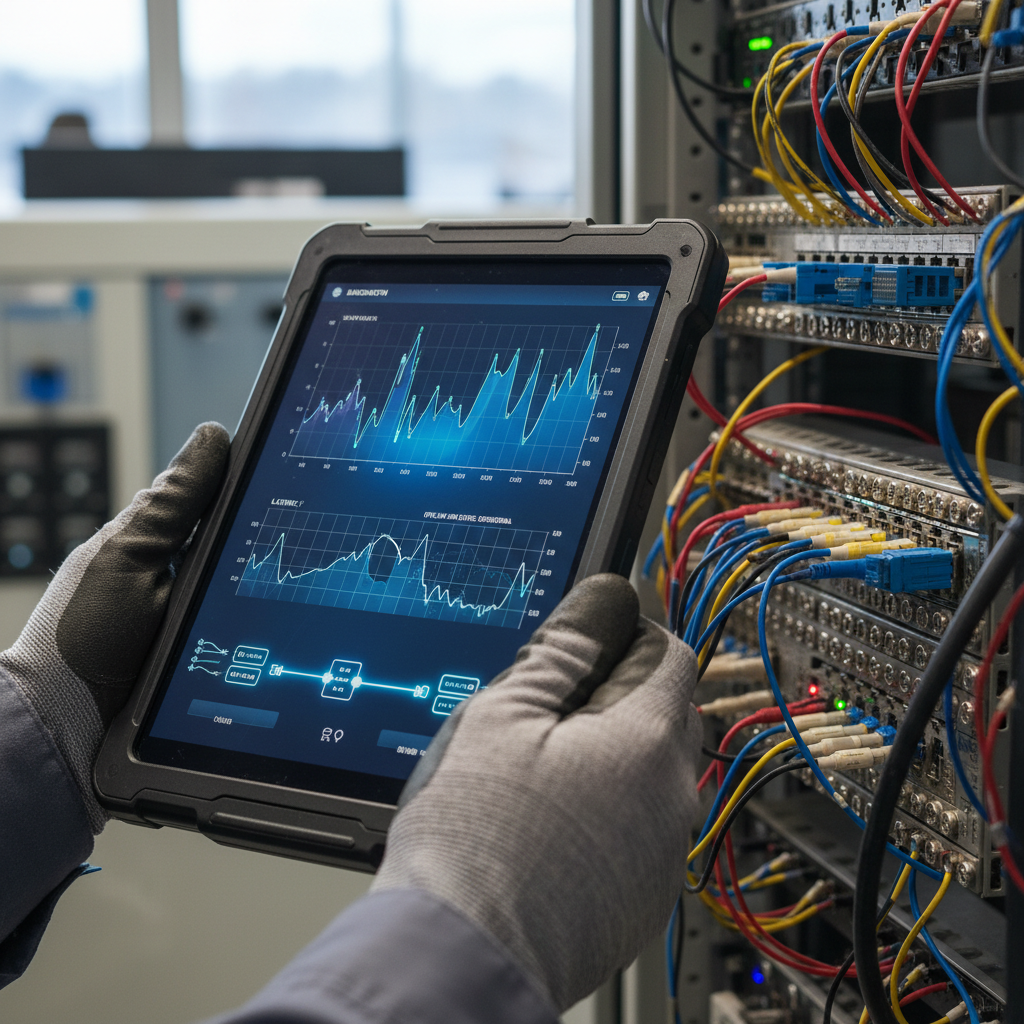
This is where most energy transport tracking conversations go sideways. Teams invest in AIS feeds or GPS telematics and call the visibility problem solved.
It is not.
Kpler reports that 80.1% of vessels caught spoofing their AIS signals were sanctioned within a year. Their 2025 analysis estimates the grey fleet now exceeds 13% of global tanker capacity. An AIS signal tells you where a transponder claims to be. It says nothing about what the vessel is carrying, who owns the cargo, or whether the position is real.
On the emissions side, the gap between reported numbers and measured reality is just as problematic. GHGSat detected 28,224 methane plumes across 127 countries in 2025. A peer-reviewed study cited in their report found satellite-quantified methane exceeded UNFCCC-reported emissions by 15% globally and 32% for oil and gas operations. Self-reporting, by itself, is not verification.
Then there is cybersecurity. When Colonial Pipeline was hit by ransomware in May 2021, the company shut down its entire pipeline proactively. Not because operational technology was directly compromised, but because the business IT disruption made it impossible to verify what was happening in the system. Tracking and control share networks. A breach in one can paralyze the other.
Position data is necessary. Mistaking it for operational evidence is where the expensive surprises live.
Maritime Energy: Tracking as a Resilience Function
Maritime energy flows funnel through a handful of chokepoints. A delayed, spoofed, or incomplete data feed at Malacca or Hormuz can cascade through insurance pricing, trading positions, physical security decisions, and downstream electricity generation. For anyone moving or buying energy commodities by sea, that is not a risk model exercise. It is Tuesday.
This is also where the distinction between shipment tracking and asset tracking becomes critical.
A shipment tracker follows cargo from origin to delivery. Once the tanker discharges, the job ends. An asset tracker follows the vessel, container, or equipment through its entire cycle: loaded, in transit, at port, idle, in maintenance, repositioned, reloaded. For operators managing fleets of LNG carriers, fuel barges, offshore supply vessels, or reusable transport containers, cycle-time visibility is where the real money sits. Knowing “the cargo arrived” is a status update. Knowing “this vessel has been idle at anchorage for 11 days at $47,000 per day while three other jobs wait” is an operational decision.
Regulation is reinforcing this. The IMO Data Collection System requires ships of 5,000 gross tonnage and above to collect and report fuel-consumption data, feeding the Carbon Intensity Indicator (CII). The EU ETS now covers shipping emissions, phasing from 40% in 2025 to 100% from 2027. For large vessels, maritime energy transport tracking has crossed from “nice to have” to regulatory infrastructure.
Pipelines and Grids: Tracking Energy That Doesn’t Move in a Box
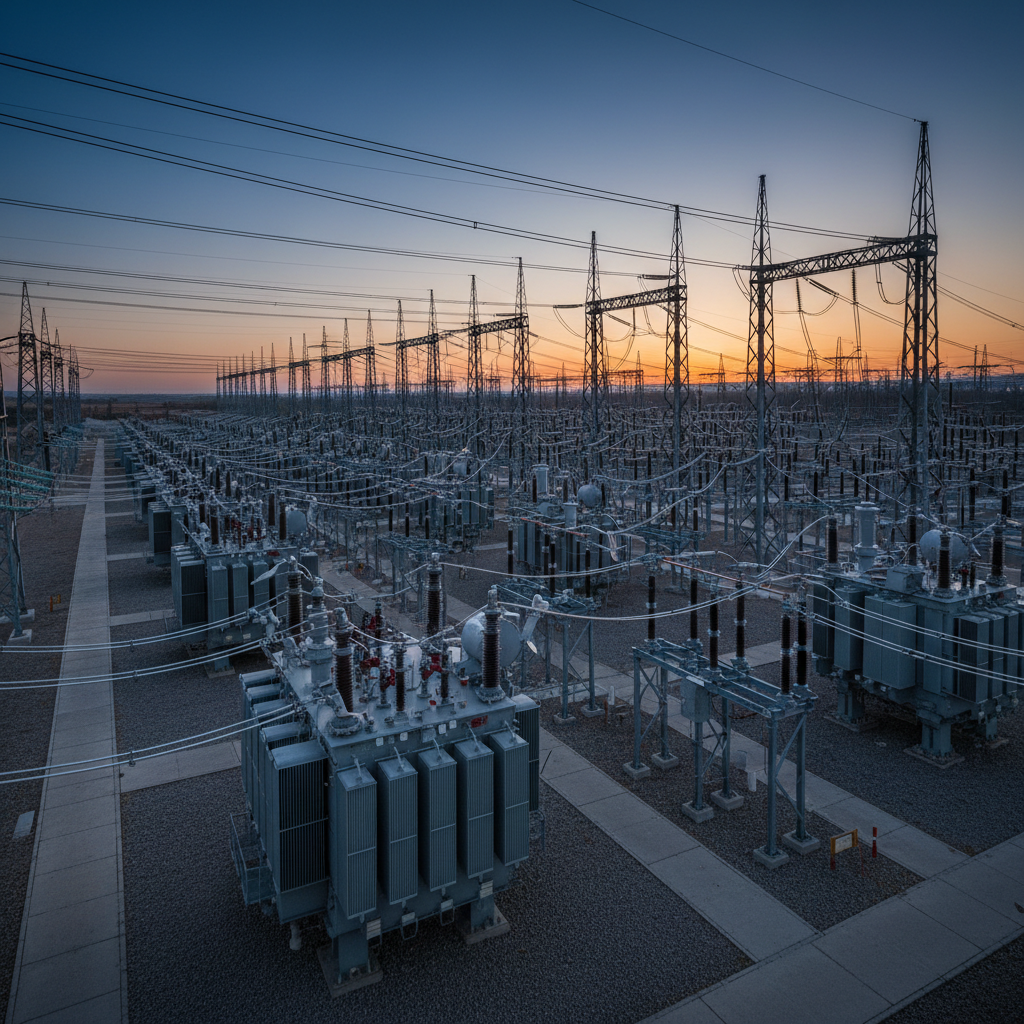
Not all energy transport happens on a vessel or truck. Pipelines and power grids carry the majority of energy, and tracking them demands fundamentally different instrumentation.
The US alone has approximately 700,000 circuit miles of electric transmission lines. PHMSA has tracked pipeline infrastructure since 1970, covering gas distribution, gathering, transmission, hazardous liquid, LNG, and underground storage. Multiple operators, different regulatory classes, different failure modes.
For pipelines, SCADA remains the backbone. PHMSA regulations specifically address controllers, control rooms, and SCADA systems used to remotely monitor and control pipeline operations. API RP 1130 covers algorithmic monitoring tools that help operators recognize hydraulic anomalies indicating potential leaks. But no single detection method catches everything. Slow seepage, transient flow variations, sensor drift, unauthorized excavation, and communications failure each produce different signatures. Mature programs stack computational monitoring with field inspection, in-line tools, acoustic or fiber sensing, and GIS. Even a dedicated moisture tracker shows why a single reading is rarely enough to characterize a carrier’s true condition.
For power grids, phasor measurement units (PMUs) sample voltage, current, and frequency at 1,200 or more samples per second, producing 30+ phasor values per second across interconnections spanning hundreds of miles. Digital twins extend this by combining topology, asset registries, smart-meter data, and simulation into a queryable operational model.
The lesson: if your tracking system does not match the physics and failure modes of your specific carrier, it is not a tracking system. It is decoration.
Hydrogen, Batteries, and the Provenance Layer
The newest layer of energy transport tracking has nothing to do with “where.” It is entirely about “what” and “from where.”
Hydrogen tracking is a certification and mass-balance problem layered onto physical logistics. CertifHy’s EU Hydrogen Certification Scheme covers renewable fuels of non-biological origin (RFNBOs) and low-carbon hydrogen, with shared governance, audit procedures, and traceability rules. The EU requires RFNBOs to reach at least 1% of transport energy by 2030 and at least 42% of industrial hydrogen by the same year, rising to 60% by 2035. To qualify as “renewable,” hydrogen must achieve at least 70% greenhouse-gas savings.
Battery tracking blends logistics with lifecycle provenance. The European Commission requires battery passports for EV, light-mobility, home-storage, and industrial batteries. The operator placing the battery on the market owns the passport. Current timeline: registry in 2026, mandatory passports by February 18, 2027.
But provenance at scale brings its own problem. A GIZ study on critical-mineral traceability cautions that uniform mine-to-product tracking is rarely realistic. Supply chains are complex and non-linear. Fragmented regulations limit cross-border data exchange. Traceability records what was entered into the system. It does not guarantee what was entered is true. Independent verification, governance, and clear accountability remain non-negotiable.
For companies transporting hydrogen, batteries, or renewable fuels, this provenance layer is no longer aspirational. It is a market-access gate.
From Dashboard to Operational System: Where ROI Lives
I have seen this pattern across dozens of deployments in energy logistics and aviation alike. A team buys a tracking platform. Beautiful map. Colored dots. Smooth animations. Six months later, four problems surface:
- Alerts do not connect to work orders or dispatch
- Data does not integrate with the EAM, ERP, or port management system
- Nobody defined what constitutes a false positive, let alone measured the rate
- The system has no fallback for communications loss
A dashboard shows what is happening. An operational system changes what you do next. The deployments that generate measurable returns close the loop: detection triggers an alert, the alert creates a work order, the work order dispatches a crew or reroutes an asset, the resolution gets logged, and the log feeds a compliance report. Every break in that chain is a place value disappears.
Three outcomes that separate working tracking systems from expensive screen savers:
- Cycle time reduction. Track reusable assets (containers, ULDs, ground support equipment, portable fuel systems) through their full lifecycle, not just origin to destination, and idle time becomes visible. In maritime operations, idle time at anchorage or port runs tens of thousands of dollars per day. “Cargo delivered” is not the same as “container available for reuse.”
- Loss and shrinkage prevention. The IEA estimates around 30% of fossil-fuel methane emissions in 2024 could have been avoided at no net cost under prevailing energy prices. For physical equipment, the principle holds: what you cannot see, you cannot recover.
- Compliance readiness. EU ETS is expanding. IMO CII is tightening. EU methane import rules are arriving. Battery passports are due in 2027. Tracking data is becoming raw material for regulatory submissions. If your system cannot produce audit-ready records today, you are building a second system later, under deadline pressure, at a premium.
Choosing the Right Tracking Architecture
The temptation is to buy one platform that handles everything. In energy transport, that rarely works. The carriers, failure modes, latency requirements, and regulatory frameworks are too different.
A layered approach is more practical:
For immediate safety (pipelines, grid operations): deterministic systems. SCADA, computational pipeline monitoring, PMUs, acoustic sensors. Response time in seconds. Tolerance for communications loss. Explainable alerts over analytics elegance. Safety-critical tracking stays segregated from cloud platforms.
For commercial flow intelligence (maritime, fleet, trading): observational systems. AIS, GNSS telematics, satellite imagery, cargo inference engines. Response time in hours or days. Routing, ETA management, market positioning. Always corroborate AIS with independent data in high-risk corridors.
For provenance and compliance (hydrogen, batteries, carbon intensity): certified traceability. Mass-balance accounting, digital passports, MRV records, third-party verification. Response time in months or years. Must survive audits.
For physical asset tracking across the full cycle (containers, reusable transport units, ground equipment, portable fuel systems): ruggedized IoT hardware with long battery life, global connectivity, and integration into your asset management workflow. This is the layer most energy logistics operations overlook entirely. The shipment tracker says “delivered.” The asset tracker says “your container pool of 3,000 units has a 22-day average cycle time, and 340 of them have been idle over 30 days.” One is a notification. The other is an operational lever.
If your ocean equipment tracking ends at delivery confirmation, the most expensive part of the asset cycle stays invisible.
Across every layer, the architecture should be open: common asset identifiers, standard APIs, secure communications, clear data ownership. Cybersecurity is a design constraint, not a feature you bolt on later. Connecting a pipeline control room to cloud analytics improves visibility, but it expands the attack surface. Build segmentation, immutable logs, and manual fallback into the plan from day one.
If any of this resonates with what your operation is dealing with, talk to our team. We work with energy logistics, maritime operators, and industrial fleets to close the gap between “we know where it was shipped” and “we know where every asset is right now.” That gap is usually bigger than people expect.
Frequently Asked Questions
Is energy transport tracking just GPS tracking?
No. GPS or AIS answers where an asset is. Energy transport tracking also encompasses pressure, flow, temperature, cargo condition, emissions measurement, custody chain, and provenance certification. The right system depends on whether you need real-time safety alerts, commercial intelligence, or audit-ready regulatory documentation.
Which energy carriers need tracking most urgently?
All major carriers do, but the risk profile differs. Pipelines need leak and integrity monitoring. LNG and crude need cargo, chokepoint, and sanctions visibility. Electricity needs real-time grid state estimation. Hydrogen and batteries need origin certification and lifecycle passports. Prioritize by consequence of failure multiplied by current uncertainty.
Can AIS data prove what a tanker is carrying?
No. AIS provides vessel identity and reported position. Cargo composition, beneficial ownership, and contractual title require corroboration from documents, port records, satellite imagery, and analytical inference. Spoofing is a real and growing risk, particularly among the grey fleet, which now exceeds 13% of global tanker capacity by some estimates.
What is the difference between shipment tracking and asset tracking?
Shipment tracking follows cargo from origin to delivery. Asset tracking follows the vessel, container, or equipment through its entire lifecycle: loaded, in transit, idle, in maintenance, repositioned, and reloaded. For reusable assets in energy logistics, the gap between “delivered” and “ready for next use” is where most hidden operational cost sits.
How do EU regulations affect energy transport tracking in 2026?
The EU ETS covers shipping emissions, phasing to 100% by 2027. EU methane rules require importers to report origin, route, and methane intensity. Battery passports become mandatory by February 2027. Together, these regulations turn tracking data into compliance infrastructure, not just operational visibility.
What should I ask before buying a tracking solution?
Start with: what decision will this alert change? Then ask about required latency, accuracy, and integration with SCADA, GIS, EAM, or ERP. Ask how false positives are measured, who owns the data, and how the system operates during communications loss. Calculate avoided loss, downtime, emissions exposure, and compliance risk against total lifecycle cost.







 +1 508 292 2210

One Response