

A soil moisture controller labeled by EPA’s WaterSense program saves an average home more than 15,000 gallons of water per year. The mechanism is simple: the sensor detects that the ground is already wet and overrides the scheduled irrigation cycle. No hardware upgrade required. Just better data at the right moment.
That principle scales. A $10 analog probe tells a gardener whether to water a potted plant. A multi-depth agricultural sensor tells a grower how fast the root zone is draining. An environmental logger tells a logistics team whether humidity inside a container spiked during transit. All of these devices get called a moisture tracker. They solve fundamentally different problems.
Below is a practical breakdown of what each type measures, why accuracy varies more than most buyers expect, and when continuous monitoring creates value that a one-time reading never will.
What a Moisture Tracker Actually Measures
The label “moisture tracker” hides a critical variable mismatch. Not all moisture is the same physical quantity, and a sensor designed for one cannot reliably measure another.
Four categories cover nearly every use case:
- Volumetric water content (VWC): the percentage of a soil volume occupied by water. Most agricultural and garden sensors report this. A VWC of 25% means a quarter of the measured soil sample is water by volume.
- Soil water potential (tension): how tightly the soil grips its water. Two soils can have identical VWC but very different tension, meaning plants extract water easily in one and struggle in the other. Tensiometers and granular matrix sensors work in this domain.
- Relative humidity (RH): the moisture content of air, expressed as a percentage of saturation at a given temperature. Environmental loggers, museum sensors, pharmaceutical monitors, and in-slab concrete probes (ASTM F2170) operate here.
- Material moisture content: the water in wood, drywall, concrete, paper, grain, or other solids, usually expressed as a percentage of dry weight. Pin and pinless meters handle construction, woodworking, and food processing applications.
This matters because a VWC reading from a garden sensor and an RH reading from a concrete probe are not comparable numbers, even if both display “35%.” They describe different physical states. Choosing the wrong type of tracker is worse than having no tracker at all: the number looks authoritative while answering a question nobody asked.
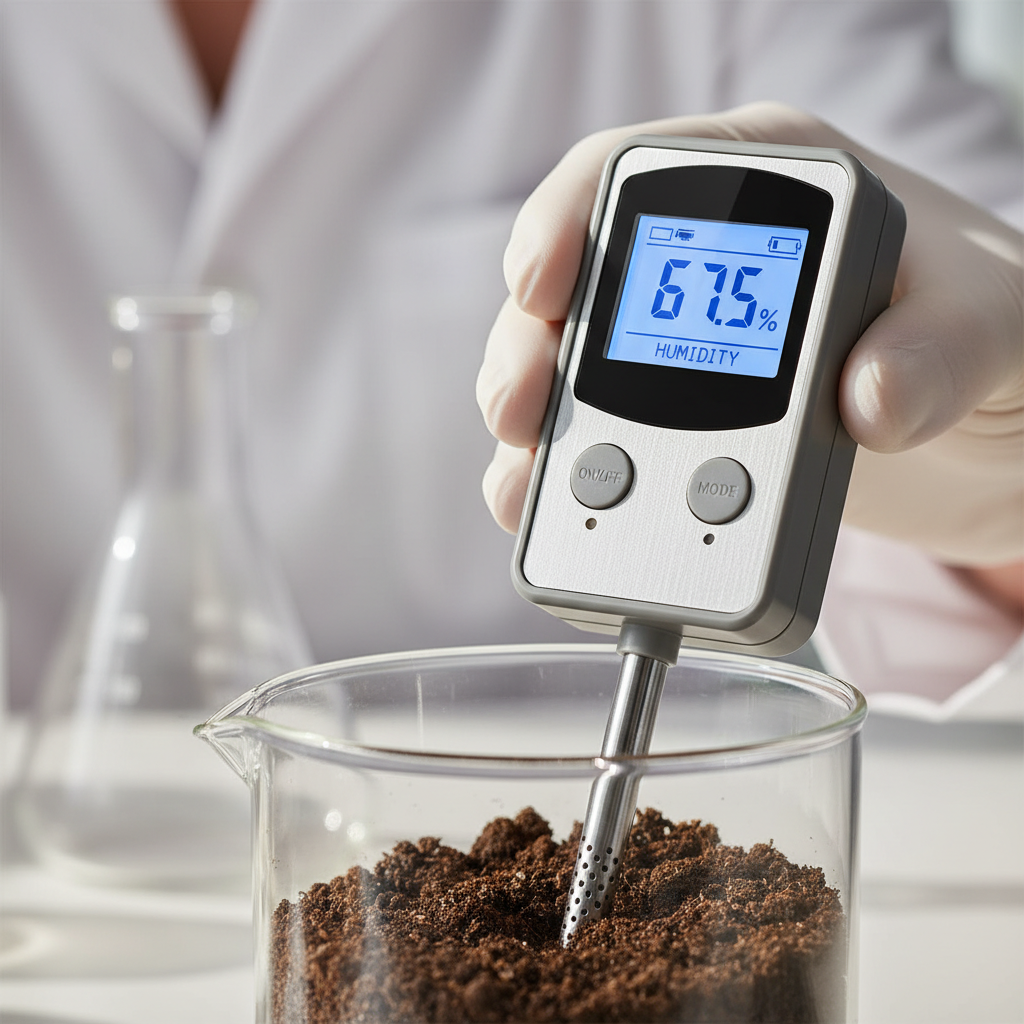
How the Main Sensor Types Compare
Once you know which variable you need, the next decision is the sensing method. Each carries trade-offs in accuracy, cost, maintenance, and sensitivity to interference.
| Method | What It Measures | Strengths | Limitations |
|---|---|---|---|
| Capacitance / FDR | Dielectric response → VWC | Fast, low power, remote-capable, moderate cost | Sensitive to salinity, clay, temperature, and air gaps around the probe |
| TDR (Time Domain Reflectometry) | Pulse travel time → VWC | Generally accurate to ±2-3% VWC under proper calibration; less salt-sensitive | Higher cost; small measurement volume; installation quality is critical |
| Tensiometer | Soil water tension | Direct tension reading; unaffected by salinity; inexpensive | Needs water refill; limited operating range (~70-90 kPa); can cavitate |
| Granular matrix / resistance | Electrical resistance → tension | Low cost; continuous logging possible | Slow response; temperature and salinity sensitive; poor in sandy soils |
| Neutron probe | Neutron scattering → VWC | Large measurement area; high accuracy | ~$10,000; radioactive source; licensing and manual readings only |
| RH probe | Relative humidity in air or material | Ideal for concrete testing (ASTM F2170), storage, transit, museums | Not a soil-VWC measurement; placement and applicable standard define meaning |
| Pin / pinless meter | Material moisture (wood, drywall, surface concrete) | Instant field inspections; portable | Point-in-time only; substrate variation and operator technique affect readings |
The accuracy figures deserve scrutiny. Oregon State University reports TDR accuracy of ±2-3% VWC under proper calibration. That sounds tight until you unpack what “proper calibration” actually requires: soil-specific adjustment, correct installation depth, good probe contact, and stable conditions.
A 2024 laboratory study testing eight commercial sensors found that salinity caused overestimation across every sensor tested. Calibration brought seven of eight to approximately ±0.02 cm³/cm³. The eighth performed worst in that specific experiment, though results may differ in other soils.
The takeaway: accuracy is not a spec you read off a datasheet. It is a result you achieve through selection, installation, and calibration. The best sensor on the market, poorly installed, produces worse data than a cheaper sensor calibrated for your specific conditions.
The Excursion Problem: Spot Checks vs. Continuous Tracking
Here is the question that separates a moisture meter from a moisture tracker: what happens between readings?
A handheld meter answers “how wet is this right now?” That is sufficient for certain tasks. Checking lumber moisture before milling. Testing a houseplant. Inspecting a wall after a suspected leak.
But many real-world moisture problems are excursion events. They happen at 2 a.m., during a rainstorm, or on day 18 of a shipping container’s ocean transit. A spot check at 9 a.m. on Tuesday misses them entirely.
A museum case study by Conserv illustrates the gap clearly. Once-daily handheld readings showed conditions appeared stable. Wireless sensors sampling every 15 minutes revealed large intraday humidity fluctuations that the morning walkthrough never caught. Same building. Same air. The only difference was measurement frequency.
This is not an academic distinction. It is an operational one:
- In agriculture, a root zone can drain below the stress threshold between morning checks, especially in sandy soils. Continuous monitoring catches the deficit before the crop shows visible wilting.
- In pharmaceutical storage, a 30-minute humidity excursion can void a batch if the facility cannot prove conditions stayed within spec for the entire storage window.
- In freight and logistics, cargo damage claims hinge on whether someone can prove conditions inside a container remained within limits for the full journey, not just at origin and destination.
- In construction, a single-point concrete moisture test may pass while the slab center stays too wet for adhesive. Drying gradients are not uniform across thickness.
The word “tracker” implies continuity. If your moisture device does not log, transmit, or alert, it is a meter, not a tracker. Both are valid tools. They solve different problems. The cost of choosing wrong shows up as crop loss, compliance failures, rejected shipments, or flooring that delaminates six months after installation.
Where Continuous Moisture Tracking Creates Measurable ROI
The business case for a tracker over a meter is strongest wherever water, humidity, or material moisture has a direct, quantifiable cost. Four sectors make the case most clearly.
Agriculture and Irrigation
Agriculture accounts for roughly 70% of global freshwater withdrawals. Even modest improvements in irrigation timing produce large absolute savings.
CropX published a controlled California grapefruit comparison: 50 trees under identical grove conditions, half on predetermined sprinkler schedules, half guided by soil sensors and weather data. The sensor-managed trees used 68% less water and produced a 14% higher yield. This is a vendor-published result, not independent peer-reviewed research, so treat it as strong evidence of a plausible operating model rather than a universal guarantee.
Arable reported a 22% irrigation reduction across 27 Nebraska fields in 2023, combining weather, crop, soil, and irrigation data in a single platform.
At the residential scale, the EPA benchmark is more standardized: WaterSense-certified controllers must consistently prevent irrigation at a preset soil moisture threshold. The result is 15,000+ gallons saved per home per year.
Construction and Flooring
Concrete slabs can take months to dry to a level safe for adhesive. An incorrect moisture assessment leads to adhesive failure, mold, or flooring delamination, with repair costs that make the sensor price look like a rounding error.
ASTM F2170 specifies quantitative in-slab relative humidity testing as the standard method for this decision. Industry guidance commonly cites 75% RH (or the flooring manufacturer’s limit) as the threshold. A standards-compliant in-slab probe is far more defensible than a surface scan, because the surface can read dry while the center of the slab remains too wet.
Museums, Pharmaceuticals, and Cold Chains
These sectors share a common requirement: proving that environmental conditions stayed within limits over time. A point-in-time measurement cannot do that. Continuous loggers with cloud storage, threshold alerts, and audit-ready export can.
Modern museum deployments use wireless sensors and gateways that collect and transmit temperature and humidity measurements automatically, replacing manual walkthrough logs with continuous digital records. In pharmaceutical cold chains and food storage, the regulatory expectation is explicit: if you cannot prove conditions were maintained for the full storage or transit window, the product may be considered compromised.
Freight, Logistics, and Supply Chain
This is the use case I encounter most in my work at Datanet. A shipping container crosses an ocean for 30 days. The cargo (electronics, machinery, food ingredients, pharmaceutical raw materials) is moisture-sensitive. At the destination, the receiver opens the container and finds condensation damage, corrosion, or mold. For air cargo with strict environmental requirements, airfreight certified trackers provide compliant monitoring throughout the chain of custody.
Who is liable? Without continuous environmental data from inside the container, the answer is “whoever loses the argument.” With a tracker that logged temperature and humidity every 15 or 30 minutes throughout the voyage, the answer is documented. The data shows exactly when conditions exceeded the threshold, which leg of the journey caused the excursion, and whether packing and desiccant were adequate.
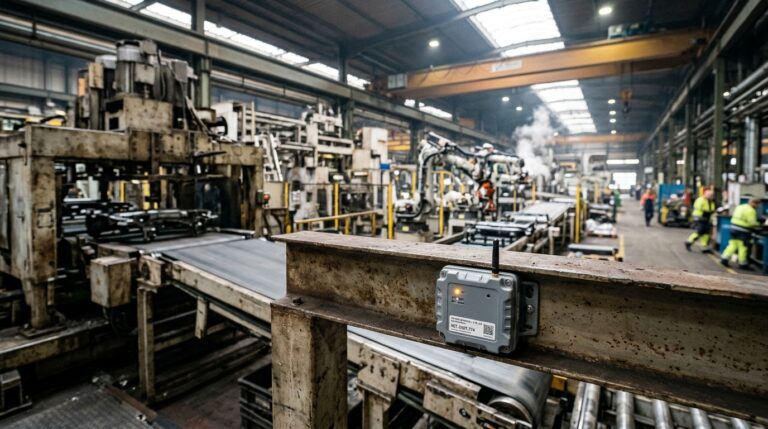
This is where environmental tracking overlaps with asset tracking: knowing not just where your container is, but what conditions it experienced along the way. Rugged sensors with multi-year battery life, cellular or satellite connectivity, and tamper-evident data logs turn a liability dispute into a five-minute data review.
Combining environmental data with location intelligence creates complete supply chain visibility—learn more about IP geolocation tracking for asset positioning.
What to Ask Before Buying a Moisture Tracker
The decision is not “which brand has the best Amazon reviews.” It is “which device matches my measurement need, my environment, and my decision workflow.” Seven questions cut through the noise:
- What physical variable do I need? VWC, water tension, air RH, or material moisture? This eliminates entire product categories on the first pass.
- Do I need a snapshot or continuous data? Checking lumber before a project calls for a handheld meter. Proving conditions over time or triggering automated irrigation calls for a connected tracker with logging and alerts.
- What is my accuracy requirement, and in what real-world conditions? ±5% VWC is fine for a garden bed. It is not fine for irrigation scheduling on a high-value crop or for a compliance-critical pharmaceutical store. Ask whether the stated accuracy holds in your soil type, salinity range, temperature range, and humidity band.
- How will data reach me? Bluetooth to a phone, Wi-Fi to a local network, LoRaWAN to a gateway, cellular to the cloud, or satellite for remote sites. Rural connectivity is a documented barrier to precision agriculture adoption. If your site lacks cell service, plan for offline buffering or a local gateway before you buy.
- What is the total cost of ownership? Include the sensor, installation, calibration, gateway (if required), cloud subscription, battery replacements, and maintenance. Some platforms charge a monthly per-device fee for cloud access. Others support private LoRaWAN networks without recurring costs.
- Can I export the data? API access, CSV export, and integration with existing platforms (irrigation controllers, warehouse management systems, compliance databases) determine whether the data creates value beyond a standalone dashboard.
- What happens when the sensor fails or loses connectivity? A well-designed system alerts you to a missing reading. A poorly designed one silently stops reporting, and you discover the gap weeks later during an audit or a damage claim.
For logistics, freight, and industrial environments where assets move through unpredictable conditions, the requirements tighten further. The tracker must survive vibration, temperature extremes, and extended periods without external power. Battery life measured in years, not months, becomes a baseline requirement rather than a premium feature.
If your operation involves moisture-sensitive cargo, environmental compliance, or humidity monitoring across distributed sites, the right tracker is the one that integrates into your workflow, survives your environment, and delivers data you can act on or defend in an audit. That is the problem our environmental tracking solutions are built to solve. If this is relevant to your situation, reach out and we will map the right approach together.

Frequently Asked Questions
What is the difference between a moisture tracker and a moisture meter?
A moisture meter gives a point-in-time reading: you press it against a surface or insert it into soil and get a number. A moisture tracker implies repeated measurements over time, with data logging, remote access, alerts, or automation. If you need to prove conditions over a period or trigger actions based on thresholds, you need a tracker. For a quick one-off check, a meter is sufficient.
Which sensor type is most accurate for soil moisture?
TDR (Time Domain Reflectometry) is generally accurate to ±2-3% volumetric water content under proper calibration and is less sensitive to salinity than capacitance sensors. However, site-specific calibration, installation quality, and soil conditions often matter more than the sensing method itself. No single sensor type is universally “most accurate” across all soils and environments.
Can a moisture tracker automatically control irrigation?
Yes. WaterSense-certified soil moisture controllers override scheduled irrigation when the ground is already wet, saving an average home over 15,000 gallons per year. Agricultural systems use sensor thresholds to trigger or skip irrigation cycles. In both cases, the threshold must be validated for the specific soil, crop, and irrigation setup.
Why do two moisture sensors show different readings in the same spot?
They may use different measurement methods, calibrations, measurement volumes, or installation depths. Salinity, clay content, temperature, bulk density, organic matter, and air gaps around the probe all affect readings. A percentage from one brand cannot be directly compared with a percentage from another without a common calibration reference.
How often should a moisture tracker take readings?
It depends on what you are trying to catch. In agricultural irrigation, readings every 15 to 60 minutes capture root-zone dynamics that twice-daily checks miss. In museum and pharmaceutical environments, sampling every 5 to 15 minutes reveals HVAC-driven fluctuations invisible to daily walkthrough inspections. The rule of thumb: sample fast enough to detect the excursion you need to prevent.
Do moisture trackers work inside shipping containers?
Yes, provided the device is built for that environment. Container transit involves wide temperature swings, vibration, weeks without external power, and limited connectivity at sea. Environmental trackers designed for freight use long-life batteries, rugged enclosures, and store-and-forward data transmission, logging conditions throughout the journey and uploading when connectivity returns.






 +1 508 292 2210

3 Responses