

The GPS tracking device market crossed $4.2 billion in 2025 and is on pace to double by 2031. Geolocation tracking apps drive much of that growth. Parents run Life360 to confirm their teenager arrived at school. Fleet managers monitor 500-truck operations from a single dashboard. Hikers record summit routes through apps that work with no cell signal at all. (See also: geolocation tracking device.)
But here’s what I see constantly in the field: people pick a geolocation tracking app based on store ratings or a listicle, then discover it drains their phone by noon, drifts 300 meters every time they walk indoors, or goes silent exactly when it matters. The app is only as good as the technology stack underneath. Understanding that stack is the line between real visibility and expensive guesswork.
What a Geolocation Tracking App Actually Does
A geolocation tracking app determines a device’s position on Earth and transmits that position to a user, a server, or both. At its core, it answers one question: where is this thing right now?
The “thing” can be a person carrying a phone, a delivery van with an embedded modem, a shipping container with a bolt-on tracker, or a Bluetooth tag on a set of keys. What changes across those use cases isn’t the question. It’s the technology answering it.
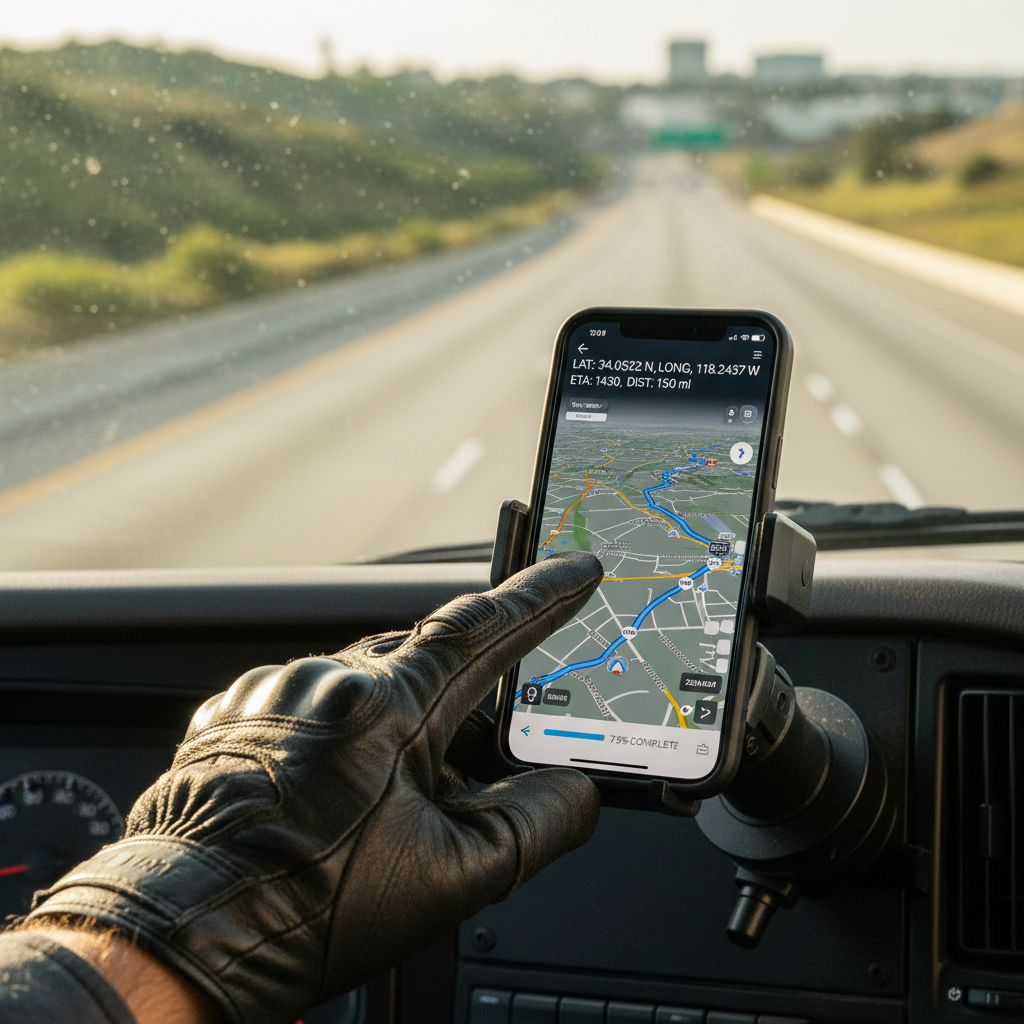
The Technology Stack: Why Your Location Pin Jumps
Every geolocation tracking app relies on one or more positioning technologies. Each one comes with a specific accuracy range, power draw, and coverage profile. None works perfectly everywhere.
GPS/GNSS is the foundation. Satellites broadcast timing signals; the receiver triangulates position from at least four of them. Outdoor accuracy sits around 3 to 5 meters under clear sky. Walk inside a warehouse, a parking garage, or a dense urban canyon, and GPS goes blind.
Cell tower triangulation fills that gap partially. It measures signal strength from nearby towers to estimate position. The trade-off is steep: accuracy ranges from 300 meters in dense urban areas to 3 kilometers in rural zones. It won’t tell you which aisle the forklift is in, but it’ll confirm the forklift is still at the depot.
WiFi positioning sits between the two. By matching detected WiFi access points against known-location databases, apps narrow position to roughly 20 to 50 meters indoors. Google’s Geolocation API uses this approach, fusing cell and WiFi data to return coordinates with an accuracy radius.
Bluetooth Low Energy (BLE) beacons push indoor accuracy to 1 to 5 meters. Hospitals use them to track equipment. Retailers use them for in-store navigation. Warehouses use them to locate pallets. They’re cheap per unit but require infrastructure: someone has to install and maintain beacons across the facility.
Ultra-Wideband (UWB) is the newest layer. It uses time-of-flight measurements to hit sub-10-centimeter accuracy. In 2024, roughly 60% of all UWB chips shipped were embedded in smartphones. Apple’s U1 and U2 chips use it for AirTag precision finding and digital car keys. For now, UWB needs compatible hardware on both ends. In two to three years, expect it to be standard in most flagship devices.
Most production apps don’t rely on a single technology. They use sensor fusion: blending GPS, cell, WiFi, accelerometer, and gyroscope data to produce the best available fix at any given moment. That’s why your location pin is sharp on a highway and fuzzy inside a shopping center. The app didn’t break. The available inputs changed.
| Technology | Accuracy | Power Draw | Works Indoors | Best For |
|---|---|---|---|---|
| GPS/GNSS | 3 to 5 m | High | No | Outdoor navigation, fleet tracking |
| Cell Triangulation | 300 m to 3 km | Low | Yes | Fallback, rural coverage |
| WiFi Positioning | 20 to 50 m | Medium | Yes | Urban indoor tracking |
| BLE Beacons | 1 to 5 m | Low | Yes | Proximity, micro-location |
| UWB | ~10 cm | Medium | Yes | Precision finding, digital keys, RTLS |
Four Categories of Geolocation Tracking Apps
“Geolocation tracking app” covers products that look similar on the surface but solve very different problems. Here’s how they break down in practice.
Family Safety and Personal Tracking
Life360 dominates this space, closing 2025 with 95.8 million monthly active users. It provides real-time location sharing, crash detection, driving reports, and geofence alerts. Apple’s Find My serves a similar function inside the Apple ecosystem, backed by 2.5 billion active devices for crowd-sourced finding. For mixed Android and iPhone households, Life360 works across both platforms. Find My does not.
These apps work because the person being tracked carries a charged smartphone at all times. The moment the phone dies, the tracking dies with it.
Outdoor and Recreation
Apps like Geo Tracker (15+ million downloads) record routes in GPX and KML formats, display topographic maps, and run in offline mode. Users are hikers, cyclists, and kayakers. The priority here is battery efficiency and offline capability, not real-time sharing with a family circle.
Fleet and Employee Tracking
Enterprise fleet apps combine GPS tracking with dashcams, electronic logging devices (ELD), route optimization, and driver behavior scoring. Samsara, Geotab, and Motive lead this segment. Smaller field-service platforms like Hubstaff and Connecteam focus on employee time tracking with location verification. The data feeds directly into payroll, compliance, and customer SLAs.
Industrial Asset Tracking
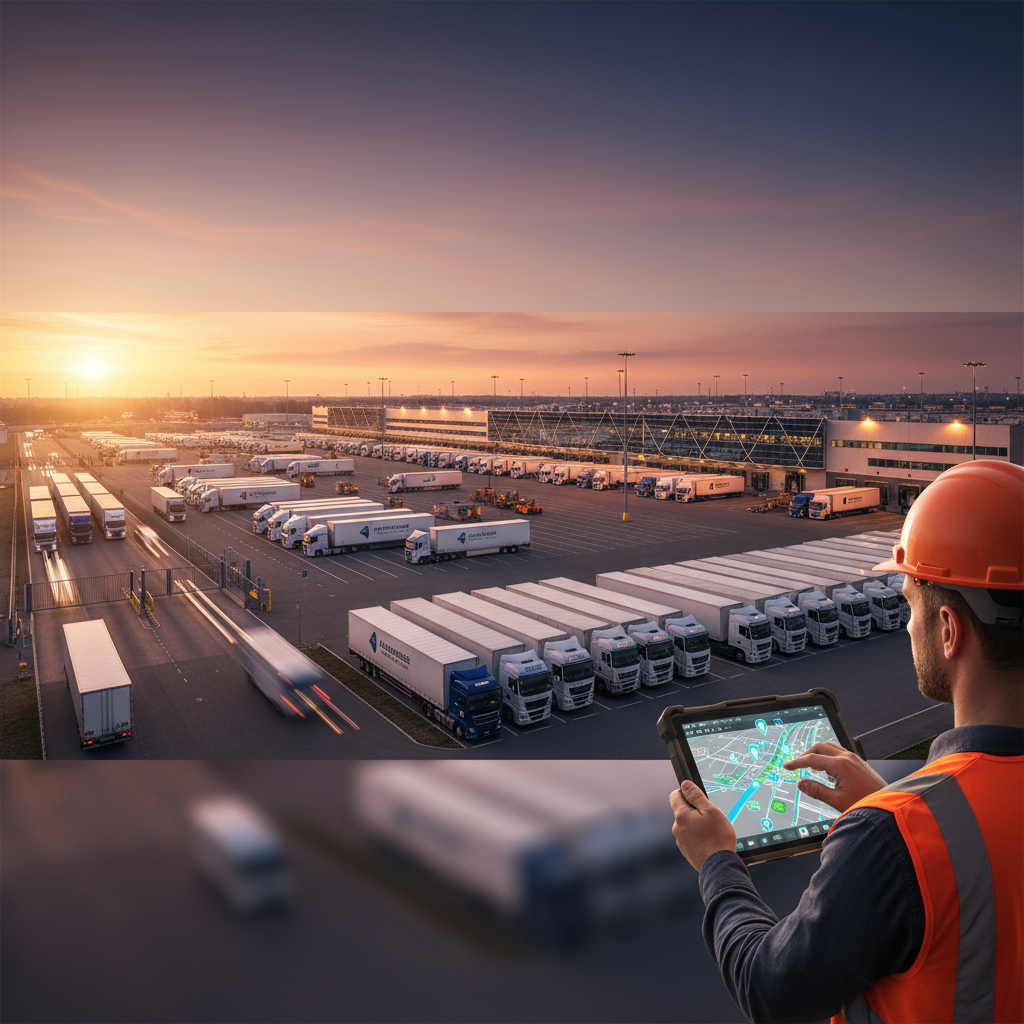
This is where the phone app model breaks down. Shipping containers, ULD pallets, ground support equipment, MRO tooling: none of these carry a smartphone. They need dedicated hardware with its own GPS antenna, cellular modem, and a battery rated for months or years. The app layer sits on top as a dashboard or API, but the real work happens at the device level.
This category is where I spend most of my working hours. And it’s where the distinction between shipment tracking and asset tracking matters most. Shipment tracking ends at delivery. Asset tracking follows the asset through its full lifecycle: deployment, dwell, return, reuse. Industries like aircraft manufacturing rely on this lifecycle visibility to manage tooling, GSE, and component flow across facilities. If your reusable container pool goes invisible after reaching the customer, that’s not tracking. That’s half-tracking.
Phone App vs. Dedicated Tracker: Where the Line Is
A phone-based geolocation tracking app and a dedicated GPS tracker both answer “where is this?” The overlap ends there. Choosing between technologies isn’t about one winning outright; as this breakdown of GPS vs RFID tracking shows, the right fit depends entirely on your use case.
Phone apps rely on the phone’s hardware: its GPS chip, its cellular radio, its battery. They’re convenient because there’s nothing extra to buy. But they drain battery fast under continuous GPS, need the app active in the background (which both iOS and Android increasingly restrict), and stop working if the person turns off the phone or leaves it behind.
Dedicated trackers carry their own GPS, modem, and power source. A device like the Oyster3 can report position for years on a single battery, bolted to a container moving across oceans with no human nearby. It doesn’t care if someone’s phone died. It doesn’t need WiFi. It doesn’t ask for background permissions. This is exactly what a GPS asset tracker with long battery life delivers.
Three questions settle the decision:
- Is a person always carrying the tracked item? If yes, a phone app may be enough. If you’re relying on GPS tracking for equipment, vehicles, or containers, you need dedicated hardware.
- How long does tracking need to last per charge? Phone apps drain a battery in hours under continuous GPS. Dedicated trackers last months to years.
- Does tracking stop at delivery? If you only need to confirm a shipment reached point B, most apps work. If you need visibility during dwell time, return transit, and the next deployment cycle, you need always-on hardware with an asset tracking architecture.
The Privacy Problem No One Reads the Fine Print On
Geolocation data is among the most sensitive information a device can generate. It reveals where you live, work, worship, seek medical care, and how fast you drive. The regulatory landscape finally started catching up.
The FTC took action against General Motors in January 2025 for collecting precise geolocation data as often as every three seconds and selling it to consumer reporting agencies. Penalty: a five-year ban on sharing that data. A month earlier, the FTC prohibited data broker Mobilewalla from selling location data that exposed visits to medical and religious facilities.
Life360 itself became a cautionary case. The Markup reported the company sold precise location data to roughly a dozen brokers, with data sales growing from $693,000 in 2016 to $16 million in 2020 (nearly 20% of revenue at the time). The Texas Attorney General then sued Allstate’s subsidiary Arity for secretly collecting driving data from over 45 million Americans through apps including Life360.
On the hardware side, the Apple AirTag stalking class action (Hughes v. Apple) survived a motion to dismiss, allowing negligence claims to proceed. States are responding: Pennsylvania passed legislation making tracker-based stalking a criminal offense. Apple and Google are now jointly developing cross-platform standards to detect unwanted Bluetooth trackers.
The pattern is consistent. If a geolocation tracking app is free, the business model likely involves your data. Not every free app sells your location. But you should read the data policy before you install, not after you’re cited in a lawsuit. For organizations handling sensitive assets in regulated sectors, compliance frameworks require explicit data governance controls that consumer apps rarely provide.
What’s Changing Right Now
Three shifts are reshaping geolocation tracking apps as I write this.
UWB goes mainstream. With 60% of UWB chips already in smartphones and the FiRa Consortium standardizing use cases across 100+ members, sub-centimeter indoor positioning is moving from lab to production. Digital car keys, hospital asset finding, and airport indoor navigation will be unremarkable within two years.
AI adds context to coordinates. Raw latitude and longitude are becoming less valuable than interpreted location intelligence. AI models now filter GPS noise, detect anomalies (a container that hasn’t moved in 14 days, a vehicle off its planned route), and predict arrivals with narrowing error margins. The shift is from “where is it” to “what does that location mean.”
Regulators stopped asking nicely. The 2024 and 2025 FTC actions set precedents that will shape app design for years. Affirmative, informed consent for location data collection is now a design requirement, not a compliance checkbox. Companies that skip this step are writing future settlement checks. Google’s $93 million settlement over misleading location-tracking practices proved that even the biggest players aren’t exempt.
How to Choose the Right Tracking Setup
Before downloading anything or buying hardware, answer four questions:
- What are you tracking? People, vehicles, containers, pallets, tooling, or small items? The answer determines whether a phone app, a Bluetooth tag, or a dedicated GPS tracker fits.
- What environment? Outdoor-only (GPS is fine), indoor-only (you need BLE or UWB), or mixed (sensor fusion and possibly hybrid hardware).
- How long between charges? A phone app needs daily charging. A BLE tag lasts about a year. A dedicated tracker can last three to five years in low-report-rate configurations.
- What happens after delivery? If tracking ends when the shipment arrives, most solutions work. If you need visibility across dwell, return, and redeployment, you need asset tracking. That’s a different architecture entirely.
For personal and family safety, Life360 or Apple’s Find My handle the job. For outdoor route recording, Geo Tracker and similar offline-capable apps work well. For fleet operations, enterprise platforms with ELD compliance and driver coaching are the standard.
For industrial assets (reusable containers, aviation ground equipment, MRO tooling, anything that cycles without a human carrying a phone), you need integrated IoT hardware and a platform built for lifecycle visibility. If your container pool goes dark the moment it leaves your dock, that’s exactly the gap asset tracking closes.
We build those solutions at Datanet. If you want to talk through what fits your operation, get in touch here or drop a note to info@datanetiot.com.
Frequently Asked Questions
How accurate are geolocation tracking apps on a phone?
Outdoors under clear sky, phone GPS achieves 3 to 5 meter accuracy. Indoors that drops to 20 to 50 meters with WiFi assist, or hundreds of meters with cell-only fallback. Phones with UWB chips (recent iPhones, some Samsung Galaxy models) can reach roughly 10-centimeter precision for close-range finding.
Can a geolocation tracking app work without internet?
GPS can calculate coordinates without connectivity, but most apps need a data connection to display maps, share location with others, or use WiFi/cell positioning databases. Dedicated GPS trackers can store positions offline and upload them once connectivity returns.
What’s the difference between a tracking app and a dedicated GPS tracker?
A tracking app uses the phone’s GPS chip, battery, and cellular radio. A dedicated tracker has its own antenna, modem, and power source, lasting months to years without human intervention. Dedicated devices work in environments where phones can’t: shipping containers, remote yards, ocean freight.
Is it legal for apps to track location without consent?
No. The FTC has taken enforcement actions against General Motors, Mobilewalla, and others for collecting or selling location data without meaningful consent. State laws like the Texas Data Privacy and Security Act add protections. There is still no single comprehensive federal geolocation privacy law in the U.S., but the enforcement trend is clear.
Which family tracking app works on both iPhone and Android?
Life360 works fully on both platforms, including location sharing, driving reports, and crash detection. Apple’s Find My is limited to Apple devices. For households with mixed devices, Life360 is the practical choice.
When should I choose dedicated hardware over a phone app?
When you’re tracking assets rather than people, need battery life in months or years, require coverage without WiFi or cell infrastructure, or need visibility beyond the delivery point. Reusable containers, aviation ground equipment, MRO tooling, and unattended trailers all call for dedicated tracking hardware.







 +1 508 292 2210

2 Responses