

Here is the fundamental problem with air cargo visibility: your shipment goes dark the moment it boards the aircraft. Standard cellular trackers keep transmitting at cruising altitude, which violates ICAO regulations. So either you fly blind, or you risk your cargo being held, delayed, or returned to shipper because you strapped an unauthorized device to it. (See also: griffin air.)
Global shipment monitoring with Griffin Air solves this in a way that sounds simple but took years of engineering to get right. The device detects flight automatically, silences its cellular radio, keeps logging data internally, and resumes live reporting the second it lands. No manual intervention. No compliance risk. And on high-frequency lanes, the per-shipment cost drops below $1.
I have spent 15+ years in IoT deployments across aviation, MRO, and freight operations. The Griffin Air, built by Digital Matter, is the device I recommend when someone asks me how to track assets through the air without creating regulatory headaches. Let me walk you through why, how, and what the numbers actually look like.
What the Griffin Air Is (and What It Replaces)
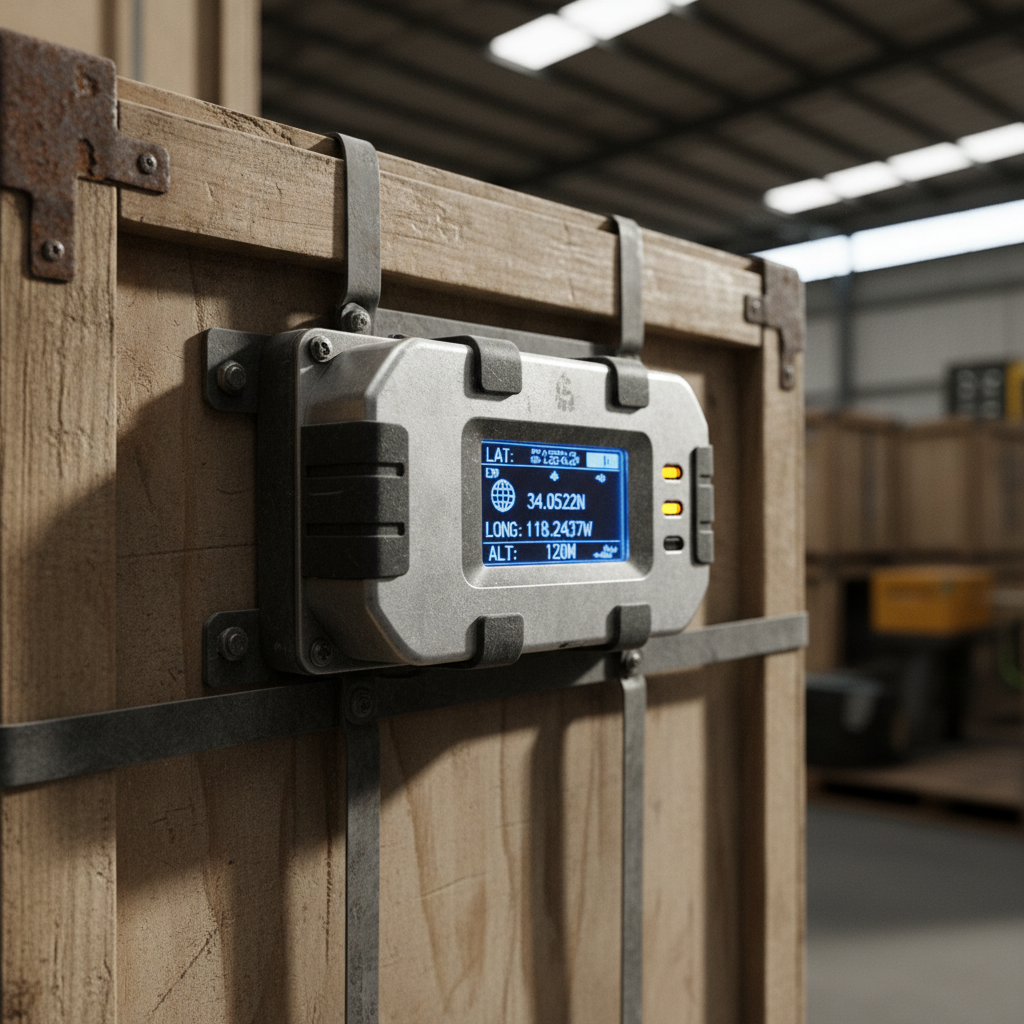
The Griffin Air is a battery-powered, IP67-rated GPS tracking device designed by Digital Matter, a company with over 2.5 million devices deployed across 130+ countries. It is not a general-purpose tracker repurposed for air cargo. It was built from the ground up for the specific constraints of global shipment monitoring: multi-modal routes, long battery life requirements, harsh handling environments, and strict aviation compliance.
Core specs that matter operationally:
- Positioning: Multi-constellation GNSS for outdoor, Wi-Fi MAC scanning for indoor (warehouses, cargo terminals), cell tower fallback for everything in between.
- Connectivity: 4G LTE Cat 1bis with 2G fallback. Cat 1bis is the sweet spot: enough bandwidth for periodic uploads, low enough power draw to sustain a multi-year battery.
- Battery: Three AA LiFeS2 cells, user-replaceable, lasting 2+ years with adaptive tracking enabled.
- Sensors: Impact detection, tip and rotation, barometer (pressure/altitude).
- BLE 5.2 Gateway: One Griffin Air on a ULD can aggregate condition data from multiple Bluetooth sensors on individual packages inside the container.
What it replaces varies. Some operations use disposable single-use trackers at $20+ per shipment. Others use nothing at all and rely on carrier milestone scans, which tell you when a shipment was scanned (if it was scanned) but not where it actually is between scans. The Griffin Air fills both gaps: continuous location data and environmental condition monitoring, across the entire journey.
Automatic Flight Detection: The Feature That Makes Everything Else Possible
Every other spec on the Griffin Air is secondary to this one. Automatic flight detection is why airlines certify the device. Without it, you do not have a viable air cargo tracker. You have a compliance liability.
The mechanism: the device combines barometer readings (altitude and pressure changes) with accelerometer data to determine when it is airborne. Once it detects flight, it silences all cellular transmissions. No RF emissions during flight, period. This satisfies ICAO regulations that prohibit radio frequency interference from cargo devices. The device continues logging GNSS positions and sensor data internally. After landing, it reconnects to cellular and uploads the stored data in a batch.
Why this matters in practice: the FAA documented 55 lithium battery air incidents in 2022. Regulatory scrutiny of electronics in cargo holds is intensifying, not relaxing. IATA’s Lithium Battery Guidance Document explicitly warns that unauthorized tracking devices may result in cargo being held, delayed, or returned to the shipper. The Griffin Air’s automatic compliance removes this risk entirely.
There is a subtlety worth noting. The device operates in a hybrid mode that most people miss: it is an active tracker on the ground (transmitting real-time data via cellular) and a passive logger in the air (recording data without transmitting). Air France KLM Martinair Cargo distinguishes between active trackers (which require pre-approval) and passive trackers (allowed on all flights). The Griffin Air satisfies the strictest requirements for both modes, automatically switching between them.
46+ Airline Certifications: What That Number Actually Means
The Griffin Air is certified by over 46 airlines, including Delta, Emirates, Lufthansa Cargo, Qatar Airways, Singapore Airlines, United, American, British Airways, FedEx, Cathay Pacific, and Qantas. That list covers the majority of global cargo capacity.
But let me give you the reality check on certification numbers, because I see this cause confusion constantly.
Competitors like Tive’s Solo 5G claim 130+ approvals. Controlant’s Saga Logger claims 200+. Those numbers are real. But the comparison is misleading for two reasons.
First, the Griffin Air’s 46+ certified carriers already cover the routes that handle the highest volume of international air cargo. If you are shipping Frankfurt to Shanghai, Dubai to Chicago, or Singapore to Sydney, the carriers serving those lanes are on the list. Second, IATA launched its Air Cargo Device Assessment Program under Recommended Practice 1693 in December 2024, standardizing how devices get validated for electromagnetic compatibility and battery safety. Results are centralized in the ONE Source database. This program does not replace individual airline approval, but it dramatically reduces the friction of obtaining it. The certification gap between devices will compress over time.
For practical purposes, ask yourself: which carriers actually move my freight? If the answer is any combination of the major global cargo airlines, the Griffin Air is already cleared.
The Economics: Reusable vs. Disposable, by the Numbers
This is where the conversation gets interesting, and where I see the most misunderstanding.
A disposable tracker like the Tive Solo 5G costs $20+ per shipment. You attach it, it tracks for one journey, and it is done. No retrieval, no recharging, no reverse logistics. That convenience has real value, particularly for irregular, one-off shipments.
The Griffin Air is reusable across hundreds of shipment cycles. On high-frequency lanes (think: recurring weekly flights between two hubs), the amortized cost per shipment drops below $1. Over a 2+ year battery life and, say, 200 cycles, the math is straightforward. Even at much lower utilization rates, the per-shipment cost stays dramatically lower than disposable alternatives.
| Factor | Griffin Air (Reusable) | Disposable Tracker |
|---|---|---|
| Cost per shipment (high-frequency lane) | Under $1 | $20+ |
| Battery life | 2+ years (replaceable AAs) | Single use |
| Reverse logistics required | Yes (device must return) | No |
| BLE sensor gateway | Yes (Bluetooth 5.2) | Typically no |
| Best fit | Recurrent lanes, container pools | Irregular or one-off shipments |
The real question is not “which is cheaper” in the abstract. It is: what does your lane mix look like? If 70% of your air freight volume runs on 5 predictable routes, reusable trackers dominate the economics. If your shipments are scattered across dozens of one-off destinations, disposables make more sense. Most large logistics operations will end up running both.
The IoT-based asset tracking market exceeded $4.5 billion in 2023 and is growing at over 12.5% CAGR through 2032, and the economics of reusable devices on recurrent lanes are a major driver of that growth.
The BLE Gateway: Why One Device Tracks an Entire Container
Most people think of the Griffin Air as a GPS tracker. It is. But the Bluetooth 5.2 gateway makes it something more: a hub for sensor data aggregation.
Here is the practical application. You place one Griffin Air on a ULD (Unit Load Device, the aluminum container that goes into the aircraft hold). Inside that ULD, individual packages carry small BLE temperature, humidity, or shock sensors. The Griffin Air collects data from all of them and transmits it via cellular when on the ground.
Result: container-level location and package-level condition data, from a single cellular device. You do not need a separate cellular modem on every package. You do not need a separate SIM card for each sensor. The economics and the physics both favor this hub-and-spoke architecture, especially for pharmaceutical cold chain shipments where temperature excursion documentation is non-negotiable.
This is also where disposable trackers hit a wall. They lack the battery life and processing power to function as BLE gateways. A single-use device can tell you where the shipment went and what temperature it experienced. A reusable hub like the Griffin Air can tell you that, plus the condition of every tagged item inside the container. The value gap widens with every additional BLE sensor in the ecosystem.
Where Shipment Tracking Ends and Asset Tracking Begins
This distinction is central to how I think about IoT deployments, and it matters for how you evaluate the Griffin Air—especially when tracking high-value aviation assets through their entire operational lifecycle.
Shipment tracking answers one question: where is my cargo right now? The job ends at delivery. Most carrier-provided tracking systems work this way. You get milestone updates until the shipment arrives, then the data stops.
Asset tracking follows the physical thing through its entire lifecycle. For a ULD, that means outbound flight, destination dwell time, return leg, maintenance inspection, and redeployment. For a reusable container pool, the cycle repeats hundreds of times. The Griffin Air, with its 2+ year battery and adaptive tracking (active when moving, sleep mode when stationary), is built for this cycle.
If your container pool feels invisible after delivery, that is the gap asset tracking closes. You stop losing containers. You stop guessing dwell times. You start making decisions based on where your assets actually are, not where they were last scanned.
Deployment: What Getting Started Looks Like
I will be direct about what a Griffin Air deployment involves, because the implementation process is where many IoT projects stall.
The device uses an internal Nano SIM (4FF). You provision it on your tracking platform via Digital Matter’s Device Manager, insert the SIM, insert three AA batteries, and mount it. Default tracking parameters are sensible out of the box: 12-hour heartbeat when stationary, GPS every 2 minutes and uploads every 30 minutes when moving, trip-end after 5 minutes of no movement. All configurable.
The integration question is bigger than the device itself. Digital Matter’s platform connects with over 1,000 third-party systems. But “connects” is a spectrum. Getting raw location pings into your TMS or ERP is one thing. Building workflows around that data (automated alerts for geofence breaches, temperature excursion escalations, cycle time dashboards for your container pool) is another.
This is where working with an integration partner makes the difference between a tracking device and a tracking solution. A device gives you data. A solution gives you decisions.
The Competitive Landscape, Honestly
You should know what else is on the market before committing to anything. Here is how the main alternatives stack up against the Griffin Air for global shipment monitoring:
| Device | Type | Battery | Airline Approvals | Best For |
|---|---|---|---|---|
| Griffin Air (Digital Matter) | Reusable | 2+ yrs, replaceable AA | 46+ | Recurrent lanes, ULD/pallet pools, BLE sensor hubs |
| Solo 5G (Tive) | Disposable | Single shipment | 130+ | One-off or irregular shipments, broadest carrier acceptance |
| Saga Logger (Controlant) | Reusable, rechargeable | USB rechargeable | 200+ | Pharma cold chain, GDP compliance |
| TRACK 1105 (Sensolus) | Reusable | Up to 10 years | Not specified | Industrial durability, long-life ground tracking |
| SmartTape (Trackonomy) | Disposable tape | Single use | Not specified | No reverse logistics, no subscription fees |
IATA’s RP 1693 assessment program will eventually level the certification playing field, which means competition will shift from “how many airlines approve this” to “what does this device actually do for my operations and at what cost.” That shift favors devices with strong economics and capabilities (like BLE gateway functionality) over devices whose primary selling point is certification breadth.
Three Outcomes That Justify the Investment
When I work with logistics operators evaluating the Griffin Air, the conversation always comes back to three measurable outcomes:
- Visibility through the air gap. No more blackout between departure scan and arrival scan. Stored data uploads after landing, closing the gap that carrier milestones cannot cover. You know not just that the shipment arrived, but the exact route, timing, and conditions it experienced.
- Compliance without manual intervention. Automatic flight detection means your team does not need to toggle devices into airplane mode, file extra documentation, or worry about carrier rejections. The device handles it. This eliminates an entire category of operational risk.
- Per-shipment cost under $1 on recurrent lanes. For operations running 100+ cycles per year on consistent routes, the tracking cost becomes negligible. That changes the ROI equation from “can we afford to track this shipment” to “can we afford not to.”
What Comes Next: RP 1693, 5G, and Predictive Intelligence
Three trends will reshape global shipment monitoring over the next 2 to 3 years.
First, IATA’s RP 1693 program will mature. As more devices go through the ONE Source validation process, airlines will increasingly accept standardized assessments rather than running redundant device-by-device evaluations. This lowers the barrier for new entrants but also lowers the switching cost for shippers, which means device capability and integration quality will matter more than ever.
Second, connectivity will evolve. The Griffin Air’s 4G Cat 1bis is the right choice today: adequate bandwidth, low power consumption. As 2G networks sunset globally (the current fallback), devices will need to migrate to LTE-M or NB-IoT for backup connectivity. This is a hardware refresh, not a paradigm shift, but it is worth planning for.
Third, the real value will move from visibility to intelligence. Knowing where your shipment is, that is table stakes. Predicting when it will arrive, detecting anomalies before they cause damage, optimizing routes based on accumulated tracking data: that is the next layer. The data the Griffin Air collects today becomes the training set for predictive models tomorrow.
The global air cargo market is projected to grow from $177 billion in 2025 to $273 billion by 2032. The smart air cargo tracking segment is growing at 15.4% CAGR, roughly 2.5x faster than the broader market. The operators investing in shipment monitoring infrastructure now will have both the data advantage and the operational maturity to capture that growth.
If you are evaluating how the Griffin Air fits your operation, or if you need help designing a deployment that integrates with your existing systems, talk to our team. We are a Digital Matter integration partner, and we have done this across aviation, MRO, freight forwarding, and container pool management. We will tell you honestly whether it is the right fit, or if a different device in our asset tracking portfolio makes more sense for your lanes.

Frequently Asked Questions
What is the Griffin Air and who manufactures it?
The Griffin Air is a battery-powered, airline-certified GPS tracking device manufactured by Digital Matter. It is designed specifically for global air cargo and supply chain monitoring, featuring automatic flight detection that silences cellular transmissions during flight to comply with ICAO regulations. It runs on three replaceable AA batteries lasting 2+ years.
Can I use any GPS tracker on air cargo shipments?
No. Airlines require every electronic tracking device in cargo to be pre-approved due to lithium battery safety concerns and RF interference rules. A standard cellular tracker transmitting at cruising altitude violates ICAO regulations. Unauthorized devices can result in cargo being held, delayed, or returned. The Griffin Air’s automatic flight detection and 46+ airline certifications eliminate this risk.
How does the Griffin Air compare to disposable trackers?
Disposable trackers (like Tive’s Solo 5G) cost $20+ per shipment but require no retrieval. The Griffin Air is reusable across hundreds of cycles, driving per-shipment costs below $1 on recurrent lanes. It also offers a BLE 5.2 gateway for sensor aggregation, which disposable devices cannot support. The right choice depends on your shipment frequency and lane consistency.
What is IATA RP 1693 and how does it affect device selection?
IATA launched its Air Cargo Device Assessment Program under Recommended Practice 1693 in December 2024. It standardizes electromagnetic compatibility and battery safety validation, with results stored in the ONE Source database. The program streamlines the approval process but does not replace individual airline approval. Over time, it will reduce the certification gap between competing devices.
Does the Griffin Air work for pharma cold chain monitoring?
Yes. Its Bluetooth 5.2 gateway allows one Griffin Air on a ULD to collect temperature and humidity data from multiple BLE sensors on individual packages inside the container. This delivers both container-level location and package-level condition data, which is critical for pharmaceutical GDP compliance and temperature excursion documentation.
How does Datanet IoT help with Griffin Air deployments?
Datanet IoT Solutions is a Digital Matter integration partner. We handle end-to-end deployment: device provisioning, platform integration with your existing TMS or ERP, workflow configuration (geofence alerts, condition monitoring, cycle time dashboards), and ongoing support. Reach us at datanetiot.com/contact-us or info@datanetiot.com.








 +1 508 292 2210

4 Responses