

If you’re researching griffin air cargo tracking solutions, you’re likely in one of two situations: evaluating the Digital Matter Griffin Air device for your cargo operations, or trying to track a shipment through a company with “Griffin” in its name.
Quick disambiguation. Griffin & Company Logistics is a freight forwarder and customs broker with its own shipment portal. Griffin Transport Services is an IATA-registered forwarder out of Reno, Nevada. Neither builds tracking hardware.
The Griffin Air is something else entirely: a battery-powered, airline-certified IoT asset tracker built by Digital Matter. It earned Korean Air approval in December 2024 as device number 124 on a list that already had 123 competitors. It’s also approved for United Cargo operations on all mainline aircraft.
That crowded list tells you something about the market. The global cargo container tracking market hit USD 3.4 billion in 2025, projected to nearly quadruple by 2035. Everybody wants in. So what does the Griffin Air actually bring to the table, and is it the right fit for your operation? I’ve been deploying IoT tracking across aviation and industrial logistics for over 15 years. Here’s what I’d want to know before committing.
What the Griffin Air Actually Does
At its core, the Griffin Air is a rugged, long-life asset tracker designed for global logistics and air cargo supply chains. Not a smart label. Not a disposable tag you toss after one shipment. It’s built to go out, cycle through airports and warehouses and cargo holds, and keep reporting for years without maintenance.
The technical architecture reflects that ambition:
- Location: Three-tier positioning using multi-constellation GNSS for outdoor accuracy, Wi-Fi MAC address scanning for indoor environments (warehouses, cargo terminals), and cell tower triangulation as a fallback. The Wi-Fi and cell data get processed in the cloud rather than on-device, which saves significant battery.
- Connectivity: 4G Cat 1bis cellular with 2G fallback. A single nano SIM card handles global coverage. The device also operates as a Bluetooth 5.2 gateway, meaning one Griffin Air can report on multiple BLE-tagged assets nearby. That’s a force multiplier: attach BLE temperature sensors or asset tags to individual items in a shipment, and the Griffin Air relays all of it.
- Battery: Three AA cells (LiFeS2 recommended), user-replaceable, rated for 2+ years. Default settings push heartbeats every 12 hours when stationary and GPS fixes every two minutes during movement, with uploads every 30 minutes.
- Physical: IP67-rated housing. Impact, tip, and rotation detection built in. Mount it with screws, magnets, cable ties, or adhesive.
The BLE gateway function is worth pausing on. Most air cargo trackers are single-asset devices: one tracker per container or ULD. The Griffin Air’s ability to aggregate data from surrounding BLE sensors means you can track and monitor a cluster of tagged items with a single cellular device. For operations managing pharmaceutical cold chain shipments or high-value component kits, that changes the math on per-unit tracking cost.
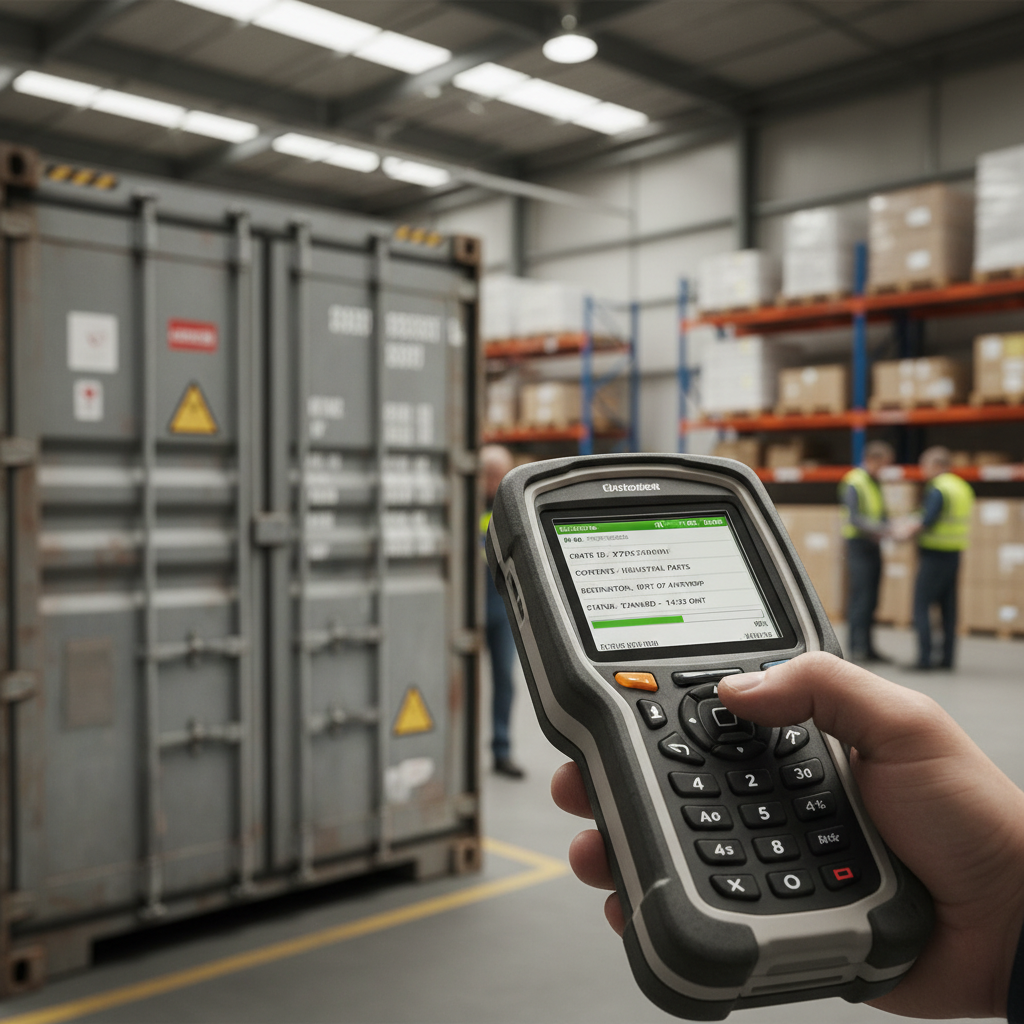
Why an Air Cargo Tracker Must Go Silent (and How This One Does It)
Here’s something that surprises people outside aviation: your air cargo tracker is not allowed to transmit while airborne. Period.
ICAO Technical Instructions and IATA Dangerous Goods Regulations are clear. Any tracking device with a cellular transmitting function must automatically shut down its radio when inside an aircraft. The reason is lithium battery fire risk in cargo holds. This isn’t theoretical. The FAA recorded 55 lithium battery air incidents in 2022, including a package tracking device that was found burning inside a baggage cart at a cargo facility after a battery short circuit.
The Griffin Air handles this with a barometer-based flight detection algorithm. It senses altitude and pressure changes to determine when it’s inside an aircraft in flight. Once it detects airborne conditions, the cellular radio shuts down automatically. Location and sensor data continue to log internally. When the aircraft lands and the device detects ground conditions, normal transmission resumes.
This is not a feature differentiator. It’s a hard regulatory requirement. Any air cargo tracking device that lacks reliable auto-shutdown capability is, by definition, non-compliant for use on commercial aircraft. The differentiation lives in how reliably the detection works. Barometric sensing is one of the more robust approaches compared to timer-based or GPS-altitude methods, which can produce false triggers.
Korean Air underscores the seriousness: their GPS handling instructions limit trackers with lithium batteries to two per Master Air Waybill. That constraint makes device selection, placement strategy, and the BLE gateway capability of the Griffin Air especially relevant. If you’re limited to two cellular devices per MAWB, a device that can aggregate data from multiple BLE tags stretches that limit further.
How the Griffin Air Stacks Up Against 124+ Approved Devices
Saying the Griffin Air is “airline-certified” is necessary but not sufficient. So are 123 other devices on the Korean Air list alone. The question is where digital matter’s design philosophy wins and where it doesn’t.
Here’s how it compares to the major players I encounter most in the field:
| Device | Maker | Battery Life | Connectivity | Key Differentiator |
|---|---|---|---|---|
| Griffin Air | Digital Matter | 2+ years (3×AA) | 4G Cat 1bis / 2G / BLE 5.2 | BLE gateway, platform-agnostic (1,000+ platforms) |
| SENTRY 400/500/600 | OnAsset Intelligence | Varies by model | Cellular | Market pioneer (approved since 2015), AI analytics |
| Solo 5G / TT-7000 | Tive | Single-use or 1+ year | 5G / 4G / NB-IoT | Disposable option eliminates reverse logistics |
| BeeSense Air / Flex | Decklar (ex-Roambee) | Rechargeable (24h charge cycle) | Cellular / BLE | Decision AI platform, managed services model |
| TRACK 1105 | Sensolus | 7 to 10 years | NB-IoT / LTE-M / BLE | Extreme longevity, IP68/IP69K |
| SenseAware M4 | FedEx | Varies | Cellular | Vertically integrated with FedEx network |
| GO Real-Time series | Copeland (Emerson) | Varies | 4G / 5G | Pharmaceutical cold chain heritage |
A few things stand out from this comparison.
OnAsset is the incumbent. They’ve held airline approvals since 2015, with six approved models on the Korean Air list. That’s a decade of airline relationships the Griffin Air doesn’t have yet. If your priority is breadth of airline coverage and you need approvals beyond Korean Air and United Cargo, OnAsset’s head start matters.
Sensolus wins on battery life by a wide margin. A 7- to 10-year operational life makes the Griffin Air’s 2+ years look modest. But Sensolus runs on NB-IoT/LTE-M, which limits coverage in regions where those networks aren’t deployed. And as of December 2024, Sensolus devices don’t appear on the Korean Air approved list. For air cargo specifically, certification can be more important than raw specs.
Tive created the disposable tracking category. Their Solo 5G is a single-use device. No recovery logistics. No device management. No battery replacement. The tradeoff is obvious: it only makes economic sense for shipments where the device cost is small relative to cargo value, and where you don’t need the device back.
The Griffin Air’s real edge is platform flexibility. Digital Matter integrates with over 1,000 third-party tracking platforms. FedEx SenseAware locks you into the FedEx ecosystem. Decklar wants you on their Decision AI platform. The Griffin Air works with whatever system you’re already using. For operations that refuse vendor lock-in, that’s the deciding factor.
Reusable vs. Disposable: The Strategic Fork
Before you compare specs, ask a more fundamental question: does your operation need a reusable tracker or a disposable one?
The Griffin Air is engineered for reuse. Its deploy-once design means you mount it on a ULD, container, or pallet, and it operates through hundreds of shipping cycles over two-plus years. You get it back and it keeps working. Digital Matter calls this philosophy “deploy once,” and they’ve built their entire product portfolio around it: devices that operate for their full service life without maintenance or battery changes.
Disposable trackers follow the opposite logic. Tive’s Solo line and the growing category of GPS-enabled smart labels are designed to travel with a single shipment and get discarded. No reverse logistics. No device management overhead.
These aren’t competing solutions. They serve different asset tiers and operational models:
- Reusable (Griffin Air territory): ULD fleet management, returnable pharmaceutical containers, high-value MRO part shipments, ground support equipment cycling through multiple airports. Any asset you own, reuse, and need to track through its entire lifecycle.
- Disposable: One-time high-value shipments, ad-hoc visibility for a single consignment, operations without the infrastructure to collect and reissue devices.
If you’re managing a pool of returnable assets, the per-cycle cost of a Griffin Air (device cost amortized over hundreds of uses) will be a fraction of deploying disposable trackers on every trip. If you’re a freight forwarder sending one crate of prototype parts across the Pacific and you’ll never see that crate again, disposable wins.
The BLE gateway capability adds nuance here. One reusable Griffin Air paired with inexpensive BLE tags on individual items inside a container can give you item-level visibility at a fraction of what multiple cellular trackers would cost. That hybrid model is where I see the most interesting deployments emerging.
What IATA’s Device Assessment Program Changes
IATA launched its Air Cargo Device Assessment Program in December 2024, and if you’re evaluating air cargo trackers, you need to understand what it does and doesn’t replace.
The program validates tracking devices against Recommended Practice 1693 for electromagnetic compatibility and battery safety. Validated devices get listed in IATA’s ONE Source directory, giving airlines and freight forwarders a centralized reference when approving equipment. The first validated product was THE BOX by LivingPackets.
Here’s the important distinction: IATA validation does not replace individual airline approval. Korean Air, United, Emirates, and every other carrier still maintain their own approved device lists. What the program does is streamline the documentation burden. Instead of submitting the same compliance paperwork to 50 airlines separately, manufacturers can point to their IATA validation as a baseline.
For procurement teams, this has two implications:
- Devices listed in ONE Source will face less friction in airline approval processes going forward. If you’re choosing between two similar devices and one has IATA validation, the validated one will likely clear approvals faster across your route network.
- As airlines start referencing ONE Source in their procurement workflows, unlisted devices face increasing invisibility regardless of technical merit. Certification is becoming table stakes.
The Griffin Air already holds airline-specific approvals from Korean Air and United Cargo. Whether Digital Matter has submitted the device for IATA validation through the new program isn’t publicly documented yet. Worth asking about if you’re evaluating it.
Deployment Considerations: What I’d Ask Before Committing
Having deployed thousands of IoT tracking devices across aviation and industrial operations (including a 10,000-unit Digital Matter deployment for returnable packaging in Europe), I know that specs and certifications only tell half the story. Here’s what I’d verify before rolling out the Griffin Air or any air cargo tracker.
Airline coverage on your actual routes. The Griffin Air is approved for Korean Air and United Cargo. If your cargo regularly flies on Lufthansa, Singapore Airlines, or Emirates, you need to confirm whether those carriers accept it. Don’t assume that one airline’s approval transfers to another.
Platform compatibility. Digital Matter’s 1,000+ platform integrations sound impressive, and they are. But confirm that your specific TMS, WMS, or visibility platform is among them before you order hardware. The integration architecture uses Digital Matter’s Device Manager as a middleware layer. If you’re running a less common platform, test the integration explicitly.
Battery life under your conditions. The 2+ year rating assumes default tracking parameters and moderate temperatures. Mount the device in direct sunlight on a non-ventilated surface, and that lifespan compresses significantly. If you’re tracking assets in equatorial heat or desert climates, factor in more conservative expectations. LiFeS2 chemistry handles temperature extremes better than standard alkaline, but physics still applies.
Mounting and GNSS orientation. The Griffin Air’s GNSS antenna needs a clear view of the sky. Digital Matter’s documentation specifies that screw heads should face down (toward the sky when mounted on the underside of an asset). Incorrect mounting orientation kills GPS accuracy. In a cargo environment where devices get buried under freight, Wi-Fi and cell-tower fallback becomes crucial.
The 2G sunset question. The Griffin Air uses 4G Cat 1bis with 2G fallback. As 2G networks continue to be decommissioned globally, that fallback path narrows. For deployments with a 3- to 5-year planning horizon, verify 2G availability along your primary routes. In most of North America and Western Europe, this isn’t yet critical. In parts of Asia and Africa, 2G remains the more reliable network. This calculus is shifting fast.
One more consideration specific to airfreight: if your operation requires DO-160 environmental qualification (the military/aerospace standard for vibration, temperature shock, and altitude), that’s a different certification path from airline cargo GPS approval. Learn more about aviation GPS tracking solutions and how devices like the Thingfox T2 carry DO-160 airfreight approval and may be better suited for operations requiring that specific compliance.
Where the Griffin Air Fits in Your Tracking Strategy
The air cargo tracking market is growing at 13.1% annually, and global air cargo demand hit record volumes in 2025. The pressure to have real-time asset visibility across the air freight chain isn’t going away. If anything, IATA upgrading AI from “High” to “Very High” impact in its 2026 technology trends report signals that raw tracking data is becoming the input layer for increasingly automated decision-making.
The Griffin Air is a strong option for operations that need a reusable, platform-agnostic tracker with BLE gateway capability and airline certification. It’s not the longest-lived device on the market (Sensolus owns that), not the most widely approved (OnAsset has a decade head start), and not the cheapest per-use option (disposable trackers win there). What it offers is a well-balanced combination of connectivity flexibility, sensor integration, and an open architecture that doesn’t lock you into one vendor’s ecosystem.
For us at Datanet IoT Solutions, the Griffin Air sits within a broader portfolio of air cargo and asset tracking solutions that we deploy and support. The right device depends on your specific routes, asset types, compliance requirements, and tracking platform. Whether it’s the Griffin Air, the Thingfox T2 for DO-160 environments, or another device from our asset tracking catalog, the goal is the same: visibility that survives the full asset lifecycle, not just the delivery leg.
If your container pool goes dark after handoff, or your ULDs cycle through airports with zero location data between checkpoints, that’s the gap asset tracking closes. Talk to our team and we’ll help you figure out which device architecture fits your operation.
Frequently Asked Questions

What is the Griffin Air tracker?
The Griffin Air is a battery-powered IoT asset tracking device manufactured by Digital Matter. It’s designed specifically for air cargo and global logistics, featuring airline-certified automatic flight detection that shuts down cellular transmissions during flight. It runs on three AA batteries for 2+ years and integrates with over 1,000 tracking platforms.
Which airlines have approved Griffin Air for cargo use?
As of December 2024, the Griffin Air is approved by Korean Air (entry FT-GPS-24-021 on their cargo GPS tracker list) and listed on United Cargo’s approved devices page for use in cargo compartments of all mainline aircraft. Additional airline approvals may follow as the device goes through individual carrier certification processes.
How does the Griffin Air differ from disposable cargo trackers?
The Griffin Air is a reusable, deploy-once device designed to cycle through hundreds of shipments over its battery life. Disposable trackers like the Tive Solo 5G travel with a single shipment and are discarded. Reusable devices have a lower per-cycle cost for returnable asset pools, while disposables eliminate device recovery logistics.
Does the Griffin Air track cargo while the plane is in the air?
The Griffin Air’s cellular radio automatically shuts down during flight, as required by ICAO and IATA regulations. However, the device continues logging GNSS location and sensor data internally throughout the flight. Once the aircraft lands, transmission resumes and all stored data uploads to your tracking platform.
Can I use the Griffin Air with my existing tracking software?
Yes. Digital Matter’s integration architecture supports over 1,000 third-party tracking platforms through its Device Manager middleware. This platform-agnostic approach means the Griffin Air can feed data into most major TMS, WMS, and supply chain visibility systems. Confirm compatibility with your specific platform before purchasing.
What is IATA’s Air Cargo Device Assessment Program?
Launched December 2024, this IATA program validates air cargo tracking devices against Recommended Practice 1693 for electromagnetic compatibility and battery safety. Validated devices appear in the ONE Source directory. The program streamlines compliance documentation but does not replace individual airline approval requirements.








 +1 508 292 2210

6 Responses