

If you searched “griffin air freight visibility platform,” you likely found two entirely different products sharing one name. One is a SaaS portal built by Magaya for freight forwarders. The other is a physical GPS tracker built by Digital Matter, certified on 42 airlines, designed to ride inside aircraft cargo holds for years on a single set of batteries.
The confusion isn’t trivial. These two products solve fundamentally different problems, and most freight operations need both layers before they can claim real air cargo visibility. This article covers both, then goes deep on the hardware side: what the Griffin Air device does, why it exists, and where software platforms hit a wall that only physical trackers can break through.
Two Products, One Name: Software vs. Hardware
Magaya’s Griffin is a software visibility platform. It gives freight forwarders a branded customer portal with milestone tracking, automated status notifications, and document management. Think of it as a communication layer between the forwarder and the shipper. It reduces “where’s my cargo?” phone calls by pulling data from existing TMS and carrier feeds into a clean interface.
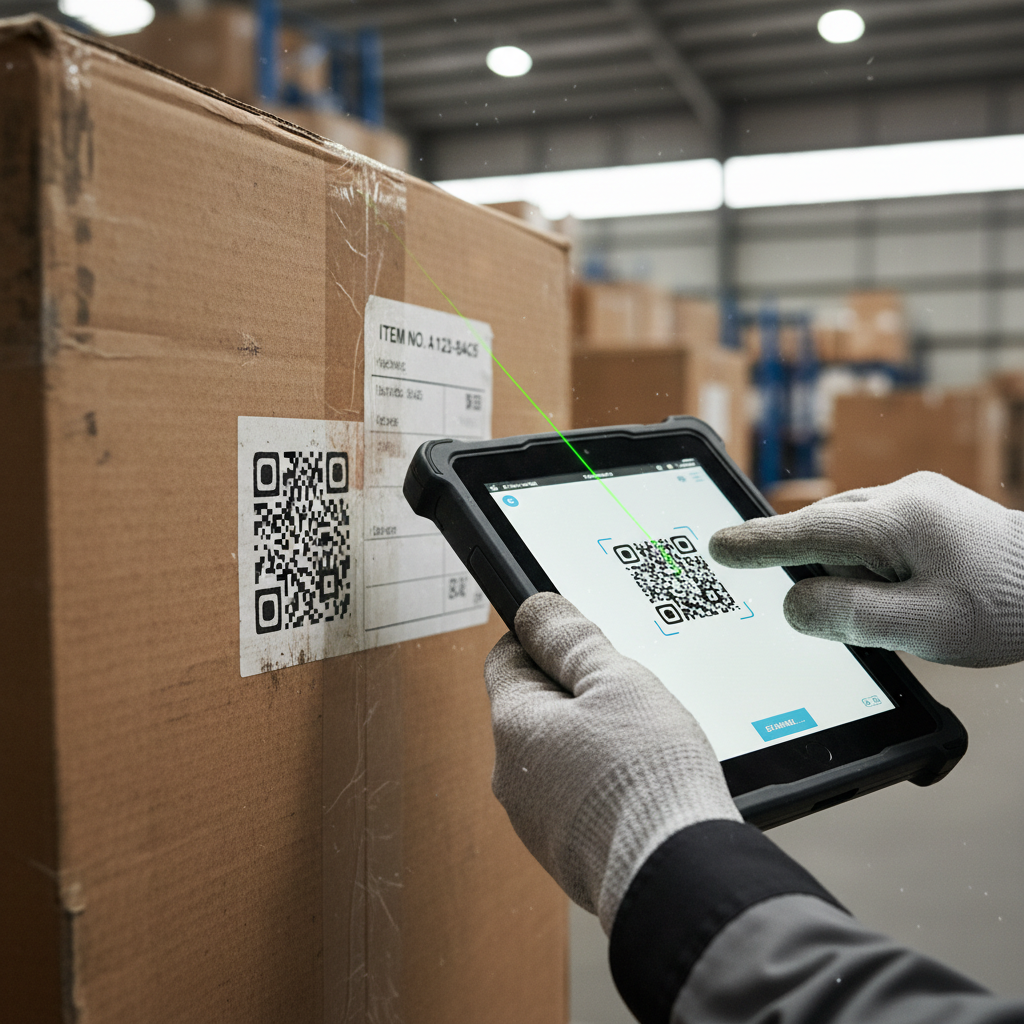
Digital Matter’s Griffin Air is a compact, battery-powered IoT tracker that physically travels with the cargo. It tracks location via multi-constellation GNSS (GPS, GLONASS, Galileo, BeiDou), falls back to Wi-Fi and cell tower positioning indoors, automatically shuts down cellular transmission during flight, and functions as a Bluetooth 5.2 gateway for environmental sensors.
The first tells your customer what your systems say happened. The second tells you what actually happened to the physical asset, including events your systems never captured.
How the Griffin Air Works
The Griffin Air was engineered around the specific constraints of air cargo: lithium battery regulations, electromagnetic interference rules aboard aircraft, and the need for reliable connectivity spanning dozens of countries and carriers. Here’s what the device architecture looks like in practice.
Primary positioning runs on concurrent multi-constellation GNSS with a low-noise amplifier, delivering roughly 1-meter accuracy outdoors. When satellite signals are blocked (warehouses, cargo holds, airport terminals), the device scans Wi-Fi access points for 10-100m urban accuracy, then triangulates via cell towers at 250m-1km. Cloud-based location solving offloads the heavy computation from the device to the server. That architectural choice is a major reason the battery lasts as long as it does.
The feature that makes the device airline-certifiable is automatic flight detection. When the Griffin Air senses it’s aboard an aircraft, it kills cellular transmissions without any manual toggle or ground crew intervention. During flight, it continues logging sensor data internally. After landing, it reconnects and uploads everything. The sensing mechanism has been tested against selected environmental sections of RTCA DO-160G:2010, the aviation standard for airborne equipment environmental conditions.
Connectivity runs on 4G LTE Cat 1bis with 2G fallback. Not LTE-M or NB-IoT, which have patchy coverage on international air cargo routes. For a device that needs to work reliably from Frankfurt to Guangzhou to São Paulo, prioritizing global reach over marginally lower power consumption is the right call.
The Bluetooth 5.2 gateway turns the tracker into a multi-sensor hub. Pair it with third-party BLE tags for temperature, humidity, or shock monitoring, and the Griffin Air relays their readings alongside its own location data. For cold-chain pharmaceutical shipments or corrosion-sensitive aerospace parts, this collapses what used to require multiple separate systems into a single device footprint.
Three user-replaceable AA LiFeS2 batteries deliver seven-plus years of operational life. Default parameters: GPS fix every 2 minutes during movement, uploads every 30 minutes, and a position check every 12 hours when stationary. When batteries eventually deplete, you swap them in the field. No return to manufacturer. The IP67 enclosure handles rain, dust, and impacts up to 16G, with tip and rotation detection built in.
42 Airlines and the IATA Standardization Push
As of February 2026, the Griffin Air has been approved by 42 airlines, including Lufthansa Cargo, Emirates, Qatar Airways, Korean Air, FedEx, Air Canada, American Airlines, United Airlines, Cathay Pacific, Turkish Airlines, Singapore Airlines Cargo, ANA, and Cargolux.
That certification count matters more than it appears. Each airline independently decides which tracking devices may operate aboard its aircraft. A tracker approved by Lufthansa is not automatically cleared for Korean Air. A device on Emirates’ list might be absent from United’s. For freight forwarders routing cargo across multiple carriers, the number of airline approvals directly determines how many flight legs the tracker can remain active.
The regulatory landscape is shifting. In December 2024, IATA launched the Air Cargo Device Assessment Program under Recommended Practice 1693, creating standardized electromagnetic compatibility and battery safety assessments for tracking devices. IATA’s ONE Source database now centralizes assessed devices, reducing the repetitive testing manufacturers face across carriers.
A critical nuance: IATA assessment does not replace individual airline approval. Airlines retain final authority. But the standardization reduces friction, and devices with strong existing certification (like Griffin Air’s 42 carriers) are positioned to expand approvals faster as the process matures.
What Software Platforms Can’t See
Software visibility platforms like FourKites, project44, and Magaya’s Griffin aggregate data from carrier feeds, EDI messages, and API integrations. They excel at milestone-level tracking: departed JFK at 14:30, arrived Heathrow at 02:15, available for pickup at 06:00. For comprehensive aviation asset visibility solutions, these platforms form just one layer of a complete monitoring strategy.
Here’s what they can’t tell you:
- Whether cargo sat on the tarmac for three hours in direct sun, pushing internal temperatures past the threshold for your pharmaceutical payload.
- Whether the pallet took a 14G impact during ground handling at an intermediate hub.
- Where the asset is right now inside a customs bonded warehouse with no carrier scan events for 48 hours.
- Whether humidity inside the container crossed the level that triggers corrosion risk on high-value aerospace components.
That last scenario isn’t a thought exercise. One of the world’s largest aircraft parts manufacturers lost hundreds of millions of dollars when unmonitored humidity caused jet engine components to corrode during COVID-19 lockdowns. They now deploy Digital Matter devices with BLE environmental sensors on transportation stands across their global supply chain.
Software platforms track shipments. Hardware trackers track assets. A shipment ends at delivery confirmation. The asset keeps moving through storage, MRO, reuse, return. IoT-based cargo monitoring adoption surged by roughly 200% in 2024-2025 because operations teams recognize that carrier data feeds leave the most expensive gaps in the physical journey uncovered.
The visibility stack that actually works is both layers: software for shipment orchestration, hardware for ground truth.
Deploy-Once Economics vs. Single-Use Trackers
The Griffin Air’s seven-year reusable design represents one economic model. The other is single-use devices like the Tive Solo 5G or Adapt Ideations’ Kelvin and Proton lines, which ship with the cargo and are not designed to return.
Neither model wins universally. The math depends on three variables.
First: shipment volume and route predictability. If you move 500 pallets a month on 4 recurring routes, a pool of reusable Griffin Air trackers pays for itself quickly. Each device covers thousands of trips over its lifespan, driving per-shipment cost toward zero after year one.
Second: recovery logistics. Reusable trackers need to come back. If your return logistics are already built (reusable containers, closed-loop supply chains, ULD pools), the Griffin Air slots in naturally. If every shipment goes to a different destination with no return path, recovering the device adds operational cost that single-use avoids.
Third: regulatory friction. Lithium battery restrictions complicate air cargo tracker deployment. The Griffin Air uses LiFeS2 (lithium iron disulfide), which faces different regulatory treatment than lithium-ion. Some competing single-use trackers now offer non-lithium battery variants that eliminate lithium entirely to bypass those restrictions. For routes with stringent battery rules, that difference can determine whether a tracker flies at all.
For most freight forwarders and MRO operations I work with, the reusable model wins on total cost at scale. Once the device recovery loop is in place, the deploy-once economics become hard to argue with.
Market Context: Numbers That Frame the Opportunity
The global real-time freight visibility platform market hit $4.8 billion in 2025, projected to reach $13.9 billion by 2034 at 12.5% CAGR. The supply chain visibility software segment is growing even faster: 26.45% CAGR toward $25.47 billion by 2035.
Air freight carries roughly 1% of global trade by volume but 35% by value. The financial consequences of a visibility failure on an air cargo shipment are disproportionate: a temperature excursion on a pharmaceutical pallet or an undetected shock event on aerospace components doesn’t just lose a shipment. It triggers regulatory holds, warranty claims, and contract penalties that can dwarf the goods’ value.
The direction of the market is also clear. Visibility is migrating from reactive (“where is it now?”) to predictive (“where will it be, and what might go wrong?”). Hardware trackers like the Griffin Air generate the granular sensor data that feeds predictive models. Without device-level ground truth, even the most advanced AI analytics platforms are making educated guesses from carrier milestones.

Frequently Asked Questions
Is the Griffin Air a software platform or a hardware device?
The Griffin Air is a hardware device: an airline-certified GPS/IoT asset tracker built by Digital Matter. It integrates with Digital Matter’s Telematics Guru software for tracking visualization and Device Manager for remote configuration. People often confuse it with Magaya’s Griffin, which is a separate SaaS visibility platform for freight forwarders.
Which airlines have approved Griffin Air?
As of February 2026, 42 airlines have approved the device, including Lufthansa Cargo, Emirates, Qatar Airways, Korean Air, FedEx, Air Canada, American Airlines, Cathay Pacific, Singapore Airlines Cargo, ANA, and Cargolux. The complete list is on Digital Matter’s airline certifications page.
How does the Griffin Air handle in-flight transmission restrictions?
Automatic flight detection senses when the device is aboard an aircraft and disables cellular transmissions without manual intervention. During flight, sensor data is logged internally and uploaded after landing. The mechanism has been tested against sections of RTCA DO-160G:2010.
Can the Griffin Air monitor temperature and humidity?
Not with built-in sensors. Its Bluetooth 5.2 gateway scans and relays data from paired BLE temperature, humidity, and shock tags within range. This lets a single tracker serve as the condition-monitoring hub for the entire shipment.
How long does the battery last?
Seven-plus years on three user-replaceable AA LiFeS2 batteries, with adaptive tracking that enters sleep mode when stationary. Batteries are swapped in the field; no return to manufacturer needed.
Is the Griffin Air a replacement for platforms like FourKites or project44?
No. They’re complementary. FourKites and project44 aggregate shipment-level data from carrier APIs and EDI feeds. The Griffin Air generates device-level location and condition data by physically traveling with the asset. The real visibility comes from combining both layers.
We deploy the Griffin Air alongside DO-160 approved trackers like the Thingfox T2 and Digital Matter’s full device range across air freight, MRO, and ground support operations. If your visibility ends at the carrier’s last scan event, that’s the gap hardware tracking closes. See our asset tracking lineup or talk to our team about what fits your operation.








 +1 508 292 2210

3 Responses