

Southwest Airlines Cargo’s latest approved device list contains over 60 GPS tracking devices from dozens of manufacturers. Most freight forwarders I talk to can’t tell the difference between them. The Griffin Air, built by Digital Matter, stands apart for a specific reason: its certified tracking technology holds approvals from more than 40 individual airlines, including Emirates, Lufthansa Cargo, Qatar Airways, FedEx, and Korean Air. (See also: how griffin air supports logistics operations.) (See also: griffin air airfreight visibility tools.) (See also: aircraft assembly asset tracking.) (See also: digital tracking for aircraft manufacturing plants.)
That is not a marketing figure. It is a competitive moat built on one technical capability that most air cargo trackers still lack.
If you are evaluating GPS trackers for air freight, this is the piece that separates devices that technically work from devices that airlines will actually allow on their planes.
What “Airline-Certified” Actually Means for Cargo Trackers
There is no single “airline certification” for cargo tracking devices. That surprises a lot of people.
What exists instead is a fragmented, airline-by-airline approval process. Each carrier maintains its own list of permitted devices, with its own testing criteria. IAG Cargo, for example, approves only four tracker models. Southwest approves over 60. Korean Air limits shippers to a maximum of two lithium-battery GPS trackers per Master Air Waybill.
The common thread across all carriers is a set of non-negotiable requirements:
- The device must automatically disable all radio transmissions during flight. The FAA is explicit: any tracking device with a transmitting function must shut itself down when aboard an aircraft. No manual switches. No crew intervention. Automatic.
- Lithium batteries must comply with UN 38.3 testing standards and typically stay under 100 watt-hours.
- The device must meet electromagnetic compatibility (EMC) standards to avoid interference with avionics.
- The tracker model and manufacturer must be declared on the air waybill.
Miss any one of these, and your tracker stays on the ground. Or gets confiscated during handling.
This is why “certified by 40+ airlines” is more than a spec line. Getting each approval means submitting documentation, passing tests, and often waiting weeks or months for a single carrier’s review. A device that has cleared this gauntlet 40+ times has earned something competitors cannot shortcut.
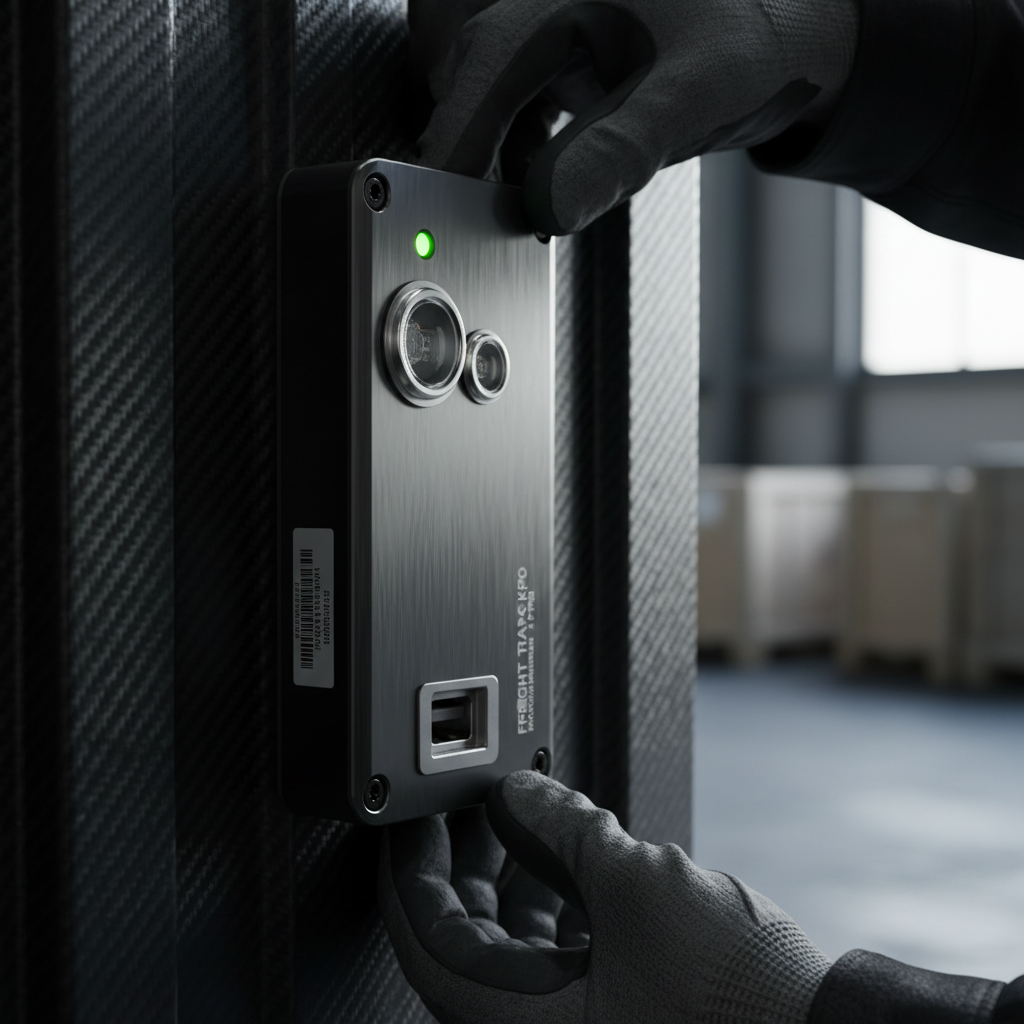
How Griffin Air’s Certified Tracking Technology Works
Digital Matter built the Griffin Air specifically for global air cargo and multimodal logistics. Every design decision revolves around one principle: continuous visibility without compromising flight safety.
Automatic Flight Detection
This is the feature that earned the Griffin Air its airline approvals. The device uses onboard sensors to detect when it is aboard an aircraft in flight. Once detected, cellular transmission shuts down automatically. No crew action. No shipper intervention. No app toggle.
During the flight, the Griffin Air keeps logging GPS coordinates and sensor data internally. The moment it detects ground conditions after landing, cellular transmission resumes and all logged data uploads seamlessly.
This is not “airplane mode” triggered by a human. It is a sensing algorithm that makes the compliance decision on its own, satisfying FAA and airline mandates without any operational friction. That single engineering capability is the biggest reason this device clears carrier lists that reject competitors.
Positioning: Outdoor and Indoor
Outside, the Griffin Air runs a multi-constellation GNSS receiver. Default behavior: a GPS fix every two minutes during movement, uploads every 30 minutes. In GPS-obstructed environments (warehouses, cargo terminals, aircraft holds), it switches to Wi-Fi access point scanning and cell tower triangulation. Location solving for Wi-Fi and cell data runs in the cloud, not on the device, saving significant battery in the process.
Connectivity and BLE Gateway
4G LTE Cat 1bis with 2G fallback covers global cellular needs. An internal nano SIM keeps provisioning simple. On top of cellular, the Griffin Air runs Bluetooth 5.2 in gateway mode: it actively scans for nearby BLE tags and sensors, reporting their data alongside its own. One cellular device can relay information from multiple cheaper BLE-tagged assets nearby. For large shipments with multiple pallets or containers, this hybrid architecture cuts hardware costs significantly.
Sensors, Battery, and Enclosure
The sensor suite covers barometric pressure (altitude monitoring), accelerometer-driven impact, tip and rotation detection, configurable geofencing, and run-hours tracking. For cargo that bruises, melts, or disappears, these sensors produce a timestamped digital chain of custody.
Power comes from three AA user-replaceable batteries (LiFeS2 recommended). Battery life ranges from 2 years at high-frequency tracking to over 7 years with conservative settings. That spread is real, not marketing sleight of hand: it depends entirely on how often you configure GPS fixes and uploads. The IP67-rated enclosure handles rain, dust, and rough cargo handling.
| Specification | Griffin Air |
|---|---|
| Cellular | 4G LTE Cat 1bis + 2G fallback |
| GNSS | Multi-constellation receiver |
| Indoor location | Wi-Fi AP scanning + cell tower |
| Bluetooth | 5.2 Gateway (active/passive scanning) |
| Battery | 3x AA replaceable (LiFeS2) |
| Battery life | 2 to 7+ years (configuration-dependent) |
| Enclosure | IP67 |
| Sensors | Barometer, impact, tip, rotation, accelerometer |
| Flight safety | Automatic cellular shutdown in flight |
40+ Airlines and Counting
As of mid-2026, the Griffin Air holds approvals from over 40 airlines. The published list includes AeroMexico, Air Canada, Alaska Airlines, ANA, American Airlines, Asiana, Atlas Air, Austrian Airlines, Brussels Airlines, Cargolux, Cathay Pacific, Emirates, Etihad Airways, FedEx, Hawaiian Airlines, Icelandair, ITA Airways, Kalitta Air Cargo, Korean Air, LOT Polish Airlines, Lufthansa Cargo, Malaysia Airlines, Qatar Airways, Saudi Arabian Airlines, United Cargo, and more.
Some competitors claim “major airline approvals” without specifying which ones or how many. The Griffin Air’s list is published, verifiable, and actively maintained. If a carrier is not yet on it, Digital Matter’s support team can initiate the approval process directly.
For freight forwarders running multi-carrier routes (Hong Kong to Frankfurt on Cathay, trucked to Brussels, then on to JFK via Cargolux or American), this matters operationally. One tracker. One set of paperwork. No device swaps at transfer points. The alternative is managing a drawer full of different tracker models approved by different carriers, each with its own platform login. I have seen that setup collapse under its own weight more than once.
Griffin Air vs. Tive, Sensitech, and OnAsset
The air cargo tracking market is crowded. Here is how the Griffin Air compares to the most common alternatives in the field.
vs. Tive Solo 5G
Tive’s Solo 5G is a single-use, disposable tracker: 5G connectivity, temperature, humidity, shock, light sensors, and a non-lithium battery option that simplifies airline compliance. It is built for one-way, high-value shipments where you place the device and never expect it back.
The Griffin Air takes the opposite approach. Reusable. User-replaceable AA batteries. A 7+ year lifespan under conservative settings. For shippers running regular lanes (the same origin-destination pairs week after week), the per-shipment cost drops dramatically with each reuse. A single Griffin Air covering 200+ shipments across its lifetime costs a fraction of 200 disposable units.
The tradeoff: Tive’s non-lithium option avoids UN 38.3 complexity entirely. The Griffin Air’s LiFeS2 batteries are compliant but still require declaration. For one-off, high-stakes shipments where operational simplicity beats economics, Tive may be easier. For return-loop logistics or regular freight flows, the Griffin Air’s math wins clearly.
vs. Sensitech and OnAsset
Sensitech (now part of Copeland) and OnAsset are legacy incumbents. OnAsset’s Sentry 500 claims over 70 airline certifications through its patented FlightSafe technology. Sensitech specializes in validated temperature monitoring for pharmaceutical cold chains, with deep GxP compliance credentials that auditors already recognize.
Both excel in narrow, domain-specific roles. But neither offers the Griffin Air’s BLE 5.2 gateway capability, which enables hybrid architectures: one cellular tracker managing multiple low-cost BLE tags for piece-level visibility across large shipments. Neither matches the simplicity of field-swappable AA batteries (legacy devices often require manufacturer battery servicing or full unit replacement).
If your sole concern is pharma cold-chain compliance with an institutional paper trail, Sensitech has years of established trust. If you need a flexible, multi-purpose tracker across cargo types, routes, and transport modes, the Griffin Air is the stronger play.
| Device | Type | Key strength | Limitation |
|---|---|---|---|
| Griffin Air | Reusable, multi-purpose | 40+ airline certs, BLE gateway, replaceable battery | Lithium batteries require waybill declaration |
| Tive Solo 5G | Disposable, single-use | Non-lithium option, 5G, zero return logistics | Recurring device cost per shipment |
| OnAsset Sentry 500 | Reusable, legacy | 70+ airline certs, large install base | No BLE gateway, proprietary battery |
| Sensitech TempTale GEO | Cold-chain specialist | GxP validated, pharma industry standard | Narrow use case, limited flexibility |
The Shifting Landscape: IATA RP 1693 and Stricter Enforcement
In December 2024, IATA launched the Air Cargo Device Assessment Program under Recommended Practice 1693. This is the most consequential regulatory development for cargo tracking devices in years.
The program creates a centralized validation framework for EMC and battery safety testing. Manufacturers submit their trackers. IATA validates them against a standardized technical baseline and lists approved devices on its ONE Source platform. Airlines can then reference ONE Source when making their own approval decisions, reducing redundant testing and accelerating the review process.
RP 1693 does not replace individual airline approval lists. Carriers still set their own policies. But it gives them a common starting point: a device validated through the IATA program has already demonstrated compliance with the hardest technical requirements. Airlines can adopt it faster, with less internal review.
At the same time, enforcement pressure is climbing. Battery-powered devices overheated more frequently on aircraft in 2024, driving the FAA and carriers to tighten scrutiny of non-compliant trackers. Korean Air now caps lithium-battery trackers at two per MAWB. Airlines that previously looked the other way on borderline devices are getting stricter.
The net effect: the barrier to entry for uncertified tracking hardware is rising. Devices with proven automatic flight safety (like the Griffin Air) become more valuable. Devices that rely on manual compliance, or simply have not pursued certification, face growing risk of being pulled from cargo holds.
The market reflects this. Air cargo IoT trackers were a $1.42 billion segment in 2024, projected to hit $5.65 billion by 2033. The broader GPS tracker market reached $4.04 billion in 2024 with a 17.4% CAGR forecast through 2030. Tracking hardware is growing two to three times faster than the air cargo industry itself, driven by pharma cold-chain mandates, e-commerce visibility demands, and high-value cargo security concerns.
Tracking in Action: What the Case Data Shows
The best proof of a tracker’s value comes from what happens when something goes wrong.
Cathay Cargo’s Ultra Track service presented several cases at IATA’s 2025 Air Cargo forum that illustrate this directly.
A temperature-sensitive pharmaceutical shipment from Los Angeles to New York experienced an excursion during transit. The IoT tracker’s data pinpointed the exact timing, location, and ground handling facility where the spike occurred. Investigation time dropped from days to minutes. Liability was assigned accurately to the ground handler. The kind of dispute that used to drag on for weeks resolved with a single data export.
In a separate case, a high-value electronics shipment triggered three simultaneous alerts: a light sensor activated (the package was opened), a shock event recorded, and a geofencing boundary was breached. All at the same airport facility. The combined sensor data created an irrefutable evidentiary record for insurance and identified the specific handler responsible.
A third case involved fragile cargo where shock events, correlated with operational timestamps, pinpointed exactly which handling step caused damage. Cathay calls this the “digital chain of custody”: continuous, timestamped evidence from origin to destination that transforms claims from guesswork into data.
The Griffin Air’s sensor suite (barometer, impact, tip, rotation, geofencing, BLE relay) supports all three scenarios. This is not tracking for the sake of a dot on a map. It is condition-based visibility that produces actionable evidence when things break, spoil, or walk away. This approach reflects broader advances in aerospace asset tracking technology that prioritize real-time condition monitoring over simple location data.

Frequently Asked Questions
What is the Griffin Air and who manufactures it?
The Griffin Air is an airline-certified GPS tracking device built by Digital Matter, an Australian IoT hardware manufacturer with over 25 years in the industry. It is designed for air cargo and multimodal logistics, with automatic flight detection that disables cellular transmission during flight and resumes on landing.
Which airlines have approved the Griffin Air?
Over 40 airlines as of mid-2026, including Emirates, Lufthansa Cargo, Qatar Airways, FedEx, Korean Air, Cathay Pacific, American Airlines, United Cargo, and Cargolux. Digital Matter publishes and actively maintains the full approval list.
How long does the Griffin Air battery last?
Between 2 and 7+ years, depending on tracking frequency. High-frequency configurations (GPS fixes every 2 minutes, uploads every 30 minutes) consume more power. Conservative settings extend life significantly. The device uses three AA user-replaceable batteries, so field swaps are straightforward.
Is the Griffin Air reusable or disposable?
Reusable. Its IP67 enclosure and replaceable batteries are designed for hundreds of deployments over multiple years, making per-shipment costs drop with every reuse. This contrasts with single-use trackers that require a new device for each shipment.
Can it track cargo indoors?
Yes. The Griffin Air combines GPS for outdoor positioning with Wi-Fi access point scanning and cell tower triangulation for indoor and GPS-obstructed environments such as warehouses and cargo terminals.
What happens if my tracker is not on an airline’s approved list?
Most carriers forbid unapproved GPS trackers on aircraft. Korean Air explicitly marks unapproved devices as forbidden cargo. If the Griffin Air is not yet approved by a specific carrier, Digital Matter can initiate the review process, which typically takes weeks to months. IATA’s new RP 1693 assessment program aims to reduce this timeline.
We deploy the Griffin Air as part of our asset tracking solutions for freight forwarders, MRO facilities, and airlines running multi-carrier routes. If your current tracking setup involves juggling multiple device types, incomplete airline coverage, or zero condition visibility in transit, that is exactly the gap this device closes. Reach out to our team or email info@datanetiot.com to talk through your specific setup.








 +1 508 292 2210

4 Responses